airport

The Airport That Never Loses Your Bag

My life fits inside a suitcase. Literally.

My life, for better or worse, has been organised around a single suitcase. The suitcase and I have logged more miles together than I have with most people I know. It does not complain. It does not have opinions about the hotel. It simply arrives. Usually.

Sometimes, though, it waits in the wrong place. I have landed in San Francisco while my bag sat in Singapore. I have cleared immigration in Brisbane while my suitcase was still somewhere over the Indian Ocean, presumably enjoying the flight more than I did. Each time, there is that particular sinking feeling at the carousel. The belt moves. Other people’s bags appear. Yours does not.

It is harrowing in a way that is hard to explain to someone who hasn’t lived out of one bag for months at a time.

The rabbit hole

On one of those occasions, bag delayed, gate agent apologetic as the process warrants, scrolling through something on her device. A smile played at the corner of her lip. It was not about my suitcase. A lost bag offers very little to smile about. Although, who knows.

I found myself in the airport coffee shop with nothing to do but wait and drink. The coffee was doing its job. And then the data I was reading did something coffee rarely manages. It made me sit up straight.

Kansai International Airport opened in 1994 on an artificial island in Osaka Bay. Since that first day, it has not lost a single piece of luggage. Not one. It handles around 10 million bags a year. It has won the global award for best baggage delivery eight times.

In the United States, domestic flights lose 3 million bags every year.

I read that sitting at a gate, waiting for my bag to arrive on the next flight, and felt something between admiration and mild despair.

The man at the carousel

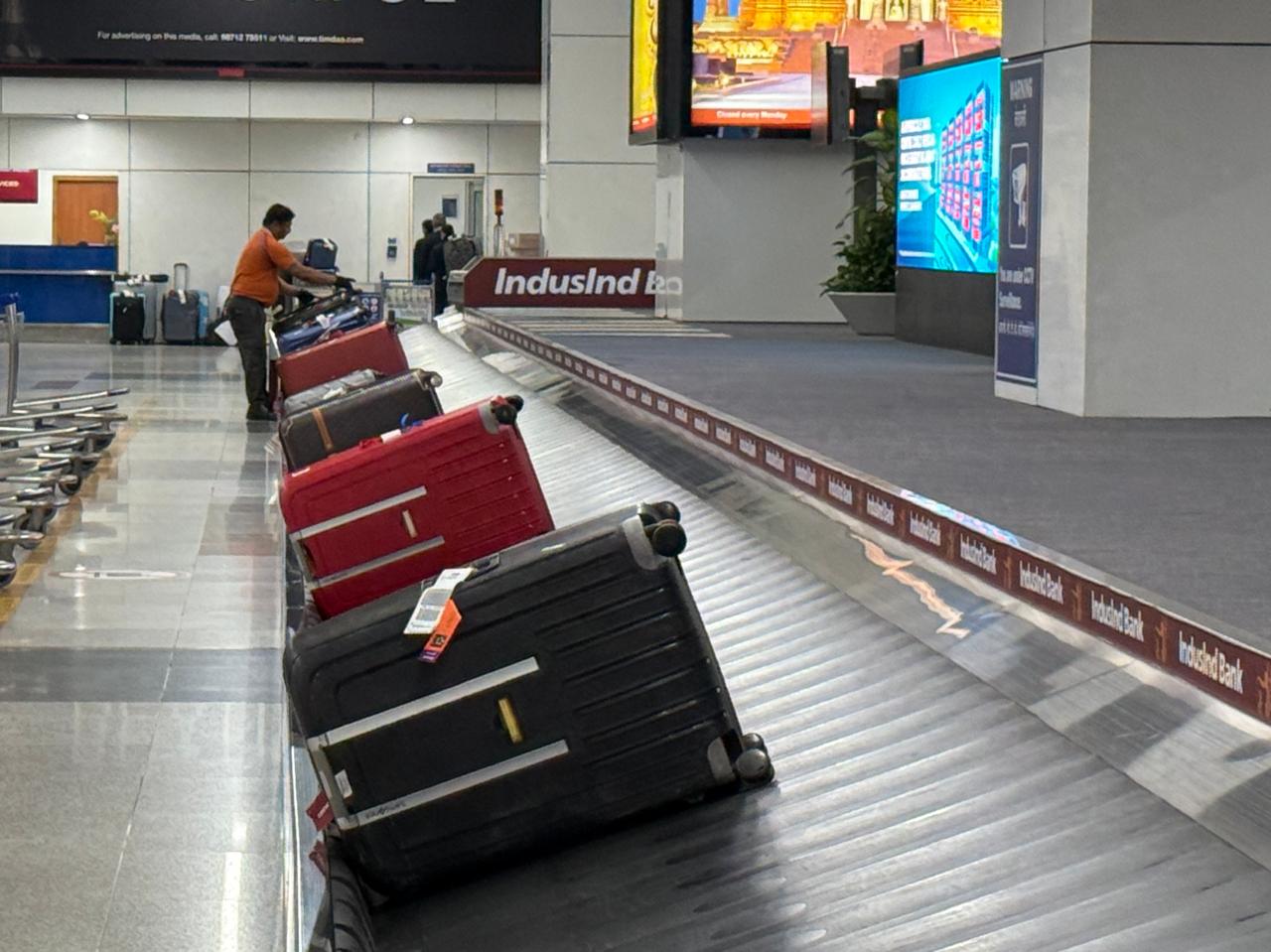
A few weeks ago, at Terminal 3 in Delhi, I watched a ground handler doing something I had never seen before. As bags landed on the carousel, he straightened them. Turned them. Arranged them so the handles faced outward.

Someone had clearly told him to do this. A new manager, perhaps. Or someone keen to get a good rating. Or both, which is usually how these things happen. My sceptical mind went there immediately. Because I had not seen this before at Delhi. Or maybe I had, and the carousel anxiety had made me look only at the bags.

Bangalore’s Terminal 2 has been doing something similar. The handles face outward there as well. The bags arrive with a certain quiet orderliness that feels deliberate.

Mumbai is a different story. At Mumbai, the correct posture is gratitude. If your bag appears at all, and within the same hour as you, the appropriate response is quiet thanksgiving. The handle direction is not the concern. Arrival is the miracle.

And yet, Delhi and Bangalore matter. The detail lands, regardless of what drove it. Someone, somewhere up the chain, looked at a carousel and thought: this could be better.

It stayed with me. And then Osaka made sense. Because Osaka had been doing the same thing, at every carousel, since 1994. Except nobody told them to. They just decided it mattered.

What they actually do

Kansai’s secret, when you finally prise it out of them, turns out to be deeply unsatisfying. Small teams. Manual counts. A rule that if the number of bags unloaded doesn’t match the number loaded, you stop everything and look. The bag reaches the carousel within 15 minutes. The handle faces outward.

That is it. No algorithm. No proprietary system. Just people who count bags twice and arrange handles and apparently find this entirely normal.

I went deeper into the rabbit hole looking for the dramatic reveal. An airport official told NPR that the record was “the result of the daily efforts and careful work of everyone involved.” Then added, with a courtesy that itself felt Japanese: “We apologise if this would be not a specific answer.”

It was not. It was also completely honest.

Another official, speaking to CNN, was even more deflating. “We don’t feel like we have been doing something special,” he said. “We have been working as we normally do.”

Thirty years. Zero bags lost. Business as usual.

What actually drives it

Tsuyoshi Habuta has run baggage operations at Kansai for 17 years. His explanation makes the spokesperson look verbose. Luggage is precious to passengers, he says. So it should not go missing.

That is the whole argument. Seventeen years. Ten million bags a year. Thirty years of an unbroken record. And the philosophy fits in one sentence.

He is not chasing a bonus. He is not hitting a KPI. He has decided, at some point that probably passed without ceremony, that a stranger’s suitcase deserves to arrive. That quiet decision, renewed every morning, is what the record is actually made of.

The Japanese have a word for this. Omotenashi. It translates as wholehearted hospitality, but the translation loses the edges. What it really means is that you attend to what the other person needs, whether they are watching or not. Especially when they are not watching.

The gap that cannot be downloaded

A process can be copied. A checklist can be shared. But the thing that makes Habuta count bags at 4am with the same attention as the first day, thirty years in, with nobody watching and no applause coming, that cannot be transferred in a training manual. It has to be believed.

Most airports move bags. Kansai returns them.

The difference is entirely in what the people there think they are doing when they show up.

Clouds Of Japan

Tokyo is a city on the move. With a sense of calm hurriedness that can only be best experienced in a crowded metro. Or when the welcome note to the rented apartment mentions “by the way, there may be earthquakes. Don’t Panic”. Or like Typhoon Jebi is raging on and the resolute Japanese fight back with calm! ..
The Japanese are used to clouds. In a sad way too. But it doesn’t take long for you to notice they don’t let it cloud their way of living.

#traveller #instatravel #instapassport #blogger #travelblogger #blogging #travelinsights #traveladdict #traveltheworld #wanderlust #destinations # #wonder #independenceday #famous #celebrations #entrepreneur #love #wonder #musings #india #lives #nature #airport #Japan #tokyo #Jebi #typhoon (at Tokyo, Japan)
https://www.instagram.com/p/BnUhMS6FboX/?utm_source=ig_tumblr_share&igshid=zeghvxd3t3iq

Traveller Or Tourist?

“when all is said and done, much more remains to be said and done”.

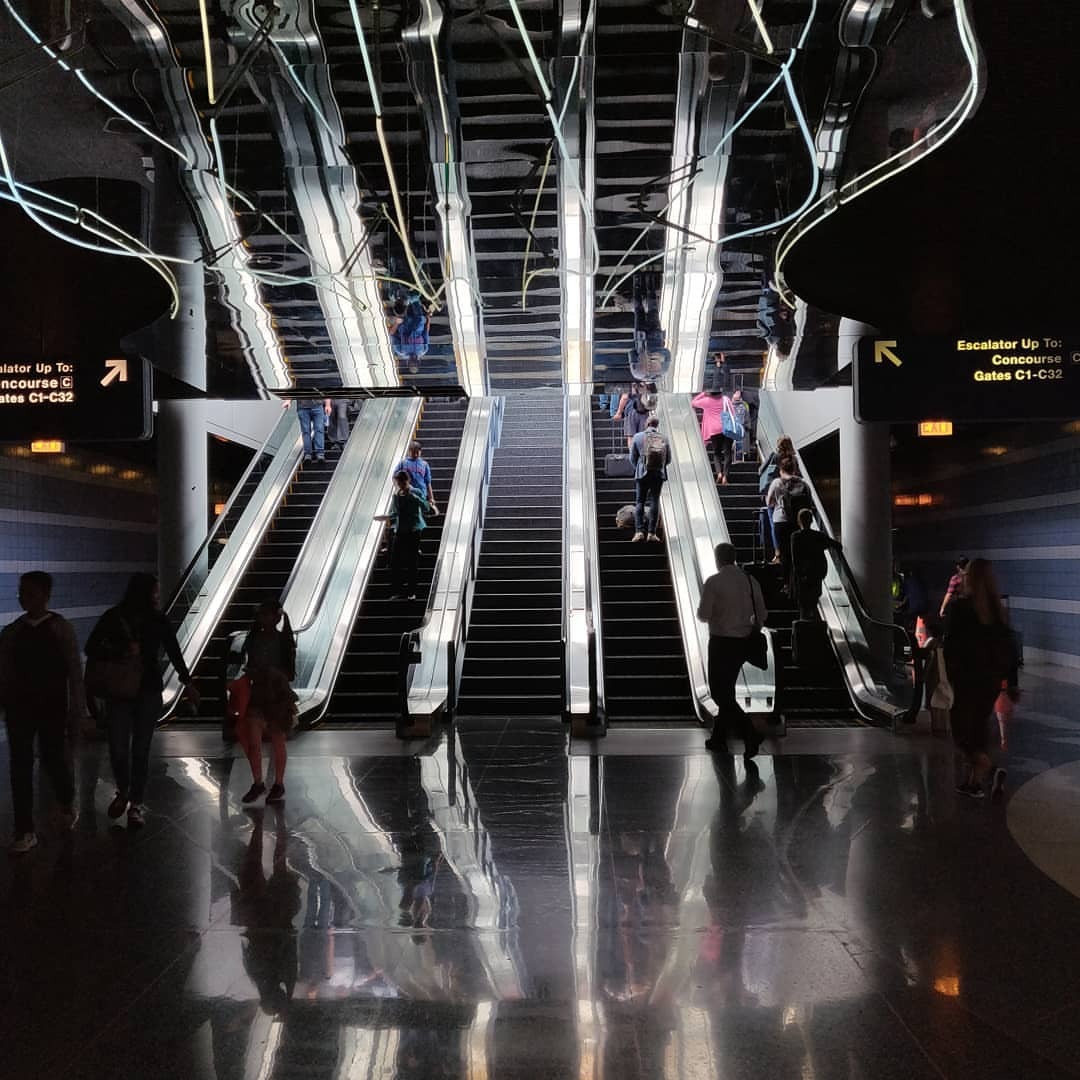
At the end of the Chicago leg of this travel, @flyohare ’s elevators say goodbye in a shiny memorable way!
“The traveler sees what he sees, the tourist sees what he has come to see”. Thats G.K.Chesterton. Now that I dint come to see the elevators, I guess I am a traveller! 🙂 

Orchestrated Moments: When Connection Breaks Through

Another morning. Another airport.

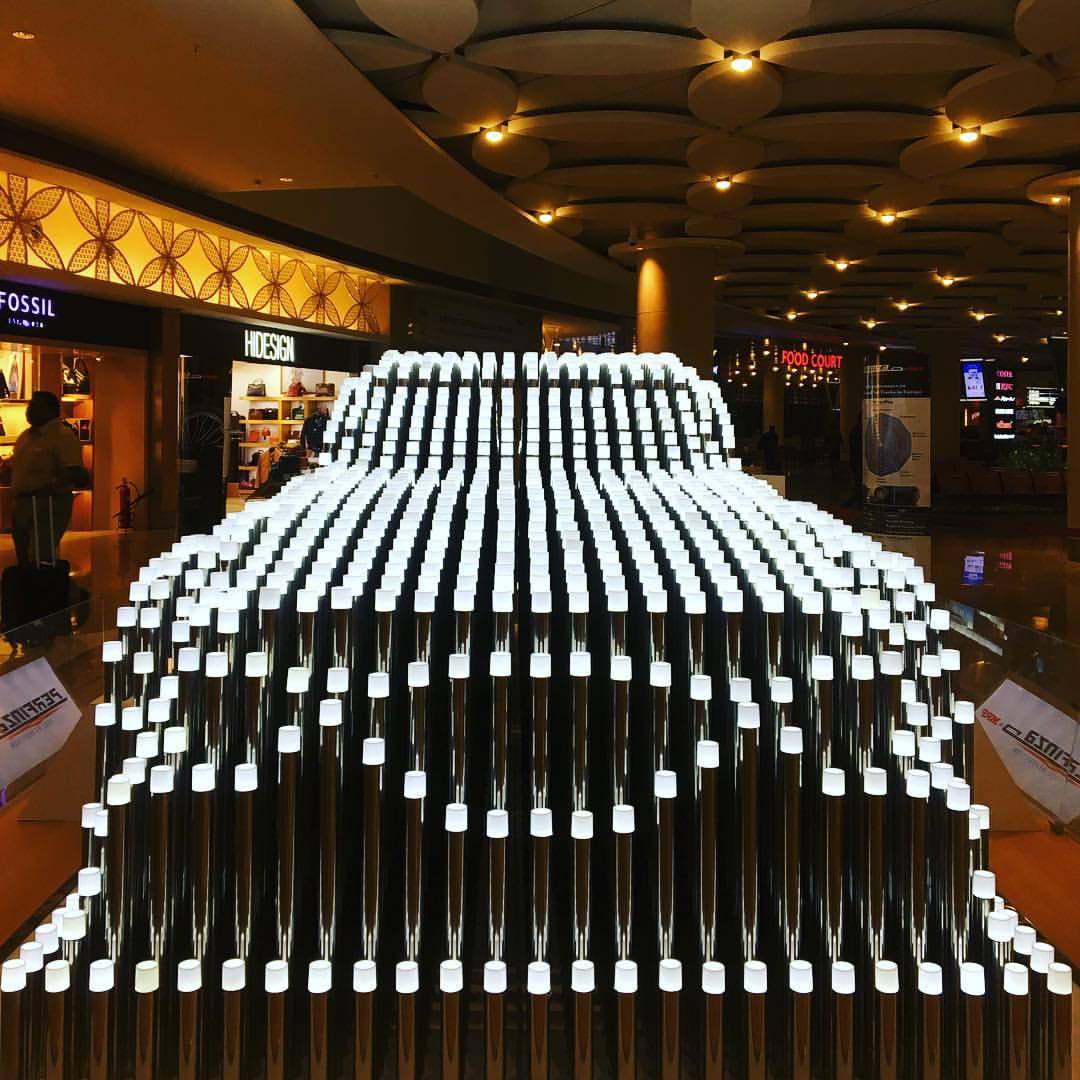
What seemed like a car was just an assortment of lights, choreographed to perfection. Orchestration rules the world now. Every movement, every detail, neatly arranged.

Amidst the glitz and precision, an old friend appears, catching me by surprise. “You haven’t changed one bit,” they say.

“I’m glad you looked,” I reply.

A moment. A hug. A smile.

Orchestration may dominate our world, but moments like these remind us there’s something it can’t choreograph—genuine connections.

And for that, I’m grateful.

(at Chatrapati Shivaji International Airport)

Big Planes, Small Planes—The Sky Sees No Difference

Same Ground, Different Journeys

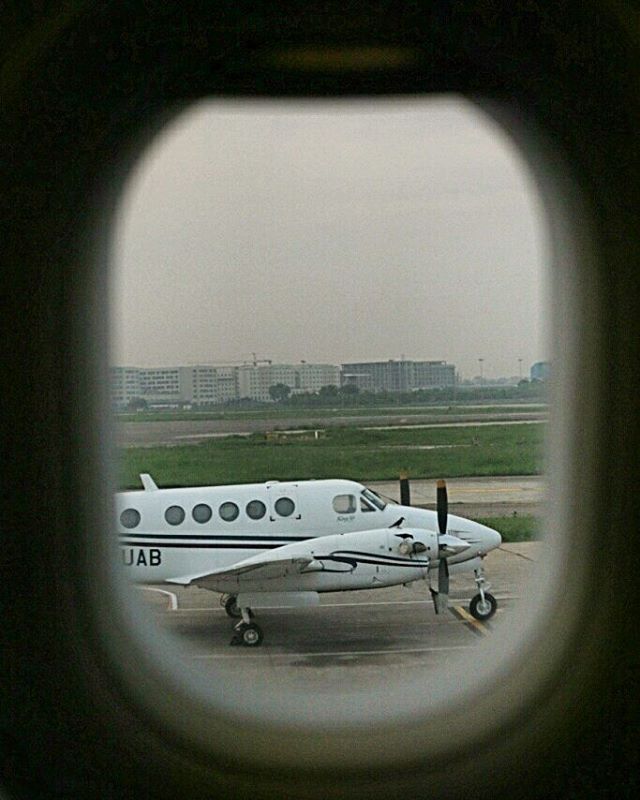
From my window, the small plane sits quietly on the tarmac. Side by side, yet worlds apart. Mine is bigger, his is smaller. And for a second, I almost dismiss it.

But then, I remind myself—size is just perspective.

This seat is mine for this journey. That plane is his. One isn’t better than the other, just different.

Because in the end, it’s not about the perch, it’s about the flight.

And once we take off, the sky doesn’t care how big the plane is.

Do You Just Land, or Do You Really Fly?

Noticing Life, Not Just Passing Through

Do you just take off and land—or do you truly fly?

Do you just pass by flowers—or have you paused to see them in full bloom?

Do you notice the things you see—and more importantly, the things you don’t?

Because in the end, it’s not about the flowers, the flight, or the view. It’s about what’s inside you. That restless, beating thing called life.

And life isn’t in the rush. It’s in the noticing.

What’s in Your Frame? A Lesson from Photography

What do you keep in the background? What do you focus on?

These are the first lessons a photographer learns. But over time, they prove just as valuable in business—and in life.

Years ago, while fumbling with my first camera, I met someone for whom the camera was an extension of his arm. He shared a simple truth:

“A good photographer learns what to include in the frame. You get better by learning to keep out EVERYTHING that doesn’t add to the picture.”

That lesson stuck. In photography. In work. In life.

Because clarity isn’t just about what you see—it’s about what you remove.

(at Isle of Wight)

No Seat? No Table? No Problem: The Power of an Open Mindset

Space isn’t about what’s available. It’s about what we believe exists.

If you think there’s space, there is.
If you think there isn’t, well, there won’t be.

What they call an abundance mindset is just that—a function of the mind. To be boundaryless in thought achieves far more than any title, hierarchy, or permission ever will.

A seat at the table? It doesn’t always require a table. Or even a seat.

Travel teaches this best. When you move, when you see people, cultures, and places, you realize—the ‘them’ and ‘us’ dissolve when the chairs are empty.

Because in the end, we are all in the same ship, traveling together.