ByteSize

What Does Success Mean?

The other day I chanced upon Kipling’s If. The kind of find that comes when you are lazily flipping through an old journal. My younger self had copied the poem there, in a steadier hand.
That poem has travelled with me across the years.

It made me pause. Again. As it always does. It made me wonder: what are my own markers for success?
Now.
How have they shifted as new conversations arrive at my shore, every day? As new books, ideas, and lived moments at work reshape me? Or have they?
I reached for a pad and pencil.

So, what is success?

Three things.

Success is to reinvent. To see the changes around us and not be afraid. To bend, to stretch, to become.
Not to chase every trend. But to stay alive, awake, in touch with the times. To move with them, yet remain yourself.

Success is to believe that better is possible. Better is not more. Not louder. Not heavier.
Better is lighter.
Cleaner.
Full of meaning. It asks for courage.
It is nourished by curiosity. And thrives on humility. Every day offers the chance to try again. To make one corner of life, work, family, self a little better than before.

Success is to give. And then give again. Not because you have plenty left over. But because giving itself makes you full. It is the circle of life made visible. To give is to know you are alive. To give is to know you are enough.

That to me, is success. Now.
Reinvention.
Belief in better.
The grace of giving.

Yours?

Not a Travelogue. A Checklist.

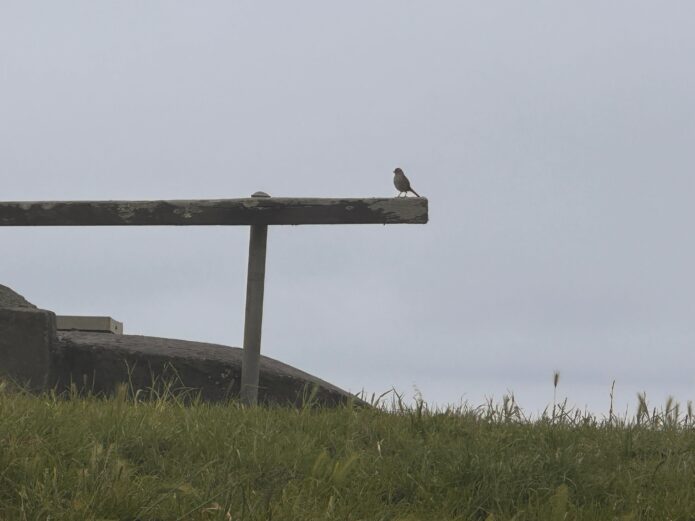
The bird sits alone on a weathered post. San Francisco breathes behind it. Fog rehearses its entrance. The Bay keeps secrets and receipts. Waves clap lightly, like polite applause. The bird doesn’t bow. It just is.

We chase bigger stages. The bird chooses a better stance. Small can be vast when attention is full. Presence is the original zoom.

What’s the moral? None, if you need a twist. Plenty, if you need a nudge. Simplicity survives weather. Patience outflies drama. Focus is free and expensive.

If you must take a selfie, include the horizon. If you must take a call, keep it short. If you must take advice, take it from the wind. Lean, then let go.

One bird. One post. One city that never agrees with itself and somehow works.

And that is enough for today.

Starting Line of Age

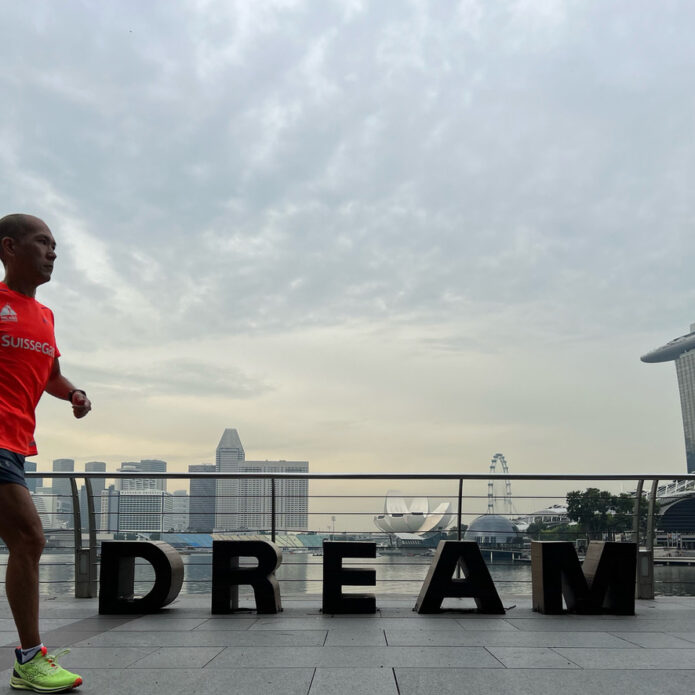
I used to run. Not like Fauja Singh, of course. But I did run. Early mornings. Dodging dogs, potholes, and the determined scooter that seemed coming my way.

These days, it’s more of a shuffle. A quiet negotiation between my feet and my pride. But every time I see a runner glide past, I pause. There’s something magical about steady feet and flying shoulders. Especially when your joints creak like old furniture.

Which is why Fauja Singh leaves me speechless.

He didn’t just run marathons. He began running them at 89. Yes, began.

Most people that age are asked to slow down. He tied his laces tighter.
And he kept going. Past 90. Past 100. Till 104.

That’s not just inspiring. That’s gently rebellious.

No fancy shoes. No watches that beep. Just a turban flapping in the wind and a belief that age was just the starting line.
He once said,

“I won’t stop running until I die. The day I stop running, take me to the crematorium.”

He ran for healing. He ran for joy.
He ran for something deeper that words can’t always catch.

To me, Fauja Singh is an anchor. A reminder that ageing isn’t about winding down. Sometimes, it’s just the warm-up lap.

And when he finally stopped? He wasn’t running. He was simply walking, in his village in Punjab, when a speeding car hit him.

The reports called it a hit and run.
Even the accident, it seems, couldn’t resist referencing his life.

He may be gone. But every shuffle forward, every second wind, every late start? That’s still his race.

Strength In Silence

There is strength in silence.
It comes from knowing. From grounding.
From the quiet confidence that doesn’t seek applause.

Silence isn’t the absence of thought—it’s the presence of depth.
It doesn’t rush to fill space.
It allows space to speak for itself.

The greater strength in silence lies beyond words.
Not just when the tongue is still—
but when the mind is calm.

When the mind doesn’t scramble to react.
When it listens, observes, absorbs.
When it allows things to be, without needing to control them.

That is the truest strength in silence—
A presence that doesn’t perform.
A stillness that holds its own.

It doesn’t retreat. It doesn’t resist.
It simply is—anchored, awake, and fully there.

Over the Moon

The moon has always been close to the heart.

It’s lit up poems, songs, movies—and many a lonely terrace. Shakespeare warned us not to swear by it. Sangam poets poured longing into it.

In Tamil, as in several other languages, the moon just doesn’t stop with setting the scenery. It’s emotion. It’s memory. And, It’s mood lighting for a thousand songs.

If you grew up with Ilaiyaraaja, you know this. He turned moonlight into music. “Ilaya Nila” played like a breeze across the night. “Nilaave Vaa” was a heartfelt invitation. They weren’t just songs. They were midnight conversations with the sky.

And years later, A.R. Rahman joined the moonlight symphony with “Vennilave Vennilave” (“Chanda Re” in Hindi), where Kajol and Prabhu Deva danced under its glow. The moon became a stellar witness to yearning—even as it received an invitation to descend, play, and promised a safe send-off.

They weren’t just songs. They were midnight conversations with the sky.

Back then, the moon stored everything. First loves. Break-ups. Dreams we were too shy to share.

And now?

The moon has upgraded to the cloud. Literally.

From Music to Metadata

A company called Lonestar Data Holdings is sending tiny data centres to the moon. Why? Because it’s cold out there. Minus 173°C cold. Perfect for keeping servers cool. And thanks to uninterrupted sunlight, solar power works like a dream.

Engineers are doing what poets did—staring at the moon. But instead of sonnets, they’re uploading files.

There’s something deliciously ironic about it all. For centuries, poets looked up at the moon for inspiration. Now, engineers are looking at the dark side of the moon for server racks. Somewhere, a bard is sighing while a CIO is smiling.

Even better? These moon-based data centres are being designed to withstand radiation, dust storms, and the general grumpiness of outer space. No mood swings here. The dark side of the moon may be inconstant in poetry, but it’s becoming pretty dependable in IT infrastructure.

Once a metaphor for mystery and madness, now a hub for metadata. The moon used to hold lyrics and longing. Now, it might hold your cloud backup.

And a few moons from now, if someone asks where your data is—well, irrespective of how bright the data is, it could well be on the dark side of the moon.

The Slippery Surface of Envy

“To understand others, watch what they reward.

To understand yourself, watch what you envy.”

I read that and sat quietly with it for sometime.

The latter part just made me pause. “To understand yourself, watch what you envy”. Envy is slippery surface.

To notice envy. Not just the fleeting kind—someone’s holiday photos or a shiny new car—but the deeper twinges. The ones that linger.

Perhaps it isn’t just about wanting what they have. Perhaps it’s about something unspoken. Freedom?

Recognition?

A sense of ease?

Sitting with it, even briefly, might help. Naming it, writing it down, noticing when it shows up. Over time, a pattern might emerge. A quiet revelation of what truly matters to you.

And once you see it, you have a choice.

To chase it.

To redefine it.

Or to let it go.

Note To Self. 🙂

The Spotlight and the Stage: Who Really Makes It Work?

The trouble begins when we assume that being visible is the same as being valuable. But life, like a well-run play, needs both the stage and the backstage, both the voice and the silence.

Some roles demand the mic. Others work the lights. Some take the step forward. Others make sure there is a step to take.

The best teams don’t just celebrate the stars. They celebrate the system. Because in the end, what matters is not who stands where—but whether the whole thing stands strong.

Hyderabad: More Than Just a City

Hyderabad doesn’t try too hard. Old and new exist without fuss. Charminar and Cyber Towers. Bazaars and glass buildings.

People are warm, witty, and fluent in many worlds. A chai can spark an hour-long debate—about the past, the present, the US, or Tirupati.

The food? Yes, the biryani is legendary. But also kebabs, the softest osmania biscuits, and some delightfully spicy vegetarian preparations.

The city stays clean. Surprises with green spaces. KBR Park for morning walks. Durgam Cheruvu for sunsets.

There is history in its bones and tech in its DNA.

Hyderabad is where opposites don’t just coexist—they complete each other. It doesn’t force harmony. It just moves, breathes, and thrives. A quiet example for the rest. Not just as a city to live in, but as a way to live.

Trust, Scars, and Stormy Places

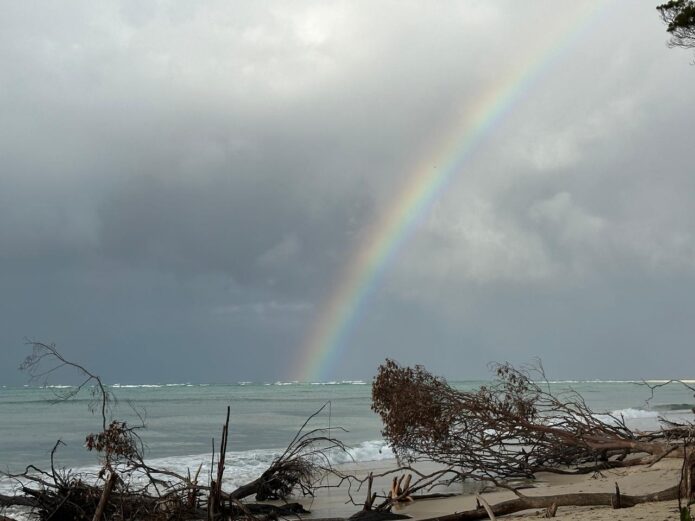
I have seen flowers come in stormy places
And kind things done by men with ugly faces,
And the gold cup win by the worst horse at the races
So I trust, too.
John Masefield.

Life is messy, unpredictable, and occasionally brilliant. Stormy places can grow flowers. Horses you’d bet against can take home the gold. The world isn’t always what it seems, and that’s precisely why it’s worth sticking around.

How you see it, though, depends a lot on where you stand. The lenses you wear—shaped by your past, your scars, and your hopes—colour everything. Storms might look like chaos to one person and necessary rain to another. The trick isn’t to pretend you’re lens-free but to recognise the tint. To pause and ask, “Is this how things are, or just how I see them?”

And then, there’s trust. Not the kind you offer blindly, but the kind you live with—a quiet understanding that life, for all its storms, has a way of working things out. Trust is sitting with uncertainty, even when it’s uncomfortable. It’s knowing that flowers can grow through cracks and that a “no-hope” horse might just surprise you.

Hope isn’t naïve. It’s stubborn. It keeps you showing up, even when the odds don’t look great. It reminds you that the scars you carry aren’t just wounds—they’re proof you’ve lived through storms before.

That’s my note to myself. For today.

Stay alive to the oddities.

Be present to what’s in front of you, even if it doesn’t fit your map.

Trust that the story is unfolding as it should.

And keep an eye out for flowers. They show up in the strangest places.

Republic Day: What’s in a Republic?

The word republic comes from Latin—res publica, meaning “public affair.” A system where the power belongs to the people. Sounds grand, doesn’t it?

America kicked off the modern republic idea with its Constitution in 1787. But here’s a thought: a republic isn’t a gift. It’s like a group project. And the grade depends on everyone showing up.

What does it mean to belong to a republic? Is it about flags and songs once a year? Or is it about the everyday stuff—doing my bit, following rules, enduring the messy compromises that make things better for all? ALL.

It’s time to talk about it. To ask what we owe this public affair. Because a republic works only when the public does.

What do you think?