Learning & Change

When AI Fires Everyone, Who’s Left to Buy Anything?

Vikram Singh doesn’t walk very fast. He talks fast. Thinks faster. And somewhere between the first and second kilometre, he says something that stops you in your tracks.

We were thirty minutes into our morning walk when he did exactly that. “Here’s what nobody is explaining properly,” he said. “If AI fires everyone, who buys the stuff?”

Seven words. The entire anxiety of 2026 in one sentence.

I’ve since read the economics. A paper by Falk and Tsoukalas at Penn and Boston University builds a formal model around exactly this question. They call it a demand externality. I’ll spare you the equations. Vikram said it better on a footpath in seven words.

The town that ate itself

Think of a small town. One factory, one high street, a few hundred families. The factory owner replaces half his workers with machines. His costs fall. His profits rise. Perfectly rational.

But those fired workers used to buy groceries. Eat at the corner restaurant. Buy their children’s shoes on the main street. One by one, those businesses feel it. Eventually the factory owner notices his own sales falling. His customers — it turns out — were his workers.

He could see this coming. He automated anyway. Because the factory on the other side of town was doing the same thing. If he waited, he’d be undercut and out of business before his competitor felt any pain.

Every firm is rational. Every firm can see the damage. Every firm automates anyway. Because the alternative is dying first.

That’s the trap. A Prisoner’s Dilemma at civilisational scale.

What the economists tried and failed

The paper works through every solution you’d reach for.

Retrain the workers. Helpful, but doesn’t change what firms do. Give workers company shares. Same problem, different pockets. Pay everyone a basic income. Puts money back in circulation but doesn’t stop the automation race. Ask companies to voluntarily slow down. Collapses immediately. Any firm that cheats gains an instant advantage, so everyone cheats.

The only thing that actually works, they argue, is a direct tax on each automated task. It forces firms to pay the full cost of the damage they cause and not just their small slice of it. A Pigouvian tax. Named after Arthur Pigou, a Cambridge economist who devoted his life to one question: what happens when your gain is everyone else’s problem?

Here’s how it works in plain English. When a firm fires a worker and replaces them with a machine, that worker stops spending money. Every other business suffers a little. But the firm that did the firing only feels a fraction of that pain. It kept all the savings. Everyone else shared the damage. The tax reverses that. You automate, you pay the real bill. Suddenly it’s not such an easy call. Nobody is banning robots. But you can’t quietly hand your costs to everyone else anymore.

The only remaining problem is convincing politicians to do it. And politicians, as a rule, are not famous for making brave decisions about things that haven’t quite gone wrong yet.

Where Keynes got it half right

In 1930, deep in the Great Depression, Keynes wrote an essay imagining life a hundred years ahead. By 2030, he said, technology would be so productive that we’d only need to work fifteen hours a week. The rest would be culture, leisure, living well. His worry — genuinely — was boredom. That we wouldn’t know what to do with all the free time.

He saw the same force at work. Technology replacing human labour. He just assumed the gains would spread evenly. That if machines did the work, everyone would share in the abundance.

He didn’t account for the factory on the other side of town.

Falk and Tsoukalas show what actually happens when AI fires everyone: the dishwasher gets bought, the person it replaced gets let go, and the restaurant slowly runs out of customers who can afford to eat there. Keynes imagined we’d all get to stop doing the dishes. The productivity was real. The distribution wasn’t automatic. And a hundred years on, we’re not working fifteen hours a week. We’re working like maniacs.

The leisure never arrived. Neither did the crisis. We’ve been living inside that tension without quite noticing it.

All good ideas come on walks

A critic named McEntire has since checked every line of the Falk-Tsoukalas paper. The maths holds. But he showed that the conclusions depend on specific assumptions. Change a few reasonable numbers and the catastrophe shrinks or disappears. The trap is real. How bad it gets depends on how the world actually works and economists still disagree about that.

So we don’t know how bad it gets. We know the mechanism exists. We know it’s already running.

Vikram spotted all of this in seven words on a morning walk.

Good ideas come on walks because walking has no agenda. You’re not performing. You’re not concluding. You’re just moving, thinking, and occasionally stopping mid-stride because something has become clear.

I need to keep walking with him.

The Airport That Never Loses Your Bag

My life fits inside a suitcase. Literally.

My life, for better or worse, has been organised around a single suitcase. The suitcase and I have logged more miles together than I have with most people I know. It does not complain. It does not have opinions about the hotel. It simply arrives. Usually.

Sometimes, though, it waits in the wrong place. I have landed in San Francisco while my bag sat in Singapore. I have cleared immigration in Brisbane while my suitcase was still somewhere over the Indian Ocean, presumably enjoying the flight more than I did. Each time, there is that particular sinking feeling at the carousel. The belt moves. Other people’s bags appear. Yours does not.

It is harrowing in a way that is hard to explain to someone who hasn’t lived out of one bag for months at a time.

The rabbit hole

On one of those occasions, bag delayed, gate agent apologetic as the process warrants, scrolling through something on her device. A smile played at the corner of her lip. It was not about my suitcase. A lost bag offers very little to smile about. Although, who knows.

I found myself in the airport coffee shop with nothing to do but wait and drink. The coffee was doing its job. And then the data I was reading did something coffee rarely manages. It made me sit up straight.

Kansai International Airport opened in 1994 on an artificial island in Osaka Bay. Since that first day, it has not lost a single piece of luggage. Not one. It handles around 10 million bags a year. It has won the global award for best baggage delivery eight times.

In the United States, domestic flights lose 3 million bags every year.

I read that sitting at a gate, waiting for my bag to arrive on the next flight, and felt something between admiration and mild despair.

The man at the carousel

A few weeks ago, at Terminal 3 in Delhi, I watched a ground handler doing something I had never seen before. As bags landed on the carousel, he straightened them. Turned them. Arranged them so the handles faced outward.

Someone had clearly told him to do this. A new manager, perhaps. Or someone keen to get a good rating. Or both, which is usually how these things happen. My sceptical mind went there immediately. Because I had not seen this before at Delhi. Or maybe I had, and the carousel anxiety had made me look only at the bags.

Bangalore’s Terminal 2 has been doing something similar. The handles face outward there as well. The bags arrive with a certain quiet orderliness that feels deliberate.

Mumbai is a different story. At Mumbai, the correct posture is gratitude. If your bag appears at all, and within the same hour as you, the appropriate response is quiet thanksgiving. The handle direction is not the concern. Arrival is the miracle.

And yet, Delhi and Bangalore matter. The detail lands, regardless of what drove it. Someone, somewhere up the chain, looked at a carousel and thought: this could be better.

It stayed with me. And then Osaka made sense. Because Osaka had been doing the same thing, at every carousel, since 1994. Except nobody told them to. They just decided it mattered.

What they actually do

Kansai’s secret, when you finally prise it out of them, turns out to be deeply unsatisfying. Small teams. Manual counts. A rule that if the number of bags unloaded doesn’t match the number loaded, you stop everything and look. The bag reaches the carousel within 15 minutes. The handle faces outward.

That is it. No algorithm. No proprietary system. Just people who count bags twice and arrange handles and apparently find this entirely normal.

I went deeper into the rabbit hole looking for the dramatic reveal. An airport official told NPR that the record was “the result of the daily efforts and careful work of everyone involved.” Then added, with a courtesy that itself felt Japanese: “We apologise if this would be not a specific answer.”

It was not. It was also completely honest.

Another official, speaking to CNN, was even more deflating. “We don’t feel like we have been doing something special,” he said. “We have been working as we normally do.”

Thirty years. Zero bags lost. Business as usual.

What actually drives it

Tsuyoshi Habuta has run baggage operations at Kansai for 17 years. His explanation makes the spokesperson look verbose. Luggage is precious to passengers, he says. So it should not go missing.

That is the whole argument. Seventeen years. Ten million bags a year. Thirty years of an unbroken record. And the philosophy fits in one sentence.

He is not chasing a bonus. He is not hitting a KPI. He has decided, at some point that probably passed without ceremony, that a stranger’s suitcase deserves to arrive. That quiet decision, renewed every morning, is what the record is actually made of.

The Japanese have a word for this. Omotenashi. It translates as wholehearted hospitality, but the translation loses the edges. What it really means is that you attend to what the other person needs, whether they are watching or not. Especially when they are not watching.

The gap that cannot be downloaded

A process can be copied. A checklist can be shared. But the thing that makes Habuta count bags at 4am with the same attention as the first day, thirty years in, with nobody watching and no applause coming, that cannot be transferred in a training manual. It has to be believed.

Most airports move bags. Kansai returns them.

The difference is entirely in what the people there think they are doing when they show up.

The Hall of Fame and the Forgotten Graveyard

I once spent twenty minutes in an airport bookshop reading the back covers of business books. Every single one promised to reveal the secrets of wildly successful people. Not one mentioned anyone who had tried the same things and gone quietly bankrupt. I eventually bought a sandwich instead, which felt like the more honest transaction.

This is survivorship bias. We study the winners and conclude they must have done something right. We rarely consider that they also did several things wrong, and happened to be standing in the right place when the market turned.

The Hall of Fame Has Excellent Lighting

Jawbone raised over $900 million, reached a $3.2 billion valuation, and made exactly the same fitness tracker as Fitbit, with roughly the same technology, at roughly the same time. Fitbit got the headlines. Jawbone got liquidation proceedings. The post-mortems ran to thousands of words asking what Jawbone did wrong. Fewer asked the more interesting question: what, precisely, did Fitbit do right that equally well-funded competitors could not replicate?

Then there is Quibi. Jeffrey Katzenberg, co-founder of DreamWorks. Meg Whitman, former CEO of eBay and HP. Between them, more industry experience than most studios accumulate in a decade. They raised $1.75 billion, signed Spielberg and half of Hollywood, and launched a mobile streaming platform in April 2020.

By December it was gone. Roku bought the content library for less than $100 million. The post-mortems blamed the pandemic and the format. What they did not say is that the people who built Netflix made many of the same bets and simply got different answers from the market.

The Hero With Gaping Holes

In boardrooms and business schools, senior leaders take the names of their role models and vow to emulate them. Musk. Bezos. Jobs. The impulse is understandable. The effort these people put in was real. What they built was real. The gaping hole is in the story told about how they did it.

The heroic individual narrative has never quite held up. A Yale historian told MIT Technology Review that major innovation has never been driven by a lone inventor relying only on imagination and drive. The tech industry has spent twenty years building a mythology that says otherwise.

Behind every celebrated founder is a tide of timing, capital, inherited infrastructure, and the uncelebrated labour of thousands of people whose names appear nowhere in the book. Musk did not single-handedly build Tesla’s supply chain or SpaceX’s engineering teams. Jobs returned to a company that had not, in fact, been destroyed in his absence. Bezos built Amazon during an era of essentially free capital and minimal regulatory scrutiny. Call it context. The survivorship story strips it away entirely.

Admiration is fine. The lesson drawn from it is where things go wrong. When we reduce success to individual genius and grit, we tell every aspiring founder that the gap between them and Bezos is mostly effort. It is effort, and timing, and market conditions, and a dozen decisions that could have gone either way.

What to Do with a Biased Sample

Hard work matters. So does timing, and capital, and market conditions that nobody controls. The honest version of the success formula acknowledges all of them, which is a far less inspiring sentence and therefore rarely appears on motivational posters.

When a clean success story lands in front of you, run it through three questions before you absorb the lesson. What worked? What got lucky? What would have killed this if one variable had shifted? Applied to someone else’s wins, this is a corrective. Applied to your own, it is more instructive than any story you are about to tell yourself.

The second move is calibration. Study the conditions that made the winner possible, not just the winner. Musk is more useful as a case study in what a particular moment made possible than as a template for what you should do next. Ask what your moment makes possible.

The third is surface area. Since you cannot replicate someone else’s timing or context, the question becomes: how do you increase your exposure to the conditions you actually face, and the ones coming? Stay solvent. Make more bets. Show up in more rooms. The winners rarely knew which move would pay off. They made enough of them.

The graveyard is large and poorly lit. Most of its residents were talented, ambitious, and completely convinced they were on the right track. The hall of fame deserves its residents. It simply does not deserve to be the only story we tell.

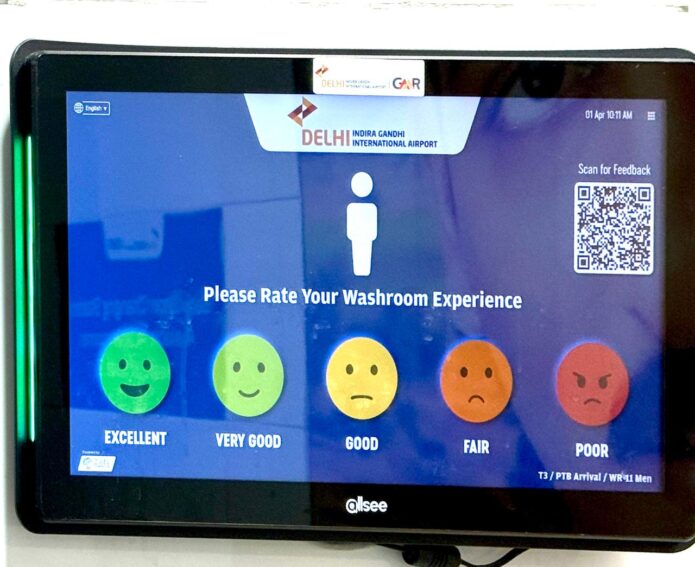
Rated, Surveyed, and Slightly Broken

The Uber driver had barely pulled up before I was out the door. He was a pleasant enough man. No sudden swerves, no unsolicited opinions on the economy. A perfectly decent journey by any reasonable measure. And then his phone dinged.

“Please,” he said, holding it out like a collection plate, “if you could rate the ride.”

I gave him a four. Felt guilty immediately. Still not sure why.

That was nine in the morning. By lunchtime I had been surveyed by a coffee shop, a car park, my doctor’s receptionist, and a sandwich chain that wanted to know, on a scale of one to five, how the bread had made me feel. Not the sandwich. The bread. Specifically.

The Problem with Three

You know the drill. A question appears on your screen, or on a clipboard, or on the little touchpad by the exit. How satisfied were you? Strongly agree. Agree. Neither agree nor disagree. Disagree. Strongly disagree. Or sometimes just numbers. One to five. One to seven, if the researcher is feeling ambitious.

It is everywhere. Clinic waiting rooms, parking apps, hotel pillows, highway petrol station toilets. No experience, however brief or involuntary, is apparently complete without a structured response.

The honest answer to most of these is three. Three is not satisfied. Three is not disappointed. Three is “I have already moved on and cannot believe you are asking me this.” But three, on a satisfaction survey, is treated as a catastrophe. Someone in an office will look at the three and wonder where it all went wrong.

It went wrong when you asked.

The Numbers Go Up, the Meaning Goes Down

Somewhere along the way, five points stopped being enough. The Uber driver now hands you a quiet instruction as you step out: please give me a five. The “please” is doing a lot of work there. It is not really a please. It is a five with good manners.

The car service centre called back after I gave them a four. The mechanic himself, not a bot. “What did I do wrong, sir? I have kids to feed.” A pause long enough to be intentional. Then the manager. “We have people here with home loans,” he said. “Please choose your rating carefully.”

He had, somewhere in his desk drawer, a full load of guilt arrows. He knew exactly where to aim them.

I did not change my four. But I thought about it. Which is, I suspect, the point.

The system has a name, as it happens. The psychologist Rensis Likert invented this style of rating scale in 1932, as a precise research tool for measuring human attitudes. It is, in its original form, a perfectly sensible idea. What Rensis did not foresee is that ninety years later his invention would be repurposed to measure how one feels about a cancelled clinic appointment, a self-service checkout, and, apparently, bread.

Even the Feelings Have a Score

It has crept into places you would not expect. Leadership coaching, strategy facilitation and the like. I have sat in rooms where a facilitator asks, with complete sincerity, “On a scale of one to five, how effectively did you lead that conversation?” The leader thinks. Nods. Says “three point five.” Everyone writes it down. It is the same impulse I wrote about in The Checklist Trap — complexity reduced to something that fits on a form.

There is a fantastic organisation I work with that opens every meeting with a check-in. Each person announces their mood on a scale of one to five, and explains why. It is, genuinely, a good practice. You learn things. A quiet two from someone who is usually a four tells you more than ten minutes of status updates. I am part of it. I have given my twos and my fours. I have meant them.

But something nags. A mood is not a number. It is a weather system. It has history and pressure fronts and the memory of last Tuesday. Squeezing it to a five-point scale makes it legible. It also makes it smaller than it is.

That is the thing about the scale. It is useful the way a map is useful. Accurate enough to navigate. Not quite the same as being there.

So Much for a Number

A number is a pointer. It gestures at something. It says: roughly here, roughly this much, roughly this warm. The moment the number becomes the goal, something quietly breaks. The car service centre is no longer trying to fix cars well. It is trying to harvest fives. The coffee shop is not trying to make good coffee. It is managing its rating. The mechanic with the kids and the manager with the home loans are not asking how they did. They are negotiating a score.

Goodhart’s Law, if you want the formal version: when a measure becomes a target, it ceases to be a good measure. The number stops pointing at the thing. It becomes the thing. And the thing, quietly, disappears. I have written about this tendency before, in a different context, in Benchmark Against What, Exactly?

I got home that evening having logged opinions on no fewer than eleven separate experiences. The dry cleaner. The parking app. The supermarket billing counter, which had the audacity to ask whether I would recommend it to a friend.

I was still processing this when my daughter appeared in the doorway.

“Appa,” she said, with the casual cruelty available only to children, “on a scale of one to five, how was your day?”

I stared at her for a long moment.

“Two,” I said.

She nodded and walked away. Unsurprised. In this house, two is practically optimistic.

Somewhere out there, a dashboard updated. A bar shifted. And in the morning, I will receive a follow-up email asking if there is anything they could have done better.

I will give it a three. Seems about right.

Inspired by Deborah Thompson’s essay on the Likert scale, published in The Offing, July 2024.

Benchmark Against What, Exactly?

I was reading a piece in The Economist on span of control — how many direct reports a manager should have. It’s a question, the piece notes, that has been generating confident answers for over a century. The confidence, it turns out, has always outrun the evidence.

Management thinking has always had a weakness for false precision. Clean numbers that dissolve the messiness of actual organisations into something you can defend in a meeting.

Henri Fayol, a 19th-century mining engineer turned management thinker, said fewer than six. Someone later decided seven, plus or minus two — borrowed, apparently, from entirely unrelated research into short-term memory. The number keeps shifting. The confidence never does.

I’ve watched this play out up close. A boss arrived into a new role — new to the organisation, new to the context, new to most of the people — and within weeks announced a benchmarking exercise. We were going to measure our span of control against industry peers.

Benchmark against what context, exactly? Our work was modular in places and deeply interdependent in others. Our strongest people ran themselves. The culture was built around autonomy.

The conversation ended the way those conversations tend to end.

We did the exercise. A number came back. A deck was made. A recommendation was presented. The org shifted toward a shape that made sense on a slide and considerably less sense in practice.

There’s a name for this

DiMaggio and Powell called it mimetic isomorphism — the tendency of organisations, when facing uncertainty, to copy what others are doing. Not because the evidence says it works. Because sameness feels safe.

A number gets borrowed, dressed in the language of best practice, and presented as analysis. Nobody has to defend the reasoning, because the reasoning is: everyone else is doing it. It is not a performance decision. It is a legitimacy move. The benchmark is not there to find the right answer. It is there to make the decision defensible.

I didn’t know any of this at the time. I just knew we were solving for the wrong thing. My boss was new, the pressure to demonstrate early competence was real, and a benchmarking exercise is a visible, structured, credible-looking thing to do.

I understand that now in a way I didn’t then. The impulse wasn’t laziness or bad faith. It was a very human response to an uncomfortable situation. Mimicry as a coping mechanism. The research just gives it a name.

The variables that actually determine a good span of control — the nature of the work, the capability of the people, the texture of the culture — aren’t complications to be set aside. They are the answer. There is no number underneath them waiting to be uncovered.

A number without that context isn’t a standard. It’s a placeholder for thinking that hasn’t happened yet.

_____________________________________________________________

If this resonated, you might find The Checklist Trap worth a read — on how management thinking packages complexity into something that fits on a slide.

Every Country Is Adopting AI. Very Few Are Asking What Kind.

Every great leap forward casts a shadow. We just rarely look at it.

History has a pattern. The printing press gave us the Reformation and the pamphlet. It also gave us the propaganda leaflet. The compass opened up trade routes and the age of discovery. It also opened up the age of colonisation. Gunpowder lit up fireworks and festivities. And battlefields. Transformative technologies always carry a shadow story, a disruption running quietly beneath the triumphant narrative. The people living through the transformation rarely see it. They are too busy celebrating the light.

We are, right now, in the middle of one such transformation.

Artificial Intelligence is having its summit moment. The India AI Impact Summit 2026 in New Delhi brought together the luminaries, the announcements, the investments in data centres and cloud infrastructure, the excitement of a country positioning itself as a global hub. All of it warranted. All of it real.

And running quietly alongside it — almost in the shadow of it — was a different kind of conversation.

In January 2026, a closed-door strategic dialogue was convened at the India International Centre in New Delhi. NatStrat, in partnership with Strategic Foresight Group and Founding Fuel, brought together voices from national security, science, policy and academia. Not to celebrate AI. To interrogate it.

The dialogue produced a special policy report — India’s AI Gambit: Navigating the Global Race — and a rich public record in video and writing. Founding Fuel has curated the most consequential ideas from this conversation in two pieces worth reading carefully: India’s AI Gambit: The Choices That Will Define Power and India’s AI Moment by Ambassador Pankaj Saran.

The shadow, it turns out, tells quite a bit about what is coming.

The Arguments Worth Sitting With

The central provocation from this dialogue is deceptively simple: every country is adopting AI, but very few are asking what kind of AI power they want to become.

Most of the public conversation — including most of what you will hear at summits — concentrates on the consumption side. AI for productivity. AI for inclusion. AI for efficiency. 

These are real and important. And they are not the whole story.

Ambassador Pankaj Saran, former Deputy National Security Adviser and Convenor of NatStrat, writes in India’s AI Moment: “In both the United States and China, the centre of gravity in artificial intelligence is moving beyond consumer-facing applications and productivity tools. Increasing emphasis is being placed on advanced AI systems designed to accelerate scientific discovery and strengthen national security.”

The US has its Genesis Mission, coordinated by the Department of Energy, using AI for discovery science with national security implications. China, through the Chinese Academy of Sciences and related institutions, is pursuing the same territory — science and security, tightly integrated. The race is not just about who has the better chatbot. It is about who rewrites the rules of biology, chemistry and strategic power.

Sundeep Waslekar, President of Strategic Foresight Group, put it plainly at the dialogue: “The US and China are building AI for scientific discovery — new rules in biology and chemistry. They fear falling behind in science. We think we are doing fine.”

That last sentence carries some weight. The assumption that we are doing fine, while others are asking harder questions, is precisely the kind of complacency that history tends to punish slowly and then all at once.

Why These Voices Matter

Here is what I want you to notice about the people in this conversation.

They are not selling anything. They are not vendors of technology with a price attached. They are not optimising for applause at a summit.

Alok Joshi, Chairman of the National Security Advisory Board, spoke about building “assurance systems” and the balance between sovereignty and trusted outreach in diplomacy. Air Marshal S. P. Dharkar (Retd.), former Vice Chief of the Air Staff, articulated the governance tension plainly: “Centralised control. Decentralised execution. Without coherence, we fragment. Without flexibility, we slow down.”

Dr. V. K. Saraswat, Member of NITI Aayog and former Director General of DRDO, noted: “Strategic autonomy does not mean isolation. AI thrives on collaboration. The challenge is balancing openness with control.”

These are people whose professional lives have been spent thinking about consequences — national, institutional, long-term. The kind of thinking that is rarely represented in the summit stage lineup, and almost never in the LinkedIn posts celebrating AI’s potential.

When people like this sit in a room and say we need to think more carefully, it is worth slowing down and listening.

The Scenarios Ahead

What happens if we do not ask these questions? A few possibilities, none of them dramatic, all of them consequential.

The first is the talent and capability gap. If the world’s leading nations are deploying AI for scientific discovery — new materials, new drugs, new energy sources — and we are primarily deploying it for productivity and use cases, the gap between AI-as-tool and AI-as-power widens. 

We become very good consumers of a future that others are building.

The second is the governance vacuum. AI is interdisciplinary, as Dr. Preeti Banzal of the Principal Scientific Adviser’s office noted at the dialogue. One rule cannot govern all of it. Sectoral regulators need to adapt, coordinated through a whole-of-government approach. Without this, the default is fragmentation — or worse, governance that arrives after the disruption rather than before it.

The third is the sovereignty question. Advanced AI systems have already demonstrated the ability to generate hazardous knowledge in chemistry and biology, to interact with critical decision-support systems, to reshape cyber resilience. As Ambassador Saran writes, “questions of control, accountability and unintended escalation become increasingly salient.” These are not alarmist scenarios. They are the sober assessments of people with clearances and consequences.

The disruption of lives that AI will bring is as certain as its benefits. The printing press did not ask permission before upending the church’s monopoly on knowledge. Gunpowder did not pause for governance frameworks. The question is not whether disruption will come. It is whether we will have thought about it before or after.

What You Can Do

If you are reading this as a professional, a leader, a curious person trying to make sense of the moment — here is what I think is worth your attention.

Read the primary sources. Not the summaries. Not the LinkedIn posts. Read the Founding Fuel pieces. Watch the full dialogue on YouTube. The policy report by Strategic Foresight Group is available as a PDF. These are not long. They are dense with things worth thinking about.

Ask the shadow question. Every time you encounter an AI claim — a product, a policy, a prediction — ask: what is this not saying? Who benefits? What gets disrupted? What governance is missing? This is not cynicism. It is literacy.

Count the costs alongside the benefits. The printing press, the compass, gunpowder — we inherited the full story, shadow and all. We are in the middle of writing this one. The people who shaped the earlier transformations were not the ones who celebrated the loudest. They were the ones who thought the hardest.

The AI summit had its lights. Bright and real and warranted.

The shadow conversation happened quietly, in a room at the India International Centre, with people who spend their lives thinking about what comes next.

Both deserve your attention.

The shadow, especially.


If this resonated, you might enjoy A Small Defence Of Thinking — on why slowing down to think is its own kind of courage.

Spilled Water, Sharp Wit, and a Lesson in Leadership

It was a long oak table. The kind around which serious men in serious suits talked serious strategy.

The Managing Director was about to make a big presentation. Papers needed to be passed around.
Years ago, as a junior manager, I’d been entrusted with setting it all up. I grabbed the opportunity with both hands. Possibly legs too.

I had worked closely with the CEO. Learnt a ton. And put it all together like my life depended on it. Because, frankly, it felt like it did.

People filed in. The room filled up. And just as the meeting was about to begin, Murphy showed up. My elbow hit a glass of water. It emptied itself on the neat sheaf of the CEO’s printed presentation. Numbers, projections, strategy, all now soaking in regret.

Right then, the CEO walked in. I froze. So did time.

He looked at the mess, smiled, picked up the damp stack, and said:Well, here’s a watered-down version of next year’s strategy.”

The room erupted. The tension vanished. The meeting was sharp, alive, and unexpectedly joyful.

And I learnt something I’ve never forgotten: The best leaders don’t just stay calm in a crisis. They know when to crack a joke.

These days, humour has become something else. It’s often loud. Crass. Sharp-edged. Reduced to personal attacks, one-upmanship, and clever jabs. It’s lampooning more than laughing. And it leaves no room for dignity. Only applause or offence.

Which is a pity. Because true humour of the quiet kind, the kind with timing and taste, adds a certain sophistication to everyday life.

It disarms. It connects. It shows perspective. It’s not about who can say the most outrageous thing as much as it about holding the moment lightly, without letting it slip.

Stanford thinks so too

At Stanford’s Graduate School of Business, Professors Jennifer Aaker and Naomi Bagdonas teach a popular course called Humour: Serious Business. Their research is clear: humour is an underrated superpower in leadership.

Used well, it boosts trust, increases engagement, and makes communication stick. More interestingly, humour makes leaders appear more competent, not less.

Because being able to laugh — and more importantly, to make others laugh, signals something powerful: you’re comfortable. You’re present. You’re not afraid of the room.

And the very best leaders? They don’t just use humour. They can take a joke too. Without flinching. Without getting defensive. Often, with a smile and a comeback that lifts the moment rather than hijacks it.

Humour is the glue

There’s a Japanese art form called kintsugi. It involves repairing broken pottery using gold. The cracks are not hidden. They’re highlighted. Because the break is part of the story. And the gold, quite literally, holds it all together.

I think humour plays a similar role in leadership. When things crack, as they often do, humour is the gold we can pour into the situation.

It doesn’t erase the problem. But it holds the room together, highlights resilience, and reminds everyone that we can move forward. With perspective.

The best part? Once you’ve laughed with someone, it’s much harder to stay divided.

So how do you cultivate this?

Start by observing. Noticing moments of lightness or the ones begging for it. I once worked with a manager who was famous for his campus presentations. He would rehearse meticulously, plan every slide and then grin and say,

“In the fifth minute, I’ll crack a spontaneous joke.”

Yes. Spontaneous, by appointment. And strangely, it worked. The room laughed. Every time. For some people, humour is a performance. 

But for the truly great ones, it’s a practice. It comes from noticing. From being present. From taking small risks. And yes, from being open to taking it on the chin when it doesn’t land.

The next time you’re in a heavy meeting, watch what lifts the room. It’s rarely slide 47. It’s often a well-timed comment. A look. A line. Something small but true.

Read people who write with wit. Hang around people who laugh easily, not just loudly. And most importantly, practise on yourself. Learn to take a joke. Especially about yourself. That’s the real test. And the best training ground.

The Closing Line

This is not a call to turn every meeting into a stand-up set. At best, It’s a quiet reminder that in ‘serious’ rooms , a well-timed laugh can change everything.

It humanises the moment.

Because humour, when done right, doesn’t just break the ice. It becomes the gold that mends the cracks. The pause that helps the room breathe. The tiny spark that reminds us: we’re all in this together. Elbow, water spills and all.

And maybe, just maybe, the best way to hold the room, is to let it laugh.

The Hidden Costs of WiFi (and Other Stories of Progress)

I visited Keezhadi recently—a quiet village near Madurai, where the ground is giving up secrets that are 2,600 years old. Brick houses, water systems, writing on pottery… all part of a once-thriving civilisation during the Sangam period.

They had trade routes, poetry, tools, and systems. They crossed seas without GPS. Built cities without cement trucks. Passed down knowledge without cloud backups.

It made me wonder—how much have we really gained through “progress”? And what have we lost along the way?

Phones gave us connection on tap. But they took away long, meandering conversations. The kind where you talked just because you had nothing else to do.

Google Maps made life easier. But it also took away the chance encounters—the awkward, hilarious, occasionally helpful conversations with strangers while hunting for that elusive street corner.

The elevator saved our knees. But it also saved us from cardio, eye contact, and the accidental small talk that sometimes brightens a dull day.

Microwaves gave us convenience. But they also gave us uniformly hot but uniformly dull meals. The kind of food that’s warm but somehow lifeless—like a hug from a vending machine.

Air-conditioning gave us comfort. And buildings with sealed windows, where fresh air is just a theory.
Social media gave us reach. But often at the cost of depth.

Even the humble washing machine—blessing that it is—removed a time when people sat together, washing clothes by the river, exchanging gossip, jokes, sometimes wisdom. (It also reduced arm strength.)

I’m not arguing against technology. I’m not packing for a cave just yet.

But here’s the thing: with every upgrade, something old and human quietly exits the frame. Not with a bang, but with a polite shrug—like the friend who left the party without saying goodbye.

We rarely keep track of what we lose.
We almost never count the things that disappear.

What Do We Lose When Everything Gets Easier?

In trying to smoothen every experience, we may have polished off something essential. Friction isn’t always a flaw—it’s often the fingerprint of effort, presence, and care.

The delay before a letter arrived. The clumsy directions from a stranger sitting at the corner tea stall. The slow-cooked meal that made you wait—and talk while waiting. These weren’t bugs. They were features. They made us pause. Pay attention. They made the world—and each other—a little more real.

In our obsession with speed, scale, and seamlessness, maybe it’s time we asked: what’s the value of a little resistance? Of things that take effort, but leave a mark? Of progress that still lets humanity show through?

Friction reminds us that something is being done. That time is being taken. That life is still being lived in full sentences, not just swipes.

Progress is not the enemy. But friction is not always the villain. Sometimes, it’s the only thing standing between us and forgetting what it means to be human.

Keezhadi reminded me: our ancestors were inventive, but not obsessed with convenience. They built thoughtfully. Slowly. With care and friction.

Maybe that’s what made them civilisations worth unearthing.

Me? Quit?

A young man in his mid-20s came to me a few years ago. Well, technically, his parents sent him. They wanted me to “talk some sense into him.” He had decided he was done with the corporate world. Said it was petty. Petulant, even. He didn’t believe in it, didn’t enjoy it, and didn’t want to stick it out.

He had no grand plan for what came next—just a clear conviction that there had to be something better.

We had a fantastic conversation. We explored possibilities, entertained wild dreams, and poked at what really mattered to him. He didn’t need advice. He needed space to think.

His parents, on the other hand, were unimpressed. They were hoping I’d march in, deliver a sermon about hard work and perseverance, and send him back to the grind. Instead, I made quitting sound even more interesting.

In their eyes, I’d joined the rebellion. Alas.

Quitters Never Win?

Let’s face it—quitting gets a bad rap.

Everywhere you look, there’s something preaching against it. Posters shouting “Never give up!” Books with suitably motivating titles. And videos of people crawling across finish lines while orchestras swell in the background.

It’s all very dramatic. And, frankly, slightly exhausting.

But what if quitting isn’t failure? What if, instead, it’s a deliberate, thoughtful choice?

We tend to think of quitting as dramatic or desperate. But some of the most thoughtful people have done it with calm, clarity, and purpose.

A Bend in the Road

Simone Biles, the world’s most celebrated gymnast, stunned everyone at the Tokyo Olympics by withdrawing from several events. She was at the top of her game, but “the twisties” had set in—a mental block that could have caused serious harm. So, she stepped back. It wasn’t weakness. It was wisdom.

Ashleigh Barty retired from tennis. Twice. The first time, she left to play professional cricket. The second, after winning Wimbledon and the Australian Open, she walked away for good. Why? She’d achieved what she wanted and didn’t see the point in chasing more.

Ravichandran Ashwin recently retired from Test cricket. He’s known for adapting and reinventing himself. His decision wasn’t emotional or sudden. It was calm, careful, and clear-eyed.

These aren’t stories of people giving up. They’re stories of people turning corners.

The Quiet Quitting Trap

Then there’s the other kind of quitting. The quiet kind.

You show up every day, but your mind isn’t in it. You go through the motions, but the spark is gone. The work feels dull. The goal is a blur.

It’s not quitting, technically. But it might as well be. Quiet quitting isn’t dramatic. It’s just sad.

The Sunk Cost Spiral

Knowing when to stop isn’t easy. Especially when you’ve poured so much of yourself into something.
But not everything we invest in is worth continuing. Sometimes, we keep going for all the wrong reasons.

Sendhil Mullainathan, Harvard professor and co-author of Scarcity, explains this beautifully using a simple classroom game. He auctions off a $20 note. The rules are simple: the highest bidder gets the $20, but both the highest and second-highest bidders must pay their bids.

It starts off small—$1, $2—but then things get out of hand.

Someone bids $1. Someone else says, “No way he’s getting $20 for just $1,” and bids $2.

Now both are stuck. The highest bidder may get the $20, but the second-highest still has to pay.

The $1 bidder thinks, “I can’t lose $1 for nothing. I’ll bid $3—maybe I’ll win.” The other counters with $4. Then $5. It still feels like a bargain.

But soon, it becomes about something else. Not losing face. Not “wasting” what’s already spent.

And just like that, it spirals. $10. $20. $30. Even more.

It sounds silly. But we do this all the time. Stay in jobs we don’t enjoy. Stick with plans that no longer excite us. Keep going just because we’ve already spent time, effort, or money.

It’s not about the $20 anymore. It’s about the fear of letting go.

The Strength of Knowing

Here’s the thing about quitting: it’s not about giving up. It’s about knowing when to step back and ask, “Is this still worth it?”

Some goals begin as passing desires. But they can grow into something deeper, if nurtured. Other times, we realise the goal was never really ours to begin with.

Both are perfectly okay. What matters is that we notice the difference.

And just to be clear—this isn’t about walking away the moment something gets hard.
Challenge is part of the journey. Stay. Struggle. Figure things out.

What I’m speaking of is the opposite: don’t stay in something just because you’ve already stayed for a bit.

Not every story of quitting makes headlines. Some play out quietly, with a different kind of courage.

Moving Forward

As for the young man who walked away from the corporate world? He’s doing well—for now. He’s a tour guide and runs a fledgling travel company, employing four other people. Still figuring things out, but loving the journey. “I wake up with joy,” he told me.

Quitting didn’t end his story. It helped him start a better one—at least for this chapter.

I’m not saying he’s found his forever. Or that every day is perfect. Just that, at this point in time, this is where he is. And it seems to fit.

Sometimes, what looks like the end of the road is just a bend.
You pause. You breathe. And then, you move forward—lighter, clearer, and ready for what’s next.

Flyover: What Birds Can Teach Us About Teamwork

At Nudgee, I once saw something curious. Two birds — clearly different species — were standing a little apart, watching the water. One flapped its wings noisily, stirring up fish. The other swooped in and grabbed a snack. Then they did it again. And again. It looked rehearsed. It made me think about what birds can teach us about teamwork — not just within their own flocks, but even across species.

I didn’t know what they were at the time. I just stood there, amused. Impressed. A few clicks and a bit of help from the internet later, I figured them out — one was a white-faced heron, the other an eastern great egret. Different birds, different styles. But clearly in sync.

They didn’t speak. Didn’t exchange glances. But they worked together like seasoned professionals. It was quiet, effective teamwork. And it stayed with me.

We’ve been studying animals for years. Not in the wild, but in labs. Think of Skinner’s pigeons. Pavlov’s dogs. Harlow’s monkeys. Thorndike’s cats. All of them in cages, pressing levers, solving puzzles, or drooling on cue. From them, we learned about rewards, conditioning, learning curves, even motivation.

Great science. But very controlled. And very individual.

Push a button. Get a treat.
Climb a pyramid. Reach your potential.
Respond to a bell. Salivate on time.

Useful frameworks, no doubt. But they often missed something that birds in the wild seem to understand naturally — the power of doing things together.

Birds Of Different Feathers

A new study from the Smithsonian Conservation Biology Institute changes the frame. Researchers analysed more than 20 years of data from five bird banding stations in the Americas. What they found was remarkable. Certain migratory songbirds — like the American redstart and magnolia warbler — regularly travel together, across species lines.

Not by accident. On purpose.

These birds form what the researchers call “cross-species communities.” They migrate together, stop at the same places, forage in the same areas. Not because they’re best friends. But because it works. More eyes to spot predators. More beaks to find food. Less energy wasted. Better odds of survival.

Emily Cohen, co-author of the study, put it well: “We found support for communities on the move — considering migrating birds as part of interacting communities rather than random gatherings.”

It’s a lovely phrase: communities on the move.

Not networks. Not teams. No. Not even flocks. Communities.

It makes you pause and ask again: what birds can teach us about teamwork may be deeper than we assumed.

Together Is Smarter

We humans still cling to the idea of the lone genius. The hero’s journey. The self-made success story. But the truth is usually more tangled. Behind every solo act is a hidden chorus. A parent. A mentor. A partner. A team. A silent helper who made the win possible.

Flying solo might get you a headline. But it rarely gets you very far.

Those birds at Nudgee reminded me of that. Different feathers. Different instincts. But a shared goal. They weren’t doing a trust fall exercise. They were trying to eat. And they knew they could do it better together.

Nature doesn’t do TED Talks. It does what works.
And what seems to work — even across species — is collaboration.

So next time someone says, “I built this myself,” you might want to ask:
Really?
Or did someone help stir the fish?