coffee

A Short Education in Coffee (Or: How a Simple Drink Taught Me I Knew Nothing)

I grew up believing coffee came in precisely one legitimate form.

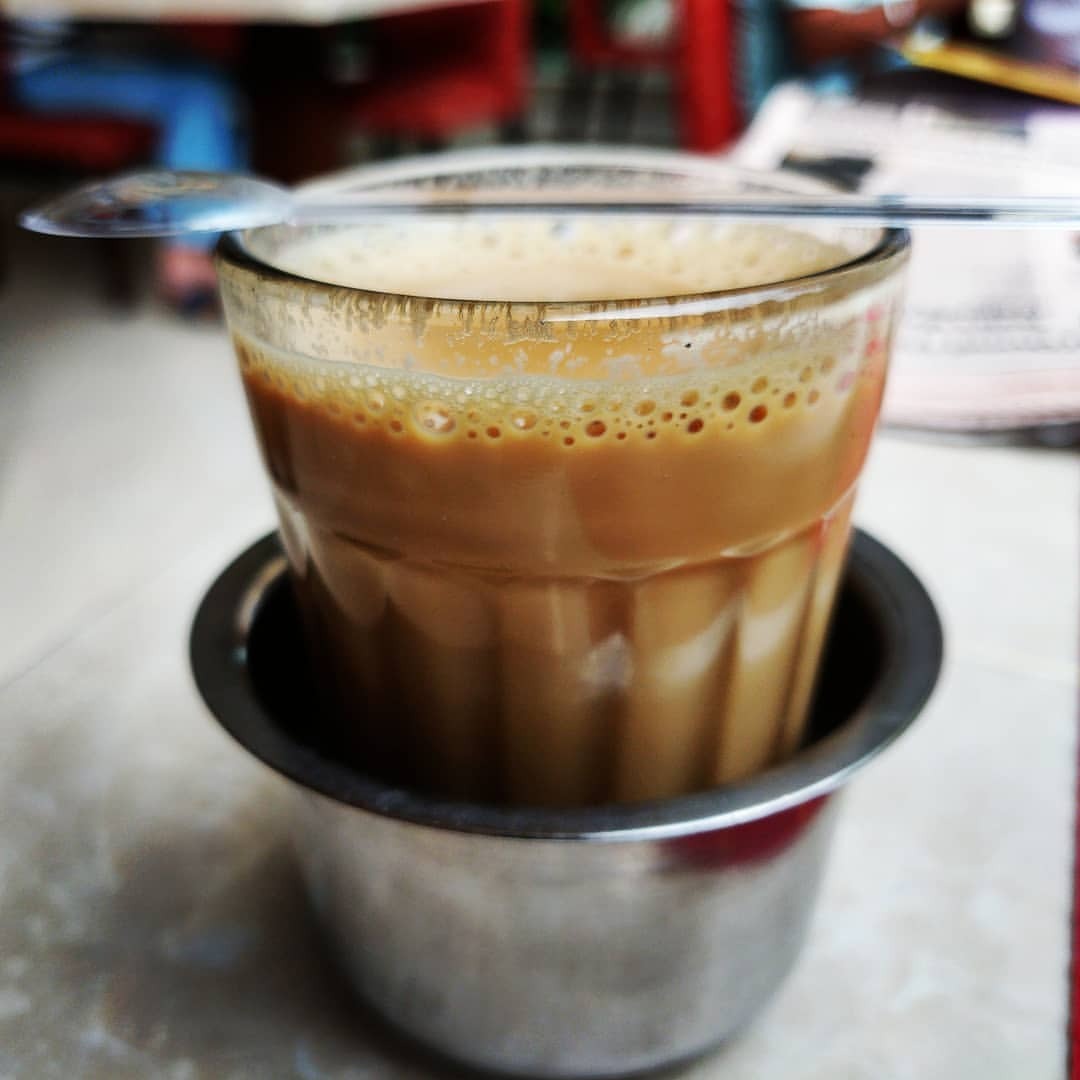
It arrived in a steel tumbler. Poured with mild theatrical flourish from one vessel to another. It possessed the authority of habit and the fragrance of morning. It was called filter kaapi. My mother makes it. There is, and remains, no higher benchmark.

Then, decades ago, a young man at a Café Coffee Day counter in Bangalore looked at me with professional patience and said, “Cappuccino?”

I had grown up in Madurai. Outside my mother’s kitchen, the only other coffee I had considered was at a small roadside coffee place called Visalam in Goripalayam. My mother gave hers in a tumbler and davara. Visalam served it in a glass tumbler. That, I had assumed, was the full range of possibility. Cappuccino was not a category I had prepared for.

What Avvaiyar Knew About Coffee (And Everything Else)

There is a line by Avvaiyar, the ancient Tamil poetess, that I have known since childhood.

கற்றது கை மண் அளவு; கல்லாதது உலகளவு

Katrathu kai mann alavu; kallathathu ulagalavu.

What you have learned is a handful of sand. What you have not yet learned is the size of the world.

I had known this line for years. I had also attributed it, confidently and wrongly, to Thiruvalluvar. The irony of misattributing a quote about the limits of one’s knowledge is, I think, what philosophers call “a bit much.”

In popular Tamil online folklore, the line hangs on a wall at NASA. I cannot verify this. But for rocket scientists to keep this in mind, however remote, is comforting anyway.

Going Down the Coffee Rabbit Hole

I came to coffee late. But when I did, I came properly. I ground my own beans. Chose them carefully. Waded in. And at each stage arrived confident I had figured it out, only to be shown, cheerfully, the next wall of ignorance waiting just ahead.

The world is not content with “coffee.” It insists on thirty-odd variations before you reach the door: espresso, ristretto, lungo, flat white, cortado, affogato, cold brew, nitro. And that is just the front end. Behind the counter lurk Arabica and Robusta, spoken of as rival football teams. There are tasting notes. Chocolate. Citrus. Stone fruit. Hints of regret.

And just when you think you have grasped the situation, someone whispers: there are beans that have passed through a cat.

Kopi Luwak. The Asian palm civet eats the coffee cherries, digests the fruit, and passes the beans. They are then collected, washed, roasted, and served to people like me. I first had it in Bali, sceptical and mildly horrified. It was extraordinary. Smooth, almost syrupy, with none of the bitterness I deserved. I have sourced it wherever possible since. Make of that what you will.

Couple from Kopi Langit Bali with their coffee range, Bali — where the Kopi Luwak education
Kopi Langit Bali. The beans were extraordinary. The education was free.

My first purchase was from a couple in Bali. They sold me the beans and threw in an education I had not budgeted for. They explained processing methods, drying times, and the difference between wild-harvested and farmed civet with the patience of people who genuinely loved what they were doing. I left with more coffee than I could carry and significantly less confidence than I had arrived with.

Then I wandered into a specialty café. It was not merely a place that served coffee. It was a temple. Baristas moved with the quiet assurance of neurosurgeons. There were championships. Yes, championships. People compete at making coffee. There are judges, points awarded for crema, and somewhere, I suspect, slow-motion replay.

Coffee, I discovered, is not a beverage. It is a civilisation.

The Dunning-Kruger Effect in a Tumbler

The less you know about something, the more qualified you feel. Beginners are condemned to confidence. I had consumed coffee daily for decades before I understood I knew nothing about it. The peak of Mount Stupid, as psychologists call it, has a magnificent view.

Coffee crossed continents before it reached your cup — from an Ethiopian goat herder through Yemen and the Ottoman Empire to the coffee houses of London, where one cup bought you a chair and the right to argue with strangers about everything.

Today, for the exorbitant price of an Americano in Mumbai, you get poor coffee, the Wi-Fi password, and access to the toilet.

The people who know coffee best are uniformly humble. Coffee taught me why. Every door you open reveals three more. The domain you think you have mastered is merely the room you are standing in. I once watched a man at a roadside kaapi kadai in Tamil Nadu who had clearly stopped thinking about coffee altogether. That is what mastery looks like from the outside.

Back to the Tumbler

My mother still pours her kaapi from height, cooling it with a practised hand. Smooth arc. No tasting notes. No championship ambitions.

I still think it is unbeatable.

But now, when a barista reels off a menu of ristretto, lungo, flat white, cortado, cold brew, and something called a nitro coffee, I do not panic. I nod gravely, as though I have always known.

Then I look it up, quietly, before anyone notices.

Avvaiyar would understand. I suspect she would also help herself to the coffee.

Lightly, Child, Lightly

The other day, I was looking at a roadside coffee shop in rural Tamil Nadu. It was a pit stop. More to sip on nostalgia. Coffee was the excuse. I got both. Nostalgia. Coffee. And a line from Huxley that appeared on cue.

The man behind the counter was working his magic with a giant kettle that hissed and sang like an old friend. The smell of fresh decoction drifted through the morning air. Somewhere in the background, Ilayaraja’s 80s melody played faintly from a radio that had seen better days. There was a very faint nip in the air, and the newspaper hanging by a rusted clip on the stall was still crisp. Proof that the day was just beginning.

The man himself was spotless and alert. A splash of thiruneer, three bright grey lines, shone on his forehead. He moved with a rhythm shaped by years of practice. Pouring, mixing, serving, taking money, returning change. All in one smooth motion. It felt as if time had slowed down to watch him.

There was no tension in his face. No wasted effort. He did not rush, yet he was never still. The kettle tilted at the perfect angle. The coffee arced through the air in a golden stream. The froth landed obediently in its glass. Every act was precise and calm. Ease that comes when you stop fighting your work.

That is when it struck me. Lightness comes from intimacy. When you have done something long enough, you stop proving yourself to it. The dancer stops counting beats. The cricketer stops calculating angles. This man has stopped thinking about coffee.

Aldous Huxley said it perfectly. “It’s dark because you are trying too hard. Lightly, child, lightly. Learn to do everything lightly.” Perhaps he had watched this man.

He looked up once, smiled, and went back to his art. The world around him kept moving. Buses honked. Cows crossed. A customer called for an extra spoon of sugar. Yet he was steady, like a monk in the middle of a festival.

It was not grand. Or dramatic. It was simply beautiful. And light.
Ease, brewed fresh.

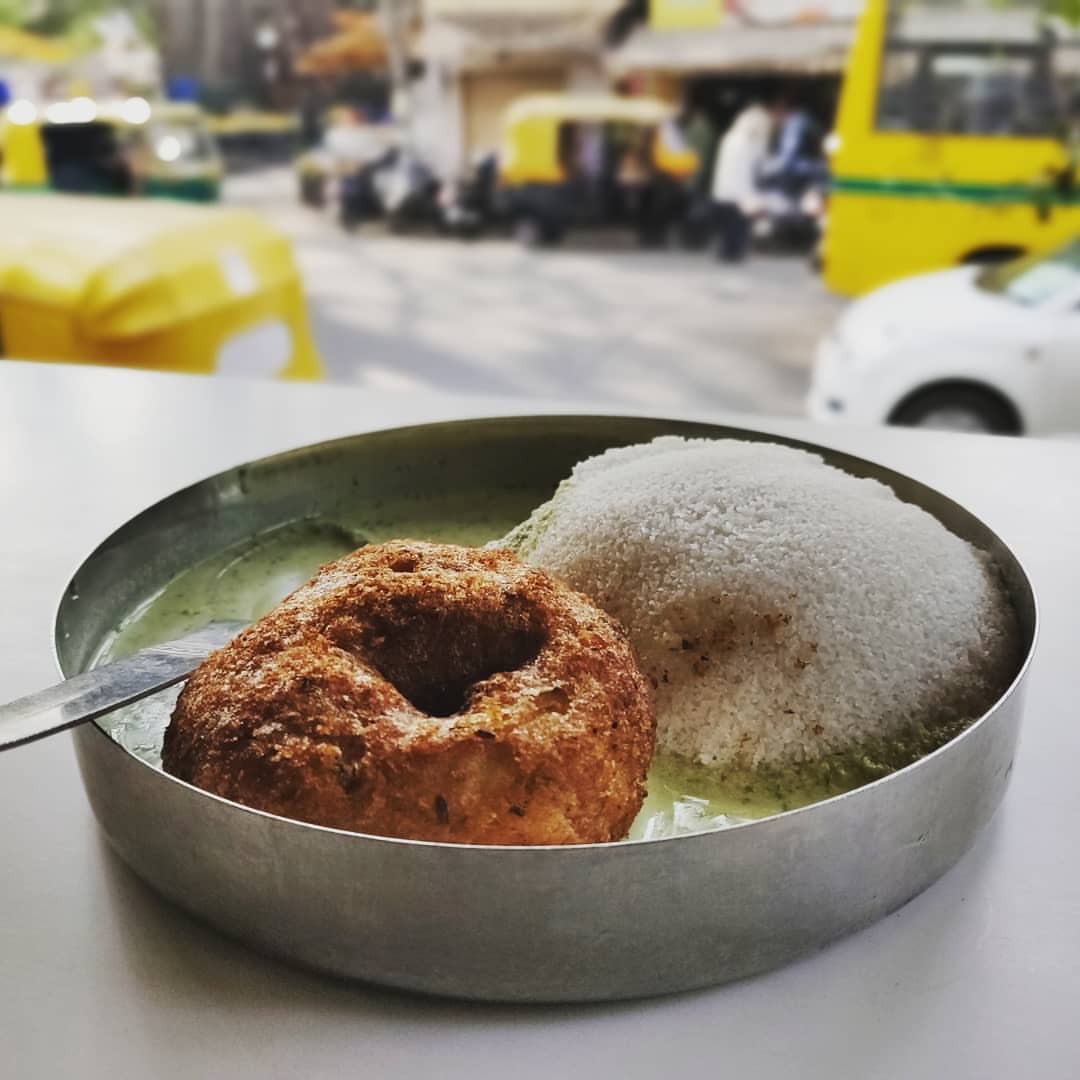
Idli Vada

The simplest foods change the mood inside the mind. Bring alive memories. And sometimes make you long to come back for good. The food pipe is the best route on the map of life! ..

Oh. What I not do for Idli vada?

(at Bangalore, India)

Coffee and Conversations: Wisdom in Every Sip

My dad always said, “Coffee drinkers are better thinkers.” He was a wise man. I’ve never had a reason to doubt him.

These days, “Coffee?” is the answer to everything.

Questions, answers, problems—it doesn’t matter. Coffee solves it all. Especially in Mumbai. The city hums with its energy, fuelled by endless cups.

Maybe it’s the caffeine. Or maybe coffee is just a great excuse to pause, talk, and think.

Either way, I’m not arguing. Coffee?

Stories a Brass Kettle

Objects have character. Don’t they? This brass kettle from another era sat quietly, serving filter coffee and cardamom tea for generations. Imagine what it has seen!

Families growing, stories flowing, and lives unfolding—all while it stayed still.

Sometimes, I wish it could talk, spilling tales of the people and the times. But its dents and marks do the talking. They hint at the lives it touched.

So, I let my imagination take over and weave my own stories.

After all, isn’t that what character is—a silent storyteller of time?

Spotted at a coffee shop in a train station. Somewhere in #London . Some messages make you think. Others bring out a smile. Yet others get you to do both!

Perhaps it’s the ambience. Or perhaps it is the weather. Maybe the coffee. Or simply, the simple yet profound meaning in the message.
#messages #Coffee #Train #London #Travel #traveldiaries #blogging #blogger #travelblogger #Europe

What gives character to a city beyond its buildings is what happens on its pavements.
It is always a sight to SEE conversation. HEAR exchanges of glances and smell Coffee. OK, beer in this case.

Imagine a character rich pavement complemented by a colourful history as a backdrop.
Just jaw dropping awesome.
A cafe with the St.Michael and St.Gudula cathedral as a backdrop in the heart of #Brussels .

Whatay setting.
#Travel #Traveldiaries #Belgium #Brussels #europe #city #character #history #cafe #coffee #beer #EU

There are many religions in the world. The one that appeals to me is here! 🙂 You dont have many rituals. Nor any holy book. But if there was a God, he resided in a bean.
Today as we sat in a new cafe, our legs tired and eyes weary, someone from the next table leaned over, looked at my drink and said, ‘ah coffee’. That started a whole new conversation. A new connection in a far off land! #Travel #Coffee #amsterdam #amsterdamcity #Conversation #Stories #Traveller #EU #Netherlands #Food