Travel

The World Ranked Our Dosa. We Have Feelings.

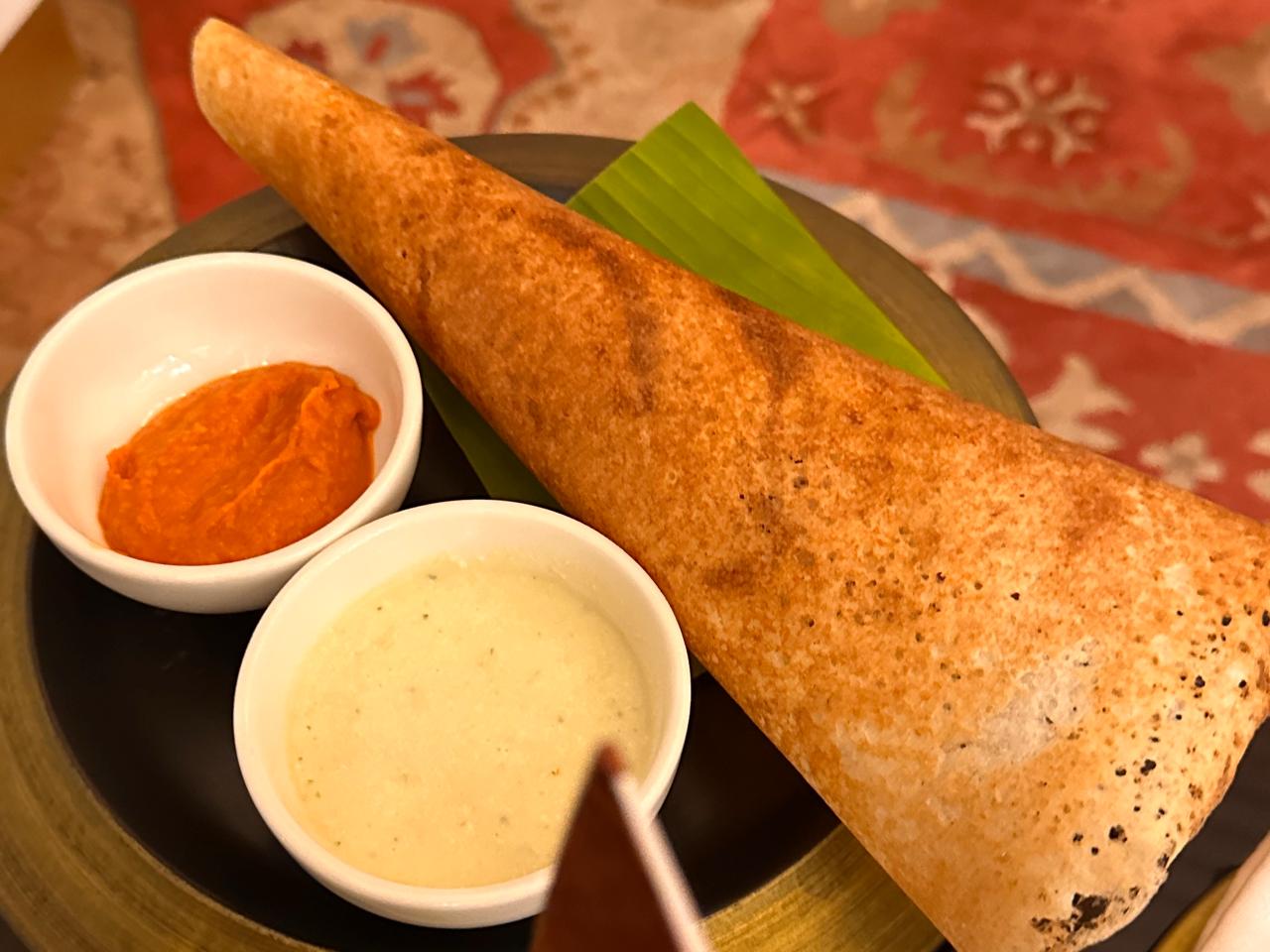
There are times when your favourite wins and you feel great. And then there are times when your favourite climbs the rankings and you feel oddly flat. Take for instance, the case of the Masala Dosa. Sixth on TasteAtlas’s list of the world’s best pancakes. I should be happy. I am not.

Let me explain.

Dosa at the First Line of Defence

By the way, the masala dosa world ranking has been climbing this list. From 12th a couple of years ago to 6th now. More Indians eating, rating, telling the world what South India already knows and makes every day for breakfast. Fair enough.

I have eaten dosa in places that had no business serving one. Once, right at the Pakistan border in the Himalayas. After crossing signboards saying You are visible to the enemy. We stood at the barbed wire and looked through binoculars into Pakistan. The mountains looked exactly the same on both sides. Same rock. Same sky.

We turned around to leave. And there it was. A stall. A handpainted sign. Dosa Corner.

First line of defence. Settled.

150 Varieties, One Tawa

Taste Atlas notesmasala dosa has made the Huffington Post’s list of 10 foods to try before you die, alongside Beijing duck, moussaka, and BBQ ribs.

Before you die? Many of us have been eating it before we could walk. A little late for the warning.I have consumed copious dosas in my life and I suspect that these dosa memories occupy more space in my brain than what has settled in my body.

Take for instance, one bright weekend morning in rural Tamil Nadu. Decades ago. A State Transport bus stopped on the outskirts of a small town. I stepped off not knowing where I was. And then I watched the man at the griddle. How he spread the batter. How much oil he used. How crispy he let the dosa get. I instantly knew where I was. The dosa is character and identity defining in more ways than one.

And then there was Nanguneri. A man asked me simply, how do you like your dosa? Not a formality. A real question. Almost a challenge in the midst of bustle and smells of a rural bus stand. I hesitatingly answered. He acknowledged my challenge with a stoic face and an incredibly precise dosa.

The dosa has not been standing still either. A place in Kochi has over 150 varieties on the menu, open till 1am. One is called Volvo. Another has chocolate. A third uses quail eggs. In Surat, a vendor spreads aam ras, mango pulp, in mango season instead of sambaar. Nobody thought twice. Nobody needed to.

At home it is sambaar and chutney. And here we must be clear. Sambaar. Not Sambur. Sambur is a deer. Sambaar is the real thing. Go to Madurai if you need proof. It will arrive in a steel vessel and make the argument for itself.

Which Dosa, Exactly?

So. The border dosa. The Nanguneri dosa. The midnight Kochi dosa with quail eggs. The Surat dosa drowning happily in aam ras. The home dosa with sambaar that is definitely not a deer. And they put it sixth. In a country where 99.99 marks out of hundred evokes an “oh no” response, sixth on a list titled ‘Pancakes’ is not a rank. It is an insult.

The ranking says masala dosa specifically. Fine. But what does masala dosa actually mean? A place in Kochi has 150 varieties on its menu? In Surat, a vendor’s answer involves mango pulp instead of sambaar. This is not one dish. This is an entire world. Does it not deserve its own category, where pancakes are welcome to come and try their luck?

There should be a list for dosas. Pancakes can appear somewhere in the middle.

We could even start a movement. The Dosa Janta Party. DJP, alphabetically next in line and some would say long overdue. The tawa as the party symbol, because the tawa does all the work and gets none of the credit.

But honestly, I do not want to be blocked, mocked, or chief minister.

Like most mornings, I just want one plain and crispy dosa.

The Airport That Never Loses Your Bag

My life fits inside a suitcase. Literally.

My life, for better or worse, has been organised around a single suitcase. The suitcase and I have logged more miles together than I have with most people I know. It does not complain. It does not have opinions about the hotel. It simply arrives. Usually.

Sometimes, though, it waits in the wrong place. I have landed in San Francisco while my bag sat in Singapore. I have cleared immigration in Brisbane while my suitcase was still somewhere over the Indian Ocean, presumably enjoying the flight more than I did. Each time, there is that particular sinking feeling at the carousel. The belt moves. Other people’s bags appear. Yours does not.

It is harrowing in a way that is hard to explain to someone who hasn’t lived out of one bag for months at a time.

The rabbit hole

On one of those occasions, bag delayed, gate agent apologetic as the process warrants, scrolling through something on her device. A smile played at the corner of her lip. It was not about my suitcase. A lost bag offers very little to smile about. Although, who knows.

I found myself in the airport coffee shop with nothing to do but wait and drink. The coffee was doing its job. And then the data I was reading did something coffee rarely manages. It made me sit up straight.

Kansai International Airport opened in 1994 on an artificial island in Osaka Bay. Since that first day, it has not lost a single piece of luggage. Not one. It handles around 10 million bags a year. It has won the global award for best baggage delivery eight times.

In the United States, domestic flights lose 3 million bags every year.

I read that sitting at a gate, waiting for my bag to arrive on the next flight, and felt something between admiration and mild despair.

The man at the carousel

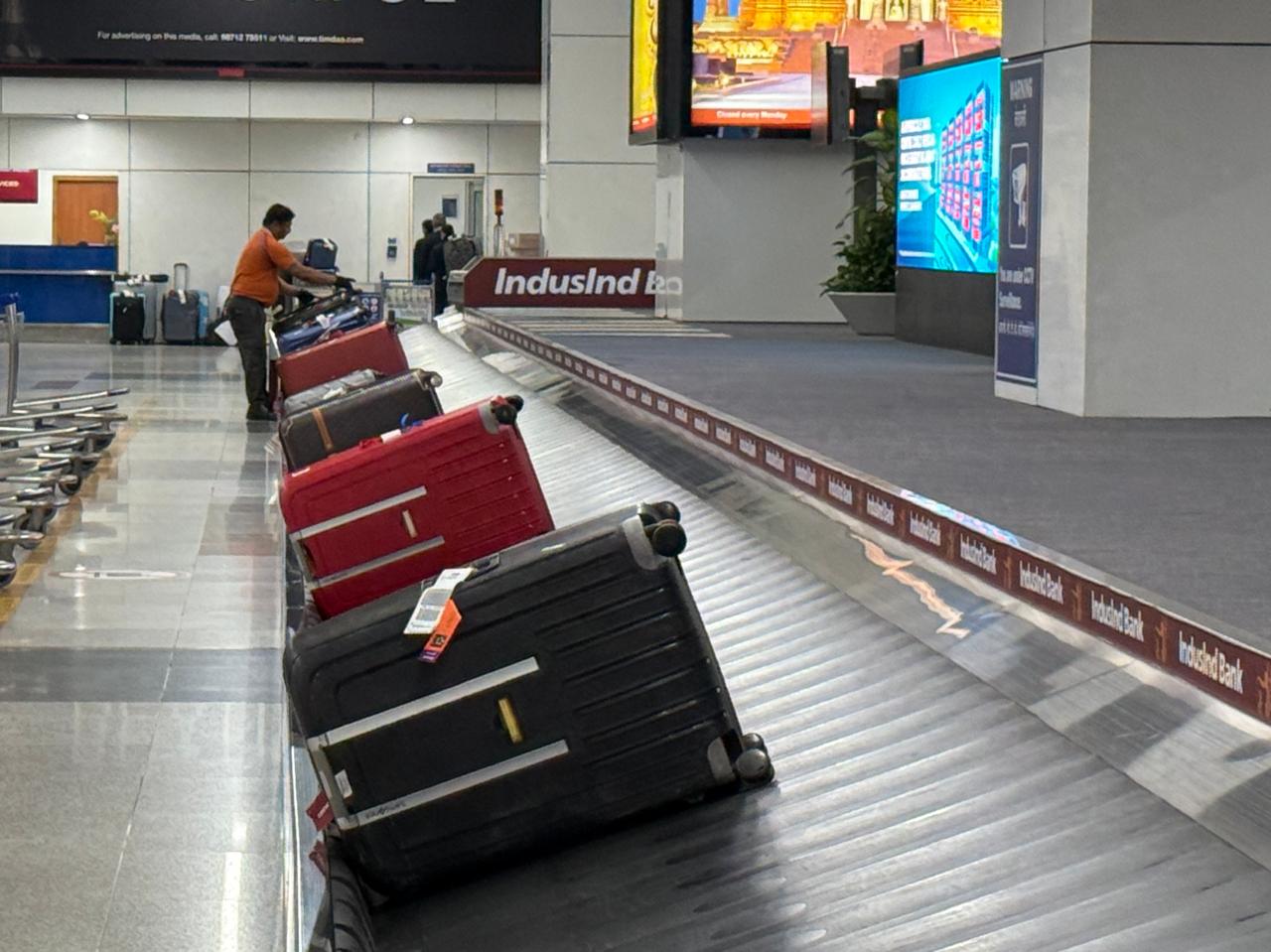
A few weeks ago, at Terminal 3 in Delhi, I watched a ground handler doing something I had never seen before. As bags landed on the carousel, he straightened them. Turned them. Arranged them so the handles faced outward.

Someone had clearly told him to do this. A new manager, perhaps. Or someone keen to get a good rating. Or both, which is usually how these things happen. My sceptical mind went there immediately. Because I had not seen this before at Delhi. Or maybe I had, and the carousel anxiety had made me look only at the bags.

Bangalore’s Terminal 2 has been doing something similar. The handles face outward there as well. The bags arrive with a certain quiet orderliness that feels deliberate.

Mumbai is a different story. At Mumbai, the correct posture is gratitude. If your bag appears at all, and within the same hour as you, the appropriate response is quiet thanksgiving. The handle direction is not the concern. Arrival is the miracle.

And yet, Delhi and Bangalore matter. The detail lands, regardless of what drove it. Someone, somewhere up the chain, looked at a carousel and thought: this could be better.

It stayed with me. And then Osaka made sense. Because Osaka had been doing the same thing, at every carousel, since 1994. Except nobody told them to. They just decided it mattered.

What they actually do

Kansai’s secret, when you finally prise it out of them, turns out to be deeply unsatisfying. Small teams. Manual counts. A rule that if the number of bags unloaded doesn’t match the number loaded, you stop everything and look. The bag reaches the carousel within 15 minutes. The handle faces outward.

That is it. No algorithm. No proprietary system. Just people who count bags twice and arrange handles and apparently find this entirely normal.

I went deeper into the rabbit hole looking for the dramatic reveal. An airport official told NPR that the record was “the result of the daily efforts and careful work of everyone involved.” Then added, with a courtesy that itself felt Japanese: “We apologise if this would be not a specific answer.”

It was not. It was also completely honest.

Another official, speaking to CNN, was even more deflating. “We don’t feel like we have been doing something special,” he said. “We have been working as we normally do.”

Thirty years. Zero bags lost. Business as usual.

What actually drives it

Tsuyoshi Habuta has run baggage operations at Kansai for 17 years. His explanation makes the spokesperson look verbose. Luggage is precious to passengers, he says. So it should not go missing.

That is the whole argument. Seventeen years. Ten million bags a year. Thirty years of an unbroken record. And the philosophy fits in one sentence.

He is not chasing a bonus. He is not hitting a KPI. He has decided, at some point that probably passed without ceremony, that a stranger’s suitcase deserves to arrive. That quiet decision, renewed every morning, is what the record is actually made of.

The Japanese have a word for this. Omotenashi. It translates as wholehearted hospitality, but the translation loses the edges. What it really means is that you attend to what the other person needs, whether they are watching or not. Especially when they are not watching.

The gap that cannot be downloaded

A process can be copied. A checklist can be shared. But the thing that makes Habuta count bags at 4am with the same attention as the first day, thirty years in, with nobody watching and no applause coming, that cannot be transferred in a training manual. It has to be believed.

Most airports move bags. Kansai returns them.

The difference is entirely in what the people there think they are doing when they show up.

The Weight of Forever

Paris. More than a decade ago. The Seine.

The Seine is the river that runs through the heart of Paris. It is wide, unhurried, and has been flowing through this city for longer than the city has existed. Poets have written about it. Painters have stood on its banks. Napoleon built bridges across it. And on one of those bridges, more than a decade ago, I stopped walking and simply stared. I had not expected the locks.

Across the river sits the Pont des Arts, a pedestrian bridge connecting two of Paris’s most celebrated institutions — the Louvre museum on one bank, and the Institut de France on the other. No traffic. No noise. Just people walking, and the river moving quietly below. Wooden slats underfoot, iron railings on either side, and on a clear day, the whole of Paris seems to arrange itself around you — domes, rooftops, water, light.

I slowed down. Then I stopped.

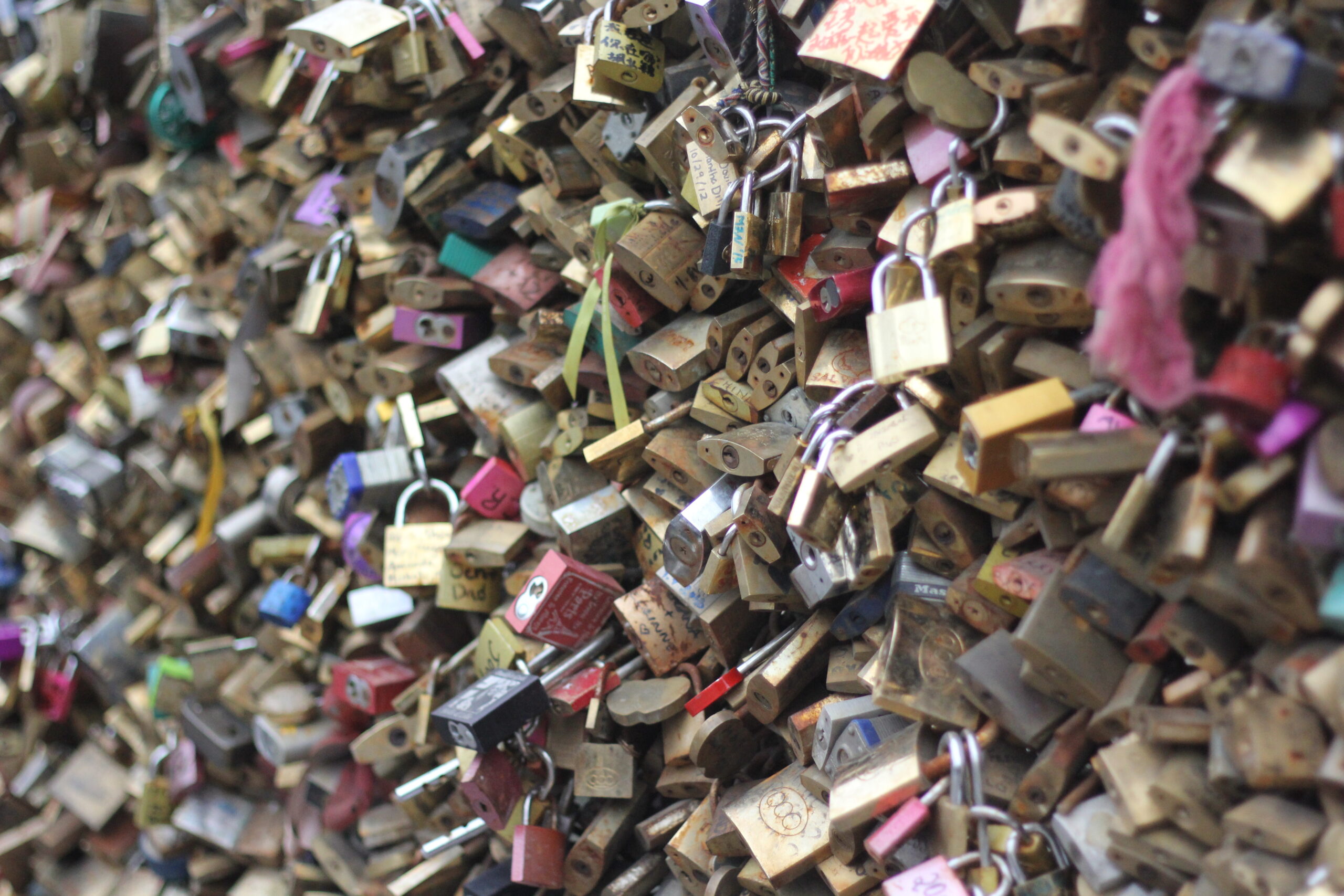
Because of the locks. Hundreds of thousands of locks, covering every inch of railing. Every size. Every colour. Brass ones, painted ones, heart-shaped ones, cheap ones from the hardware shop around the corner. Each carrying two names and one enormous hope.

That this would last. That nothing would change.

Locks of love

Look closely and you could read them. “Chantal et Charmaine.” “Tom + Ellie.” “2015, Qian, Jinlin — Forever.” Names in marker, names scratched in metal, names engraved by people who had planned ahead and brought the right tools. All of them saying the same thing, in every language, in every handwriting. Please. Not yet. Stay.

A Wish As Old As Worry

The story behind the locks begins, as the best stories do, with heartbreak. Mani Ratnam would have approved.

In a small Serbian town called Vrnjačka Banja, just before the First World War, a schoolmistress named Nada fell in love with an officer named Relja. He went to war in Greece. He fell in love with someone else. And did not come back to Nada. She never recovered, and eventually died of it. Which is the kind of ending that leaves a town looking for something to do with its grief.

The women of Vrnjačka Banja found an answer. They began writing their names, and the names of their loves, on locks, and fixing them to the bridge where Nada and Relja used to meet. Not a grand gesture. Not a ceremony. Just a small, stubborn wish dressed up as ironmongery. Protection, they hoped, against the same fate.

The gesture wandered. Across Europe, across decades, picking up believers everywhere it went. It found a 2006 Italian novel, in which two lovers attach a lock to a bridge in Rome and throw the key into the river. Young Europeans read it, recognised something in it, and began to act on it. Within two years, it had reached Paris.

Paris was not the end of it. The tradition has since spread to over 500 locations across 65 countries. Cologne, Moscow, Seoul, New York, Melbourne. Wherever there is a bridge and a railing, someone has arrived with a lock and a feeling.

Here is what you actually did. You brought a lock — or bought one from a vendor who had appeared on the bridge with the particular efficiency of someone who had read the situation correctly — wrote your names on it, snapped it onto the railing, and threw the key into the Seine. The lock said this is permanent. The key going into the river said I accept I cannot undo this.

It was, depending on how you look at it, either the most romantic gesture in the world or a considerable administrative problem in the making.

As it turned out, it was both.

By 2014 there were nearly a million locks on the Pont des Arts, weighing 45 tonnes. The equivalent of twenty elephants, standing very still on a wire fence, all of them believing in forever. A section of the railing collapsed under the weight. The city launched a campaign called Love Without Locks, which nobody paid the slightest attention to. Eventually the city stepped in, removed every single lock, and began the work of replacing the railings entirely.

We have always done this. Fear of losing a good thing at one end. A deep desire for more at the other. These are not weaknesses. They are the most human feelings there can be. The lock just happens to be what we had in our hands at the time.

A thread tied around the wrist. A ring slipped onto a finger. A coin tossed into a fountain. A name carved into a tree that will keep growing long after the feeling has moved on. And then a lock on a bridge and a key in a river — and the small, magnificent delusion that this time, finally, something might actually stay.

It never does. But the trying is very human, and it is very hard to argue with.

So What Did Paris Do?

It did what Paris does. It made a practical decision and somehow made it look elegant.

The old railings were pulled down and replaced with glass panels. Clean, clear, completely smooth. Nothing to attach to. No hook, no bar, no gap. A lock pressed against it would simply slide off, which is not the effect anyone was going for.

But here is what you can do now, standing on the Pont des Arts. You can look straight through. Through the glass, past the railing, all the way down to the Seine moving steadily below. The same river that was flowing when Napoleon built the bridge in 1804. Still going. Still not stopping for anyone.

There is something in that worth sitting with. We spend so much energy trying to fix things in place. Lock them down. Make them stay. And the river just keeps moving, completely unbothered, as if it knows something we have spent centuries refusing to accept.

Maybe the glass is the better lesson. Not a lock. Not a wish thrown into the water. Just clarity. See through it. Stay open. Keep moving.

The Seine keeps moving. And somehow, despite everything, so do we.

______________________________________________________________________________________________

If Paris and what tourism does to cities interests you, this one is worth your time. Tourist, Go Home.

Audit of Me: A December Reflection on Time, Attention, and Patterns

Last week, I was trying to get a suitcase under seven kilos so it could travel with me into the cabin of an airline where certain staff members stand near the boarding gate with a stern-looking weighing scale. They do not smile. They do not negotiate. They do not believe in intentions.

This is a strange modern sport. It involves rules, judges, and quiet humiliation.

Items that had travelled loyally with me across cities and countries were suddenly asked to leave. Some without notice. The weighing scale remained unmoved. The staff remained polite and implacable.

The suitcase eventually closed. Barely.
I did not feel victorious.
I felt informed.

December has the same effect.

Time slips away quietly through the year. It carries minor shifts and major changes in the same sweep. One day you are beginning something with enthusiasm. The next, you are wondering when it became routine. And where another cherished habit quietly retreated to, without leaving a forwarding address.

That is what time does best. It does not announce change. It just keeps moving.

Boundaries of time force a pause. A year ending is, of course, an artificial boundary. The sun and sky do not care. Monday looks much like Tuesday. But the turn of the year helps us keep score. Like a measuring tape pulled out reluctantly. Slightly crude. Still useful. You may not like the number it shows you, but at least you know where you stand.

That is why December is a good time for an annual personal audit.

The gentle art of keeping score

An audit sounds serious. It need not be. This is not forensic accounting. No spreadsheets. No colour codes. Just a calm look at where things went.

Every December, I start with the calendar. I scroll slowly. Meetings appear like family photographs. Some familiar. Some puzzling. Who did I spend time with? What claimed my attention? What expanded? What quietly disappeared?

Then comes the inbox. This is where things get personal.

Which conversations mattered? Which ones grew richer and more human over time? Which relationships were nourished, sometimes deliberately, sometimes by accident? And which ones gathered dust despite the best intentions, friendly check-ins postponed indefinitely under the noble excuse of being busy?

Emails reveal more than schedules. They reveal attention. Who we return to. Who we avoid. Who stayed present through the year, and who quietly slipped into the “will reply soon” category, where messages go to rest.

Then the credit card and UPI statements. These are always revealing. Where did the money go? More importantly, does it reflect how I thought I was living? What stories am I telling myself? Behavioural economists call this data. The rest of us call it evidence.

The point is not detail.
The point is pattern.

Ordinary lives, useful reflections

Over the next few days, I am sharing my own reflections from this annual personal audit.

Now, I am, by nature, private. What follows will be general. Pointers, not particulars. There will be no confessions, no revelations, and nothing remotely sordid. I will spare you the details and offer patterns and pauses instead. Think sketches, not surveillance footage. Hopefully, just enough provocation to get you smiling and thinking about a few things of your own.

My life itself is reassuringly ordinary. Travel. Work. Conversations. Writing. A clutch of modest successes. A few misses. Some bets that went wrong with impressive efficiency. A handful taken on knowingly, which sounds bold and usually means thinking, This could go wrong, and proceeding anyway.

Why do this at all?

Because reflection rarely arrives with drama. It comes quietly. While waiting for boarding. While staring at a hotel ceiling. While realising you have told the same story twice and it sounds different the second time.

Doing it deliberately forces attention. I remember, in school, a friend playing a rather cruel prank on a teacher who took afternoon naps under a tree.

A magnifying glass.
A patch of sunlight.
A sudden awakening.

The teacher woke up with a start, clutching his forearm, which now bore a small but unmistakable scorch mark. The kind that makes a man reassess both his nap and his life choices. Let’s leave out what happened to my classmate.

The point is simpler.
Attention wakes things up.

That is why I do an annual personal audit. To clear my head. Putting thoughts into public view forces order. It removes clutter. It makes you confront what stayed and what did not. If it nudges you to glance at your own year, even briefly, that is enough.

I will write about things I got wrong and what worked despite me. The places I went and what they did not change. The people I met and the conversations that refused to be forgotten. The patterns that only show up when you stop long enough to notice.

A few questions worth sitting with

Notes From The Rear View Mirror

What did you give time to this year?
What held your attention without asking?

Which habits strengthened?
Which ones thinned out?

What is still alive?
And, what needs closing, gently, without regret?

What promises were made?
Which ones were kept?
Which ones were quietly postponed?

If these questions create mild discomfort, that is a good sign. It usually means growth occurred somewhere without sending a memo.

December invites this kind of pause. With coffee. With Wi-Fi that generously accommodates my inconsistent sense of humour. No drama required. Just enough stillness to notice what moved, what stayed, and what quietly asked for more care than it received.

Suitcases tell the truth when weight limits apply. Years do the same, if you stop long enough to listen.

Lightly, Child, Lightly

The other day, I was looking at a roadside coffee shop in rural Tamil Nadu. It was a pit stop. More to sip on nostalgia. Coffee was the excuse. I got both. Nostalgia. Coffee. And a line from Huxley that appeared on cue.

The man behind the counter was working his magic with a giant kettle that hissed and sang like an old friend. The smell of fresh decoction drifted through the morning air. Somewhere in the background, Ilayaraja’s 80s melody played faintly from a radio that had seen better days. There was a very faint nip in the air, and the newspaper hanging by a rusted clip on the stall was still crisp. Proof that the day was just beginning.

The man himself was spotless and alert. A splash of thiruneer, three bright grey lines, shone on his forehead. He moved with a rhythm shaped by years of practice. Pouring, mixing, serving, taking money, returning change. All in one smooth motion. It felt as if time had slowed down to watch him.

There was no tension in his face. No wasted effort. He did not rush, yet he was never still. The kettle tilted at the perfect angle. The coffee arced through the air in a golden stream. The froth landed obediently in its glass. Every act was precise and calm. Ease that comes when you stop fighting your work.

That is when it struck me. Lightness comes from intimacy. When you have done something long enough, you stop proving yourself to it. The dancer stops counting beats. The cricketer stops calculating angles. This man has stopped thinking about coffee.

Aldous Huxley said it perfectly. “It’s dark because you are trying too hard. Lightly, child, lightly. Learn to do everything lightly.” Perhaps he had watched this man.

He looked up once, smiled, and went back to his art. The world around him kept moving. Buses honked. Cows crossed. A customer called for an extra spoon of sugar. Yet he was steady, like a monk in the middle of a festival.

It was not grand. Or dramatic. It was simply beautiful. And light.
Ease, brewed fresh.

Traveler vs. Tourist: How to Truly Experience a Place

Kevin Kelly is one of those people you take seriously. Not because he asks you to. But because he has lived a life that makes you want to listen. He co-founded Wired. He has written deeply about the future. And, more importantly for us today, he has spent over 50 years traveling the world. That’s half a century of airports, alleys, deserts, and detours. When someone like that gives travel advice, you pay attention.

Not all travel tips are equal. Some are practical. Some are poetic. A few are life-altering. The ones I’ve picked here are both useful and thought-provoking. They are not about checking places off a list. They are about soaking them in.

If you think travel is just about getting from one place to another, this might make you pause. If you already believe the best journeys are the ones where you lose track of time, read on.

Traveller or Tourist?

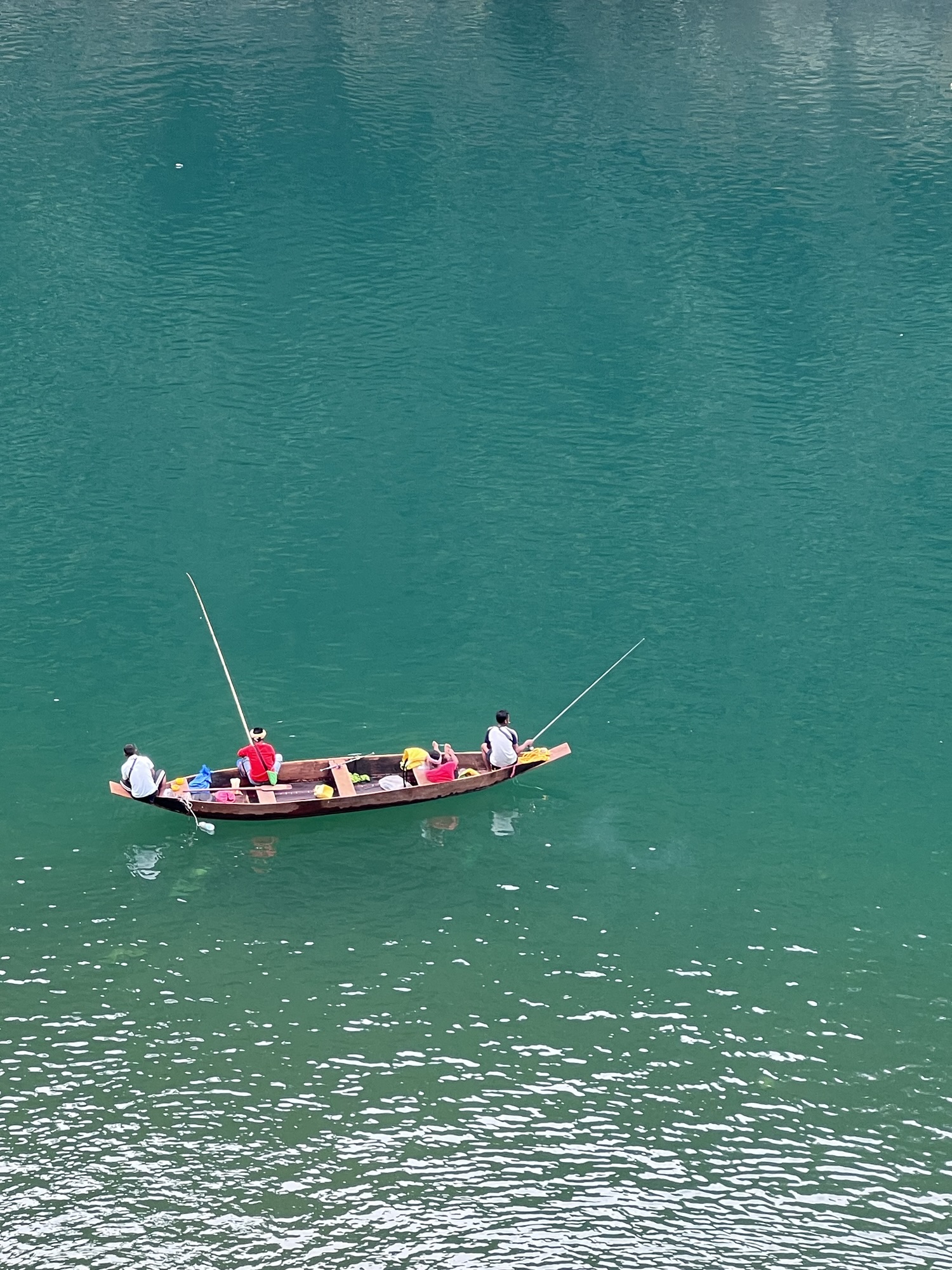
A tourist collects places. A traveller collects moments. The featured picture above is Dawki, Meghalaya. I remember the conversation with the boatman as much as I remember how bountiful nature is. It all comes together beautifully.

A tourist follows a plan. A traveller follows curiosity.

A tourist moves through a place. A traveller lets a place move through them.

The difference is subtle. But it is everything. It is the difference between taking a photo of a street market and sitting down for tea with the vendor. Between checking in at a famous site and wandering into a side street just because it looks interesting. Between skimming the surface and sinking into the depth of a place.

“Half the fun of travel is the aesthetic of lostness.” — Ray Bradbury

Travel Wisdom Worth Keeping

…..

From Kevin Kelly’s post, here are super special nudges to travel wisdom. Read the full post here.

Travel for a passion, not a place. Build a trip around cheese, jazz clubs, or ancient ruins. Not just cities and landmarks. You’ll remember that tiny family-run dairy in the Alps long after you’ve forgotten the famous cathedral in Rome.

Ask your taxi driver to take you to their mother’s home. Odd? Yes. But it works. You get a meal, a story, and a peek into real life. The driver gets to fulfill a family duty. The mother gets a guest to feed. Everyone wins.

Give yourself constraints. Travel isn’t just about where you go. It’s about how you go. Take only overnight trains. Carry just a day bag. Eat for a week on the price of a single fancy meal. Limits make things interesting.

Visit places that aren’t built for you. Cemeteries. Hardware stores. Small workshops. Real life happens there. Not everything has to be an Instagram moment.

It’s always colder at night than you think. Even in the tropics. Pack that extra layer.

Eat where the healthy locals eat. The fanciest restaurant may not have the best food. The street stall with a queue probably does.

Slow down. The best moments happen when you pause. The best conversations. The unexpected invites. The secret spots. They show up when you are not rushing.

Start your trip at the farthest point. Land. Then go far. Take an overnight train. A rickety bus. A long drive. Settle in at the most remote place you planned to visit. Then, slowly work your way back. Somehow, this makes the journey richer.

Buy souvenirs that have a home in your home. That intricate rug? Lovely. But where will it live when you return? If you don’t know, leave it behind.

When asking for restaurant recommendations, don’t ask where to eat. Ask where they ate last. You’ll get a real answer.

The Beauty of Travel

Bill Bryson, my favourite travel writer, once wrote, “To my mind, the greatest reward and luxury of travel is to be able to experience everyday things as if for the first time.”

That’s it.

Travel isn’t about crossing off landmarks. It’s about learning to see. To step into another world. Not as a tourist, but as a quiet observer. An eager participant. A respectful guest.

And when you do that, something else happens. You don’t just take a piece of the place with you. You leave a little of yourself behind.

So go. But don’t just go. Travel like a traveller. Soak it in.

(Read the whole thing. You might see travel differently.)

Trapped in Feedback: A Day in the Life of Ratings and Reviews

It started as a regular day. A taxi ride to the airport. Smooth. No complaints. As I got out, the driver smiled. “Please rate your ride,” he said. I tapped a number on my phone. Simple enough—or so I thought.

Next stop—the airport restroom. I washed my hands and reached for a towel. An attendant appeared with a clipboard. “Feedback, please,” he said, shoving a form into my damp hands. I scribbled something quickly. Who rates restrooms anyway?

Coffee time. The coffee was lukewarm. The feedback form was fresh. “How would you rate your drink?” the barista asked. I stared at the form. Then at my cup. Was I rating taste? Temperature? Or my general disappointment with life? I gave it a “3.” It felt safe.

And that’s the problem, isn’t it? The 5-point scale. Looks simple. But what does “3” even mean? “Okay, I guess”? Or “I don’t want to be rude”? What about “2” and “4”? Are they just there to confuse us?

I was on edge by then. Would I be asked to rate the waiting area chairs? Or the airport temperature? Just as I relaxed, my phone rang.

“Your car has been serviced,” the voice said. “You’ll get a feedback form shortly.” Of course, I would. Why stop now?

And then came the upgrade—the 7-point scale. Or the 10-point one. As if we needed more ways to be unsure. How do you rate coffee between “lukewarm” and “slightly less lukewarm”? Can anyone tell the difference between a “6” and a “7” on a 10-point scale?

The day dragged on. More forms. More questions. It felt like a game show where the prize was exhaustion. No moment was safe from feedback.

Finally, I got home. Kicked off my shoes. Sank onto the couch. Peace.

Then I heard it.

“Dad,” my daughter asked sweetly, “on a scale of 1 to 5, how was your day?”

I stared at her. Then I laughed. Because, really, what else could I do?

Even at home, the Likert Scale had followed me.

Travel For Growth

Travel is a pathway for growth and development. That’s why I say travel to grow. After years of conscious travel, I can say with emphasis that I have packed and unpacked disproportionately large self-awareness, new learnings and beliefs than I have of bags and suitcases. If there is one more thing that I can add with equal if not more emphasis, then it is this: Travel is hugely under rated as a catalyst for development.

My love for travel got accentuated after reading Pico Iyer’s famous ‘Why We Travel’ piece from March, 2000. It was comforting to realise that there was nothing wrong with me if I just didn’t want to go check places off a “must-see” list. For I was (and continue to be) slow in soaking up a place. In small conversations, observations and just hanging out!

There are four paragraphs from Pico Iyer’s post that have been my guideposts. They are here.

“We travel, initially, to lose ourselves; and we travel, next, to find ourselves. We travel to open our hearts and eyes and learn more about the world than our newspapers will accommodate. We travel to bring what little we can, in our ignorance and knowledge, to those parts of the globe whose riches are differently dispersed. And we travel, in essence, to become young fools again — to slow time down and get taken in, and fall in love once more.”

“Yet for me the first great joy of traveling is simply the luxury of leaving all my beliefs and certainties at home, and seeing everything I thought I knew in a different light, and from a crooked angle.”

“Thus travel spins us round in two ways at once: It shows us the sights and values and issues that we might ordinarily ignore; but it also, and more deeply, shows us all the parts of ourselves that might otherwise grow rusty. For in traveling to a truly foreign place, we inevitably travel to moods and states of mind and hidden inward passages that we’d otherwise seldom have cause to visit.”

Shorncliff Pier, Brisbane

“So travel, at heart, is just a quick way to keeping our minds mobile and awake. As Santayana, the heir to Emerson and Thoreau with whom I began, wrote, “There is wisdom in turning as often as possible from the familiar to the unfamiliar; it keeps the mind nimble; it kills prejudice, and it fosters humor.” Romantic poets inaugurated an era of travel because they were the great apostles of open eyes. Buddhist monks are often vagabonds, in part because they believe in wakefulness. And if travel is like love, it is, in the end, mostly because it’s a heightened state of awareness, in which we are mindful, receptive, undimmed by familiarity and ready to be transformed. That is why the best trips, like the best love affairs, never really end.“

Every time I have stood in the queue of a land where I clearly am ‘foreign’ irrespective of the passport I hold, I learn something new. Especially so, when am not peering into my phone or consumed by the desire to see more. Just being present to all thats happening around me and reflecting on the experiences and thoughts those experiences brought alive for me have been life-altering in many ways. Because, even if I dont immediately change or do something different, I am very present to the fact there is a different way.

When I get back to where I start from, I rarely find that some pronounced changes have taken place since the time I set out. But to my eyes that sprout new lenses because they have absorbed different places, everything seems different. My mind colours old realities with new beliefs, ideas and hopes. Giving new energy for action and reflection.

If that is not a pathway to development and change, I don’t know what is.

Pico Iyer’s essay is here. Go read.

Travel: More Than Just Seeing

Travel does more than take you places—it puts you face to face with your biases. It forces you to notice what you usually ignore. And suddenly, new possibilities appear.

It’s not about ‘just seeing.’ It’s about feeling, learning, and understanding. When you travel with intent, the world becomes richer. You notice details, connect with people, and see life from another angle.

That’s when travel truly keeps you alive—by opening your mind and reshaping the way you see the world.

Domes of Light and Glory

The domes let in light, soft and diffused, transforming the space below. Then, as your eyes follow the curve upwards, the sky reveals its splendour. It’s more than just architecture—it’s poetry in design.

In that moment, the blend of light and space feels timeless. A silent reminder to look up, to find beauty where it meets function.

The glory of the sky framed by a dome isn’t just a view; it’s an experience, one that lingers long after you’ve stepped away.