Paris. More than a decade ago. The Seine.
The Seine is the river that runs through the heart of Paris. It is wide, unhurried, and has been flowing through this city for longer than the city has existed. Poets have written about it. Painters have stood on its banks. Napoleon built bridges across it. And on one of those bridges, more than a decade ago, I stopped walking and simply stared. I had not expected the locks.
Across the river sits the Pont des Arts, a pedestrian bridge connecting two of Paris’s most celebrated institutions — the Louvre museum on one bank, and the Institut de France on the other. No traffic. No noise. Just people walking, and the river moving quietly below. Wooden slats underfoot, iron railings on either side, and on a clear day, the whole of Paris seems to arrange itself around you — domes, rooftops, water, light.
I slowed down. Then I stopped.
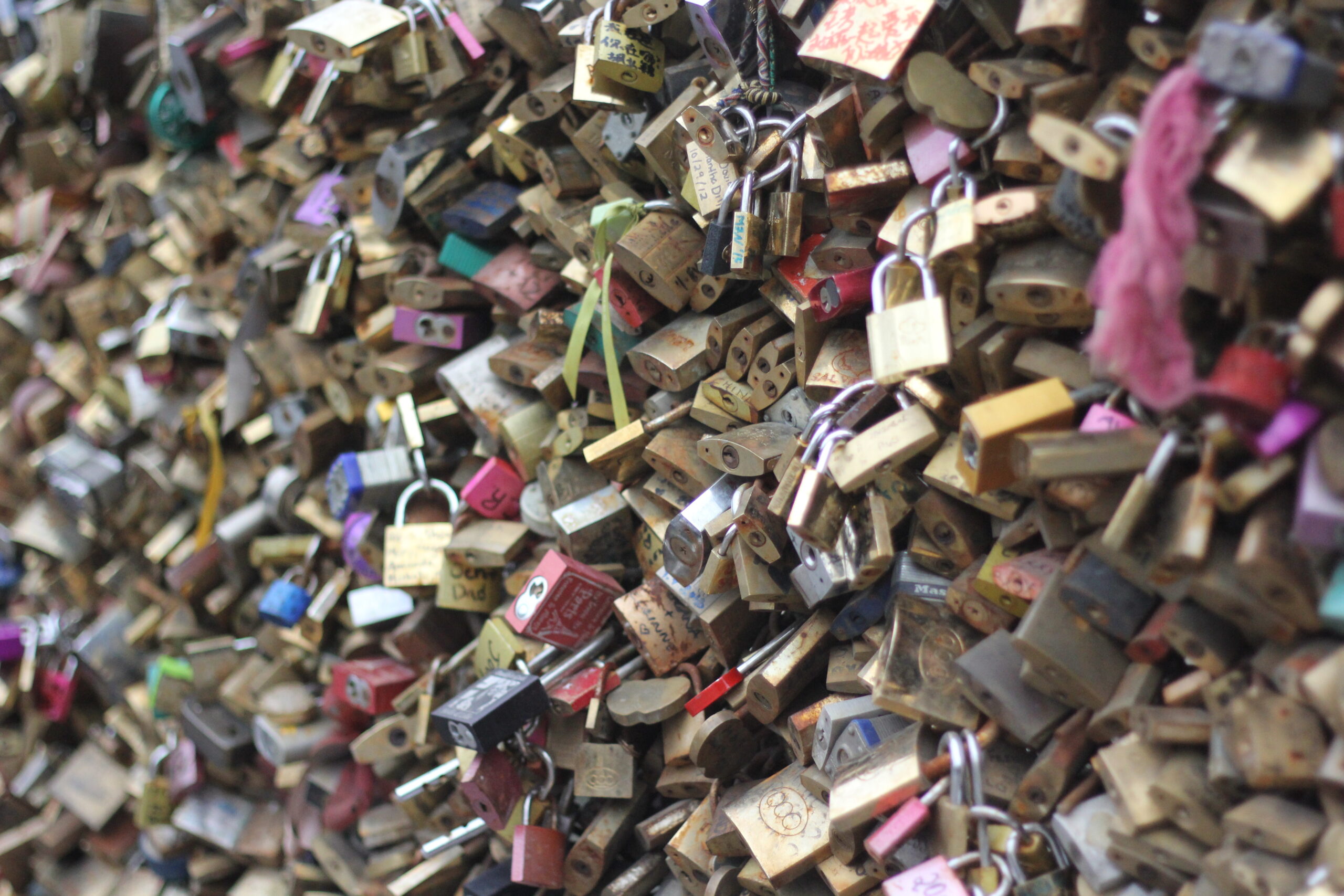
Because of the locks. Hundreds of thousands of locks, covering every inch of railing. Every size. Every colour. Brass ones, painted ones, heart-shaped ones, cheap ones from the hardware shop around the corner. Each carrying two names and one enormous hope.
That this would last. That nothing would change.
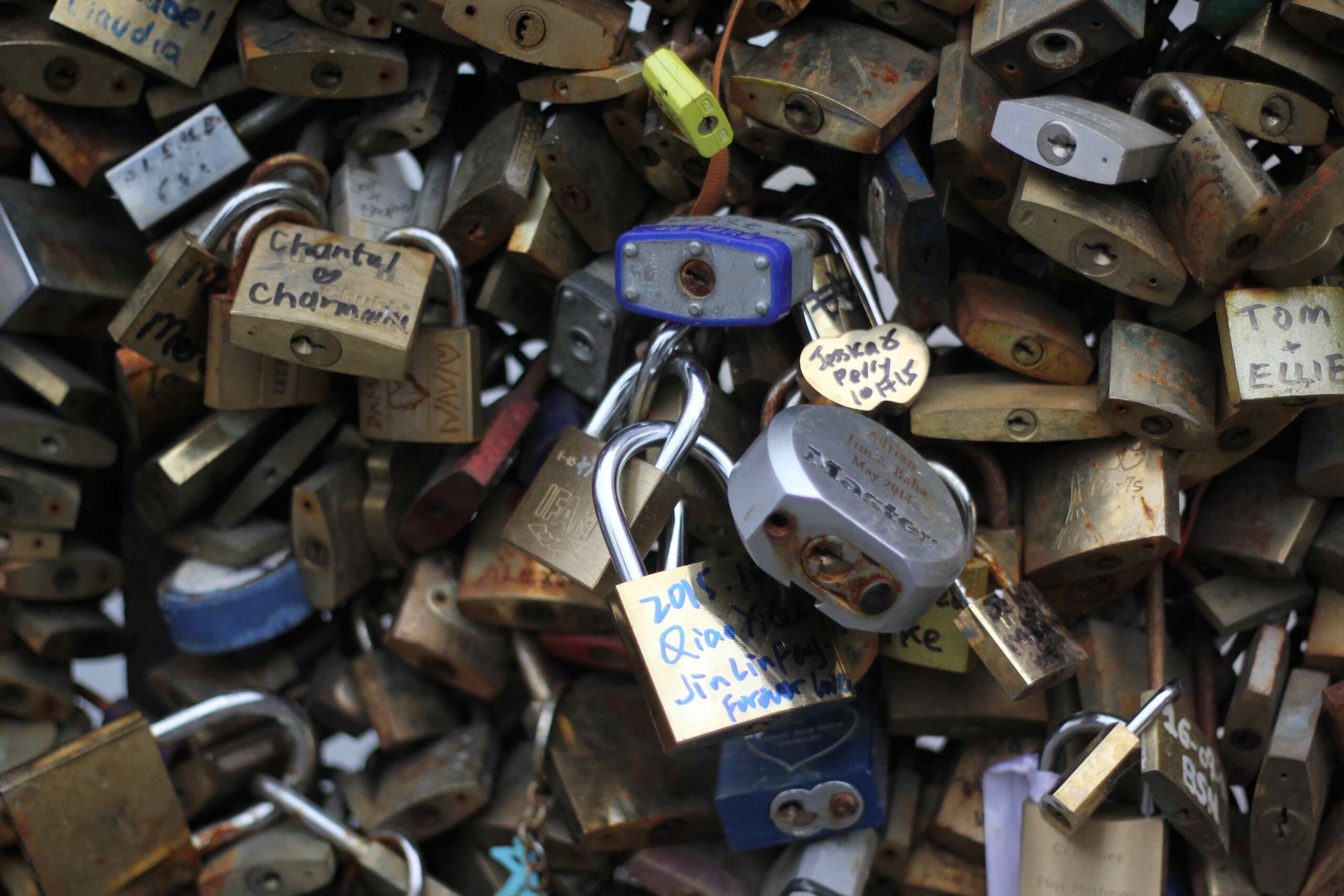
Look closely and you could read them. “Chantal et Charmaine.” “Tom + Ellie.” “2015, Qian, Jinlin — Forever.” Names in marker, names scratched in metal, names engraved by people who had planned ahead and brought the right tools. All of them saying the same thing, in every language, in every handwriting. Please. Not yet. Stay.
A Wish As Old As Worry
The story behind the locks begins, as the best stories do, with heartbreak. Mani Ratnam would have approved.
In a small Serbian town called Vrnjačka Banja, just before the First World War, a schoolmistress named Nada fell in love with an officer named Relja. He went to war in Greece. He fell in love with someone else. And did not come back to Nada. She never recovered, and eventually died of it. Which is the kind of ending that leaves a town looking for something to do with its grief.
The women of Vrnjačka Banja found an answer. They began writing their names, and the names of their loves, on locks, and fixing them to the bridge where Nada and Relja used to meet. Not a grand gesture. Not a ceremony. Just a small, stubborn wish dressed up as ironmongery. Protection, they hoped, against the same fate.
The gesture wandered. Across Europe, across decades, picking up believers everywhere it went. It found a 2006 Italian novel, in which two lovers attach a lock to a bridge in Rome and throw the key into the river. Young Europeans read it, recognised something in it, and began to act on it. Within two years, it had reached Paris.
Paris was not the end of it. The tradition has since spread to over 500 locations across 65 countries. Cologne, Moscow, Seoul, New York, Melbourne. Wherever there is a bridge and a railing, someone has arrived with a lock and a feeling.
Here is what you actually did. You brought a lock — or bought one from a vendor who had appeared on the bridge with the particular efficiency of someone who had read the situation correctly — wrote your names on it, snapped it onto the railing, and threw the key into the Seine. The lock said this is permanent. The key going into the river said I accept I cannot undo this.
It was, depending on how you look at it, either the most romantic gesture in the world or a considerable administrative problem in the making.
As it turned out, it was both.
By 2014 there were nearly a million locks on the Pont des Arts, weighing 45 tonnes. The equivalent of twenty elephants, standing very still on a wire fence, all of them believing in forever. A section of the railing collapsed under the weight. The city launched a campaign called Love Without Locks, which nobody paid the slightest attention to. Eventually the city stepped in, removed every single lock, and began the work of replacing the railings entirely.
We have always done this. Fear of losing a good thing at one end. A deep desire for more at the other. These are not weaknesses. They are the most human feelings there can be. The lock just happens to be what we had in our hands at the time.
A thread tied around the wrist. A ring slipped onto a finger. A coin tossed into a fountain. A name carved into a tree that will keep growing long after the feeling has moved on. And then a lock on a bridge and a key in a river — and the small, magnificent delusion that this time, finally, something might actually stay.
It never does. But the trying is very human, and it is very hard to argue with.
So What Did Paris Do?
It did what Paris does. It made a practical decision and somehow made it look elegant.
The old railings were pulled down and replaced with glass panels. Clean, clear, completely smooth. Nothing to attach to. No hook, no bar, no gap. A lock pressed against it would simply slide off, which is not the effect anyone was going for.
But here is what you can do now, standing on the Pont des Arts. You can look straight through. Through the glass, past the railing, all the way down to the Seine moving steadily below. The same river that was flowing when Napoleon built the bridge in 1804. Still going. Still not stopping for anyone.
There is something in that worth sitting with. We spend so much energy trying to fix things in place. Lock them down. Make them stay. And the river just keeps moving, completely unbothered, as if it knows something we have spent centuries refusing to accept.
Maybe the glass is the better lesson. Not a lock. Not a wish thrown into the water. Just clarity. See through it. Stay open. Keep moving.
The Seine keeps moving. And somehow, despite everything, so do we.
______________________________________________________________________________________________
If Paris and what tourism does to cities interests you, this one is worth your time. Tourist, Go Home.
3 responses
The only words that come to mind when talking about the mortality of everything and everyone are “Men may come and men may go but I go on forever”, more so at the mention of The Sienne. Our need to lock it down, to own, is what holds us back. And sometimes that desire is held so selfishly that we forget to acknowledge what existed so far.
It makes me sad to think that I will never be able to see the beautifully carved and designed railings which didn’t just depict the artsmanship but typically add so much character. Colours, designs, patterns are a window into the era something belonged to or a signature of the artists who designed it. Now it’s no longer there. An administrative problem is solved; alas, that bridge is no longer the same.
People do many things because of their faith. It adds so much colour to the life. Reason on the contrary is dry and colourless or colour-blind.
People think that a lock will ‘lock’ a relationship in a permanent bind, leaving almighty no chance of disturbing it.
People throw coins in the creek when the train from Diva crosses it on its way to Mumbra.
Recently an organization in Thane announced that it would buy (yes, buy) metal idols of gods if you wishes to give it away. There was a long queue of people carrying bags containing small idols no longer worshipped. Two women cried almost inconsolably when they handed over the small idols. Giving away worshipped idols was like committing a sin for them.
We see God in everything. And our prayers never stop. Because we want certainty in this uncertain world.
There is a Marathi movie based on a famous story. ‘Thamb Lakshmi, Kunku Lavate.’ Meaning ‘Please wait Goddess Lakshmi, let me apply vermillion to your forehead.’ A family loses money and everything, and the lady of the house prays Lakshmi to bless them. Finally Lakshmi obliges them and meets the lady. It is a custom (among Maharashtrians) that when a guest lady is leaving the house, the lady of the house applies vermillion on her forehead. The guest lady is not supposed to leave the house till it is done. The lady of the house instantly sees an opportunity. She tells Lakshmi ‘Wait, let me apply the vermillion’ as Lakshmi readies to leave, and goes inside the house but runs the in backyard and jumps in the well. Now Lakshmi has no choice but to stay in the house forever is the derived meaning, and thus prosperity is brought back.
Gods can be tricked in to taking a firm position – by putting a lock, throwing away the key and by promise of applying vermillion.