mindfulness

The Bowl That Holds Everything

As a young boy, every temple visit meant one thing before anything else. My great grandmother’s hand, and the soft clink of coins.

She would stop at the entrance, find the men sitting outside, and without ceremony drop a few coins into the black bowl in front of them. The sound was unmistakable. Metal on something hard and hollow. A clean, round clang that rang out and then faded into the temple noise. I heard that sound at every temple, in every town, across every visit. It became, without my knowing it, the sound of arrival.

I came to know the bowl’s name much later. Thiruvodu. In Tamil, thiru means sacred or holy. Odu means vessel. The sacred vessel. The bowl that holds what is given and asks for nothing more. Mendicants of Lord Shiva have carried it for centuries, painted black, hollowed from the hard shell of a fruit that, of all things, originates in the jungles of Mexico. It travelled oceans before anyone thought to name it sacred. Then it settled quietly into Tamil temple life, as if it had always been there.

I did not know any of this as a boy. I just knew the sound.

Well into adulthood, I picked up the courage to do more than drop coins and walk on. In a small town somewhere in rural Tamil Nadu, where life is placid and unhurried, a man sat on the ancient stone floor of a temple, sacred ash on his skin, a thiruvodu in front of him, its rim bedecked with bright flowers. We got talking. Within minutes he said something I have not managed to forget: “Whatever they give, my bowl must be worthy and ready to receive.”

I have turned that line over in boardrooms. In bad conversations. On mornings when the day arrived with more than I had asked for.

A decade and a half or so passed. Another thiruvodu brought alive an ordinary moment. This time I was in Konerirajapuram, a small village in the Chola heartland, off Kumbakonam. Its Uma Maheswarar temple has stood since the tenth century and houses what is said to be the world’s largest bronze Nataraja. A thousand years of devotion, with routines and a shrug. The village is now a shadow of its former self, though the temple stands unmoved.

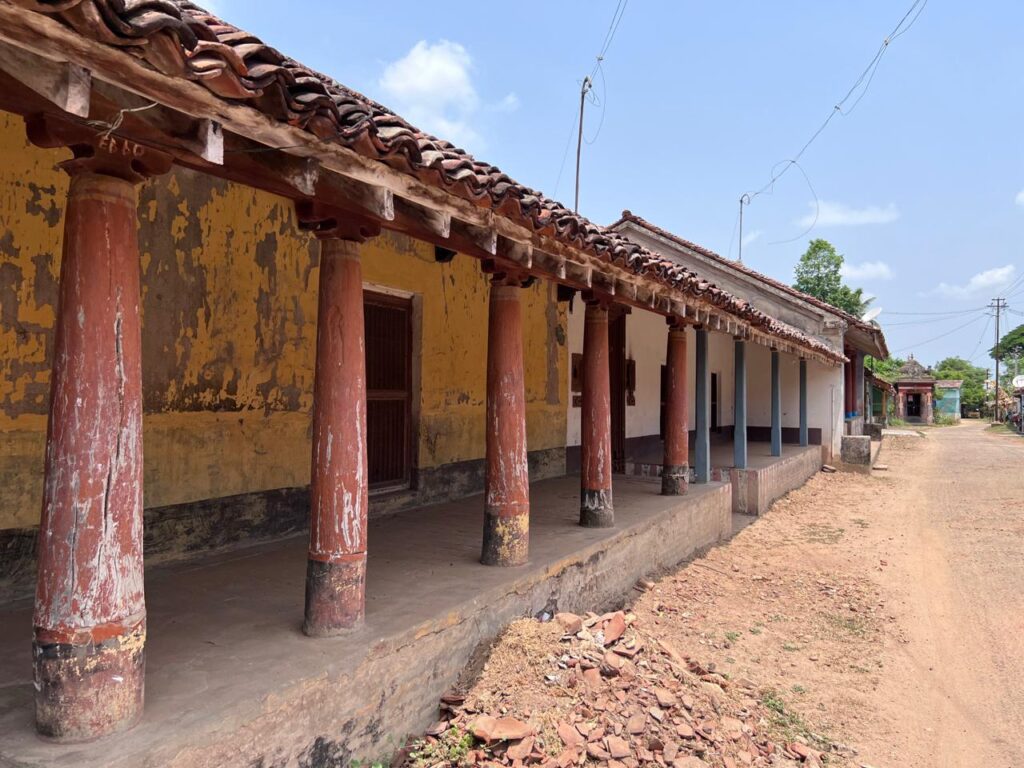
We passed through a deserted Agraharam to get there. Long colonnaded houses, ochre walls peeling in slow strips, red pillars standing at attention for a life that had quietly packed up and left. Somewhere in those corridors, families had cooked and argued and celebrated for generations. Now, just footsteps and a silence that wasn’t empty. The kind that remembers.

The temple was shortly after. And there he was, sitting outside, holding a thiruvodu worn smooth with years. No flowers this time. Just the bowl, the man, and his smile.

I asked him how he was.

He said, in Tamil, whatever has happened has happened for the good. Whatever will happen will all be for the good.

The words are from the Bhagavad Gita. But he spoke them with no performance attached. No invitation to discuss. He said what he said, smiled, and returned to sitting. The bowl sat on the ancient stone floor, looking at the sky.

He hadn’t overthought his afternoon. He wasn’t rehearsing the next thought or relitigating the previous regret. He had simply arrived at the present and settled there. The bowl open. The mind open. That was enough.

What the Sea Confirmed

Seneca, the Roman Stoic who wrote more wisely about happiness than he perhaps lived it, said something similar two thousand years ago. Happiness, he wrote, asks one thing: set down the memory of a bad past and the fear of a bad future. Two bags. Both heavy. Most of us carry them everywhere.

A few months later I drove to Sayalgudi without a plan. Just a sense the road went somewhere worth going. It did. The road ran out and the sea filled the gap. Waves arriving, crashing, dissolving without complaint, each one complete in itself.

I sat on that beach with a phone full of unread messages, a conversation I had handled badly three weeks earlier, and a meeting I was already dreading on Tuesday. I had carried all of it from Mumbai, through Madurai, down to the edge of the land. Good luggage management.

Each wave came in full, spent itself completely, and pulled back without holding on to anything. No wave has ever refused to break because the last one didn’t go well.

With one of those waves came back the image of the thiruvodu. It arrives open. It receives what comes. It does not clutch what has gone. The bowl doesn’t mourn its last contents or worry about the next. It simply stays ready.

The man in Konerirajapuram already knew this. He had known it long enough that he no longer needed to think about it.

Two bowls. Two men. One with flowers on the rim, one worn plain. Both open to whatever arrived. Between them, across a decade and a half of travel through Tamil Nadu temples, they had said everything Seneca spent letters trying to say.

Be ready to receive. Let go of the rest.

The bowl doesn’t ask what it deserves. It doesn’t mourn what it missed. It simply stays open, in whatever temple or crumbling Agraharam or quiet coastline you happen to find yourself in.

That, it turns out, is the whole practice.

This Moment That Is Slipping Away

Some lines stay. Some lines stir. A few quietly rearrange the furniture of the soul.

This one does not shake the house. It simply opens a window.

“The melody, a familiar current, pulled me instantly into the salt spray of a past self, revealing the sharp, inexplicable distance between who I was then and the present silence.” — Albert Camus

Songs from your wonder years always do this. They sneak up on you. No warning. One bar, and you are no longer here.

You are back in a room with an old 2-in-1 Panasonic tape recorder. Slightly temperamental. The eject button needed persuasion. The shelf above it carried a mélange of cassettes — handwritten labels, some spelling errors, all confidence. There was a particular smell in those rooms. Spices. Paper. A hint of ambition. Friends leaning in. Someone always claiming superior taste in music. Windows open to a world that felt large and somehow still manageable.

You remember the small-town ease of it. The presence.

And then you look around now. The devices are thinner. The music is cleaner. The storage is infinite. The shelf is gone. The room has changed. So have you. Scrolling, infinitely.

Nostalgia is a peculiar accountant. It tallies what was gained. It also, without fanfare, tallies what slipped away while you were busy refreshing screens.

A song does not merely remind you of who you were. It introduces you to the distance travelled.

The Thief in the Room and the Myth We Bought

There is, of course, a small device-shaped problem.

The phone. Eternally present. Faintly glowing. Always with something more urgent to offer than the room you are actually in. I have, on more than one occasion, reached for mine mid-conversation — not because anything important was arriving, but simply because the hand has developed its own ambitions.

It has successfully convinced an entire civilisation that the present moment is somehow insufficient. That whatever is happening here needs to be supplemented, checked, or at minimum photographed for later.

The other great lie, sold with equal confidence, is multitasking. The brain can hold one thing at a time — what we call multitasking is simply rapid switching between tasks, getting slightly worse at each of them, while feeling impressively busy throughout.

I have attended meetings in my head while being physically present in other meetings. The results were about what you would expect.

Neither of these revelations is new. What is mildly embarrassing is how consistently surprising they remain.

The Archivist Is Already at Work

Right now, something ordinary is happening around you. A voice in the next room. A cup placed on a table. A small irritation. A smaller delight. It feels entirely forgettable. It is not.

This, too, will one day be a melody. It will carry some future version of you back to a self you cannot yet imagine missing.

Bryson would probably note that memory is a slightly unreliable archivist with a fondness for soft lighting and selective omission. He would be right. But even unreliable archivists preserve something true. Something with weight.

So perhaps the only sensible response is to live this moment fully enough that it has something to give back later. Not as a performance. Not arranged for a photograph. Not in pursuit of the brief dopamine flicker of approval.

In the texture, instead. The awkwardness. The unfinished conversations. The imperfect furniture of today. The neighbour who burnt his bread and somehow let the whole floor know without making a sound.

You never know what the archivist will choose to keep. Or when a stray tune will pull it back out into the light.

Let it have something rich to retrieve.

A few days after these thoughts had been circling, Haresh Chawla wrote something on Founding Fuel that arrived like a companion piece. He approaches it from the other direction — not what memory retrieves, but what we keep deferring. The two ideas sit in quiet tension: anticipated memories pulling us forward, selective nostalgia pulling us back. Both, in their own way, are exits from the present. The destination, though, is the same.

_________________________________________________________________________________________

On a related thought — The Leisure We Forgot

Not a Travelogue. A Checklist.

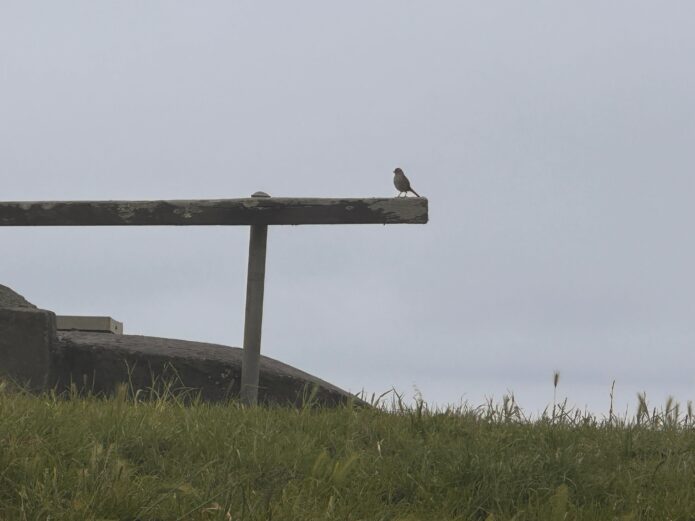
The bird sits alone on a weathered post. San Francisco breathes behind it. Fog rehearses its entrance. The Bay keeps secrets and receipts. Waves clap lightly, like polite applause. The bird doesn’t bow. It just is.

We chase bigger stages. The bird chooses a better stance. Small can be vast when attention is full. Presence is the original zoom.

What’s the moral? None, if you need a twist. Plenty, if you need a nudge. Simplicity survives weather. Patience outflies drama. Focus is free and expensive.

If you must take a selfie, include the horizon. If you must take a call, keep it short. If you must take advice, take it from the wind. Lean, then let go.

One bird. One post. One city that never agrees with itself and somehow works.

And that is enough for today.

Choose Magic: The Wonder of Everyday Moments

A bubble floats, catching the light, shimmering with impossible colours. A child watches, wide-eyed, as if witnessing pure magic. And maybe, just maybe, they are.

Because magic isn’t in the moment—it’s in how we see it. Every day hands us the same raw materials: time, people, possibilities. We can treat them as ordinary, or we can see the shimmer, the wonder, the fleeting brilliance.

The moment offers the opportunity. The magic is ours to make.

Here’s to a week filled with wonder!

Vagamon Hills: A Climb Worth the View

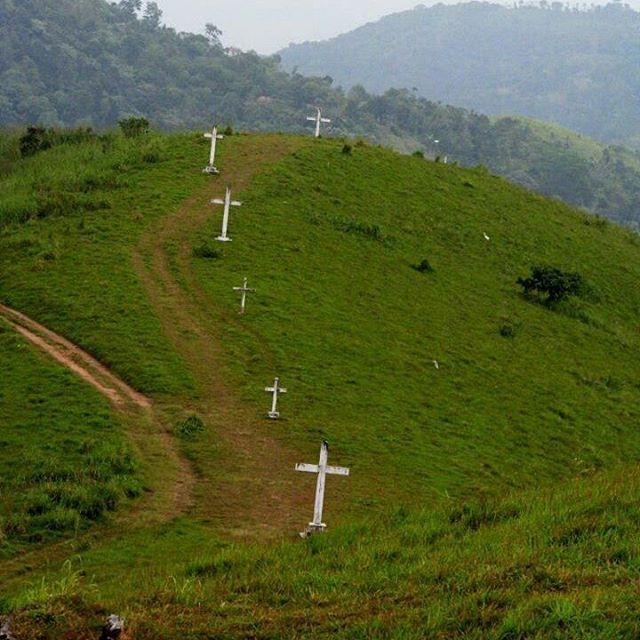
The hills of Vagamon do not just sit quietly. They call out, but only if you listen. The winding roads, the tall trees, and the gentle slopes hide their invitation. “Come,” they seem to say. “Climb, and you will see.”

Climbing is never easy, but the best views come after effort. And when you reach the top, it all feels worth it. The air is fresher, the world looks different, and the journey suddenly makes sense.

As the sun begins to set, the colours change. The hills turn gold, then orange, and finally a soft shade of dusk. The wind picks up, moving through the freshly cleaned road, making the plants dance. They bend, they sway, they follow the wind’s lead. They seem to smile, happy to be part of this moment.

Maybe we should be like them. Climb, adjust, move with the changes, and enjoy the journey.

So, which height are you climbing today?

 (at Vagamon Meadows)

Michael Jordan’s Lesson: The Real Test of Success Starts After You Win

Michael Jordan once said, “Success doesn’t stop when you get there.” And he would know. Winning wasn’t his final goal—it was just a checkpoint before the next challenge.

Reaching the top is one thing. Staying there? That’s the real test. What changes when you get there? Do your values shift? Do your old associations still fit? Does your outlook evolve, or do you stay the same?

And then comes the biggest question—What next?

A true winner doesn’t just celebrate the shot. They look up at the hoop again, ready for the next play.

Are you?

Blades of Grass, A Rising Sun, and a Gentle Morning Question

As the crimson sun kisses the fading night, every blade of grass leans in, stretching, reaching—almost as if trying to get a better view.

The breeze hums, the birds call, and together, they pose a gentle question: “So, how are you today?” Not demanding, not intrusive—just a playful nudge to start fresh.

And maybe that’s the best way to begin the day. Not with alarms and to-do lists, but with nature’s quiet company, a deep breath, and the simple joy of being asked.

How are you today?

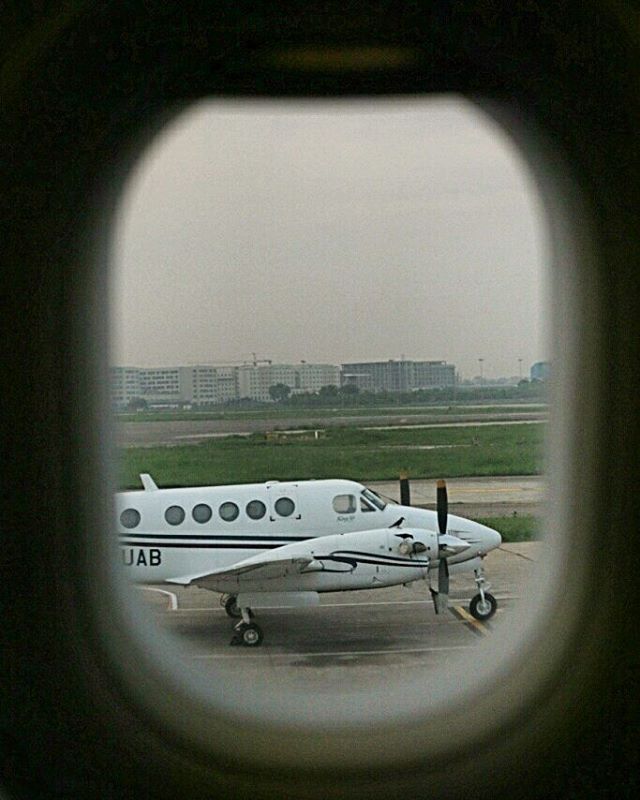
Big Planes, Small Planes—The Sky Sees No Difference

Same Ground, Different Journeys

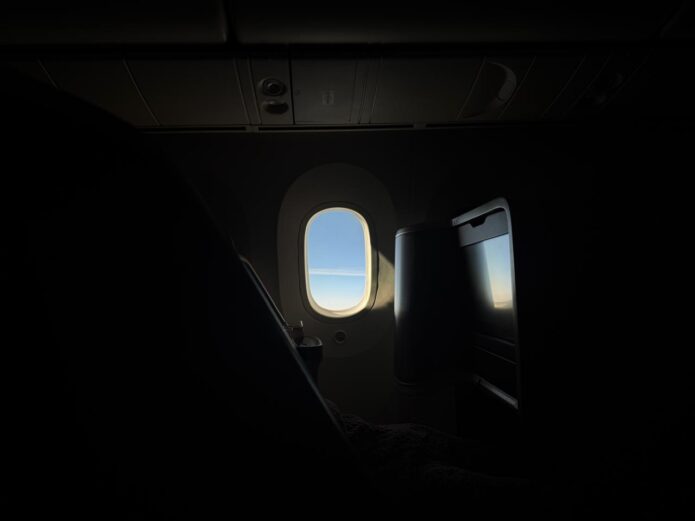
From my window, the small plane sits quietly on the tarmac. Side by side, yet worlds apart. Mine is bigger, his is smaller. And for a second, I almost dismiss it.

But then, I remind myself—size is just perspective.

This seat is mine for this journey. That plane is his. One isn’t better than the other, just different.

Because in the end, it’s not about the perch, it’s about the flight.

And once we take off, the sky doesn’t care how big the plane is.

“One Day We Will Be in Charge”—A Scrawl, A Promise

I spotted those words on what remains of the Berlin Wall. “One day we will be in charge.”

It wasn’t just graffiti. It was restless energy, an unshaken belief that the future can be different. Must be different.

That spirit—the refusal to accept things as they are, the audacity to imagine something better—is what drives progress.

And when I see the youth of today walking tall, carrying that same fearless energy, it fills me with hope. Because youth isn’t just age—it’s a state of mind.

And the future? It belongs to those bold enough to claim it.

(at Berlin, Germany)

At Tatanagar Station, a Man Who Spoke Through Stone

He sat there, unmoved by the rush of trains at Jamshedpur’s Tatanagar station. His craft lay at his feet, silent like him. His rustic look kept him company long after the train had left.

Our eyes met. His stare was vacant, words few.

But his hands had already spoken. In the carved stone pieces laid before him—each smoothed, shaped, and made to tell a tale. Stories etched in silence, held in the weight of his craft.

Some speak with words. Others let their hands do the talking.