traveller

The Road Ends, the Sea Begins: Notes from Sayalgudi

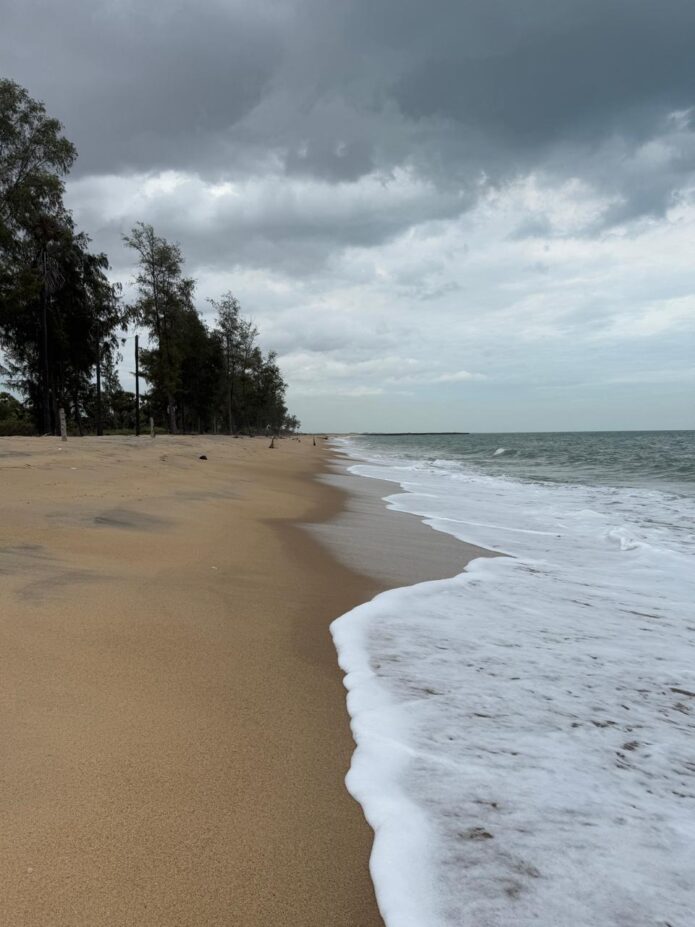
The beach at Sayalgudi doesn’t announce itself. It appears, almost shyly. No signboard declares “Welcome to Paradise.” No resort gate opens grandly with a poor, uninterested labrador that is forced to sniff the car’s trunk. There’s just the soft hiss of waves, a ribbon of clean sand, and the faint scent of salt that tells you you’ve arrived somewhere that doesn’t know it’s special.

The sea stretches endlessly, its rhythm unhurried, uncurated. There are no shacks, no deck chairs facing the sea, no soft-serve ice-cream vendors. Just a moon already at work, waves rehearsing their eternal script, and one solitary visitor thanking his stars that, such beauty escaped some social media influencer’s attention!

I sat there for a long while, watching the sea nibble at the shore and retreat, as if testing the flavour of land. It was hard to believe that this was two hours from Madurai. Tamil Nadu’s coastline is vast and beautiful, and extends beyond the fame of the Marina, Pondicherry, and Kanyakumari.

The Road That Curves Away from Fame

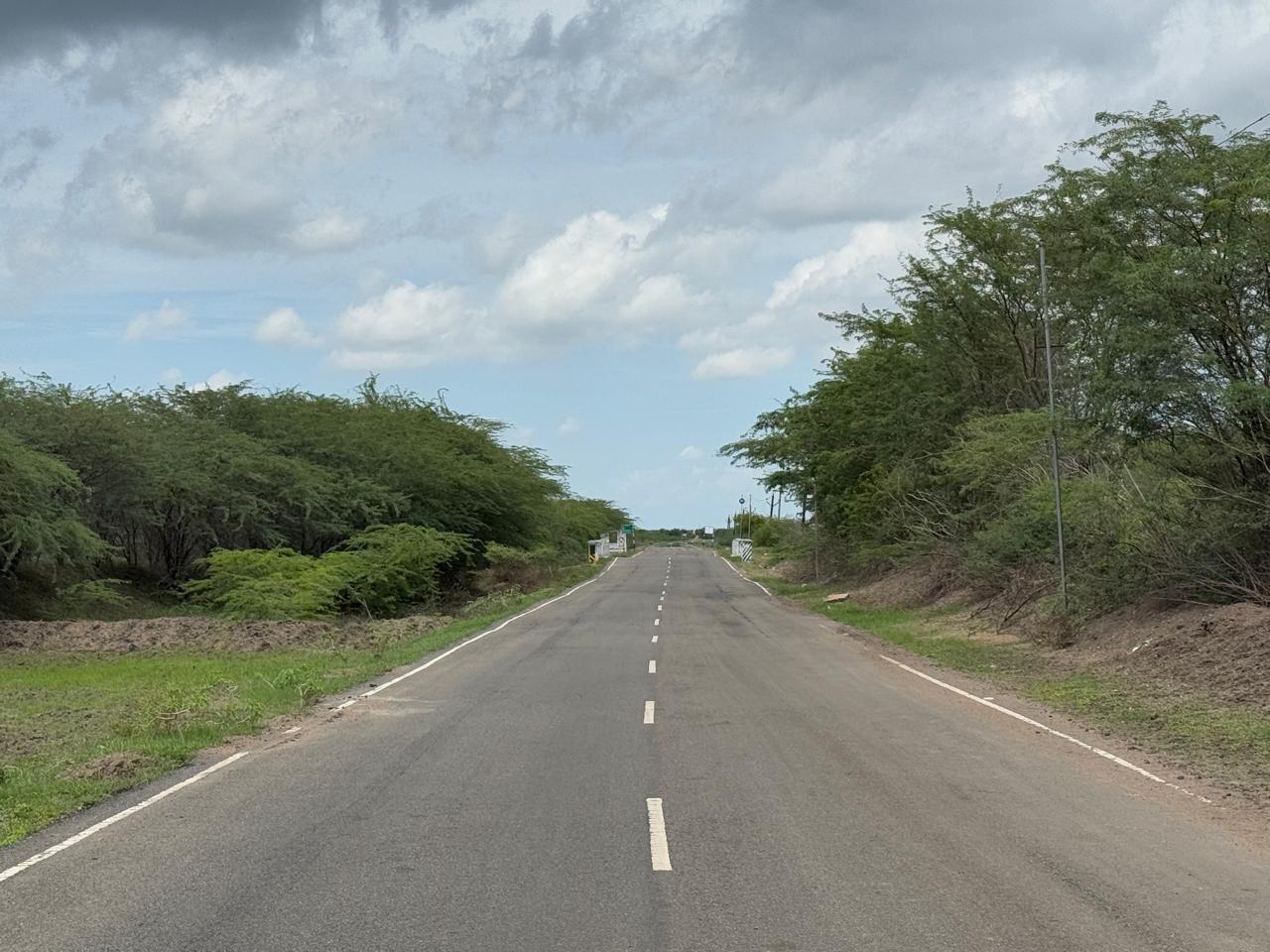
Getting here is a breeze. You start from Madurai, drive towards Rameswaram, and somewhere after Manamadurai you slip off the highway. The road begins to twist, as if embarrassed by how small it has become.

Seemakaruveli bushes for company

On both sides stand seemakaruveli bushes — Prosopis juliflora, the invasive guest the British brought in the 19th century to tame wastelands. Now it rules the countryside like a green despot, spreading faster than gossip and just as hard to uproot.

Villages appear and vanish like punctuation marks. Abhiramapuram, Karisakulam, Athikulam, Allikulam and many more whose names blur in the rear-view mirror. Their kaapi kadais linger longer in memory: tin kettles boiling away gossip, glass tumblers with a skin of sugar on top.

Politics rendered on plaster

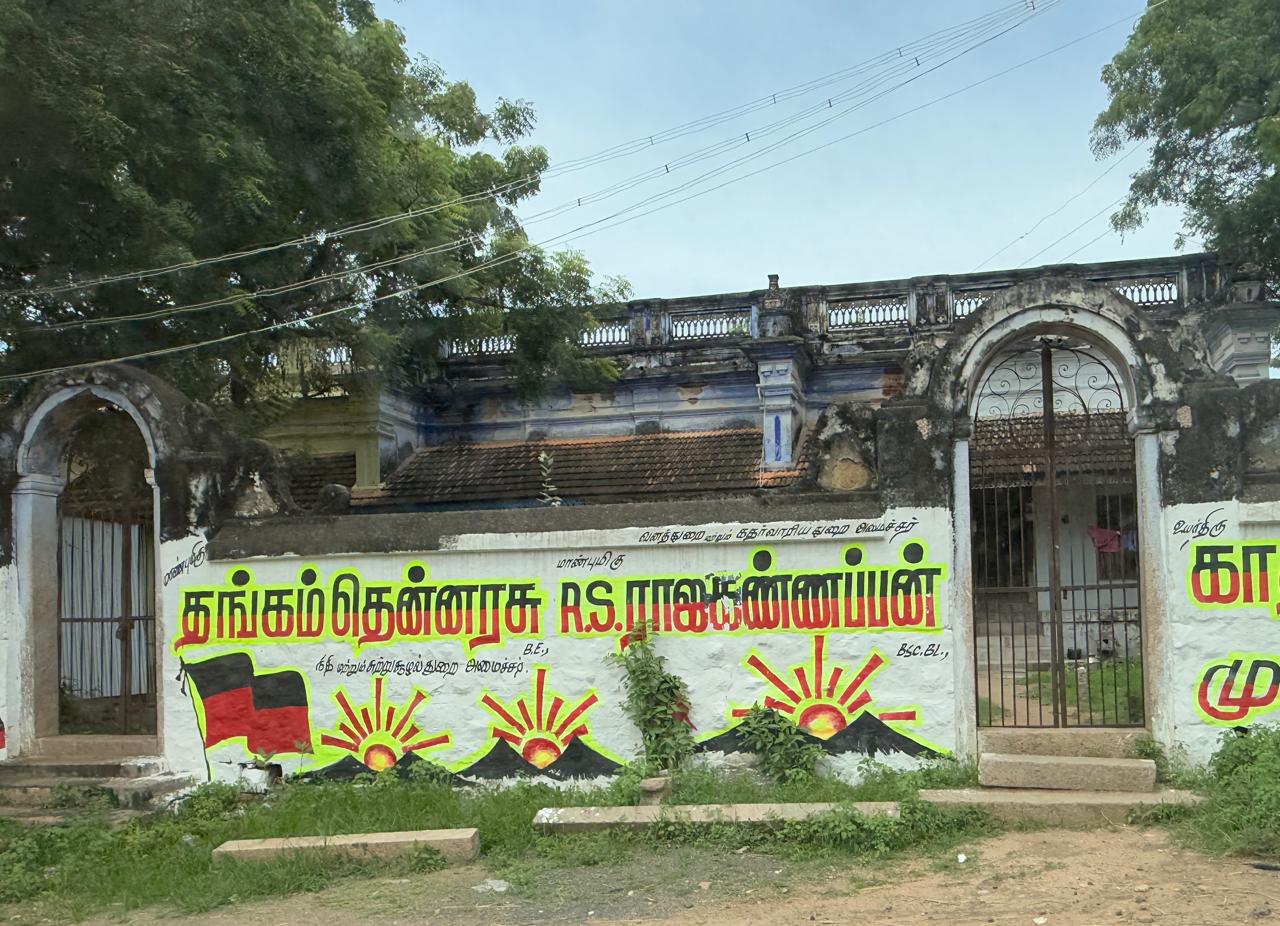
The walls along the way shout in red, black, yellow, white, and blue. Politics rendered in thick Tamil letters. In this part of the world, even plaster has opinions. A painted bull here, a rising sun there, two leaves somewhere else; campaign promises merging gracefully into art. Between two walls, a goat herd ambles across the road, his flock spilling into the highway with serene entitlement. He crouches by his TVS 50, adjusting something in the chain. They used to walk once, I think. Now even goats wait for engines.

Sugar and Spice. Ah! Memories

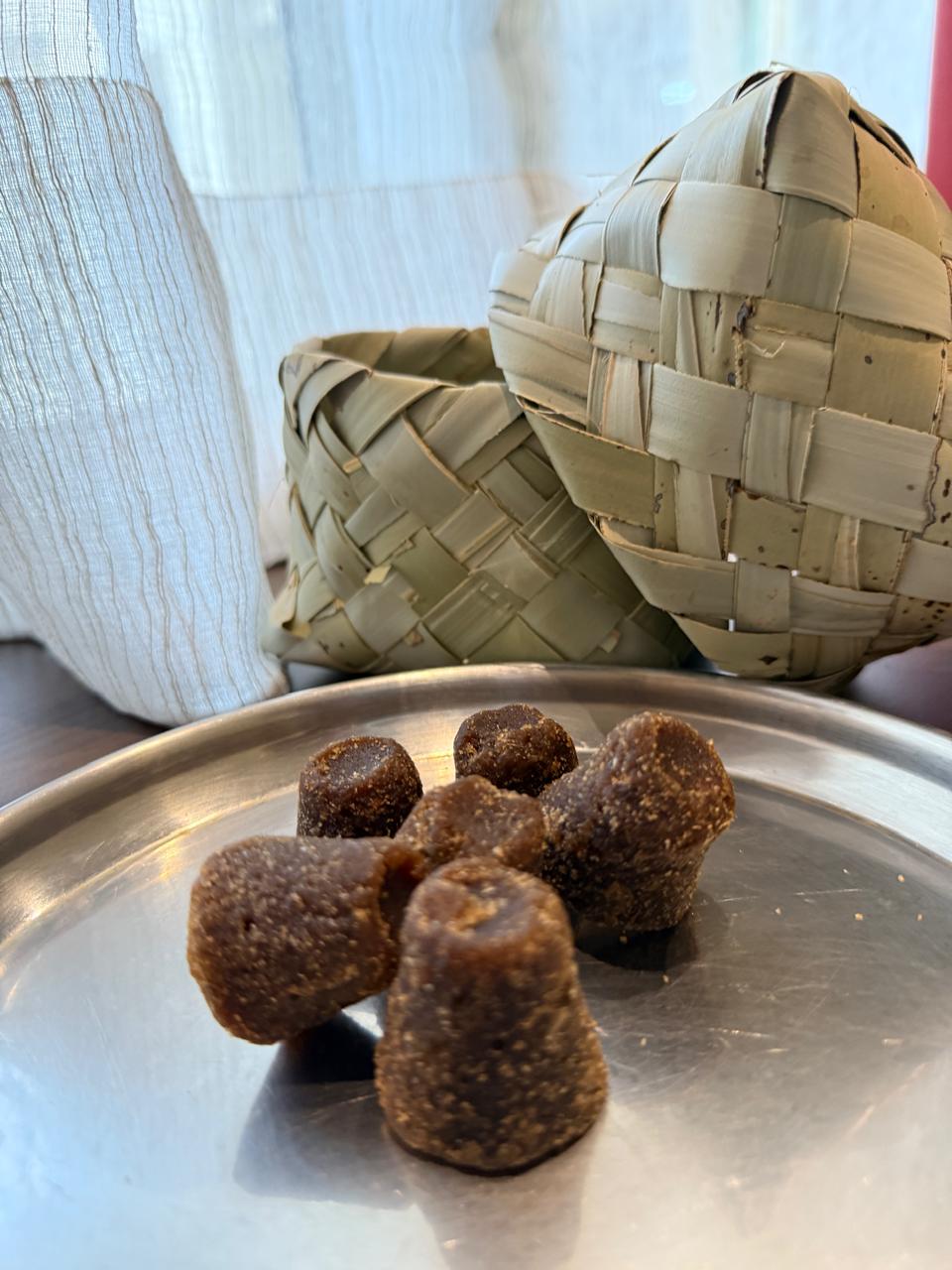
A little further on, a man sells inji karuppatti. Ginger and palm jaggery. Packed neatly in olai kottans (palm-leaf baskets). I buy some. They’re sweet, fiery, and nostalgic all at once. Childhood condensed into sugar and spice.

A Trust in the Road

I often drive through rural Tamil Nadu with a quiet confidence that if anything were to go wrong, someone would appear. Not with a “How may I help you, sir?” but with a curious “Are you okay? Water?” People here don’t outsource kindness. It’s part of the day’s work, somewhere between lunch and the evening bus.

Over the years, I’ve been stranded by punctures, wrong turns, and delusionary optimism. Each time, a passer-by has stepped in, not only to do the needful — that tidy phrase from corporate emails — but to actually see what was needed. A word, a jug of water, a direction, sometimes just company until help arrived. Rural rhythms seem to cock a polite snook at the urban question of “What’s in it for me?” Here, the answer is often, “Nothing”. And that’s fine. Every time signing off with a “paathu poituvaanga.” Loosely translated to “stay safe and come back soon.”

A Town That Prefers Modesty

Sayalgudi itself sits quietly on the southeastern edge of Tamil Nadu, a town of about twelve thousand people and exactly zero pretensions. There are shops selling coconuts, rubber slippers, and recharge coupons. The fish market smells of honesty and ocean. It’s the sort of place where everyone seems busy but no one seems in a hurry.

You follow a narrow lane until the houses give up, and the sea fills the gap. The transition is so sudden it feels like the land has run out of sentences and switched to poetry.

People Who Stay Real

The “resort” I stayed at was more functional than fancy. A bed, an air-conditioner and a fan that coughed with commitment, and a window that framed the horizon. Hot running water. Clean sheets. A television that didn’t need to be turned on, because the best show in town was hosted by the sea. And luxury came from the sound of the waves.

Gopal, the manager, was a stocky man with a weathered Hero Honda and an even more reliable smile. Ajit, the chef, tall and thoughtful, made fish curries that could start conversations. And Jaya, the attentive housekeeping staff, had returned to the resort after dallying with other employers in the vicinity. All wonderful people. “It’s good to help people here,” she said softly, folding towels with care. “Only wish others are considerate too.” Who those “others” were, we left hanging in that polite ambiguity that some conversations excel at. Like a scene from a Mani Ratnam movie where silence does the explaining. And you fill in the gap in your own way.

They didn’t greet you with a scripted “Good morning.” They simply nodded, smiled, and said “Enna saar?” — “What, sir?” — half greeting, half check-in on your wellbeing. It was infinitely warmer than the mechanical, well-practised flow of a five-star resort employee. These folks were simple and authentic. Just like the sea. That’s all that mattered.

Stillness, the Unadvertised Luxury

By night, Sayalgudi changes tone. Fishing boats light up the horizon like a shy constellation. The lighthouse sweeps its beam with the discipline of a monk ringing a bell. The air fills with the sound of insects tuning up, and occasionally, a bird that hasn’t yet signed off.

It’s the kind of stillness Pico Iyer writes about: “The more ways there are to connect, the more we seem desperate to unplug.”

Here, you don’t disconnect as rebellion. You simply forget to connect in the first place. The signal flickers; the mind steadies.

I walk along the shore, barefoot, the sand cool and damp. Something sharp presses against my foot. For a moment I think it’s a broken beer bottle. A memory from a trip to Bali. But it’s a seashell, luminous under the moon. I slip it into my pocket, a small souvenir of an unadvertised paradise.

Abundance in the Unfamous

The next morning, Ajit serves dosai so crisp it competes with the waves. Gopal checks if the Wi-Fi has decided to exist. Jaya hums an old Ilaiyaraaja song as she sweeps the courtyard. Life goes on, entirely unbranded.

I think of all the famous beaches I’ve visited. Where the soundtrack is a mix of EDM, immaculate hotel staff and unbridled commerce. Corn. Coffee. Ice-cream. Beer. Horse riding. Whatever. Sayalgudi reminds me what a coastline really is: a conversation between sea and sand that doesn’t need an audience.

Paul Theroux once said, “Tourists don’t know where they’ve been; travellers don’t know where they’re going.” In Sayalgudi, both are forgiven. You just sit, let the waves do the talking, and measure time in tides.

A Small Philosophy Between Two Waves

The sea teaches quietly. Each wave arrives certain, crashes spectacularly, and dissolves without complaint. Watching them, I begin to think of work emails and deadlines that once felt as urgent as surf, until they receded. Maybe that’s what travel to places like this really does: it returns scale to things.

My phone vibrates — a reminder of a meeting, a plan, a project. I look at the screen, then at the moon tracing its silver loop above the water. Another wave rises, crashes, and fades.

“Tomorrow,” I tell the caller. Then add, “Actually, day after.” I hear the silence on the other side.

I add, “Please.” One more wave roars.

The wind approves. The sea keeps its counsel. Somewhere far away, a boat hums its way home.

I switch my phone to airplane mode. This time, I don’t want to buckle up like I otherwise would when I do that. Because, this time, I am not in a plane. I seem to have wings.

Other blogposts from this trip
1. Kaapi Kadai wisdom
2. The Fort That Forgot Its Kingdom

Secret Destinations

Secret destinations are not so secret if you are not solely focused on the destination you came after. Martin Buber stitched travel to my heart with this immortal line.

“All journeys have secret destinations of which the traveller is unaware”.

Martin Buber

We all go on our journeys. There is a said destination that a contented traveller gets to. But a real traveller goes far beyond. Because the destination is not the end point. Several story(ies) start after you arrive!

There are elements like what else you discover in a journey. Like the lay of the land and markers in its evolution. Like this glorious temple of a 1000 years. It’s historical undulations. Some scripted in stone and other new tales that are spun to suit today’s skies. The internet tells you about this land’s past glory, the minerals beneath it and the flow of the water across the hills and much else. You can drink all of it in like a voyeur with no skin in the game or like a lover who is immersed in her love.

The rich air tells you a few stories, only if you are ready to stop and take in a breath without necessarily being coveted by the dull lure of THE destination you came after. Sometimes, I infer my lessons by looking at the people and their ways. Their quick stride, the simple ways, easy smiles, the quite common afternoon snooze under the neem tree and the collective bath by the lakeside.

At night when I peruse my random notes to realise, secret destinations are not so secret if the focus is on curiosity and possibility beyond what is apparent.

Today, I make my notes sitting in the shade that the Sun and a 1000 year old wall come together to offer.

There are two others men there. Animated in conversation.

One tells another a story from history about the king and his valour. He speaks as though he has seen it first hand. Passionate. Lyrical. And filled with energy. I am hooked. The story meanders.

And suddenly, he looks into his watch and remembers that they have to be somewhere else by this time. The other agrees. Their destination interferes with a story that was building up well. Both of them get up, dust themselves up and move.

Leaving me with their incomplete story. I let the king stay within me whilst shuffling my feet and wondering what new secret destination awaits the king. And me.

Drum Beats

If there’s one thing that refuses to sit still, it’s the drum. It calls, it commands, it moves. And when it does, so do you.

At the Chithirai Festival, the best drums don’t just set the rhythm—they set the spirit free. Feet tap, bodies sway, the energy sweeps through the crowd like a fever. You dance. You pause. You catch your breath. And then, you look around.

They’re still moving. The colours, the finery, the rhythm—it’s all alive, pulling you back in. You realise you’ve been out of action too long.

So, you move again.

Because that’s what the festival, and the drum, are here for.

That is the Chithirai Festival for you.

Small Bags. Big Wishes

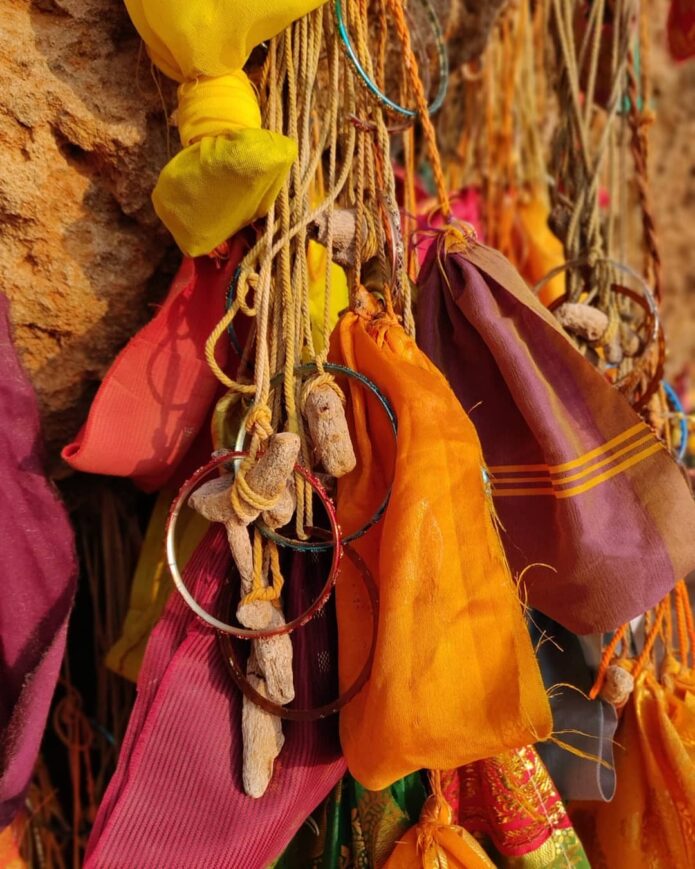
Small bags, bright with turmeric, jingling with bangles, dance in the morning breeze. Tied to a tree, they catch the first rays of the sun—fluttering, whispering, waiting.

Each knot holds a wish. Each thread, a quiet prayer. A mother’s hope, a daughter’s dream, a whispered plea for health, love, or a future yet unseen.

In rural Tamil Nadu, faith isn’t just spoken—it is tied, woven, and left to sway with the wind. And as the sun rises, the colours shimmer, as if the universe itself is listening.

 (at Thiruchendur, India)

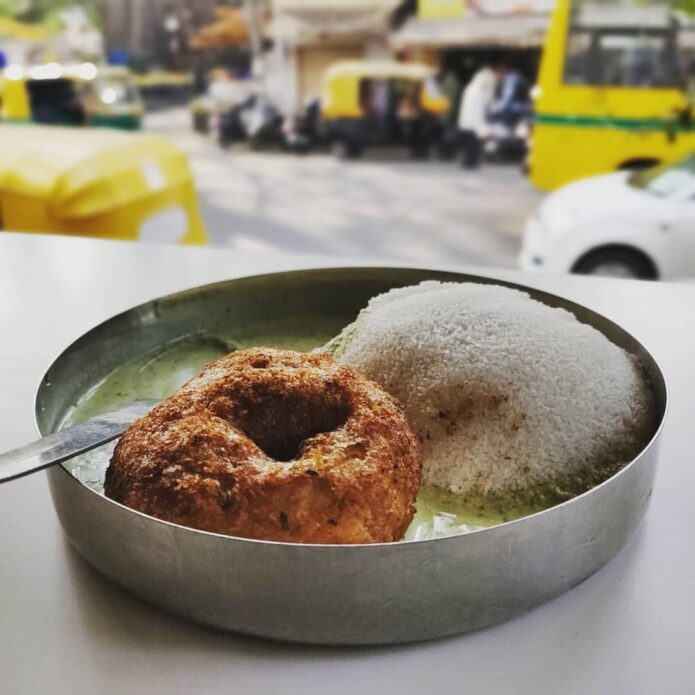
Idli Vada

The simplest foods change the mood inside the mind. Bring alive memories. And sometimes make you long to come back for good. The food pipe is the best route on the map of life! ..

Oh. What I not do for Idli vada?

(at Bangalore, India)

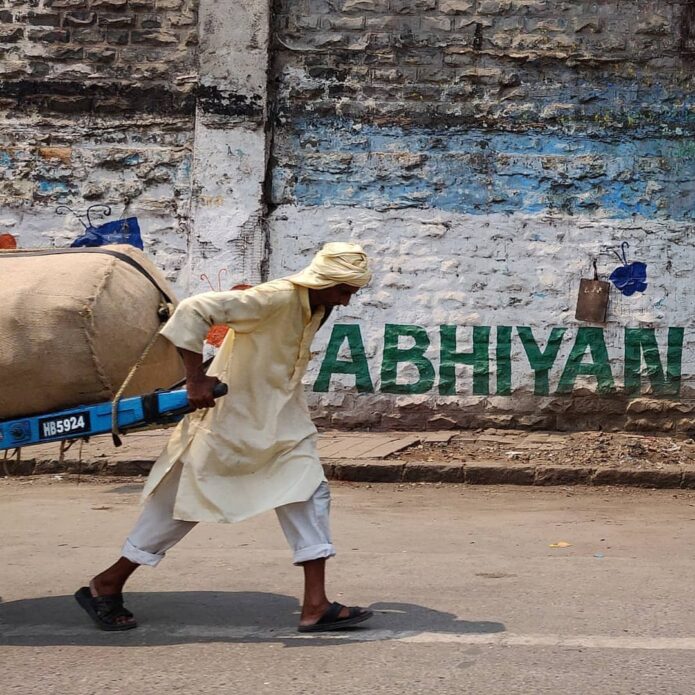
Handcrafted

When effort surpasses reality, the picture isn’t one of suffering—it’s one of progress.

Look closely, and life isn’t just about enduring; it’s about adapting, creating, pushing forward. The human spirit isn’t wired for defeat—it is built to survive and overcome.

Seen this way, suffering takes a backseat to resilience, and struggle reveals itself as transformation.

In markets, “handcrafted” is a premium label, reserved for the unique and the carefully made. But for millions, handcrafting life is not a choice—it’s everyday survival.

Effort, persistence, and the refusal to give in—that’s the real handmade story.

Clouds Of Japan

Tokyo is a city on the move. With a sense of calm hurriedness that can only be best experienced in a crowded metro. Or when the welcome note to the rented apartment mentions “by the way, there may be earthquakes. Don’t Panic”. Or like Typhoon Jebi is raging on and the resolute Japanese fight back with calm! ..
The Japanese are used to clouds. In a sad way too. But it doesn’t take long for you to notice they don’t let it cloud their way of living.

#traveller #instatravel #instapassport #blogger #travelblogger #blogging #travelinsights #traveladdict #traveltheworld #wanderlust #destinations # #wonder #independenceday #famous #celebrations #entrepreneur #love #wonder #musings #india #lives #nature #airport #Japan #tokyo #Jebi #typhoon (at Tokyo, Japan)
https://www.instagram.com/p/BnUhMS6FboX/?utm_source=ig_tumblr_share&igshid=zeghvxd3t3iq

Traveller Or Tourist?

“when all is said and done, much more remains to be said and done”.

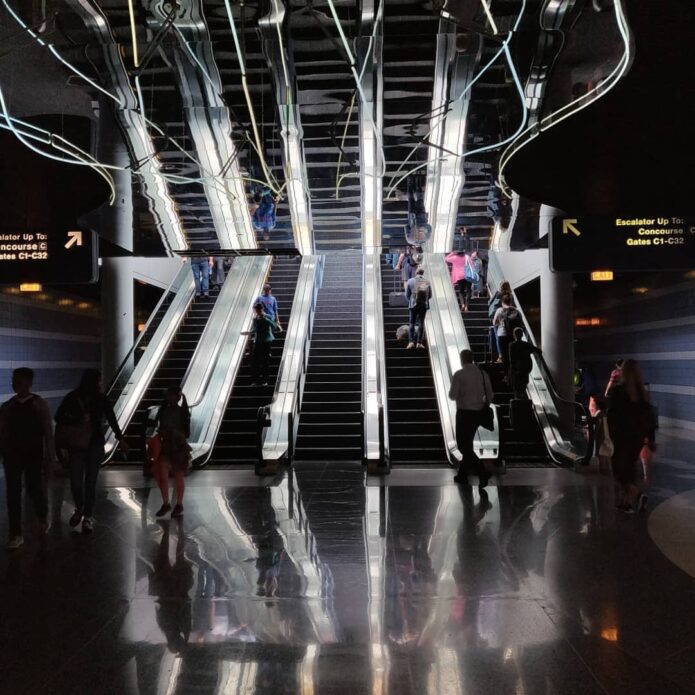
At the end of the Chicago leg of this travel, @flyohare ’s elevators say goodbye in a shiny memorable way!
“The traveler sees what he sees, the tourist sees what he has come to see”. Thats G.K.Chesterton. Now that I dint come to see the elevators, I guess I am a traveller! 🙂 

Flying Over the North Pole: Big Engines, Tiny Thoughts

Flying over the North Pole is magical. White stretches everywhere. Then a flash of sparkling blue. The Airbus A380 hums along, powerful yet tiny against the vast sky.

It makes you think.

Big and small are just ideas.

Up here, the plane feels like a dot. Down below, it’s a giant. Perspective changes everything. It’s humbling. It’s beautiful. It’s a moment to pause and wonder.

Coffee and Conversations: Wisdom in Every Sip

My dad always said, “Coffee drinkers are better thinkers.” He was a wise man. I’ve never had a reason to doubt him.

These days, “Coffee?” is the answer to everything.

Questions, answers, problems—it doesn’t matter. Coffee solves it all. Especially in Mumbai. The city hums with its energy, fuelled by endless cups.

Maybe it’s the caffeine. Or maybe coffee is just a great excuse to pause, talk, and think.

Either way, I’m not arguing. Coffee?