India

Win or Die: Notes from a Noisy Nation

“There are only two possibilities here, right? Win or die.”
That’s not a war general. That’s Aravind Srinivas, CEO of Perplexity AI.

He said this after his fledgling startup made an audacious offer to buy Google Chrome just as Google was considering acquiring his company. It wasn’t a stunt. It was a statement. Stand your ground. Don’t wait to be chosen. Act. Or disappear.

The clarity in those three words hit me harder than I expected. Because it reminded me of something else entirely: home.

A few months ago, I was traveling overseas. I was in Queensland, Australia. Clean air. Empty roads. Birds louder than people.

A woman who had once travelled to India leaned in and asked, not unkindly, “How do you live there? You’re packed like sardines.”

Fair question. All of Australia has as much people as in the city of Mumbai. We are packed. In trains. In queues and contradictions. We live close—to each other, to chaos, to survival.

And for millions, survival itself is a kind of victory.

India Wasn’t Meant to Make It

In 1947, perhaps that was the national mood. Survival. That’s all we had. A bruised nation, a broken economy, and a whole lot of people with very little of everything else.

India wasn’t meant to make it. Winston Churchill famously scoffed that India was just a “geographical expression” and predicted it would splinter into chaos after the British left.

We were a “developing country” before the term became polite. A country stitched together by courage and imagination.

And Yet—Here We Are

Seventy-eight years later. Messy. Loud. Functionally dysfunctional. Fractious. But moving. Rising.

There are parts of India today that can beat the world on any stage. Others still trying to find the stage. And yet others just finding their feet.

We are world-class in patches and at cross purposes in others. But we are trying. We are showing up. That counts. India is no superpower. But it is a super possibility. Our lived experiences vary more than all climate zones of the world. But deep down, the story is the same. The fight is the same.


One. Because of Many.

What makes India remarkable isn’t just its size or scale—it’s its stunning, often stubborn, diversity. Languages, cultures, cuisines, gods, gods within gods. We are made up of parts. Gloriously different parts. And yet, we are one. Not in spite of our differences, but because of them.

This plural existence that is messy, layered and opinionated is not a bug in the system. It is the system.

It may look inefficient from a distance. And may confound those seeking sleek, clinical uniformity. But in India, sameness has never been the soul. Diversity is. And that predates independence!

To truly be Indian is to celebrate that. To respect what is not ours. And honour where we came from. And to defer, with humility, to where we are headed.

We can disagree—on politics, beliefs, or the best way to eat dosa. But when we hold hands, we can move forward. That is our superpower.

One. Because of many.

Victory Means Living Fully

Victory, my dad used to say, is living to your full potential. Anything less, and something inside quietly dies. You may not acknowledge it at first. But a part of you knows. And shrinks a little further each time.

That’s the real journey. Especially for a country like ours. To go from simply surviving to fully showing up.

From “How do you live there?” to “How do they do that?” That arc takes courage. Not the loud, chest-thumping kind. But the quiet, daily, persistent kind.

The kind that keeps going even when things seem okay. The kind that still believes.

Aravind Srinivas’s clarity in that pithy statement reminded me of the many times India has stood at a cliff’s edge and chosen to jump forward—uncertain, unready, but unwilling to back down. Here are my top five moments India had no choice but to Win or Die. Of course, these are through my imperfect lens. And you would have yours!

Five Moments India had no choice but to show up. And win!

1. 1991: Economic Liberalisation

India was on the brink. Foreign reserves were down to a few weeks. A default loomed. As a last resort, the government flew out gold reserves to secure emergency credit. In response, Finance Minister Manmohan Singh and Prime Minister Narasimha Rao dismantled decades of economic protectionism. And how! The reforms were unpopular. Risky. Uncertain. But the alternative was collapse. That pivot didn’t just save the economy. It opened up opportunity for millions. Win. Or die.

2. 1960s–70s: The Green Revolution

Post-independence India was trapped in a cycle of food shortages and foreign aid.
Famines were frequent. Hunger was normalised. Then came a wave of scientific intervention: high-yield seeds, irrigation projects, fertilisers. Led by M.S. Swaminathan and supported politically, the Green Revolution transformed agriculture. India went from begging for grain to becoming self-sufficient. And feeding a large and growing population! More than food, it was about dignity. Win. Or die.

3. 1983 & 2011: Cricket World Cup Wins

In 1983, India entered the World Cup as rank outsiders. The West Indies were expected to cruise.
But Kapil Dev’s team defied every expectation and rewrote history at Lord’s.
It wasn’t just a cricketing upset. It was a shift in national imagination: maybe we can win.
In 2011, the stage was different. India was expected to win. But the pressure was immense.
When Dhoni hit that final six, it wasn’t just a sporting victory—it was emotional closure for a generation.
Two decades. Two trophies. (Read more)
Same mindset: Win. Or die.

4. 2016 onwards: The Data Disruption

Before 2016, mobile data was expensive and unevenly distributed. Internet access was a luxury in many parts of the country. Reliance’s Jio changed the game. Offering cheap data and forcing every telecom operator to adapt or perish. It became more about participation than a phone plan. Rural India started streaming. Teenagers started coding. Small businesses went digital.
Digital inclusion became the new frontier. Win. Or die.

5. 2010s – Present: Aadhaar and UPI

How do you bring a billion people into the financial system? You start by giving them a unique identity—Aadhaar. You link that to banking, subsidies, and digital payments. And build UPI. Today, Indians make millions of real-time transactions a day without cards or cash.
It’s not flashy, but it’s revolutionary. No other country has done it at this scale, with this quiet confidence. Win. Or die.

The Thread That Connects Them All

There are countless others. Partition. Operation Flood. The space programme. The vaccine rollout. Operation Sindhoor. Kargil and other wars. And so on. Besides the ones that make it to the news, there are several personal and community triumphs in unnoticed corners of the country. All of them have imperfections galore. But each one is stitched with the same thread: courage in the face of reality. The refusal to be defined by what is. And the constant push to discover what could be.

More in the Tank

Because in this messy, magnificent democracy of ours, there is always more fuel in the tank of potential. Something that we can access when we come together with mutual respect and collective intent. And when it comes to embracing Win or Die, the latter isn’t really an option.

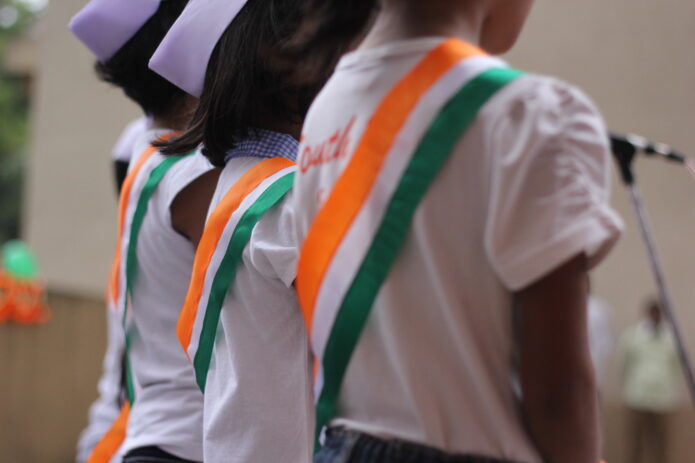
Happy Independence Day.
India’s Progress: Poverty Fell While the Doomsday Clock Ticked Closer

The world feels heavy with crisis—wars, climate disasters, and a growing sense that things are falling apart. But here’s something worth paying attention to: India has made remarkable progress in reducing poverty. Over the last few decades, millions have moved out of extreme poverty, quietly reshaping the country’s economic landscape.

This isn’t just a feel-good statistic. It’s hard evidence that things can get better, even in challenging times.

And Yet, the Doomsday Clock Ticks Closer

Despite such progress, the Doomsday Clock, that dramatic symbol of how close we are to global catastrophe, was reset to 89 seconds to midnight this year. It has barely moved—stuck at 100 seconds for years, then 90, now 89. The change is cosmetic, not meaningful.

At a Founding Fuel Masterclass on The World in 2025, Sundeep Waslekar called this reset a cop-out. He argues that the real number should be closer to 60 seconds. He pointed to a joint article by Prince Hassan of Jordan, advocating for a sharper reset.

But while the world debates whether catastrophe is inevitable, there’s another story playing out—one of real, measurable progress. One that gives me hope amidst all the gloom and doom.

India’s Role in Reducing Poverty

A recent study by Armentano, Niehaus, and Vogl found that global extreme poverty fell from 44% in 1981 to just 9% in 2019—and India played a huge role in that shift. The study found that 57% of those who started in poverty in rural India managed to escape it—one of the highest exit rates among all countries surveyed.

How Did India Do It?

Some long-held assumptions don’t hold up. The study found that:

  1. People didn’t need to switch careers. Most who escaped poverty kept working in the same industry, improving gradually rather than making risky jumps.
  2. Moving to cities wasn’t the golden ticket. Rural-to-urban migration wasn’t a major factor, and in some cases, rural-to-rural moves worked better.
  3. Self-employment was key. Unlike in Mexico or South Africa, where wage jobs mattered more, in India, self-employment played the biggest role in lifting people out of poverty.

Handouts Helped, But Progress Was Broader

Government support, cash transfers, and aid helped cushion families from falling back into poverty. The study found that when people slipped below the poverty line, social protection measures often softened the blow and gave them a fighting chance to recover.

But the biggest long-term gains came from economic activity—steady income, better opportunities, and gradual improvements in livelihoods. India’s 1991 economic liberalization, expansion of micro-businesses, small-scale farming improvements, and informal work created conditions for many to climb out of poverty while staying in familiar trades.

What’s the Big Takeaway?

Poverty isn’t a static trap. People move in and out of it constantly. The good news? In India, more people have been moving up than down.

The Doomsday Clock may be ticking, but time isn’t running out just yet. The world has seen real progress—and with the right focus, there’s more to be done.

Read the full study [here]. It’s messy, surprising, and hopeful.

Progress doesn’t stop—and neither should we.

Drum Beats

If there’s one thing that refuses to sit still, it’s the drum. It calls, it commands, it moves. And when it does, so do you.

At the Chithirai Festival, the best drums don’t just set the rhythm—they set the spirit free. Feet tap, bodies sway, the energy sweeps through the crowd like a fever. You dance. You pause. You catch your breath. And then, you look around.

They’re still moving. The colours, the finery, the rhythm—it’s all alive, pulling you back in. You realise you’ve been out of action too long.

So, you move again.

Because that’s what the festival, and the drum, are here for.

That is the Chithirai Festival for you.

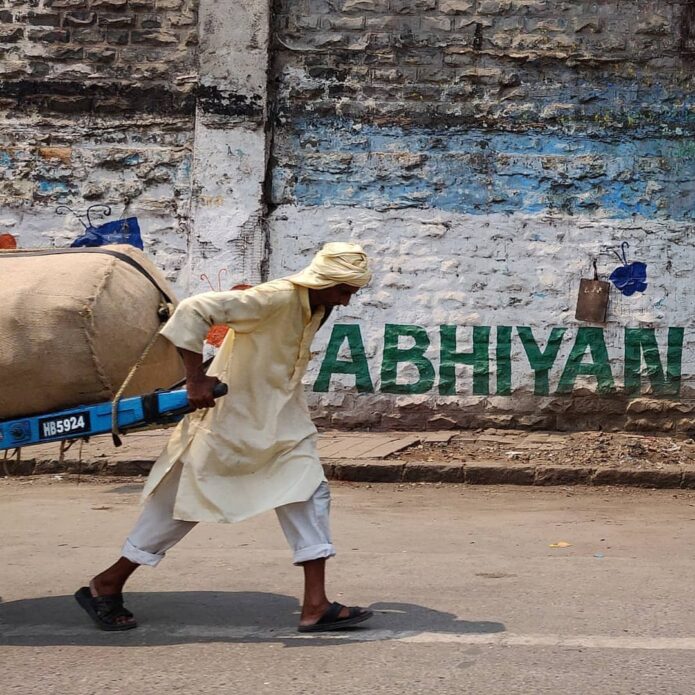
Handcrafted

When effort surpasses reality, the picture isn’t one of suffering—it’s one of progress.

Look closely, and life isn’t just about enduring; it’s about adapting, creating, pushing forward. The human spirit isn’t wired for defeat—it is built to survive and overcome.

Seen this way, suffering takes a backseat to resilience, and struggle reveals itself as transformation.

In markets, “handcrafted” is a premium label, reserved for the unique and the carefully made. But for millions, handcrafting life is not a choice—it’s everyday survival.

Effort, persistence, and the refusal to give in—that’s the real handmade story.

Clouds Of Japan

Tokyo is a city on the move. With a sense of calm hurriedness that can only be best experienced in a crowded metro. Or when the welcome note to the rented apartment mentions “by the way, there may be earthquakes. Don’t Panic”. Or like Typhoon Jebi is raging on and the resolute Japanese fight back with calm! ..
The Japanese are used to clouds. In a sad way too. But it doesn’t take long for you to notice they don’t let it cloud their way of living.

#traveller #instatravel #instapassport #blogger #travelblogger #blogging #travelinsights #traveladdict #traveltheworld #wanderlust #destinations # #wonder #independenceday #famous #celebrations #entrepreneur #love #wonder #musings #india #lives #nature #airport #Japan #tokyo #Jebi #typhoon (at Tokyo, Japan)
https://www.instagram.com/p/BnUhMS6FboX/?utm_source=ig_tumblr_share&igshid=zeghvxd3t3iq

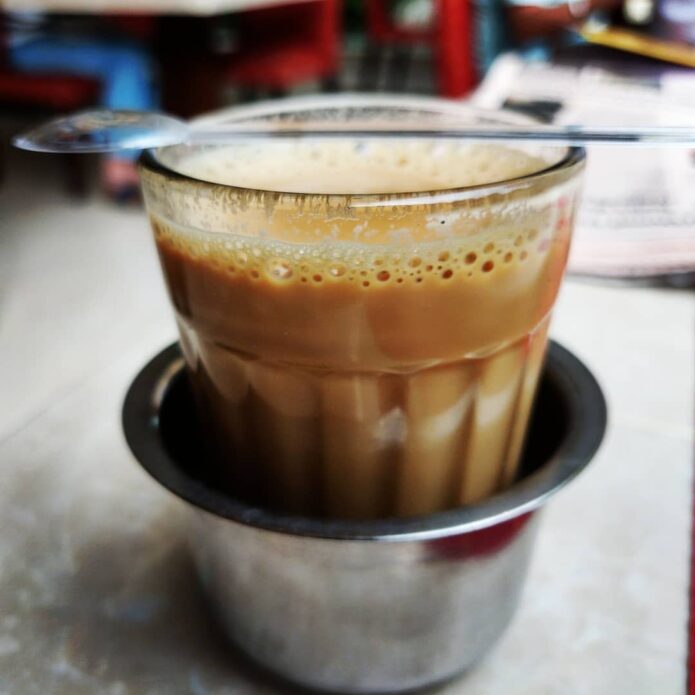
Coffee and Conversations: Wisdom in Every Sip

My dad always said, “Coffee drinkers are better thinkers.” He was a wise man. I’ve never had a reason to doubt him.

These days, “Coffee?” is the answer to everything.

Questions, answers, problems—it doesn’t matter. Coffee solves it all. Especially in Mumbai. The city hums with its energy, fuelled by endless cups.

Maybe it’s the caffeine. Or maybe coffee is just a great excuse to pause, talk, and think.

Either way, I’m not arguing. Coffee?

Chaos, Order, and the Mind’s Eye

Chaos and order aren’t about what we see—they’re about how we see. A neatly stacked pile eventually topples. A tangled mess, given time, reveals its own quiet logic.

The most structured plan can unravel in seconds. The most chaotic moment can, strangely, feel just right. Maybe order is just a matter of patience, and chaos, a test of perspective.

Look closer. Beyond the clutter, beyond the randomness—there’s always a pattern waiting to be noticed.

Where Does the Sea Begin? A Child’s Questions at Marine Drive

We sit by the sea, watching its endless waves. She sits beside me, tossing questions like pebbles into the water.

“Where does the sea begin and where does it end?”
“Can we build a new sea?”
“If we can’t build a new sea, then we must take care of this one, right?”

I nod. She’s here for answers. I came here for the breeze. But she’s stirring up a storm.

Somewhere, I hope the right men and women are listening. Because the sea has no voice—except for those who ask the right questions.

 (at Marine Drive Mumbai)

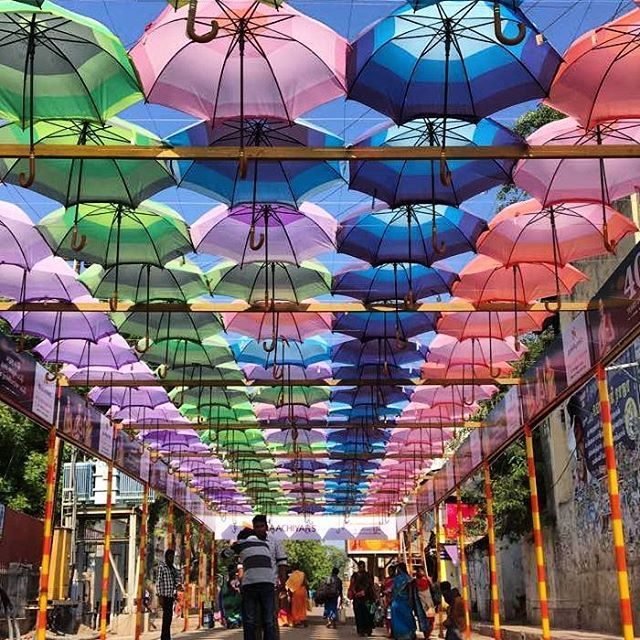
How Many Umbrellas to Block One Sun?

How many umbrellas does it take to block out the one Sun?

And yet, each throws a different colour, bending light into its own little universe.

Shapes shift, shadows stretch, and a quiet dance begins—patterns forming, fading, reforming.

People walk through it, oblivious or enchanted. Some are part of the dance. Some don’t even know they are.

The Sun plays. The umbrellas respond. The world moves on.

Who’s watching? Who’s noticing?

#umbrella #Sun #Madurai #summer #culture #life #ordinary #traveller #instatravel #instapassport #blogger #travelblogger #blogging #traveladdict #traveltheworld #wanderlust #play #lessons #india #metaphor #love #reflection #purpose #latergram
#season #future (at Madurai, India)

Life is a Series of Choices—Make Them Count!

Life isn’t just lived—it’s chosen. Every moment, every turn, every ‘yes’ and ‘no’ shapes where we stand today and where we’ll go tomorrow.

We are the sum of our choices. Some lead to open doors, others to lessons. But each one writes a part of our story.

Choose with care. Choose with courage. Because the fruits of good choices don’t just nourish the present—they secure the future.

#choice #health #fruits #stories #culture #life #ordinary #traveller #instatravel #instapassport #blogger #travelblogger #blogging #traveladdict #traveltheworld #wanderlust #play #lessons #india #metaphor #love #reflection #purpose
#season #future (at Gurgaon, Haryana)