A teacher I had in Madurai had one instruction. Delivered daily. With the confidence of someone announcing a natural law.
Pay attention.
I paid. Mostly because she was terrifying.
It took forty years to notice the instruction was strange. You pay taxes. You pay rent. You pay for mistakes you didn’t entirely make. Attention, apparently, belongs in that list.
Seventeen browser tabs later
A few months ago, I was reading Steven Pinker. Something about language and how it shapes thought. A small question snagged. Why pay? I looked it up. Then something else. Then it was an hour later and I had seventeen browser tabs open and a strong opinion about German.
Here is what I found.
English is the only major language that treats attention as a transaction.
In German, you gift it. Freely. No invoice.
In Irish, you bring it somewhere, like a person arriving with something tucked under their arm.
In Japanese and Chinese, you pour your mind into something. Slow, deliberate.
In Arabic, the root of the word means to wake up. To attend to something is to be alive to it.
And then there is English. Where attention is currency, the mind is a wallet, and a classroom in Madurai is apparently a debt collection agency.
Lakoff and Johnson wrote a book called Metaphors We Live By. The argument, simplified badly, is that metaphors are not decoration. They are the architecture. The way you phrase something tells you what the thing actually is, in the mind of the person speaking.
Which is worth sitting with for a moment
The bill, and what it assumes
If attention is something you pay, it can be paid reluctantly. Dutifully. Resentfully. You can pay attention to a meeting you hate, a speech going nowhere, a relative explaining their knee surgery in considerable detail. Obligation discharged. Ledger balanced.
If attention is something you bring, that changes. You had to decide to carry it.
If attention is waking up, reluctant attention barely makes sense. Either you’re awake or you’re not.
In Tamil, the word is kavanam. From a root meaning to watch over something carefully. Almost protectively. Less a school instruction, more something you’d say to someone you trusted with something precious.
My teacher never said it that way. She had twenty three children and a chalk duster she was not afraid to use.
But I have been thinking about her instruction ever since. About what it asked for, and what it quietly assumed. That attention was a cost. That a child in a classroom in Madurai had a payment to make.
The metaphor you grow up with becomes the instruction you carry. It tells you what you owe, and to whom, before you are old enough to question it.
Last week, I was trying to get a suitcase under seven kilos so it could travel with me into the cabin of an airline where certain staff members stand near the boarding gate with a stern-looking weighing scale. They do not smile. They do not negotiate. They do not believe in intentions.
This is a strange modern sport. It involves rules, judges, and quiet humiliation.
Items that had travelled loyally with me across cities and countries were suddenly asked to leave. Some without notice. The weighing scale remained unmoved. The staff remained polite and implacable.
The suitcase eventually closed. Barely. I did not feel victorious. I felt informed.
December has the same effect.
Time slips away quietly through the year. It carries minor shifts and major changes in the same sweep. One day you are beginning something with enthusiasm. The next, you are wondering when it became routine. And where another cherished habit quietly retreated to, without leaving a forwarding address.
That is what time does best. It does not announce change. It just keeps moving.
Boundaries of time force a pause. A year ending is, of course, an artificial boundary. The sun and sky do not care. Monday looks much like Tuesday. But the turn of the year helps us keep score. Like a measuring tape pulled out reluctantly. Slightly crude. Still useful. You may not like the number it shows you, but at least you know where you stand.
That is why December is a good time for an annual personal audit.
The gentle art of keeping score
An audit sounds serious. It need not be. This is not forensic accounting. No spreadsheets. No colour codes. Just a calm look at where things went.
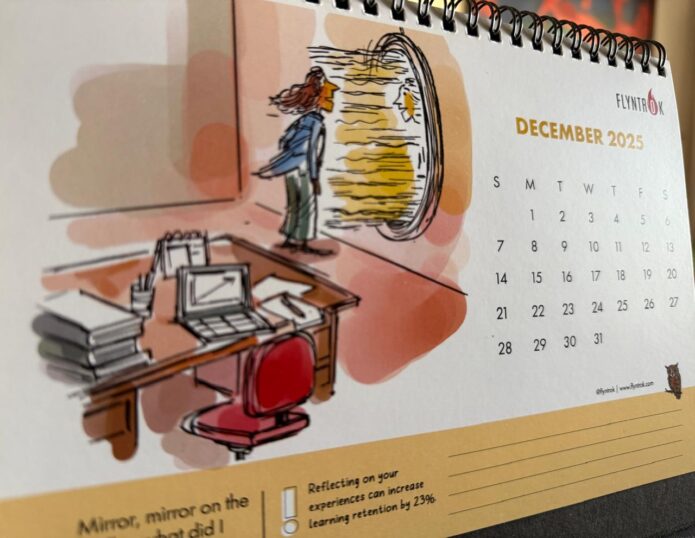
Every December, I start with the calendar. I scroll slowly. Meetings appear like family photographs. Some familiar. Some puzzling. Who did I spend time with? What claimed my attention? What expanded? What quietly disappeared?
Then comes the inbox. This is where things get personal.
Which conversations mattered? Which ones grew richer and more human over time? Which relationships were nourished, sometimes deliberately, sometimes by accident? And which ones gathered dust despite the best intentions, friendly check-ins postponed indefinitely under the noble excuse of being busy?
Emails reveal more than schedules. They reveal attention. Who we return to. Who we avoid. Who stayed present through the year, and who quietly slipped into the “will reply soon” category, where messages go to rest.
Then the credit card and UPI statements. These are always revealing. Where did the money go? More importantly, does it reflect how I thought I was living? What stories am I telling myself? Behavioural economists call this data. The rest of us call it evidence.
The point is not detail. The point is pattern.
Ordinary lives, useful reflections
Over the next few days, I am sharing my own reflections from this annual personal audit.
Now, I am, by nature, private. What follows will be general. Pointers, not particulars. There will be no confessions, no revelations, and nothing remotely sordid. I will spare you the details and offer patterns and pauses instead. Think sketches, not surveillance footage. Hopefully, just enough provocation to get you smiling and thinking about a few things of your own.
My life itself is reassuringly ordinary. Travel. Work. Conversations. Writing. A clutch of modest successes. A few misses. Some bets that went wrong with impressive efficiency. A handful taken on knowingly, which sounds bold and usually means thinking, This could go wrong, and proceeding anyway.
Why do this at all?
Because reflection rarely arrives with drama. It comes quietly. While waiting for boarding. While staring at a hotel ceiling. While realising you have told the same story twice and it sounds different the second time.
Doing it deliberately forces attention. I remember, in school, a friend playing a rather cruel prank on a teacher who took afternoon naps under a tree.
A magnifying glass. A patch of sunlight. A sudden awakening.
The teacher woke up with a start, clutching his forearm, which now bore a small but unmistakable scorch mark. The kind that makes a man reassess both his nap and his life choices. Let’s leave out what happened to my classmate.
The point is simpler. Attention wakes things up.
That is why I do an annual personal audit. To clear my head. Putting thoughts into public view forces order. It removes clutter. It makes you confront what stayed and what did not. If it nudges you to glance at your own year, even briefly, that is enough.
I will write about things I got wrong and what worked despite me. The places I went and what they did not change. The people I met and the conversations that refused to be forgotten. The patterns that only show up when you stop long enough to notice.
A few questions worth sitting with
Notes From The Rear View Mirror
What did you give time to this year? What held your attention without asking?
Which habits strengthened? Which ones thinned out?
What is still alive? And, what needs closing, gently, without regret?
What promises were made? Which ones were kept? Which ones were quietly postponed?
If these questions create mild discomfort, that is a good sign. It usually means growth occurred somewhere without sending a memo.
December invites this kind of pause. With coffee. With Wi-Fi that generously accommodates my inconsistent sense of humour. No drama required. Just enough stillness to notice what moved, what stayed, and what quietly asked for more care than it received.
Suitcases tell the truth when weight limits apply. Years do the same, if you stop long enough to listen.
Already warm. Already bright. My daughter and I were sitting in the small garden behind the house, doing nothing in particular. The kind of nothing that usually lasts only until someone reaches for a phone.
She spotted it first.
A still insect clinging to a blade of grass. Perfectly formed. Perfectly unmoving.
Dead, we assumed. And declared so. Quickly.
We still leaned in. Looked closer. It did not have the careless look of something crushed or abandoned. It seemed intact. Intentional. As if it had chosen that exact spot.
We began guessing. Beetle? Grasshopper? Something more interesting? We debated seriously, the way children do, and adults quietly enjoy. We turned it gently. Examined the legs. The head. The odd lightness of it.
Then the realisation arrived. With some help.
It was not an insect at all.
It was a shell.
A cicada had grown inside it and, at some point, calmly stepped out. Growth completed. Old skin left behind. No drama. No hurry. Just a quiet exit under the Texas sun.
What surprised me later was not the discovery itself, but how I felt afterwards. I was strangely energised. Light. Refreshed. We had not rested. We had not done anything useful. And yet something had shifted.
I noticed that I had been fully present. Not half-there. Not thinking ahead. Just there, crouched in the heat, absorbed in a small mystery. And I found myself wondering why that felt so restorative. It felt like leisure, though nothing about it resembled how leisure is usually described.
Wonder at Cruising Altitude
Two days later, I was flying from Dallas to the East Coast. Seatbelt light on. Coffee barely drinkable. Clouds stretched endlessly beneath the wing, like a slow, patient design lesson. Somewhere between cruising altitude and mild jet lag, I was reading David Steindl-Rast.
Steindl-Rast is a Benedictine monk best known for his writing on gratefulness and everyday spirituality. Not the dramatic kind. The attentive kind. And there it was, tucked into the page as if it did not need emphasis.
He wrote that leisure is not the absence of activity but the presence of wonder.
The line landed differently at 35,000 feet. The Dallas garden returned instantly. The shell. The crouching. The strange lift I had felt afterwards. That moment finally had a name.
Around that time, the idea of leisure had been circling me anyway. Conversations with friends. Reading and writing essays to clarify what leisure meant to me. Many of my friends seemed drawn to the same question. How to make time for leisure. How to protect it. And, how to schedule it before it slipped away.
Steindl-Rast’s line quietly undid all of that.
Leisure had not arrived because time had opened up that morning in Dallas. Time had not changed at all. Attention had. Wonder had been allowed in. Leisure and wonder, I realised, have less to do with calendars and far more to do with how awake we are to the moment in front of us.
Children seem to understand this without effort. They do not ask whether something is useful before being fascinated by it. A shell on a blade of grass is enough. Adults tend to wait for permission. Or purpose. Or a clear outcome.
That cicada shell offered none of those.
Not even an invitation to look closer. It sat there in casual indifference, until attention and curiosity cast their quiet spell. Something ordinary came alive. The mind loosened. And, without effort, it relaxed.
And that, it turns out, was plenty.
Leisure came not from creating space, but from entering the moment more fully.
It is December now. Many people are looking ahead to leisure. Calendars are being cleared. Time is being protected.
On that bright June morning, we discovered that the cicada shell has a small crack along its back. Nothing dramatic. Just enough for something larger to leave. I like to think wonder works in much the same way. It does not wait for empty days or perfect conditions. It slips in through small openings, through moments when attention loosens and something ordinary is allowed to surprise us. And it refreshes the soul in a remarkable way.
Yes. We could stop sealing every moment shut and not wait for free time to soak into leisure!
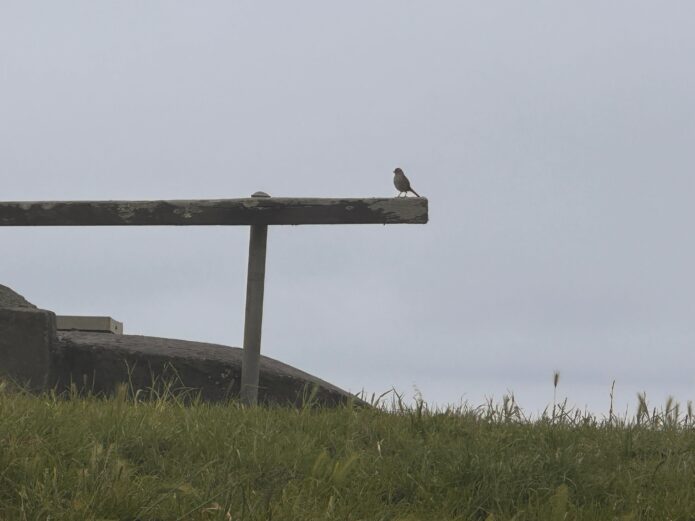
The bird sits alone on a weathered post. San Francisco breathes behind it. Fog rehearses its entrance. The Bay keeps secrets and receipts. Waves clap lightly, like polite applause. The bird doesn’t bow. It just is.
We chase bigger stages. The bird chooses a better stance. Small can be vast when attention is full. Presence is the original zoom.
What’s the moral? None, if you need a twist. Plenty, if you need a nudge. Simplicity survives weather. Patience outflies drama. Focus is free and expensive.
If you must take a selfie, include the horizon. If you must take a call, keep it short. If you must take advice, take it from the wind. Lean, then let go.
One bird. One post. One city that never agrees with itself and somehow works.
Attention is not cheap. It is scarce, free to give away and costly. Heck, it is invaluable. Like oxygen, it is omnipresent. That makes it seem cheap. You will realise it only when you don’t have enough of it.
I remember asking my dad, “Why do we say, ‘pay attention’?”. What are we paying really. Well, I know now, that we pay quite a bit.
We let others pilfer it away. Or give trade it away for trifles. We won’t do that with stuff like money but attention is another matter. It’s of course a different matter that there are people making their money off our attention. Heck, there is an entire economy devoted to it.
We gladly give thinking we have an infinite amount of it. Wrong. Attention is scarce. It is fragmented. We need to protect it. Cracks come into into tight bonds when attention stands overdrawn. Depleted and worn.
When we pay for the unnecessary with our attention, we prey on our relationships. On ourselves.
Living by design is about being careful with where we let our mind go. There is one more reason that got me thinking about all of this.
You are what you pay attention to.
It is as simple as that. Think about that. That is the key to unlocking all your super powers!
There is so much going on in the world. Much allure and endless cacophony seem to make the meaningless the center of it all. Many who came in search of music have settled for non stop noise. Worse, we contribute to it too. Filter failure, said Clay Shirky. “Its not attention overload but filter failure”. That is a strong influence on me and my thinking.
So, think about this. How strong are your filters? When did you last check? It’s like asking when did you last look at the locks of your vaults? Especially, because there have been so many break ins.