Travel Tales

“People don’t take trips, trips take people.” – John Steinbeck

The Road Ends, the Sea Begins: Notes from Sayalgudi

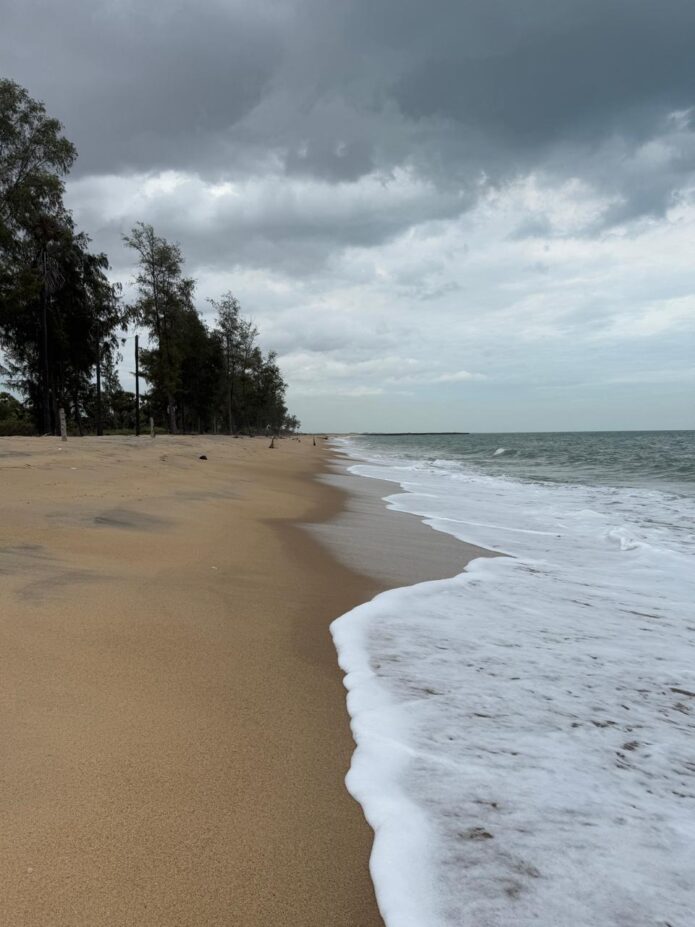
The beach at Sayalgudi doesn’t announce itself. It appears, almost shyly. No signboard declares “Welcome to Paradise.” No resort gate opens grandly with a poor, uninterested labrador that is forced to sniff the car’s trunk. There’s just the soft hiss of waves, a ribbon of clean sand, and the faint scent of salt that tells you you’ve arrived somewhere that doesn’t know it’s special.

The sea stretches endlessly, its rhythm unhurried, uncurated. There are no shacks, no deck chairs facing the sea, no soft-serve ice-cream vendors. Just a moon already at work, waves rehearsing their eternal script, and one solitary visitor thanking his stars that, such beauty escaped some social media influencer’s attention!

I sat there for a long while, watching the sea nibble at the shore and retreat, as if testing the flavour of land. It was hard to believe that this was two hours from Madurai. Tamil Nadu’s coastline is vast and beautiful, and extends beyond the fame of the Marina, Pondicherry, and Kanyakumari.

The Road That Curves Away from Fame

Getting here is a breeze. You start from Madurai, drive towards Rameswaram, and somewhere after Manamadurai you slip off the highway. The road begins to twist, as if embarrassed by how small it has become.
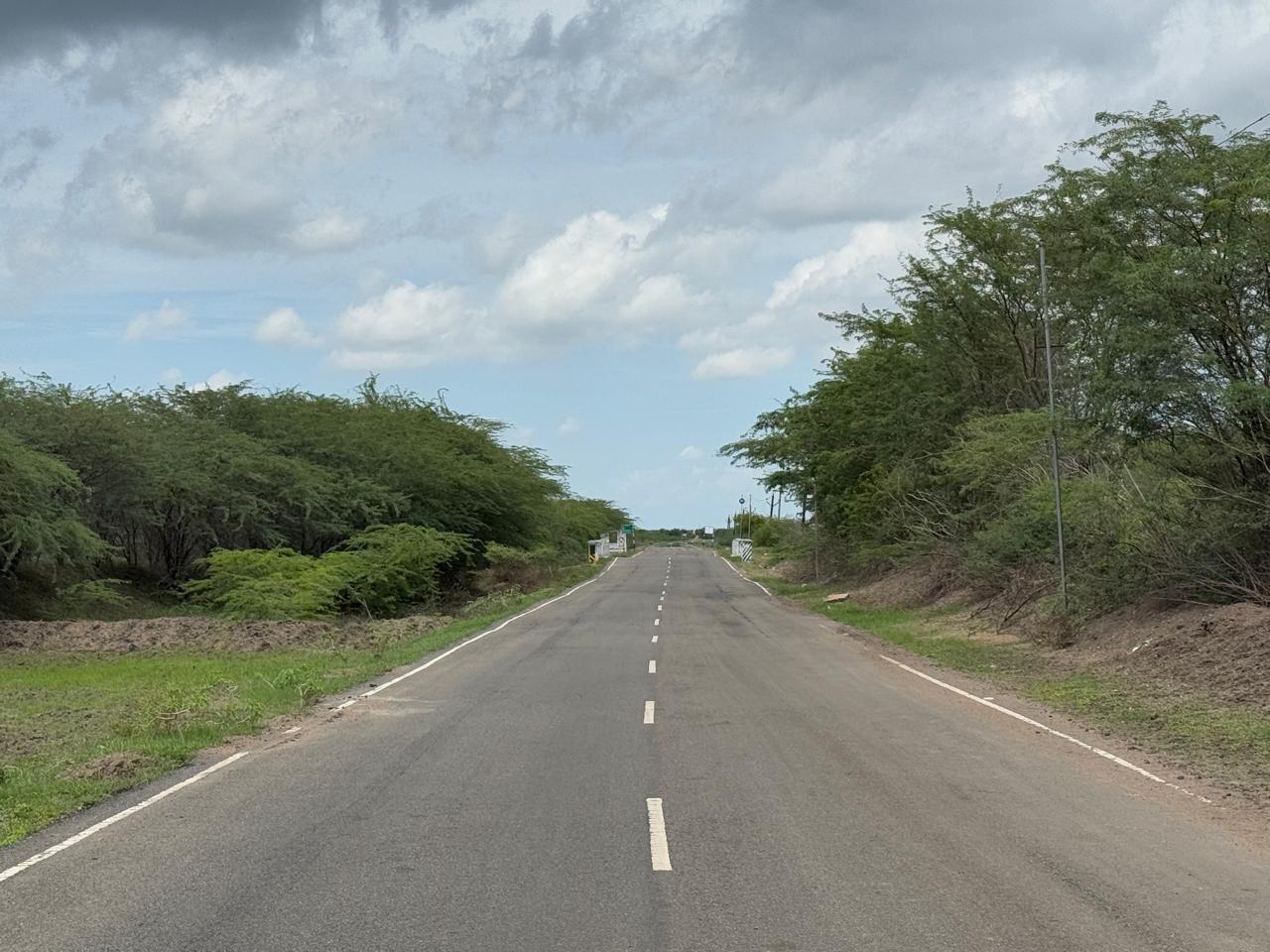
Seemakaruveli bushes for company

On both sides stand seemakaruveli bushes — Prosopis juliflora, the invasive guest the British brought in the 19th century to tame wastelands. Now it rules the countryside like a green despot, spreading faster than gossip and just as hard to uproot.

Villages appear and vanish like punctuation marks. Abhiramapuram, Karisakulam, Athikulam, Allikulam and many more whose names blur in the rear-view mirror. Their kaapi kadais linger longer in memory: tin kettles boiling away gossip, glass tumblers with a skin of sugar on top.
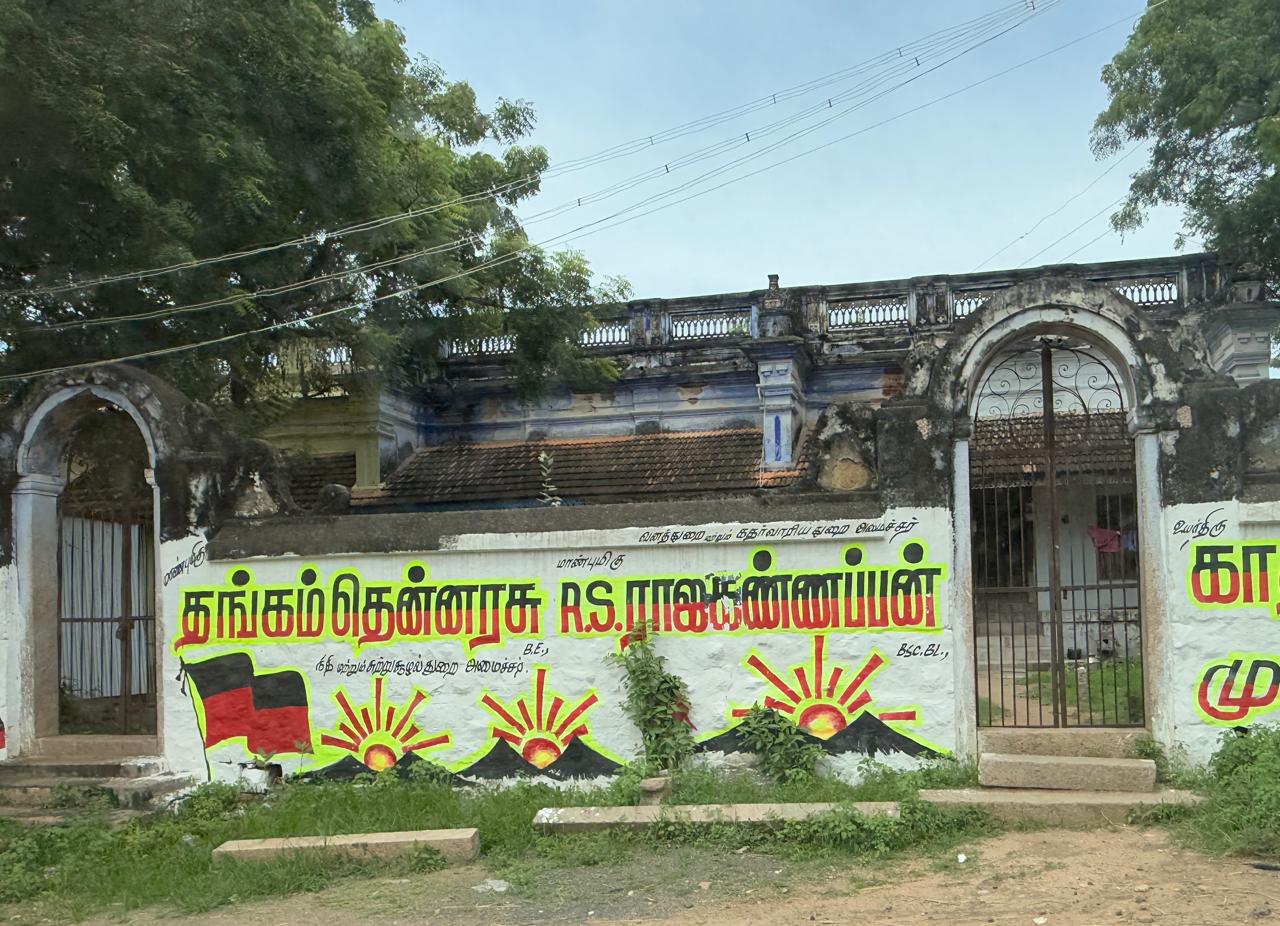
Politics rendered on plaster

The walls along the way shout in red, black, yellow, white, and blue. Politics rendered in thick Tamil letters. In this part of the world, even plaster has opinions. A painted bull here, a rising sun there, two leaves somewhere else; campaign promises merging gracefully into art. Between two walls, a goat herd ambles across the road, his flock spilling into the highway with serene entitlement. He crouches by his TVS 50, adjusting something in the chain. They used to walk once, I think. Now even goats wait for engines.
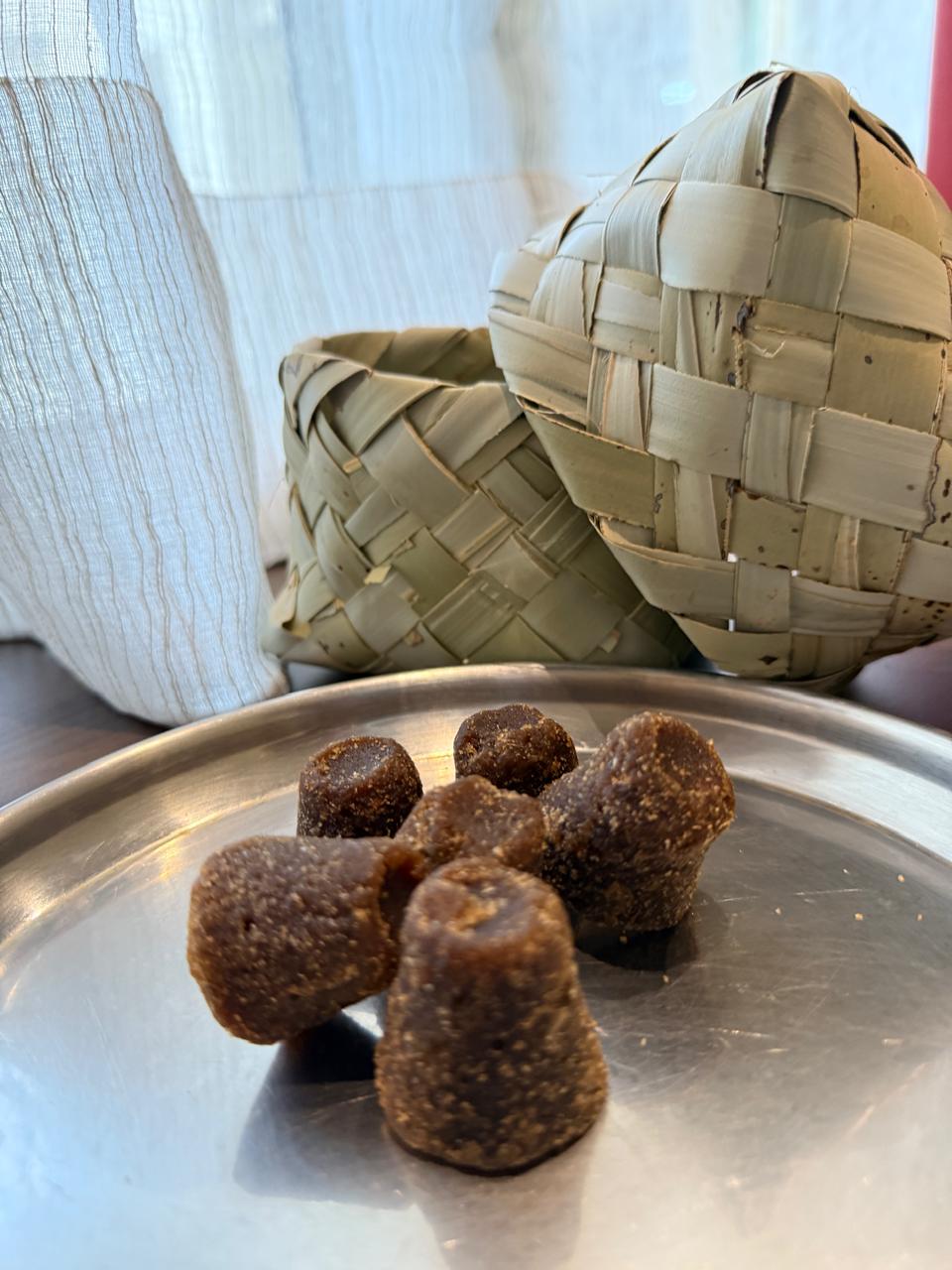
Sugar and Spice. Ah! Memories

A little further on, a man sells inji karuppatti. Ginger and palm jaggery. Packed neatly in olai kottans (palm-leaf baskets). I buy some. They’re sweet, fiery, and nostalgic all at once. Childhood condensed into sugar and spice.

A Trust in the Road

I often drive through rural Tamil Nadu with a quiet confidence that if anything were to go wrong, someone would appear. Not with a “How may I help you, sir?” but with a curious “Are you okay? Water?” People here don’t outsource kindness. It’s part of the day’s work, somewhere between lunch and the evening bus.

Over the years, I’ve been stranded by punctures, wrong turns, and delusionary optimism. Each time, a passer-by has stepped in, not only to do the needful — that tidy phrase from corporate emails — but to actually see what was needed. A word, a jug of water, a direction, sometimes just company until help arrived. Rural rhythms seem to cock a polite snook at the urban question of “What’s in it for me?” Here, the answer is often, “Nothing”. And that’s fine. Every time signing off with a “paathu poituvaanga.” Loosely translated to “stay safe and come back soon.”

A Town That Prefers Modesty

Sayalgudi itself sits quietly on the southeastern edge of Tamil Nadu, a town of about twelve thousand people and exactly zero pretensions. There are shops selling coconuts, rubber slippers, and recharge coupons. The fish market smells of honesty and ocean. It’s the sort of place where everyone seems busy but no one seems in a hurry.

You follow a narrow lane until the houses give up, and the sea fills the gap. The transition is so sudden it feels like the land has run out of sentences and switched to poetry.

People Who Stay Real

The “resort” I stayed at was more functional than fancy. A bed, an air-conditioner and a fan that coughed with commitment, and a window that framed the horizon. Hot running water. Clean sheets. A television that didn’t need to be turned on, because the best show in town was hosted by the sea. And luxury came from the sound of the waves.

Gopal, the manager, was a stocky man with a weathered Hero Honda and an even more reliable smile. Ajit, the chef, tall and thoughtful, made fish curries that could start conversations. And Jaya, the attentive housekeeping staff, had returned to the resort after dallying with other employers in the vicinity. All wonderful people. “It’s good to help people here,” she said softly, folding towels with care. “Only wish others are considerate too.” Who those “others” were, we left hanging in that polite ambiguity that some conversations excel at. Like a scene from a Mani Ratnam movie where silence does the explaining. And you fill in the gap in your own way.

They didn’t greet you with a scripted “Good morning.” They simply nodded, smiled, and said “Enna saar?” — “What, sir?” — half greeting, half check-in on your wellbeing. It was infinitely warmer than the mechanical, well-practised flow of a five-star resort employee. These folks were simple and authentic. Just like the sea. That’s all that mattered.

Stillness, the Unadvertised Luxury

By night, Sayalgudi changes tone. Fishing boats light up the horizon like a shy constellation. The lighthouse sweeps its beam with the discipline of a monk ringing a bell. The air fills with the sound of insects tuning up, and occasionally, a bird that hasn’t yet signed off.

It’s the kind of stillness Pico Iyer writes about: “The more ways there are to connect, the more we seem desperate to unplug.”

Here, you don’t disconnect as rebellion. You simply forget to connect in the first place. The signal flickers; the mind steadies.

I walk along the shore, barefoot, the sand cool and damp. Something sharp presses against my foot. For a moment I think it’s a broken beer bottle. A memory from a trip to Bali. But it’s a seashell, luminous under the moon. I slip it into my pocket, a small souvenir of an unadvertised paradise.

Abundance in the Unfamous

The next morning, Ajit serves dosai so crisp it competes with the waves. Gopal checks if the Wi-Fi has decided to exist. Jaya hums an old Ilaiyaraaja song as she sweeps the courtyard. Life goes on, entirely unbranded.

I think of all the famous beaches I’ve visited. Where the soundtrack is a mix of EDM, immaculate hotel staff and unbridled commerce. Corn. Coffee. Ice-cream. Beer. Horse riding. Whatever. Sayalgudi reminds me what a coastline really is: a conversation between sea and sand that doesn’t need an audience.

Paul Theroux once said, “Tourists don’t know where they’ve been; travellers don’t know where they’re going.” In Sayalgudi, both are forgiven. You just sit, let the waves do the talking, and measure time in tides.

A Small Philosophy Between Two Waves

The sea teaches quietly. Each wave arrives certain, crashes spectacularly, and dissolves without complaint. Watching them, I begin to think of work emails and deadlines that once felt as urgent as surf, until they receded. Maybe that’s what travel to places like this really does: it returns scale to things.

My phone vibrates — a reminder of a meeting, a plan, a project. I look at the screen, then at the moon tracing its silver loop above the water. Another wave rises, crashes, and fades.

“Tomorrow,” I tell the caller. Then add, “Actually, day after.” I hear the silence on the other side.

I add, “Please.” One more wave roars.

The wind approves. The sea keeps its counsel. Somewhere far away, a boat hums its way home.

I switch my phone to airplane mode. This time, I don’t want to buckle up like I otherwise would when I do that. Because, this time, I am not in a plane. I seem to have wings.

Other blogposts from this trip
1. Kaapi Kadai wisdom
2. The Fort That Forgot Its Kingdom
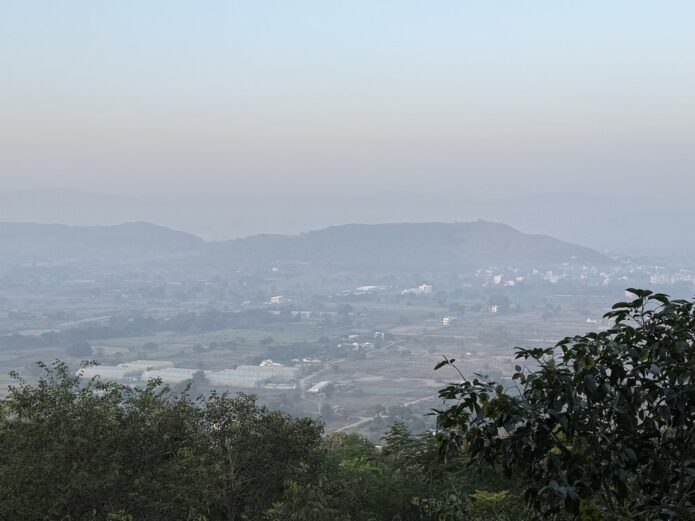
A Hill, a Haze, and All of Pune Trying to Say Hello

From the top of Lavale, the world below looks like it is trying to multitask. Part village. Part expanding city. And part construction brochure. The morning haze does its best to hide the confusion, but even through the soft grey, the jumble is obvious.

A set of apartment blocks stands proudly in the foreground, as if posing for an ad that has not been written yet. Behind them is a sudden burst of buildings that look like they belong in a different country. Blue domes, tall towers, arches, the whole theatre. It is the sort of campus that makes you blink twice, then check if someone is filming a period drama nearby.

Beyond all this, Pune stretches out in every direction. Tall buildings fade into the mist. Others stand out sharply. A crane leans casually into the frame, hinting that more construction is on the way. The land, however, stays unbothered. Patches of fields, open brown earth, scattered trees. All of them seem perfectly content to ignore the city’s ambition.

But the hill itself is calm. The trees in front rustle lightly. Birds chirp as if the valley is their personal auditorium. Every now and then, a dog barks somewhere below, reminding you the world is awake even if it looks half-asleep.

And then there is the sound of distance. A tractor starting up. A pressure cooker whistle floating up from a home you cannot see. An early-morning folk tune travelling up the slope. All of it carried through the crisp, cold air as if the hill enjoys delivering messages.

At 7.00 am a factory’s siren goes off. Loud. Firm. Reliable. It slices through the mist like a very punctual rooster. The view does not change, but your sense of morning resets instantly. Even the haze seems to shift slightly out of respect.

Once the sun rises higher, the landscape begins to reveal itself. The valley sharpens. Buildings gain edges. Roads emerge. The hills behind appear clearer, like someone increased the brightness. Even the castle-like campus settles comfortably into the scenery instead of surprising you.

By then your coffee has made its way into your system. The warmth spreads. Your thoughts soften. Whatever you were worried about before you stepped out feels a little foolish in front of this strange mix of serenity and cityhood.

Nothing dramatic happens. Nothing needs to.

You look out again. At the haze, the hills, the buildings trying to touch both village and city. And something inside you settles.

For a small, perfect moment, all is well with the world.

All is well with the world.

Lightly, Child, Lightly

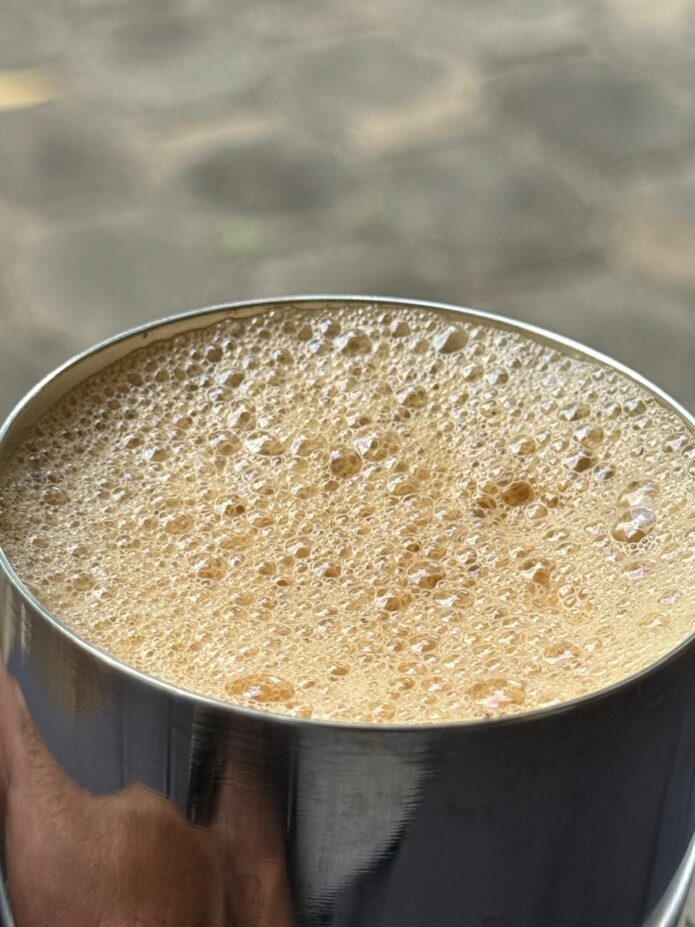
The other day, I was looking at a roadside coffee shop in rural Tamil Nadu. It was a pit stop. More to sip on nostalgia. Coffee was the excuse. I got both. Nostalgia. Coffee. And a line from Huxley that appeared on cue.

The man behind the counter was working his magic with a giant kettle that hissed and sang like an old friend. The smell of fresh decoction drifted through the morning air. Somewhere in the background, Ilayaraja’s 80s melody played faintly from a radio that had seen better days. There was a very faint nip in the air, and the newspaper hanging by a rusted clip on the stall was still crisp. Proof that the day was just beginning.

The man himself was spotless and alert. A splash of thiruneer, three bright grey lines, shone on his forehead. He moved with a rhythm shaped by years of practice. Pouring, mixing, serving, taking money, returning change. All in one smooth motion. It felt as if time had slowed down to watch him.

There was no tension in his face. No wasted effort. He did not rush, yet he was never still. The kettle tilted at the perfect angle. The coffee arced through the air in a golden stream. The froth landed obediently in its glass. Every act was precise and calm. Ease that comes when you stop fighting your work.

That is when it struck me. Lightness comes from intimacy. When you have done something long enough, you stop proving yourself to it. The dancer stops counting beats. The cricketer stops calculating angles. This man has stopped thinking about coffee.

Aldous Huxley said it perfectly. “It’s dark because you are trying too hard. Lightly, child, lightly. Learn to do everything lightly.” Perhaps he had watched this man.

He looked up once, smiled, and went back to his art. The world around him kept moving. Buses honked. Cows crossed. A customer called for an extra spoon of sugar. Yet he was steady, like a monk in the middle of a festival.

It was not grand. Or dramatic. It was simply beautiful. And light.
Ease, brewed fresh.

The Brown Snake and I

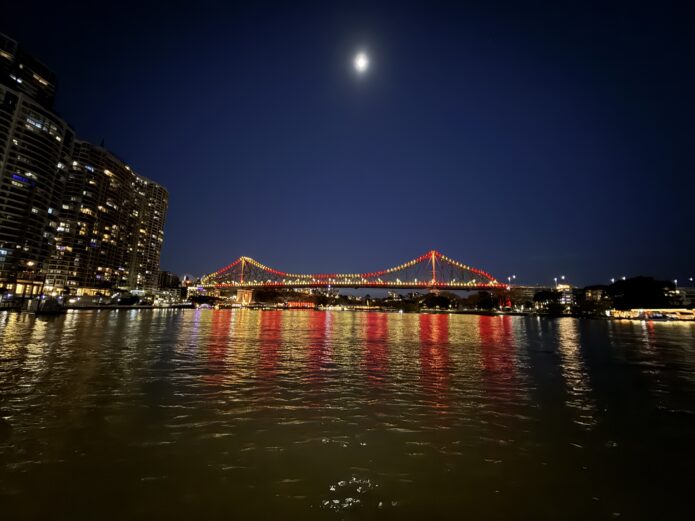
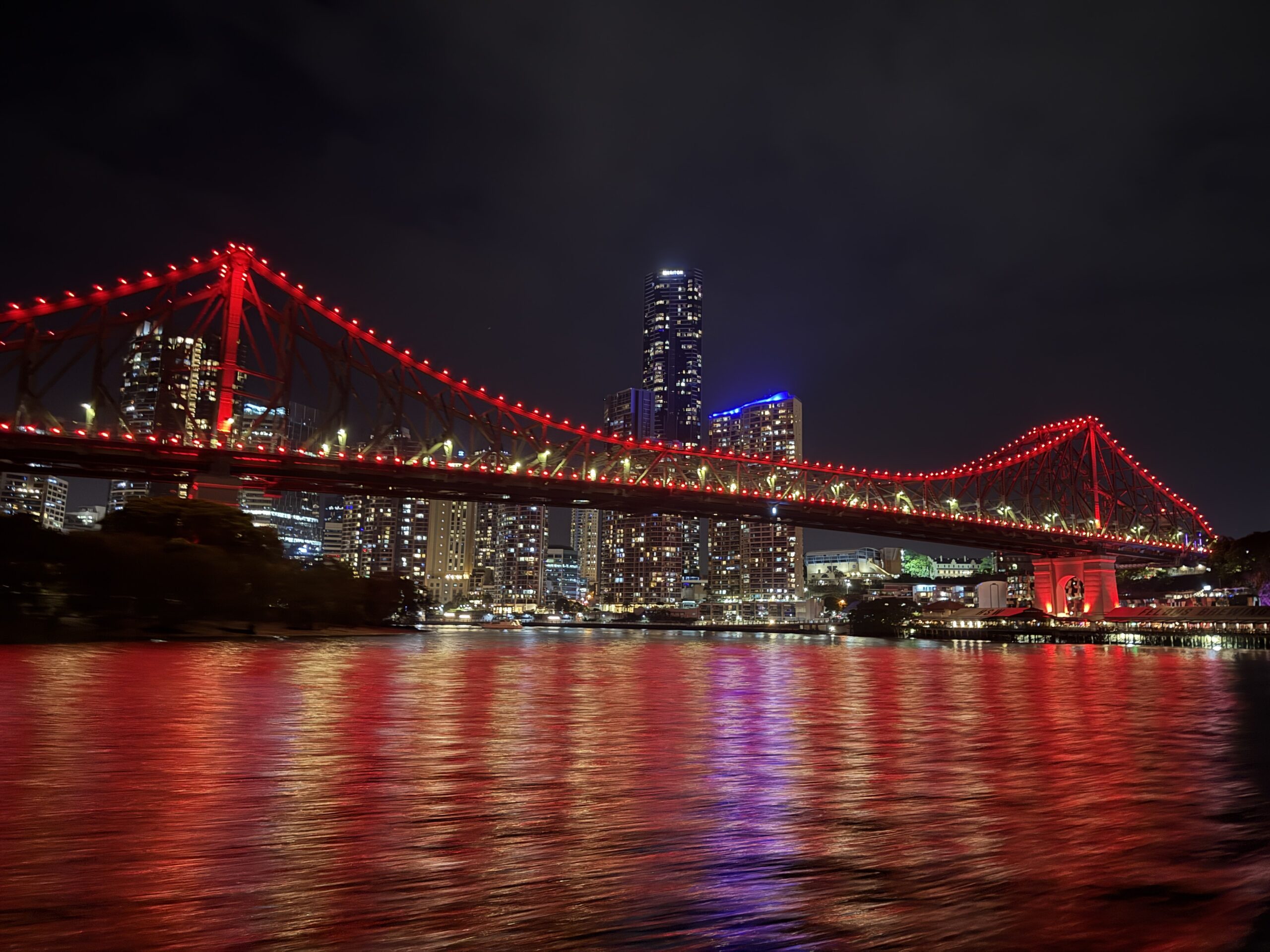
It was one of those Brisbane evenings that felt neatly put together. The moon hung above the Story Bridge, the bridge glowed in red and gold, and the river below reflected it all as if it knew its role.

This is the Brisbane River. But long before it became a postcard, it was Maiwar. The river of the Turrbal people, the first caretakers of this land. They lived along its bends for thousands of years before Europeans arrived in the 1820s. For them, the river was everything. Food, road, temple, and teacher.

The Meeting Place and a Cricket Fortress

The Turrbal people had names for every turn of the river. Woolloongabba meant “meeting place.” It still lives up to that name. It is now home to the famous cricket ground, The Gabba, where every few years India meets Australia to settle who really runs cricket.

In 2003, Sourav Ganguly’s brave century on a green, bouncy pitch showed that India had grown tired of being called timid. Then in 2021, a young, injury-hit team came back to do the impossible. Breaking Australia’s 32-year unbeaten record at the Gabba with courage, calm, and a touch of cheek.

It wasn’t just a win; it was a story of belief and joy. Many said the fortress had fallen. I thought otherwise. In fact, the Gabba stood taller for it. It proved again why sport matters: to host rivalries, to test effort, to stretch courage, and to honour that often-abused but still-revered phrase, the spirit of the game.

Funny how I started writing about the river and ended up at the cricket ground. But then again, the river has seen it all. Floods, bridges, and the odd boundary.

The River That Refused to Straighten

People call the river, ‘Brown Snake’. And the name fits. It winds through the city, calm and sure of itself. People jog along it, sail on it, build towers beside it and sometimes, when it floods, remember who’s really in charge.

Along its banks, the city gathers quietly.

Queensland’s Parliament House sits near one of the curves, looking calm and serious as if the river is ready with the next question. The kind that would embarrass a minister and still ask the opposition what they were doing all this while. A little further down, government offices line the shore, their glass windows catching the light. Across the water, old timber homes in Teneriffe stand beside tall new apartments, both pretending they belong together.

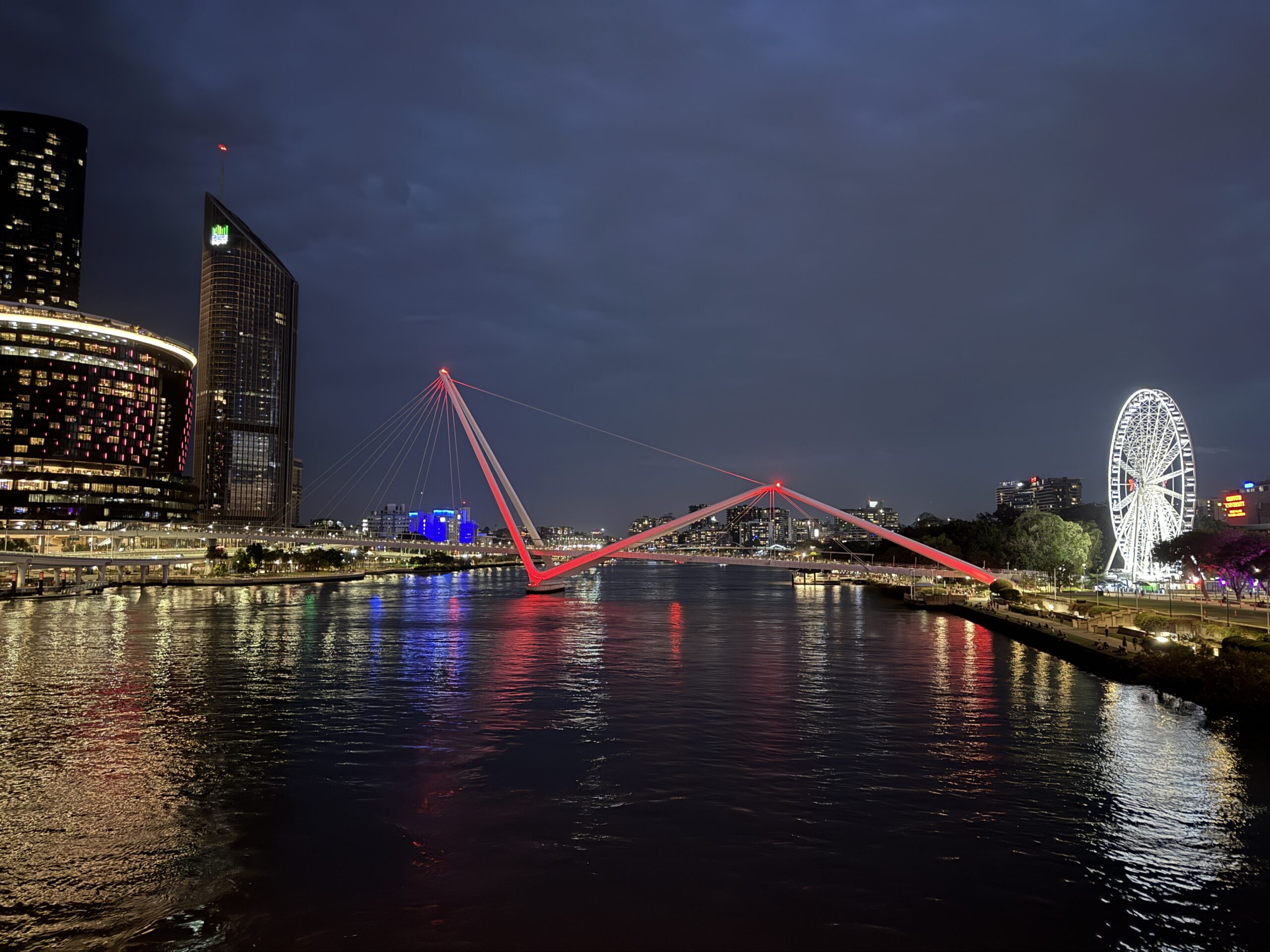
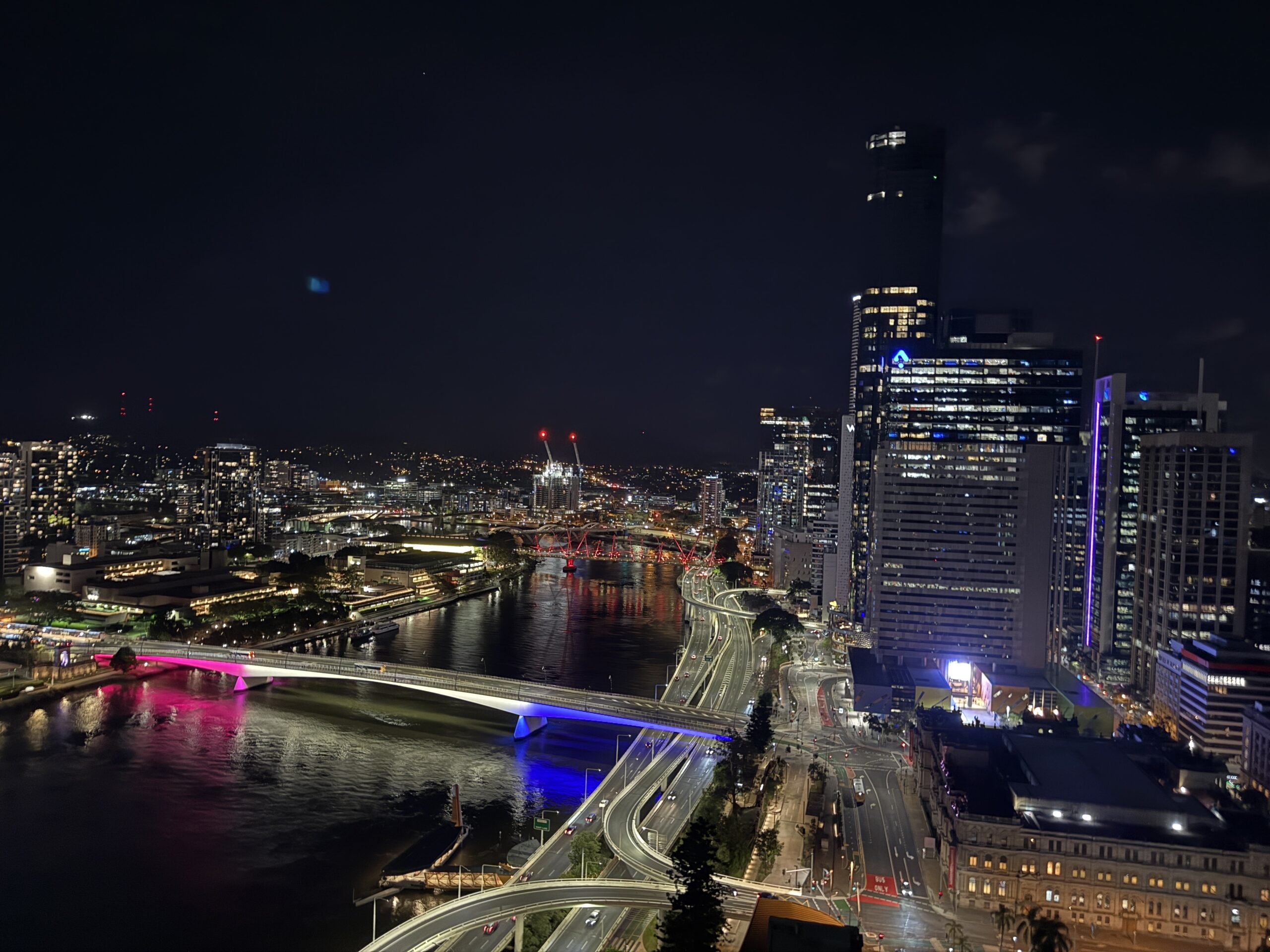
Kurilpa Bridge — a web of light and steel across the Brisbane River. It carries walkers, cyclists, and late-night wanderers
Kurilpa Bridge — where steel meets stillness, and the Brown Snake plays along.
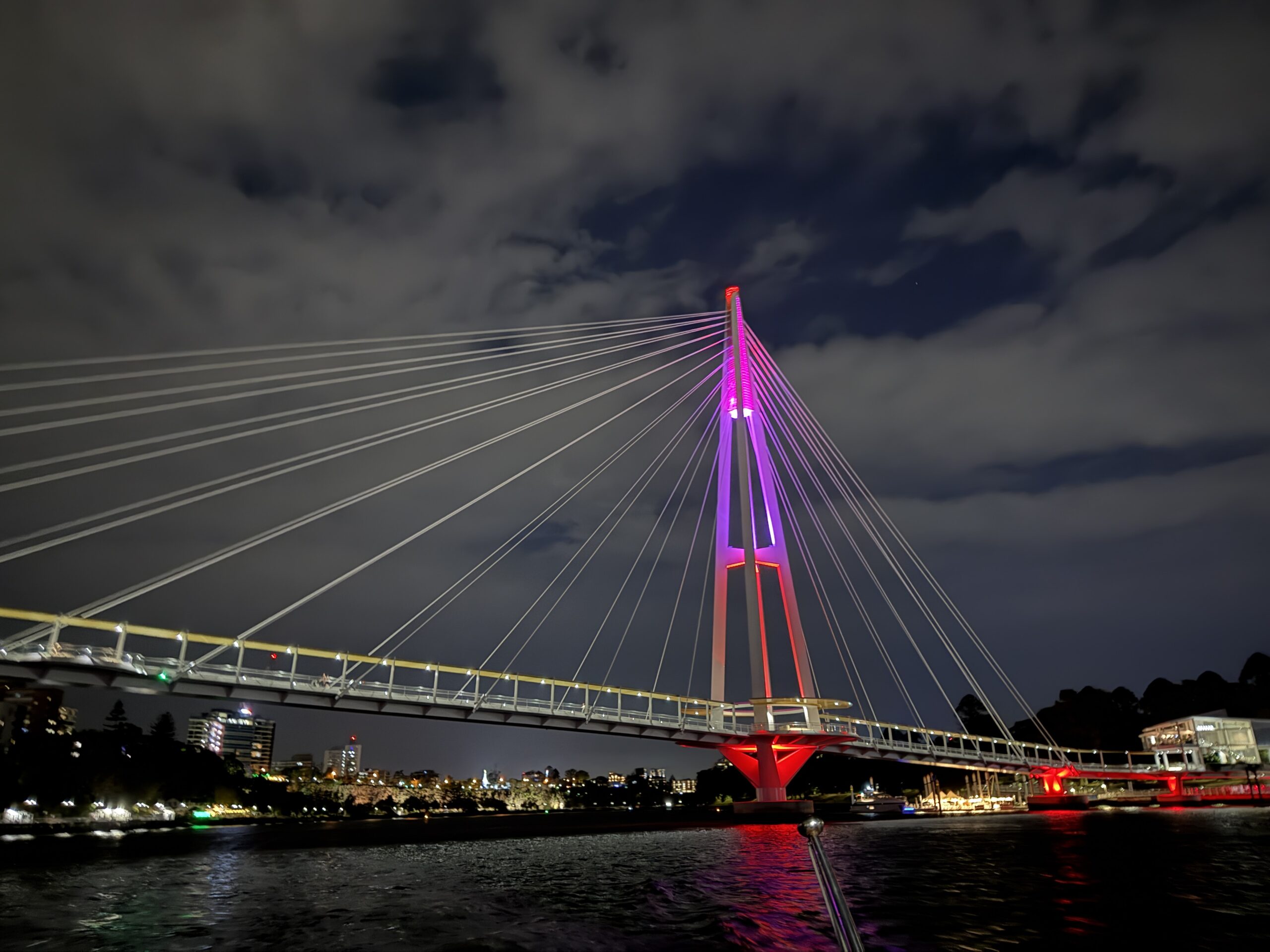
The Neville Bonner Bridge — Brisbane’s newest way to cross the Brown Snake, or to stop halfway and take another photo of it.

At South Bank, the Wheel of Brisbane turns slowly over the river. It’s a giant Ferris wheel that looks like it’s keeping an eye on the city. At night, its lights shimmer on the water, mixing with reflections from cafés and bridges. Downstream, near the University of Queensland, students walk and talk by the water, thinking of exams, futures, and maybe nothing at all. The Brown Snake watches them all, moving quietly past.

The Brisbane River tracing the city’s heart . A ribbon of water, movement, and memory.

Later that night I read how early European settlers once tried to make this river straight. They brought dredges and plans, confident they could tidy nature’s design. The Brown Snake was fiercely Australian. It refused and kept curving and silting as it pleased, reminding everyone that some things are meant to meander.

Bridges, Lights, and the CityCat

Sixteen bridges now cross this river. The old Victoria Bridge has been rebuilt more than once. The Story Bridge, born in the Depression years, is Brisbane’s favourite landmark. Every night it glows like a festival — blue, gold, purple — changing colour depending on what the city is celebrating or mourning.

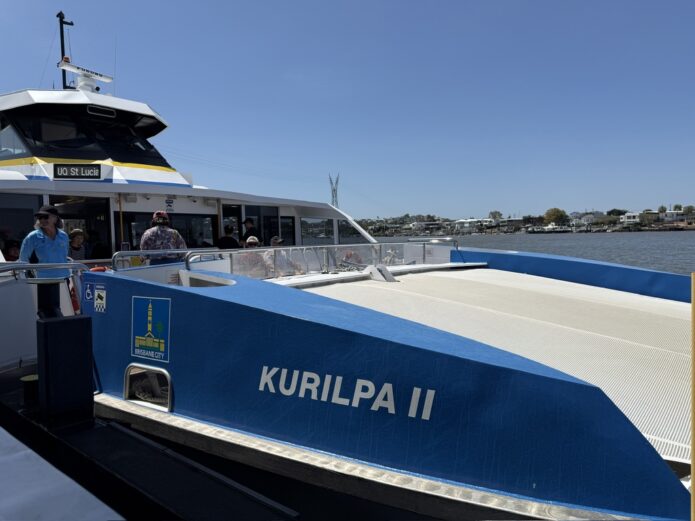
I took the CityCat a few evenings. Long, sleek, and painted in cheerful blues and whites, it glides along the river like a quiet promise. Office workers scroll on their phones. Tourists seem to take the same photo over and over. An extended hand holding a phone and clicking a picture is a standard feature! Somewhere, a child points at the moon.

The Story Bridge. Proof that even steel can smile when the lights come on.
The Brown Snake seen from above. Calm, luminous, and endlessly patient, holding Brisbane in its curve.

On one side, picture-perfect apartments lean over the water, all glass and balconies. On the other, green parks and old timber wharves stand calmly, pretending not to notice. The air smells faintly of salt and weekend plans.

The Rivers That Made Me

Somewhere between two stops, my mind wandered home. To Madurai. To the Vaigai. The river I grew up by. Once the pride of the city, now mostly a trickle between bridges that are newer than the water beneath them. Still, people cross, live, and hope. That’s what bridges are for.

And then I thought about space and wondered how many people live per square kilometer relative to spaces that I am used to.

Brisbane breathes at around 176 people per square kilometre.

Madurai hums at 8,800.

Mumbai roars at 33,000.

For ordinary people, that’s not density. That’s destiny.

Here, everyone seems to move. Running, rowing, cycling, sailing. But try getting a doctor’s appointment, and you’ll learn what patience truly means. The Brown Snake has its own pace, and so does the city.

Vaigai trickles. Maiwar flows. Mumbai surges. Each carries its own rhythm and lesson.

What Rivers Teach Us

As the CityCat slipped under the Story Bridge, the moon brightened above, and the Brisbane River — the Brown Snake — shimmered gold. The ferry hummed softly, carrying people home, and I felt the city exhale.

My mind darted back to the waters I’ve known: the restless sea in Mumbai, the fading Vaigai in Madurai, and this calm, brown river in Brisbane. Each carries its own rhythm . The sea crashes, the Vaigai sighs, the Brown Snake flows and forgives.

Mumbai teaches me motion. Madurai teaches me memory. Brisbane, perhaps, teaches me stillness and flow. Together, they remind me that home is not fixed to a pin on a map. It is a current that carries you forward, again and again, asking you to move, to meander, and to remember.

Rivers don’t just flow; they hold time. They carry stories we’ve forgotten how to tell. Stories of people, floods, bridges, and beginnings. The Brown Snake has watched Brisbane rise, falter, and rise again. It asks for nothing, but it seems to remembers everything.

Maybe that’s what rivers teach us in the end . That strength isn’t about speed or noise, but about keeping on, quietly, towards the sea.

Between the Big Blue Sky and the Brown River

I met him on the CityCat. Brisbane’s river ferries glide along the brown river, under bridges that look like bent straws, past cafés and joggers who seem permanently cheerful.

Joseph was a deckhand. A big native Australian with shoulders that looked built for the river. His job was to haul the rope, open the gate, wave people in, and make sure no one fell into the water. He did this every few minutes, at every stop. Do that a hundred times a day and anyone would be bored to death.

Not Joseph.

He moved like it was his first day at work. Cheerful. Focused. Alive. There was a bounce in his step and a twinkle that matched the river’s shimmer.

It was a Sunday evening. I had time to kill, so I stayed on the ferry all the way to Hamilton, where the boat turns and snakes back again. When we docked, I asked him, “What makes you smile and work so hard?”

He paused, smiled wider, and said, “I love the river. I love the big blue sky. This river is mine. This sky is mine. And when you come on board, sir, it gives me joy to take care of you.”

It wasn’t corporate enthusiasm. I’ve been around long enough to smell PowerPoint sincerity from a mile away. This was real.

We started talking. We spoke about people, work, and how both of us survived Covid. His words were simple, but the kind that stay with you. As I left, he said, “Take care, mate. Come back soon.”

A few days later, I boarded a Singapore Airlines flight home. The service there is famously polished, like chrome. An air hostess with a more than merely perfect smile welcomed me aboard. Encouraged by Joseph, I asked the young lass the same question.

“What makes you smile and work so hard?”

She smiled her perfect smile. The kind they probably practise before every flight. She thought for a fleeting second, and delivered her answer with the poise and precision Lee Kuan Yew might have admired.

“I have to,” she said. I liked her honesty and told her that.

Through the flight, she was impeccable. Efficient. Precise. Polite. Nothing wrong. Nothing missing. Except something invisible.

As I got off, I said, “Good luck.” She blinked, surprised. Then said, “Goodbye, sir,” and went back to her line of farewells.

Two smiles. One sculpted by discipline; the other shaped by the river and the sky.

Between the big blue sky and the brown river perhaps lies the distance between precision and presence.
Between duty and delight.
And between, having to and wanting to.

Not a Travelogue. A Checklist.

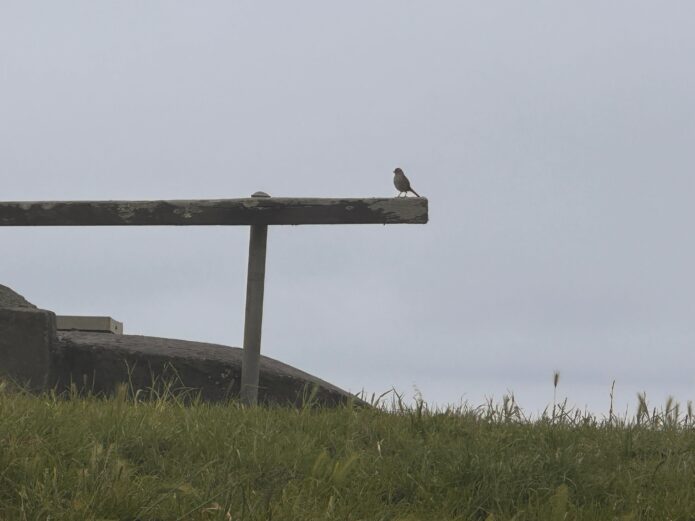
The bird sits alone on a weathered post. San Francisco breathes behind it. Fog rehearses its entrance. The Bay keeps secrets and receipts. Waves clap lightly, like polite applause. The bird doesn’t bow. It just is.

We chase bigger stages. The bird chooses a better stance. Small can be vast when attention is full. Presence is the original zoom.

What’s the moral? None, if you need a twist. Plenty, if you need a nudge. Simplicity survives weather. Patience outflies drama. Focus is free and expensive.

If you must take a selfie, include the horizon. If you must take a call, keep it short. If you must take advice, take it from the wind. Lean, then let go.

One bird. One post. One city that never agrees with itself and somehow works.

And that is enough for today.

The Hidden Costs of WiFi (and Other Stories of Progress)

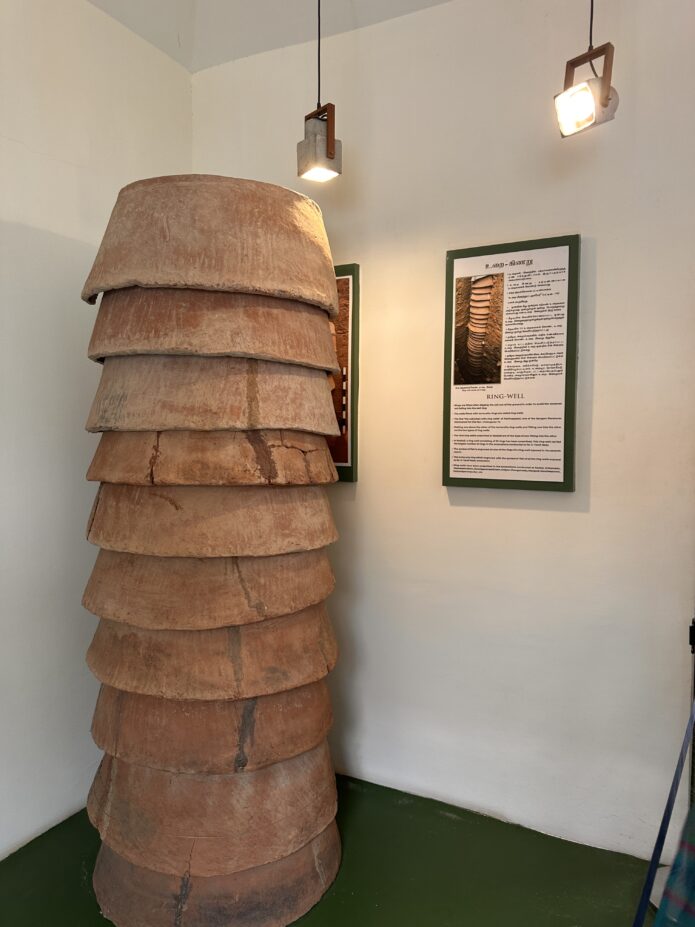
I visited Keezhadi recently—a quiet village near Madurai, where the ground is giving up secrets that are 2,600 years old. Brick houses, water systems, writing on pottery… all part of a once-thriving civilisation during the Sangam period.

They had trade routes, poetry, tools, and systems. They crossed seas without GPS. Built cities without cement trucks. Passed down knowledge without cloud backups.

It made me wonder—how much have we really gained through “progress”? And what have we lost along the way?

Phones gave us connection on tap. But they took away long, meandering conversations. The kind where you talked just because you had nothing else to do.

Google Maps made life easier. But it also took away the chance encounters—the awkward, hilarious, occasionally helpful conversations with strangers while hunting for that elusive street corner.

The elevator saved our knees. But it also saved us from cardio, eye contact, and the accidental small talk that sometimes brightens a dull day.

Microwaves gave us convenience. But they also gave us uniformly hot but uniformly dull meals. The kind of food that’s warm but somehow lifeless—like a hug from a vending machine.

Air-conditioning gave us comfort. And buildings with sealed windows, where fresh air is just a theory.
Social media gave us reach. But often at the cost of depth.

Even the humble washing machine—blessing that it is—removed a time when people sat together, washing clothes by the river, exchanging gossip, jokes, sometimes wisdom. (It also reduced arm strength.)

I’m not arguing against technology. I’m not packing for a cave just yet.

But here’s the thing: with every upgrade, something old and human quietly exits the frame. Not with a bang, but with a polite shrug—like the friend who left the party without saying goodbye.

We rarely keep track of what we lose.
We almost never count the things that disappear.

What Do We Lose When Everything Gets Easier?

In trying to smoothen every experience, we may have polished off something essential. Friction isn’t always a flaw—it’s often the fingerprint of effort, presence, and care.

The delay before a letter arrived. The clumsy directions from a stranger sitting at the corner tea stall. The slow-cooked meal that made you wait—and talk while waiting. These weren’t bugs. They were features. They made us pause. Pay attention. They made the world—and each other—a little more real.

In our obsession with speed, scale, and seamlessness, maybe it’s time we asked: what’s the value of a little resistance? Of things that take effort, but leave a mark? Of progress that still lets humanity show through?

Friction reminds us that something is being done. That time is being taken. That life is still being lived in full sentences, not just swipes.

Progress is not the enemy. But friction is not always the villain. Sometimes, it’s the only thing standing between us and forgetting what it means to be human.

Keezhadi reminded me: our ancestors were inventive, but not obsessed with convenience. They built thoughtfully. Slowly. With care and friction.

Maybe that’s what made them civilisations worth unearthing.

Develop the Heart: More Than Just a Sharp Mind

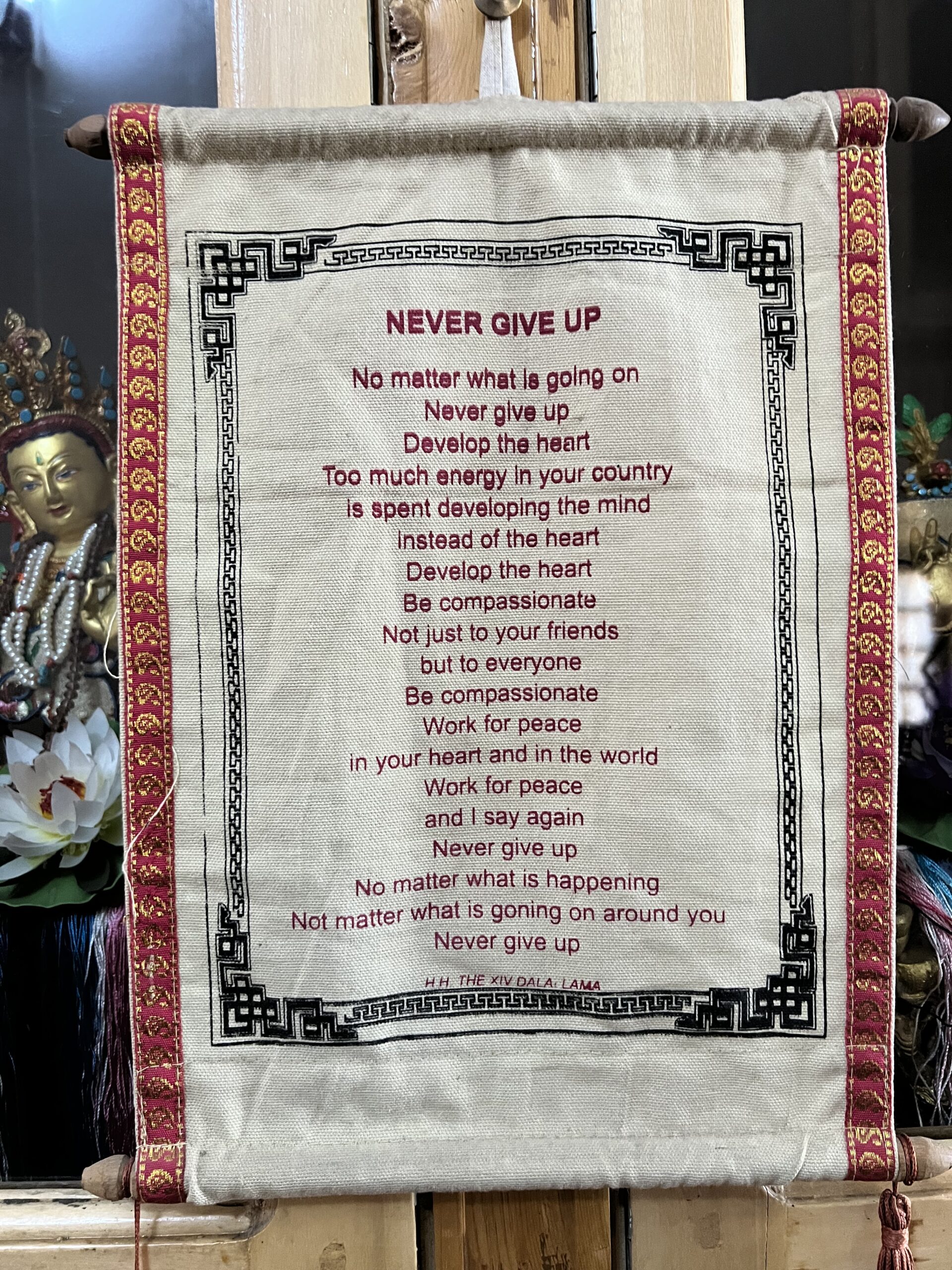
I was flipping through my photos when I found this one—words painted on a monastery wall in Diskit, Nubra valley of Ladakh.

A simple message, but powerful:

“Never give up. Develop the heart. Too much energy is spent developing the mind instead of the heart.”

It made me pause.

We chase sharp minds. Smarter, faster, more efficient—that’s the dream. We analyse, strategise, optimise. But how often do we develop the heart?

Imagine if compassion was a skill, like coding or negotiation. If kindness was a KPI. If success was measured not just by what we built, but by how we made people feel.

The mind is important. But it can’t do the job alone. Logic without empathy is cold. Intelligence without kindness can be dangerous. A brilliant mind with no heart can justify anything—even things that hurt people.

Developing the heart is different. It means listening, even when you disagree. Choosing understanding over being right. Caring—not just for friends, but for strangers too.

Nalla Sivam, the unforgettable character from Anbe Sivam, puts it beautifully:
“தயவுதான் கடவுள். எது நடந்தாலும் மனிதன் மனிதனாக இருக்கணும்.”
(“Compassion is God. No matter what happens, a person must remain human.”)

It’s easy to be clever. It’s harder to be kind. Some think kindness is weakness—a soft option, a surrender. It’s not. Kindness is strength. Empathy takes effort. It’s much easier to argue than to understand.

A friend asked me, “But how do you define it exactly?” I told him that’s part of the problem. Not everything needs a precise formula. Sometimes, it’s just about helping people see that they too can help.

If that doesn’t make sense, well, it’s ok. That’s part of the deal.

To be ok with imperfection. To see the human beyond. And notice the deep, jagged edges of people and not miss them in the quest for surface-level perfection.

That’s what developing the heart is about.

This is perhaps the best message I can give myself. A note to self.

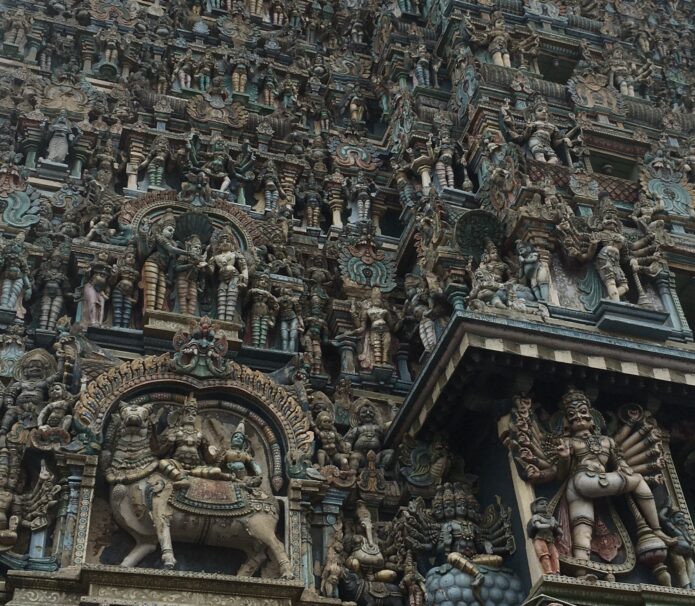
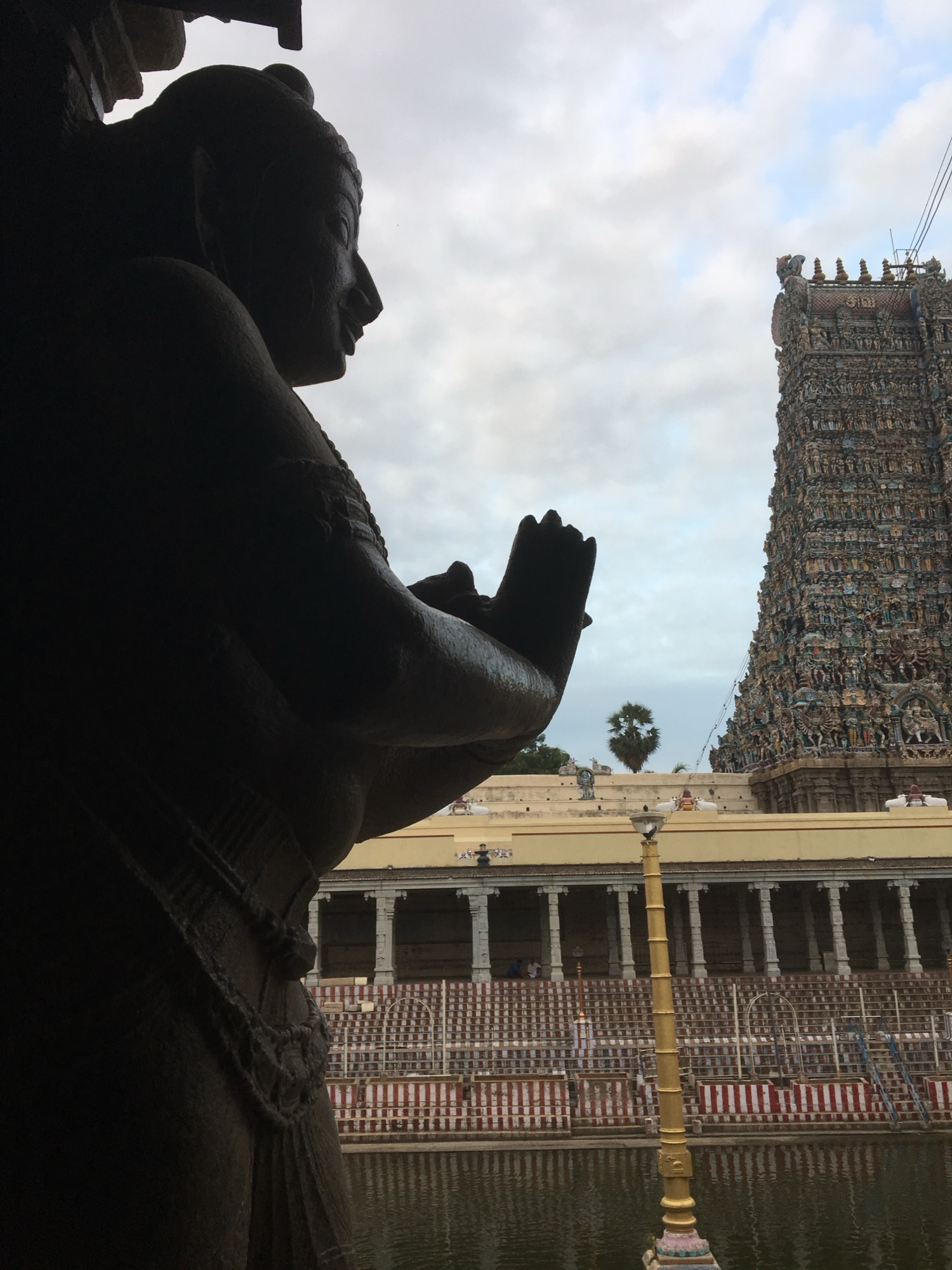
Standing Still at Meenakshi Amman Temple: A Place Beyond Time

Some places demand silence. Not because they forbid noise, but because they leave you speechless. Meenakshi Amman Temple does that to me. Every single time.

I went yesterday. And I saw scaffolding. It wrapped around the gopurams, covering the intricate sculptures. It was early in the morning. So, no workers, just stillness. If this much care is going into restoring it, imagine what it took to build it. No machines, no shortcuts—just patience, skill, and intelligence.

This temple has stood for nearly 2,500 years. It dates back to the Sangam period (6th century BCE), though much of what we see today was expanded in the 16th century by the Nayak rulers. It has survived wars, invasions, and the weight of time. Its corridors have heard prayers, wishes, and whispered hopes from millions. Mine included. Every single one of them.

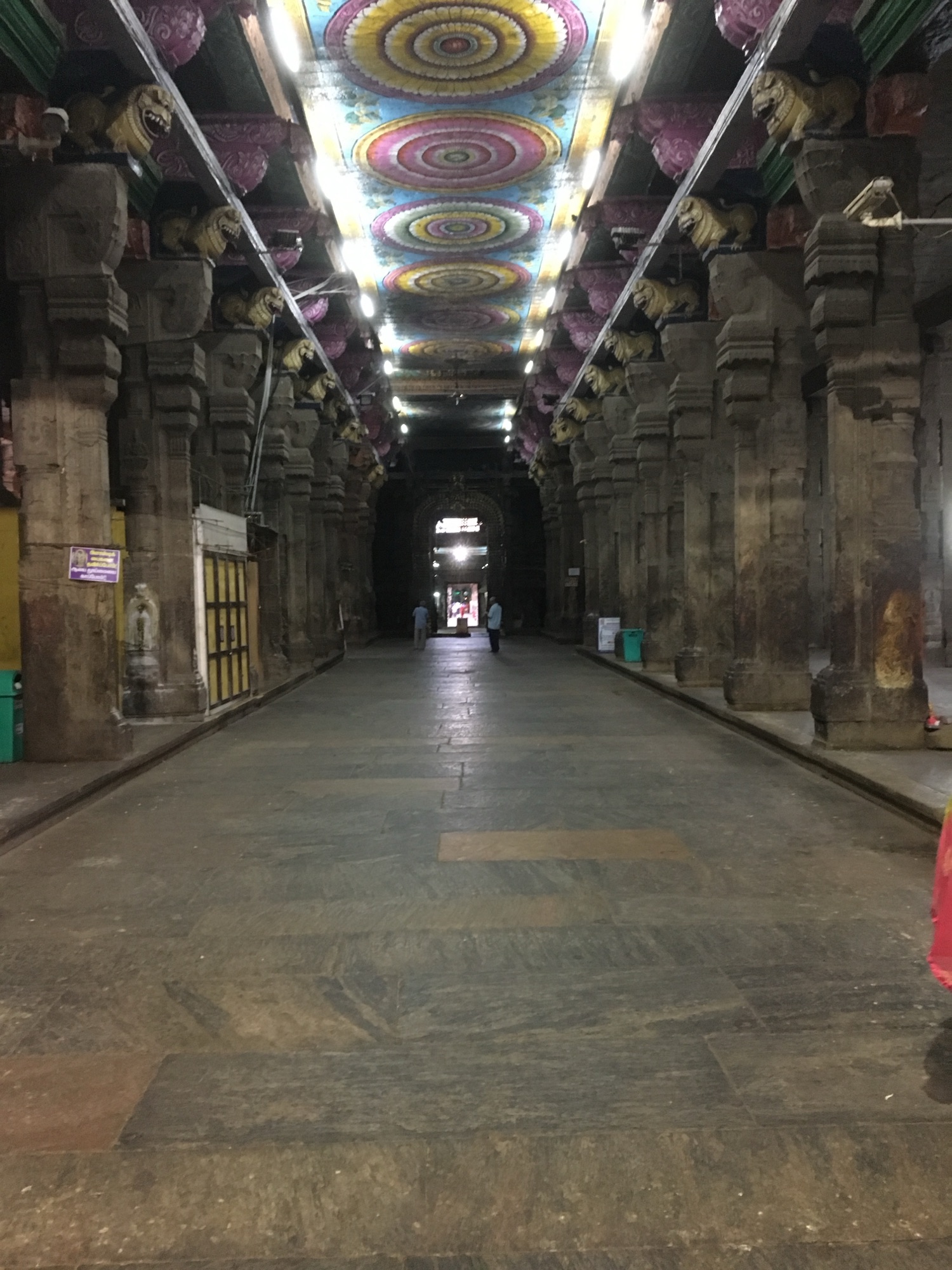
Phones and cameras are not allowed inside after a fire in 2018. Perhaps the temple authorities trust that your memory has at least some storage space left. Later, as I scrolled through my old photos, I realised something—I had taken pictures of the ceilings, the pillars, the gopurams. But not the Yazhis. Perhaps I had wisely chosen to avoid making eye contact with a stone creature with teeth bigger than my head.

And yet, Yazhis are among the most stunning sculptures in the temple. These mythical beasts are carved with an astonishing mix of power and grace—lion-like bodies, an elephant’s trunk, a serpent’s tail. Strong claws. Giant teeth. A large penis. Elaborate decorations, all aesthetically done. A creature so fierce and fabulous that Hollywood fantasy films could learn a thing or two. If they ever reboot Jurassic Park with mythical beasts, I know where they should start. And these aren’t just still figures either—the giant sculptures are so elaborately done, they seem ever ready to jump out of the pillar and take on anyone into nonsense!

This time, I stood before them, staring. Ferocious yet elegant. My father once told me they were load-bearing structures. I had laughed. Who would carve something so intricate just to support a pillar?

But he was right. The Yazhis do hold up the structure, but they also hold up something else—imagination. Someone, centuries ago, looked at a block of stone and saw more than function. They saw movement, myth, and life itself. And they brought it to life.

As a child, I found them terrifying. Now, I find them familiar, almost reassuring. They have always been there. A solid as they were. My needs have shifted.

A Temple That Soothes the Soul

Whenever I visit with much time at hand, I just stand and stare. At the Yazhis. At the ceilings. At the sheer audacity of it all.

This is beyond religion. It is devotion, yes—but also craftsmanship, vision, and love.

And that is what makes it spiritual. Not just the rituals or the prayers, but the feeling of standing in a place that has stood for centuries. A place that has seen time pass but has remained unwavering. A place that, even in its silence, speaks.

It does something to the soul. It soothes, steadies, strengthens. It slows you down, pulls you iout of the present. For a few moments, the rush of the outside world fades. The doubts, the unfinished tasks, the endless scrolling—all of it seems distant.

There is a certain weight to this place. Not the kind that burdens you, but the kind that anchors you. It puts life back into your step. It reminds you that things of value take time, that endurance is built stone by stone. It gives you the courage to face the next uncertain moment.

In more than one sense, this is home.

Not in the way four walls define home, but in the way something familiar holds you when you need it most. In the way it reassures you that it has been here long before you arrived and will remain long after you leave.

Some long-form things are timeless. They stand tall, defying time and culture. Like the gopurams of Meenakshi Amman Temple. To me, they are a firm reminder that better is always possible.

Every single time I get there.

Traveler vs. Tourist: How to Truly Experience a Place

Kevin Kelly is one of those people you take seriously. Not because he asks you to. But because he has lived a life that makes you want to listen. He co-founded Wired. He has written deeply about the future. And, more importantly for us today, he has spent over 50 years traveling the world. That’s half a century of airports, alleys, deserts, and detours. When someone like that gives travel advice, you pay attention.

Not all travel tips are equal. Some are practical. Some are poetic. A few are life-altering. The ones I’ve picked here are both useful and thought-provoking. They are not about checking places off a list. They are about soaking them in.

If you think travel is just about getting from one place to another, this might make you pause. If you already believe the best journeys are the ones where you lose track of time, read on.

Traveller or Tourist?

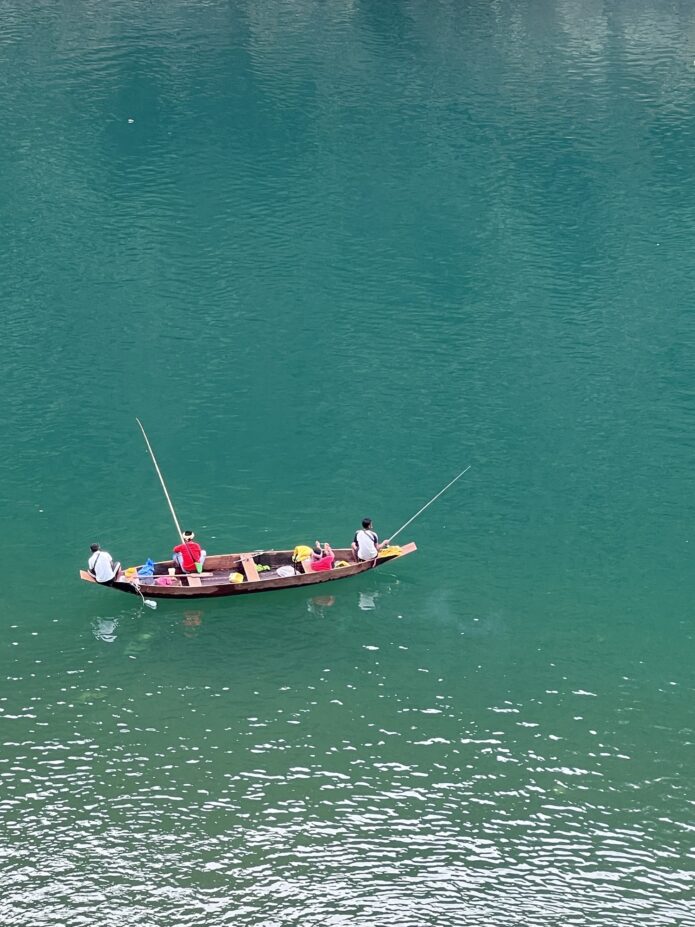
A tourist collects places. A traveller collects moments. The featured picture above is Dawki, Meghalaya. I remember the conversation with the boatman as much as I remember how bountiful nature is. It all comes together beautifully.

A tourist follows a plan. A traveller follows curiosity.

A tourist moves through a place. A traveller lets a place move through them.

The difference is subtle. But it is everything. It is the difference between taking a photo of a street market and sitting down for tea with the vendor. Between checking in at a famous site and wandering into a side street just because it looks interesting. Between skimming the surface and sinking into the depth of a place.

“Half the fun of travel is the aesthetic of lostness.” — Ray Bradbury

Travel Wisdom Worth Keeping

…..

From Kevin Kelly’s post, here are super special nudges to travel wisdom. Read the full post here.

Travel for a passion, not a place. Build a trip around cheese, jazz clubs, or ancient ruins. Not just cities and landmarks. You’ll remember that tiny family-run dairy in the Alps long after you’ve forgotten the famous cathedral in Rome.

Ask your taxi driver to take you to their mother’s home. Odd? Yes. But it works. You get a meal, a story, and a peek into real life. The driver gets to fulfill a family duty. The mother gets a guest to feed. Everyone wins.

Give yourself constraints. Travel isn’t just about where you go. It’s about how you go. Take only overnight trains. Carry just a day bag. Eat for a week on the price of a single fancy meal. Limits make things interesting.

Visit places that aren’t built for you. Cemeteries. Hardware stores. Small workshops. Real life happens there. Not everything has to be an Instagram moment.

It’s always colder at night than you think. Even in the tropics. Pack that extra layer.

Eat where the healthy locals eat. The fanciest restaurant may not have the best food. The street stall with a queue probably does.

Slow down. The best moments happen when you pause. The best conversations. The unexpected invites. The secret spots. They show up when you are not rushing.

Start your trip at the farthest point. Land. Then go far. Take an overnight train. A rickety bus. A long drive. Settle in at the most remote place you planned to visit. Then, slowly work your way back. Somehow, this makes the journey richer.

Buy souvenirs that have a home in your home. That intricate rug? Lovely. But where will it live when you return? If you don’t know, leave it behind.

When asking for restaurant recommendations, don’t ask where to eat. Ask where they ate last. You’ll get a real answer.

The Beauty of Travel

Bill Bryson, my favourite travel writer, once wrote, “To my mind, the greatest reward and luxury of travel is to be able to experience everyday things as if for the first time.”

That’s it.

Travel isn’t about crossing off landmarks. It’s about learning to see. To step into another world. Not as a tourist, but as a quiet observer. An eager participant. A respectful guest.

And when you do that, something else happens. You don’t just take a piece of the place with you. You leave a little of yourself behind.

So go. But don’t just go. Travel like a traveller. Soak it in.

(Read the whole thing. You might see travel differently.)