ByteSize

The Stuff No One Claps For

“I work physically very hard every day of my life. It’s got nothing to do with cricket anymore. It’s the way I live. So as long as my fitness levels are up and my mental enjoyment and sharpness is there, when you can visualise the game and see yourself running as hard, reacting fast on the ball, you know it’s fine.”

That is Virat Kohli. And thank God he scored runs before saying that.

Because if he had nicked one to slip for a duck, this philosophy would not have been printed anywhere. It would have been dismissed as a post-match consolation line. Success brings applause. Failure brings silence.

But the message matters, because it points to the stuff no one claps for.

The hours before the match.
The recovery routines.
The quiet mornings.
The invisible discipline.
None of it is dramatic, yet all of it is essential.

James Clear speaks the same language. Systems. Habits. Tiny steps.
MS Dhoni did the same thing without saying anything. One process at a time.
The Bhagavad Gita said it centuries ago. Act without attachment. Let the fruit take its time.

Outcomes get the spotlight.
Process sits backstage and holds up the ceiling.

Virat Kohli’s words are not a motivational poster. They are a reminder of how performance is built. Not on inspiration, but on daily structure. Not on hype, but on small habits. The world celebrates the big shot. The body remembers the small drills.

Sport keeps offering examples. Look at Roger Federer.

Roger made tennis look like silk.
People saw the elegance, not the repetition.
They admired the one-handed backhand, not the endless balance and footwork drills that came before it. They talked about grace, not the maintenance that kept him injury-free for two decades.

Federer’s genius was simple. He took care of the stuff no one claps for. Strength work. Recovery. Rehearsal. The glamorous “effortlessness” was built on ordinary routines repeated thousands of times.

This is the part we often forget.
Outcomes depend on timing, luck, conditions, moods, even the bounce of a ball.
Process depends only on you.

People imagine confidence comes from results.
But most confidence comes from doing the work when no one is watching.
You trust yourself because yesterday’s effort is still in your bones.

That is why the stuff no one claps for ends up shaping the very things people cheer for.
The unseen half carries the seen half.
The quiet routines make the loud moments possible.

So here is the simple truth in all this.
Stop staring at the scoreboard. Stop refreshing the result. Build the routines you can control.

Do the boring work. Do it when it is raining. Do it when you are not in the mood. Do it because it steadies you.

The applause will find its own time.
The work must find yours.

A Hill, a Haze, and All of Pune Trying to Say Hello

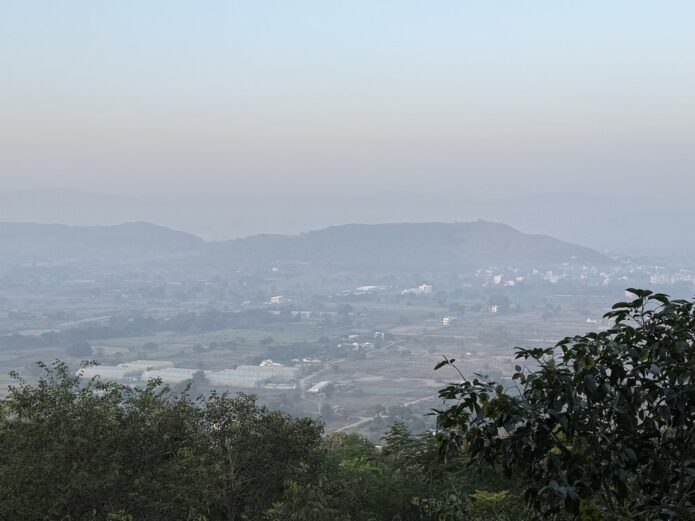
From the top of Lavale, the world below looks like it is trying to multitask. Part village. Part expanding city. And part construction brochure. The morning haze does its best to hide the confusion, but even through the soft grey, the jumble is obvious.

A set of apartment blocks stands proudly in the foreground, as if posing for an ad that has not been written yet. Behind them is a sudden burst of buildings that look like they belong in a different country. Blue domes, tall towers, arches, the whole theatre. It is the sort of campus that makes you blink twice, then check if someone is filming a period drama nearby.

Beyond all this, Pune stretches out in every direction. Tall buildings fade into the mist. Others stand out sharply. A crane leans casually into the frame, hinting that more construction is on the way. The land, however, stays unbothered. Patches of fields, open brown earth, scattered trees. All of them seem perfectly content to ignore the city’s ambition.

But the hill itself is calm. The trees in front rustle lightly. Birds chirp as if the valley is their personal auditorium. Every now and then, a dog barks somewhere below, reminding you the world is awake even if it looks half-asleep.

And then there is the sound of distance. A tractor starting up. A pressure cooker whistle floating up from a home you cannot see. An early-morning folk tune travelling up the slope. All of it carried through the crisp, cold air as if the hill enjoys delivering messages.

At 7.00 am a factory’s siren goes off. Loud. Firm. Reliable. It slices through the mist like a very punctual rooster. The view does not change, but your sense of morning resets instantly. Even the haze seems to shift slightly out of respect.

Once the sun rises higher, the landscape begins to reveal itself. The valley sharpens. Buildings gain edges. Roads emerge. The hills behind appear clearer, like someone increased the brightness. Even the castle-like campus settles comfortably into the scenery instead of surprising you.

By then your coffee has made its way into your system. The warmth spreads. Your thoughts soften. Whatever you were worried about before you stepped out feels a little foolish in front of this strange mix of serenity and cityhood.

Nothing dramatic happens. Nothing needs to.

You look out again. At the haze, the hills, the buildings trying to touch both village and city. And something inside you settles.

For a small, perfect moment, all is well with the world.

All is well with the world.

Lightly, Child, Lightly

The other day, I was looking at a roadside coffee shop in rural Tamil Nadu. It was a pit stop. More to sip on nostalgia. Coffee was the excuse. I got both. Nostalgia. Coffee. And a line from Huxley that appeared on cue.

The man behind the counter was working his magic with a giant kettle that hissed and sang like an old friend. The smell of fresh decoction drifted through the morning air. Somewhere in the background, Ilayaraja’s 80s melody played faintly from a radio that had seen better days. There was a very faint nip in the air, and the newspaper hanging by a rusted clip on the stall was still crisp. Proof that the day was just beginning.

The man himself was spotless and alert. A splash of thiruneer, three bright grey lines, shone on his forehead. He moved with a rhythm shaped by years of practice. Pouring, mixing, serving, taking money, returning change. All in one smooth motion. It felt as if time had slowed down to watch him.

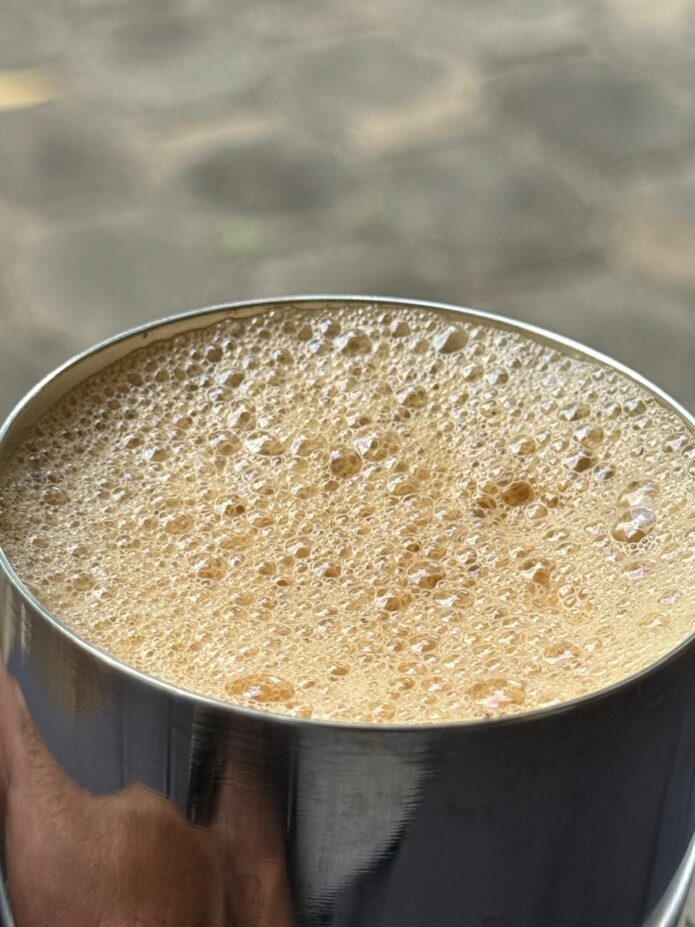
There was no tension in his face. No wasted effort. He did not rush, yet he was never still. The kettle tilted at the perfect angle. The coffee arced through the air in a golden stream. The froth landed obediently in its glass. Every act was precise and calm. Ease that comes when you stop fighting your work.

That is when it struck me. Lightness comes from intimacy. When you have done something long enough, you stop proving yourself to it. The dancer stops counting beats. The cricketer stops calculating angles. This man has stopped thinking about coffee.

Aldous Huxley said it perfectly. “It’s dark because you are trying too hard. Lightly, child, lightly. Learn to do everything lightly.” Perhaps he had watched this man.

He looked up once, smiled, and went back to his art. The world around him kept moving. Buses honked. Cows crossed. A customer called for an extra spoon of sugar. Yet he was steady, like a monk in the middle of a festival.

It was not grand. Or dramatic. It was simply beautiful. And light.
Ease, brewed fresh.

The Comfort of the Known

“If the path before you is clear, you’re probably on someone else’s.” – Carl Jung

There is comfort in a clear road. The turns are marked, the benches well placed, and even the café at the corner feels familiar. Most of us like that kind of certainty. It is safe and easy to explain.

But people who build new things rarely have that luxury. Their roads begin in fog, full of wrong turns and quiet doubt. Only later, looking back, does it seem straight.

There is nothing wrong with the tried and tested. The world needs people who keep the lights on. But for the builders and founders, clarity comes late. Sometimes very late.

New things rarely start with blueprints and spotlights. They start with someone walking through the unknown, one steady step at a time.

The Beauty of Not Knowing

Doubt is often a good sign. It means you are not on autopilot. It means you are creating something that does not yet have a name. Many mistake this fog for failure, when it is how good work begins.

Someone once said, “Trust the work, not the noise.” There is always noise. Advice, trends, confident predictions. But the work is what moves things forward. Keep your head down. Do the next small thing well. The rest sorts itself out.

Clarity is lovely, but it can also be a cage. When you know exactly where you are going, you stop noticing what else could be possible.

If the path ahead feels dim or uneven, do not panic. Keep moving. The map gets drawn by walking.

And one day, when you look back, you may see a trail that others have started to follow, one that existed only because you began before it was clear.

What Does Success Mean?

The other day I chanced upon Kipling’s If. The kind of find that comes when you are lazily flipping through an old journal. My younger self had copied the poem there, in a steadier hand.
That poem has travelled with me across the years.

It made me pause. Again. As it always does. It made me wonder: what are my own markers for success?
Now.
How have they shifted as new conversations arrive at my shore, every day? As new books, ideas, and lived moments at work reshape me? Or have they?
I reached for a pad and pencil.

So, what is success?

Three things.

Success is to reinvent. To see the changes around us and not be afraid. To bend, to stretch, to become.
Not to chase every trend. But to stay alive, awake, in touch with the times. To move with them, yet remain yourself.

Success is to believe that better is possible. Better is not more. Not louder. Not heavier.
Better is lighter.
Cleaner.
Full of meaning. It asks for courage.
It is nourished by curiosity. And thrives on humility. Every day offers the chance to try again. To make one corner of life, work, family, self a little better than before.

Success is to give. And then give again. Not because you have plenty left over. But because giving itself makes you full. It is the circle of life made visible. To give is to know you are alive. To give is to know you are enough.

That to me, is success. Now.
Reinvention.
Belief in better.
The grace of giving.

Yours?

Not a Travelogue. A Checklist.

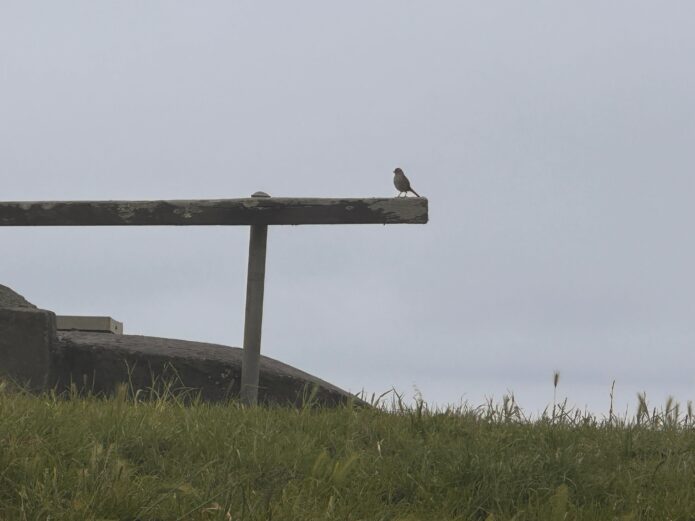
The bird sits alone on a weathered post. San Francisco breathes behind it. Fog rehearses its entrance. The Bay keeps secrets and receipts. Waves clap lightly, like polite applause. The bird doesn’t bow. It just is.

We chase bigger stages. The bird chooses a better stance. Small can be vast when attention is full. Presence is the original zoom.

What’s the moral? None, if you need a twist. Plenty, if you need a nudge. Simplicity survives weather. Patience outflies drama. Focus is free and expensive.

If you must take a selfie, include the horizon. If you must take a call, keep it short. If you must take advice, take it from the wind. Lean, then let go.

One bird. One post. One city that never agrees with itself and somehow works.

And that is enough for today.

Starting Line of Age

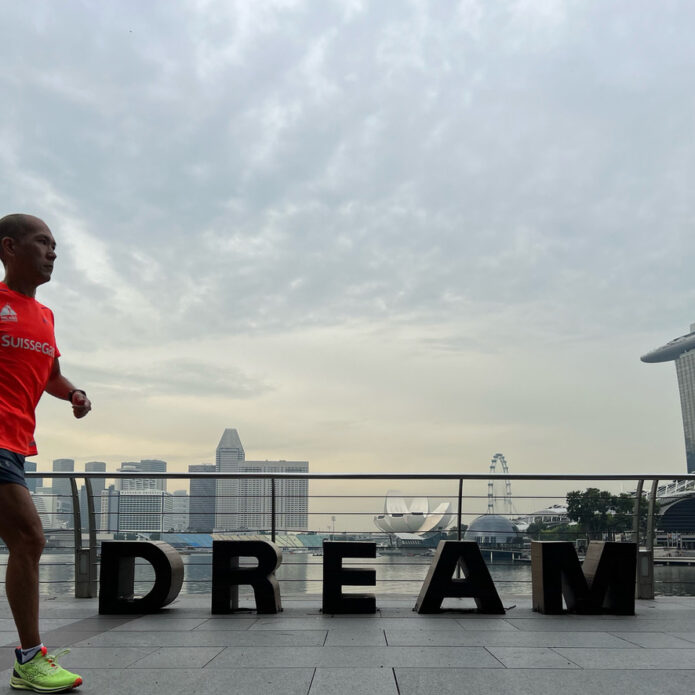
I used to run. Not like Fauja Singh, of course. But I did run. Early mornings. Dodging dogs, potholes, and the determined scooter that seemed coming my way.

These days, it’s more of a shuffle. A quiet negotiation between my feet and my pride. But every time I see a runner glide past, I pause. There’s something magical about steady feet and flying shoulders. Especially when your joints creak like old furniture.

Which is why Fauja Singh leaves me speechless.

He didn’t just run marathons. He began running them at 89. Yes, began.

Most people that age are asked to slow down. He tied his laces tighter.
And he kept going. Past 90. Past 100. Till 104.

That’s not just inspiring. That’s gently rebellious.

No fancy shoes. No watches that beep. Just a turban flapping in the wind and a belief that age was just the starting line.
He once said,

“I won’t stop running until I die. The day I stop running, take me to the crematorium.”

He ran for healing. He ran for joy.
He ran for something deeper that words can’t always catch.

To me, Fauja Singh is an anchor. A reminder that ageing isn’t about winding down. Sometimes, it’s just the warm-up lap.

And when he finally stopped? He wasn’t running. He was simply walking, in his village in Punjab, when a speeding car hit him.

The reports called it a hit and run.
Even the accident, it seems, couldn’t resist referencing his life.

He may be gone. But every shuffle forward, every second wind, every late start? That’s still his race.

Strength In Silence

There is strength in silence.
It comes from knowing. From grounding.
From the quiet confidence that doesn’t seek applause.

Silence isn’t the absence of thought—it’s the presence of depth.
It doesn’t rush to fill space.
It allows space to speak for itself.

The greater strength in silence lies beyond words.
Not just when the tongue is still—
but when the mind is calm.

When the mind doesn’t scramble to react.
When it listens, observes, absorbs.
When it allows things to be, without needing to control them.

That is the truest strength in silence—
A presence that doesn’t perform.
A stillness that holds its own.

It doesn’t retreat. It doesn’t resist.
It simply is—anchored, awake, and fully there.

Over the Moon

The moon has always been close to the heart.

It’s lit up poems, songs, movies—and many a lonely terrace. Shakespeare warned us not to swear by it. Sangam poets poured longing into it.

In Tamil, as in several other languages, the moon just doesn’t stop with setting the scenery. It’s emotion. It’s memory. And, It’s mood lighting for a thousand songs.

If you grew up with Ilaiyaraaja, you know this. He turned moonlight into music. “Ilaya Nila” played like a breeze across the night. “Nilaave Vaa” was a heartfelt invitation. They weren’t just songs. They were midnight conversations with the sky.

And years later, A.R. Rahman joined the moonlight symphony with “Vennilave Vennilave” (“Chanda Re” in Hindi), where Kajol and Prabhu Deva danced under its glow. The moon became a stellar witness to yearning—even as it received an invitation to descend, play, and promised a safe send-off.

They weren’t just songs. They were midnight conversations with the sky.

Back then, the moon stored everything. First loves. Break-ups. Dreams we were too shy to share.

And now?

The moon has upgraded to the cloud. Literally.

From Music to Metadata

A company called Lonestar Data Holdings is sending tiny data centres to the moon. Why? Because it’s cold out there. Minus 173°C cold. Perfect for keeping servers cool. And thanks to uninterrupted sunlight, solar power works like a dream.

Engineers are doing what poets did—staring at the moon. But instead of sonnets, they’re uploading files.

There’s something deliciously ironic about it all. For centuries, poets looked up at the moon for inspiration. Now, engineers are looking at the dark side of the moon for server racks. Somewhere, a bard is sighing while a CIO is smiling.

Even better? These moon-based data centres are being designed to withstand radiation, dust storms, and the general grumpiness of outer space. No mood swings here. The dark side of the moon may be inconstant in poetry, but it’s becoming pretty dependable in IT infrastructure.

Once a metaphor for mystery and madness, now a hub for metadata. The moon used to hold lyrics and longing. Now, it might hold your cloud backup.

And a few moons from now, if someone asks where your data is—well, irrespective of how bright the data is, it could well be on the dark side of the moon.

The Slippery Surface of Envy

“To understand others, watch what they reward.

To understand yourself, watch what you envy.”

I read that and sat quietly with it for sometime.

The latter part just made me pause. “To understand yourself, watch what you envy”. Envy is slippery surface.

To notice envy. Not just the fleeting kind—someone’s holiday photos or a shiny new car—but the deeper twinges. The ones that linger.

Perhaps it isn’t just about wanting what they have. Perhaps it’s about something unspoken. Freedom?

Recognition?

A sense of ease?

Sitting with it, even briefly, might help. Naming it, writing it down, noticing when it shows up. Over time, a pattern might emerge. A quiet revelation of what truly matters to you.

And once you see it, you have a choice.

To chase it.

To redefine it.

Or to let it go.

Note To Self. 🙂