There is something about a small fire on a quiet night that makes a person philosophical far quicker than any self-help book ever could.
You sit down thinking it will be a short, practical affair. Just ten minutes. Maybe fifteen. Light the fire, warm your hands, admire the sky, go back in. But fires, like old friends and railway delays, rarely stay within schedule.
Soon you are staring at the flames as if they have something important to say. The wood crackles with the confidence of a man who has never had to attend a budget meeting. The sparks rise bravely, like ambitious ideas, and vanish just as quickly.
Above, the clouds drift across the moon in slow, thoughtful formations. They look dramatic. Purposeful. Almost as if they know where they are going. Which, of course, they do not. They are simply being carried along, rearranged by invisible currents, much like the rest of us.
I’ve looked at life from both sides now From win and lose and still somehow It’s life’s illusions I recall I really don’t know life at all
I’ve looked at life from both sides now From up and down and still somehow It’s life’s illusions I recall I really don’t know life at all
The fire seems to agree. It begins with neat, obedient sticks, arranged carefully by a human who believes he is in charge. Ten minutes later, everything has collapsed into glowing chaos. Yet somehow, the warmth is better than before.
Life seems to follow a similar method. We plan, stack, arrange, and schedule. We give things names like “five-year strategy” and “career trajectory,” as if life were a polite train that would stop at all the stations on time. Then something unexpected happens. The sticks fall differently. The flame shifts. The smoke goes the wrong way. And we find ourselves learning a lesson we never planned to attend.
Still, there is warmth. There is light. There is this moment, under these wandering clouds, beside this small, cheerful fire.
And perhaps that is enough. Not perfect understanding. Just a little heat, a little light, and the gentle admission that we are all, in our own way, sitting by the fire, still figuring things out.
A Night of Theatre, Memory, and the Scripts That Refuse to Leave
Some theatre evenings feel like performances. Others feel like mirrors. This was the latter.
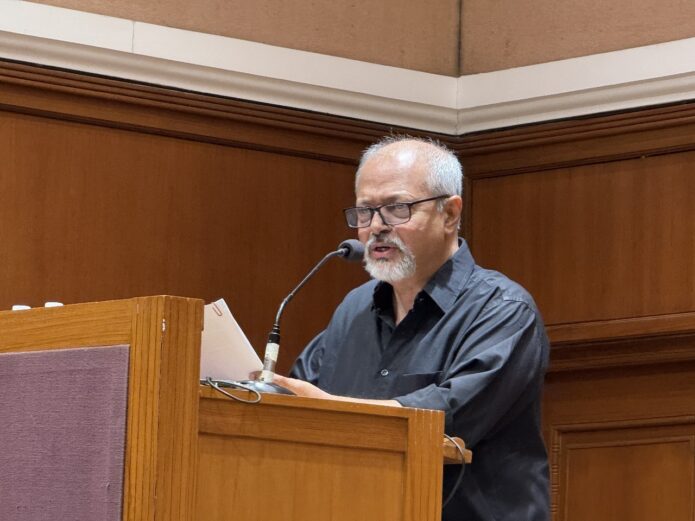
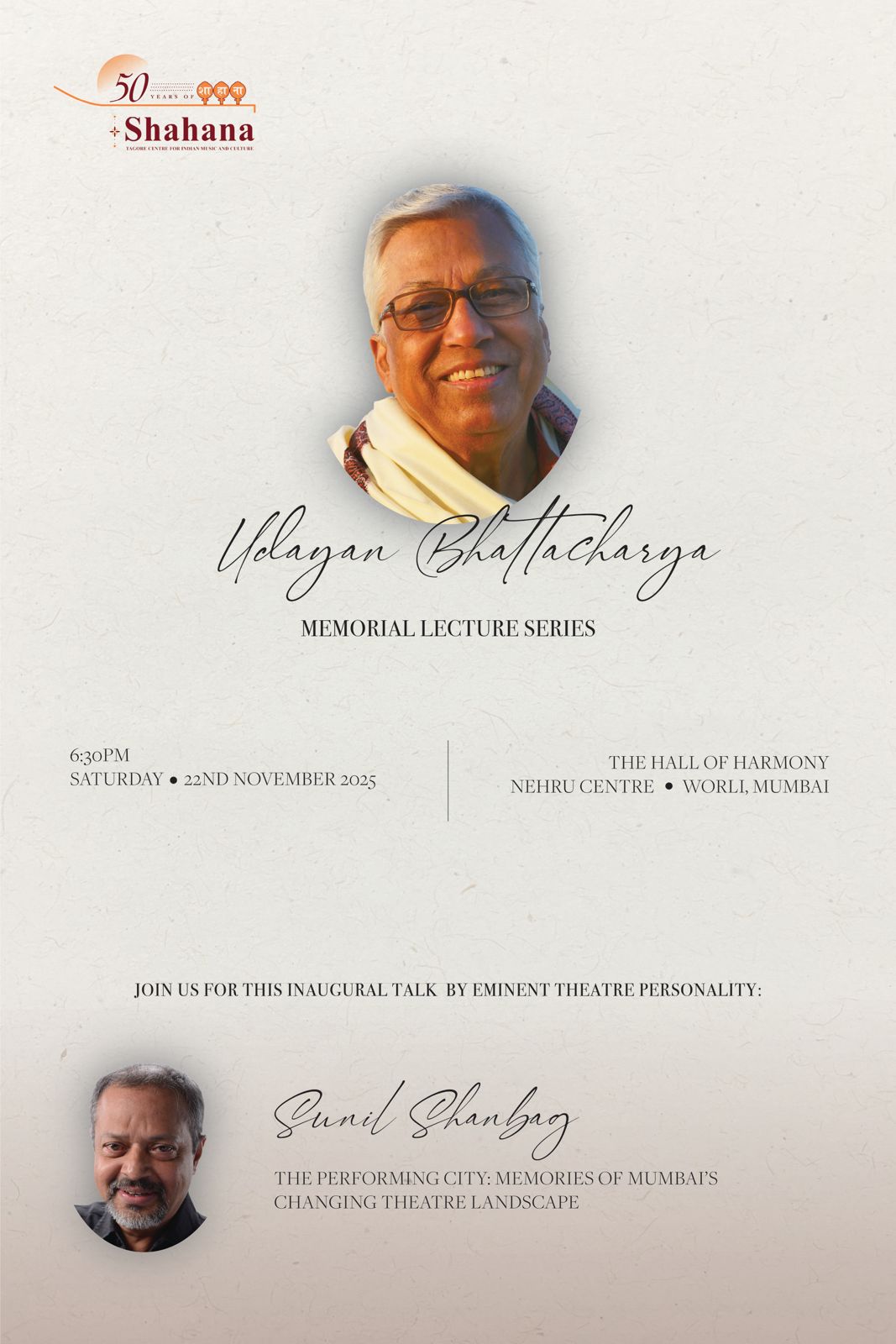
I expected the inaugural Udayan Bhattacharya Memorial Lecture at Nehru Centre to be solemn. Instead, it turned out warm, thoughtful and quietly humorous. The evening opened and closed with Tagore songs sung softly, as if reminding us that culture breathes best at its own pace. It was also the evening I was properly introduced to Sahana, Mumbai, a remarkable collective that has spent decades nurturing performing arts in the city with quiet resolve.
An Evening To Remember
At the centre of it all was Sunil Shanbag, one of Mumbai’s most respected theatre-makers and a protégé of the legendary Satyadev Dubey. He had the ease of someone shaped by decades of rehearsal rooms, difficult scripts and stubborn hope. Shanbag spoke calmly, stroking his goatee now and then, and made the history of Mumbai theatre feel less like a lesson and more like a stroll through a familiar neighbourhood. He offered hope simply by holding history in one hand and possibility in the other.
Somewhere along the way, a small door opened in me too, a familiar pathway to my own dalliances with theatre from years ago.
The Plays That Found Me
My introduction to theatre did not come with spotlights or pedigree. I was discovered by Prof Elango at Fourthwall, at The American College, who plucked me out of wayward obscurity and gave me a role in a play titled In the Name of God. One moment I was minding my own business, the next I was on stage wondering which limb was meant to move first. Theatre does not wait for you to be ready. It simply says, “Your turn.”
What followed was a fast, compressed and surprisingly thorough education. A little Shakespeare, a little Chekhov, and then The Zoo Story, the two-person pressure cooker that offers no escape and no excuses. Those early plays left an imprint, the way a river leaves its mark on stone. They shaped how I listened, how I observed, and how I carried myself long before I understood what they were doing.
Plays do not end when the curtain falls. They end when they are done with you. They return in airport queues and quiet mornings, tapping you on the shoulder when you least expect it. A play you performed at nineteen can return at forty with a completely different meaning. Theatre builds an internal archive without asking for permission, and it keeps adding to it long after the stage has gone dark.
For that imprint I owe a lifelong debt to Prof Elango and everyone at Fourthwall. Their passion ran on a different voltage and it sweepingly carried me along. Without them I would have remained exactly where I was, minding my business instead of discovering a new way of seeing and being.
And it was that way of seeing and being that sat upright that evening, listening to Sunil Shanbag narrate how Tagore’s play Dak Ghar had travelled all the way into Nazi Germany, slipping quietly into the shadows of the Warsaw Ghetto. It felt less like a history lesson and more like a reminder that stories often go further than their writers ever imagine.
Tagore, Korczak and a Lesson I Was Not Expecting
To understand the story, it helps to picture the Warsaw Ghetto in the early 1940s. A sealed district created by Nazi Germany. Starvation, cold and constant deportations. Entire childhoods cut short before they had begun.
In the middle of this was Janusz Korczak, whom I have been reading about ever since that evening. He was a paediatrician and educator who ran an orphanage with fierce tenderness. He believed children deserved clarity and dignity even when adults around them had lost both. His compassion was stubborn in the best possible way.
Shanbag described how Korczak used Tagore’s Dak Ghar to prepare the orphaned children for the idea of death. Amal, the sick child in the play who dreams of the world beyond his window, became a mirror for children whose own world was closing in. For many of us, this was the first time the Warsaw Ghetto was introduced not through numbers but through a play, through frightened children performing a gentle story, and through one man’s determination to give them a last taste of imagination.
The part that stayed with me came after the play. A few days later the children were marched away with hundreds of others towards the trains that would take them to a concentration camp. Adults around them wailed and collapsed. The children walked in silence, steady and composed. One of them held a violin and played as they moved. They were as ready as children can ever be for a fate they did not choose.
It struck me that the evening was as much an education about Korczak as it was about Tagore. Sometimes we learn about literature through the lives it touches. And sometimes we learn about history through the plays it chooses.
That night Korczak became the teacher and Dak Ghar became his chalk. Shanbag kept weaving that story through Mumbai’s own theatre tales, stories that were no less fascinating in their own way.
The Spaces That Built Mumbai’s Theatre
Shanbag’s stories reminded me that theatres do not just host plays. They build cities. They shape how a place thinks and imagines, held together not by budgets but by conviction.
Much of that conviction came from people like Dubey, who kept appearing in Shanbag’s telling. Dubey could spot actors who did not know they were actors, push them into difficult roles, and treat theatre as oxygen rather than entertainment. That energy seeped into the rooms where Mumbai’s theatre first found its voice.
Chhabildas: A School Hall That Sparked a Movement
The way Shanbag described Chhabildas, you could see it. A modest school hall in Dadar. A high tiled roof. A storeroom pretending to be a backstage. A toilet that worked on its own mood. Almost no equipment. And yet it became the beating heart of experimental theatre. For nearly two decades, dozens of groups performed there across languages, on diwans and rattling steel chairs, with traffic, vendors and radios leaking in from the street. On one night, even a murder downstairs.
In Shanbag’s telling, Chhabildas thrived not despite its flaws but because of them. The room taught theatre makers to be inventive, honest and fully awake to life.
Prithvi and NCPA: Spaces That Grew a City’s Confidence
Prithvi and NCPA, as Shanbag described them, were Mumbai’s two strictest teachers. Prithvi demanded intimacy, its thrust stage leaving no place to hide. NCPA offered the opposite lesson, insisting on scale and discipline. Together they taught artists to stretch, adapt and rise to whatever room held them. They were not just venues. They were training grounds.
Why Money Cannot Be the Only Question
Shanbag also traced how things shifted after 1992. As the country opened its markets, theatre was nudged into the logic of “an evening out.” Plays became shorter, lighter and more “dinner-friendly,” trimmed to suit appetites rather than ideas.
But Chhabildas reminded me of something else. Art does not need money to live. It needs people who care enough to rehearse after work, to perform in hot rooms, to sit on diwans and steel chairs and still feel something. Chhabildas did not decorate Mumbai. It animated it. It kept the city honest and awake.
Somewhere between the pollution outside and the conversation inside, something shifted. The air in the hall felt lighter, as if talking about plays and playwrights could momentarily clean a city’s lungs. It left me with nostalgia, a hint of melancholy, and most unexpectedly, hope.
Art that depends only on money cannot build a city. It can only decorate it. But art that depends on love and belief gives a city a soul.
Why Theatre Matters Even More Today
In a digital age we have traded presence for convenience. There is more to watch than ever, yet far less to truly feel. Our attention has become a marketplace and everything wants a piece of it.
Which is why theatre feels almost radical now. People in one room. Shared breathing. Shared laughter. And shared silence. No pause button. No algorithm.
Culture is not luxury. It is how a society remembers to stay human. And theatre remains one of the few places where India’s astonishing diversity gathers, listens to itself and recognises its own depth.
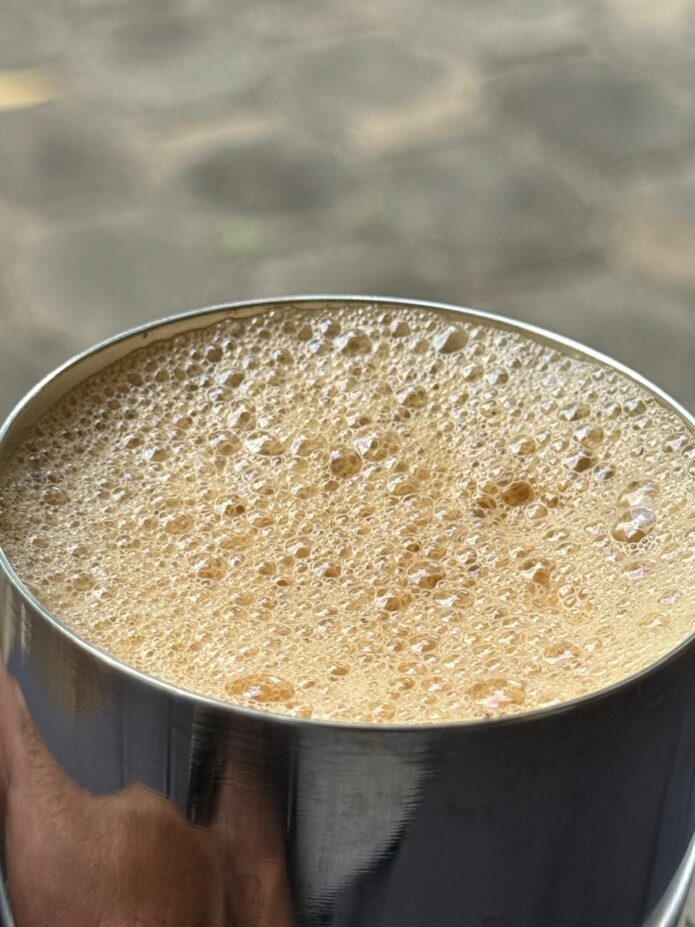
The other day, I was looking at a roadside coffee shop in rural Tamil Nadu. It was a pit stop. More to sip on nostalgia. Coffee was the excuse. I got both. Nostalgia. Coffee. And a line from Huxley that appeared on cue.
The man behind the counter was working his magic with a giant kettle that hissed and sang like an old friend. The smell of fresh decoction drifted through the morning air. Somewhere in the background, Ilayaraja’s 80s melody played faintly from a radio that had seen better days. There was a very faint nip in the air, and the newspaper hanging by a rusted clip on the stall was still crisp. Proof that the day was just beginning.
The man himself was spotless and alert. A splash of thiruneer, three bright grey lines, shone on his forehead. He moved with a rhythm shaped by years of practice. Pouring, mixing, serving, taking money, returning change. All in one smooth motion. It felt as if time had slowed down to watch him.
There was no tension in his face. No wasted effort. He did not rush, yet he was never still. The kettle tilted at the perfect angle. The coffee arced through the air in a golden stream. The froth landed obediently in its glass. Every act was precise and calm. Ease that comes when you stop fighting your work.
That is when it struck me. Lightness comes from intimacy. When you have done something long enough, you stop proving yourself to it. The dancer stops counting beats. The cricketer stops calculating angles. This man has stopped thinking about coffee.
Aldous Huxley said it perfectly. “It’s dark because you are trying too hard. Lightly, child, lightly. Learn to do everything lightly.” Perhaps he had watched this man.
He looked up once, smiled, and went back to his art. The world around him kept moving. Buses honked. Cows crossed. A customer called for an extra spoon of sugar. Yet he was steady, like a monk in the middle of a festival.
It was not grand. Or dramatic. It was simply beautiful. And light. Ease, brewed fresh.
One bright afternoon in Manly, I stood by the water and found myself watching the wind work. The sea was calm, the sky spotless, and a light breeze played around like it had nowhere in particular to be. Then a boat caught the wind, its sail filled, it leaned slightly, and began to move. Just like that.
You cannot catch the wind with your hands. You can wave, grab, or plead, but it slips right through. Yet stretch a bit of cloth in the right way, and the same wind will take you places. The trick is not strength, but alignment.
We do this in life all the time. We try to hold on to things we cannot. Control people. Plan every detail. Manage every outcome. All we end up doing is flapping about like a loose sail. The world moves anyway; the only choice we have is how we set ourselves to it.
The sailors made it look effortless. A tug on a rope here, a small turn of the wheel there, a quiet adjustment to the wind. They did not fight it; they worked with it. When the wind changed, they changed too. Calmly. In rhythm.
Lessons from the Shore
Perhaps that is what wisdom looks like. Knowing when to act and when to let the wind do its work.
And yes, there was a little competition too. You could see one sailor glance sideways at another, quietly comparing. Humans will be humans. Even grace comes with a touch of rivalry.
Standing on shore, I realised that the boats moving best were not the ones straining hardest. They were the ones that had learnt to work with the wind.
Maybe that is the real art of living. You cannot hold the wind. You can only understand it, trust it, and let it carry you forward.
I have seen flowers come in stormy places And kind things done by men with ugly faces, And the gold cup win by the worst horse at the races So I trust, too. – John Masefield.
Life is messy, unpredictable, and occasionally brilliant. Stormy places can grow flowers. Horses you’d bet against can take home the gold. The world isn’t always what it seems, and that’s precisely why it’s worth sticking around.
How you see it, though, depends a lot on where you stand. The lenses you wear—shaped by your past, your scars, and your hopes—colour everything. Storms might look like chaos to one person and necessary rain to another. The trick isn’t to pretend you’re lens-free but to recognise the tint. To pause and ask, “Is this how things are, or just how I see them?”
And then, there’s trust. Not the kind you offer blindly, but the kind you live with—a quiet understanding that life, for all its storms, has a way of working things out. Trust is sitting with uncertainty, even when it’s uncomfortable. It’s knowing that flowers can grow through cracks and that a “no-hope” horse might just surprise you.
Hope isn’t naïve. It’s stubborn. It keeps you showing up, even when the odds don’t look great. It reminds you that the scars you carry aren’t just wounds—they’re proof you’ve lived through storms before.
That’s my note to myself. For today.
Stay alive to the oddities.
Be present to what’s in front of you, even if it doesn’t fit your map.
Trust that the story is unfolding as it should.
And keep an eye out for flowers. They show up in the strangest places.
If there’s one thing that refuses to sit still, it’s the drum. It calls, it commands, it moves. And when it does, so do you.
At the Chithirai Festival, the best drums don’t just set the rhythm—they set the spirit free. Feet tap, bodies sway, the energy sweeps through the crowd like a fever. You dance. You pause. You catch your breath. And then, you look around.
They’re still moving. The colours, the finery, the rhythm—it’s all alive, pulling you back in. You realise you’ve been out of action too long.
So, you move again.
Because that’s what the festival, and the drum, are here for.
The champion on stage glides through choreographed music and synchronous applause. Some programmed tears that pop up for the camera do not take away the effort, dedication, talent and sacrifice of the winner. Being cognizant of what would it take to become a champion makes him more of a champion.
At other times, proximity numbs us from examining other lives. An uncle who waded through water to study. A neighbour who flew fighter planes. A good writer who has kept stubborn company of writing whilst barely being able to pay his bills, ensconced in obscurity. The list is limitless and has a promiscous stride across all walks of life.
The spectacular ordinariness of everyday life can be cruel. What would it take to live an ordinary life that makes a difference to many, long after death. Stellar lives with patently ordinary hues.
For instance, what would it take to live like my great grandmother?
What would it have taken to have a large heart, a loud mouth and a stellar soul? The coop of grandkids and the farm of great grandkids will stand testimony to her dynamic presence and frame. Some have her nose. Others have her presence. But none have it all. Which makes me wonder what would it have taken to be her?
Imagine 1950’s and 60’s. Imagine being stopped at the gate of a large university in a big city, where you have travelled to. You are stopped at the gate, as you push for an admission for your grand daughter. Imagine, you push your way across, stride through the portals of the University and go argue with a much heralded professor. Imagine winning the argument. Now imagine doing it all as a rural illiterate lady. That was her. Now tell me, what would it take to be like her?
To see a family splinter yet not lose hope. To see her wealth being usurped yet believing in abundance. To live through hatred and division with love. To believe in the girl child. To walk tall. To love deep. To stay curious. Thats my memory of her. Enough for me to strive to learn what would it take to be like her.
I remember her free spirit and ready smile. Her worlds and her views. Her elegance and poise. But most of all, I remember her stories. Those were vivid stories and there would be no ‘moral of the story’ at the end of it all. ‘Go figure’ she used to say. Her presience always stood alongside her presence.
As I lit a lamp in her memory, I wondered if I should write about her. And then almost heard her sing Bharathiar‘s song to me.
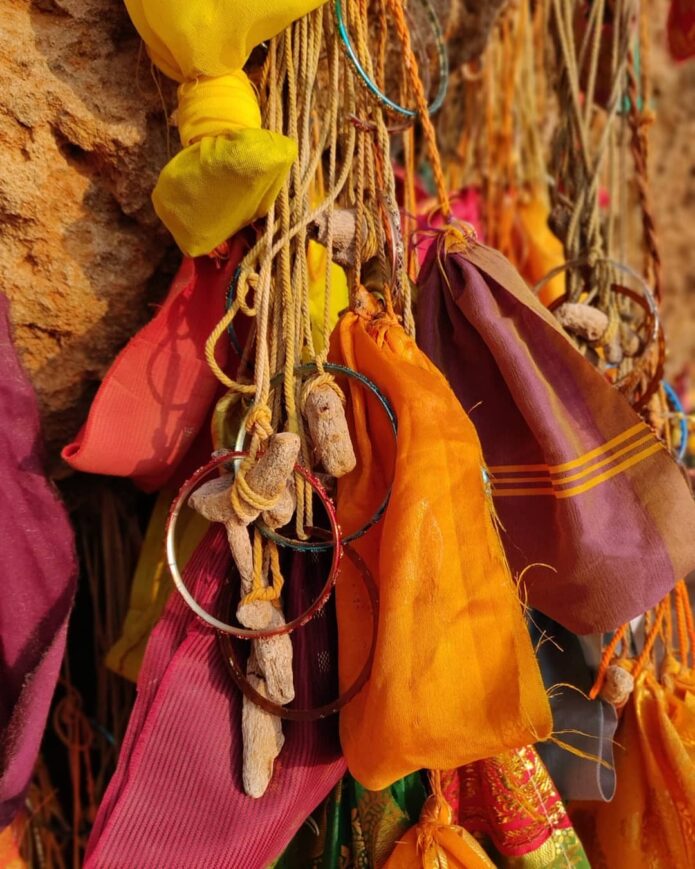
Small bags, bright with turmeric, jingling with bangles, dance in the morning breeze. Tied to a tree, they catch the first rays of the sun—fluttering, whispering, waiting.
Each knot holds a wish. Each thread, a quiet prayer. A mother’s hope, a daughter’s dream, a whispered plea for health, love, or a future yet unseen.
In rural Tamil Nadu, faith isn’t just spoken—it is tied, woven, and left to sway with the wind. And as the sun rises, the colours shimmer, as if the universe itself is listening.
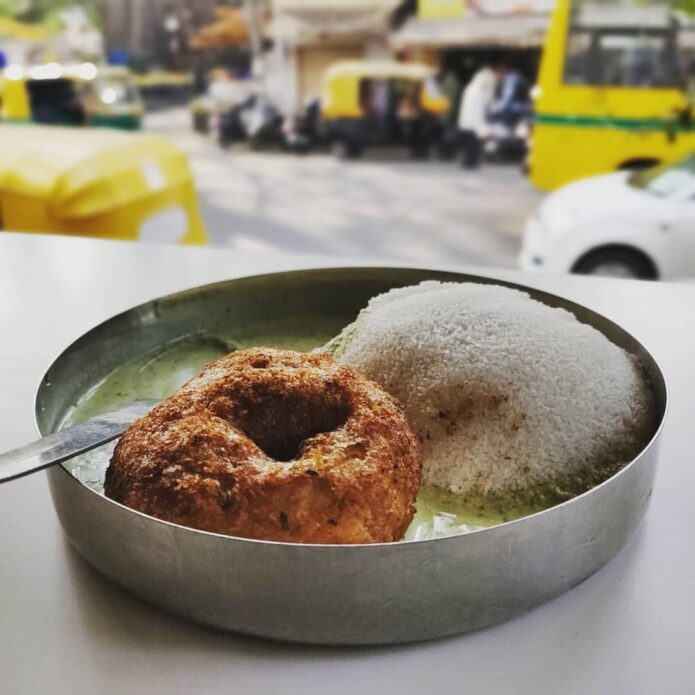
The simplest foods change the mood inside the mind. Bring alive memories. And sometimes make you long to come back for good. The food pipe is the best route on the map of life! ..
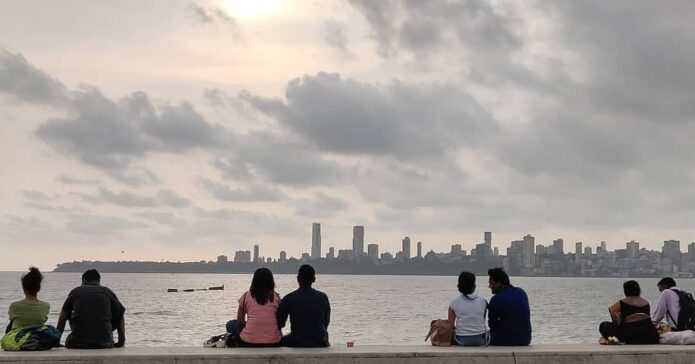
There’s something about Mumbai when it rains. The city slows, just a little. The streets glisten. The sea looks alive. But there’s also something about Mumbai when it waits for rain. The air is thick with hope. The sky teases with grey clouds. People glance up, waiting.
Anticipation fills the city.
And when the first drop falls, it feels like Mumbai breathes again.
The wait makes the rain sweeter.
That’s Mumbai—a city of moments.There is something to Mumbai when it rains. There is something to Mumbai when it expects the rain!