Leadership

How to Say a Lot Without Saying Much

The Backstreet Boys once sang, “It’s only words.”

Which, at the time, felt like a tragic discovery. A young man realising that “I love you” had begun to sound like “please pass the salt”. The words were still there. The meaning had quietly packed its bags and left.

I thought of that line again when I heard Mark Carney at Davos say, “If you are not at the table, you are on the menu.”

It is only words. Fourteen of them. But suddenly you can see the situation. A table. A menu. A future you would rather not be part of. No charts. No jargon. Just a mental picture and a mild sense of doom.

This is not about politics or ideology.

It is about language. About how some sentences do more work than entire policy documents.
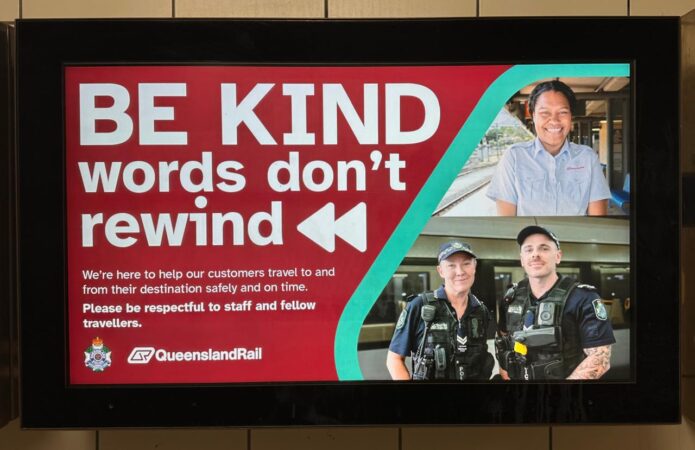
“Fear itself.” “You can’t eat ideology.” “No one left behind.” “Kindness is not a weakness.”

These are not explanations. They are handles. You can pick them up and carry them around. They survive translation. They survive headlines. And the passage of time.

I remember the original Tata Indica tagline. “More car per car.”
Not mileage.
Not torque.
Just an idea small enough to fit in your pocket.

These lines do the same thing.
More meaning per word.

Which brings us back to the Backstreet Boys. They were right, in a strange way.

It is only words. But that is exactly why it matters. When words are simple, visual and human, they stop being decoration and start becoming containers. They hold fear. Or dignity. Or hope. Or threat. Or belonging.

So a boy band lyric and a Davos soundbite end up doing the same job: reminding us that language, when it works, doesn’t shout.
It packs.
And once it packs well enough, it travels further than speeches ever will.

Only words.
But very well packed ones.

What follows is a small curation of 20 of my favourite “more meaning per word” lines — from leaders and thinkers.

Not for their politics, but for how neatly they pack a worldview into a sentence.

If you have a line like this — one that stuck with you long after the speech was forgotten — I’d love to add it to the collection.

My List

“We will not beg.” — Paul Kagame

“Peace is made with enemies, not with friends.” — Yitzhak Rabin

“You can’t eat ideology.” — Mahathir Mohamad

“No one left behind.” — Anthony Albanese

“It does not matter whether a cat is black or white, as long as it catches mice.” — Deng Xiaoping

“Kindness is not a weakness.” — Julia Gillard

“You Are Either With Us, Or With the Terrorists.” — George W. Bush

“Development is about people, not things.” — Julius Nyerere

“Speak softly and carry a big stick.” — Theodore Roosevelt

“We want life like other peoples want life.” — Mahmoud Darwish

“The world is bigger than five.” — Recep Tayyip Erdoğan

“Real power is… when you have nothing, you still have dignity.” — Nelson Mandela

“Hide your strength, bide your time.” — Deng Xiaoping

“If you are not at the table, you are on the menu.” — Mark Carney

“Minimum government, maximum governance.” — Narendra Modi

“An eye for an eye makes the whole world blind.” — Mahatma Gandhi

“A nation should not be judged by how it treats its highest citizens, but its lowest ones.” — Nelson Mandela

“We will make Singapore a first-world oasis in a third-world region.” — Lee Kuan Yew

“The only thing we have to fear is… fear itself.” — Franklin D. Roosevelt

“Optimists and pessimists die the same way. They just live differently.” — Shimon Peres

Your turn. What are lines that have stayed with you?

A Small Defence Of Thinking

There is a newsreader on television. Serious desk. Serious lighting. Serious voice.

A small slip of paper is placed on his desk, marked as a bulletin, the kind that usually signals something important.

He does not read it privately.
He does not check what it says. Or whether it makes sense.

He looks into the camera and announces, with grave authority:

“I have just been handed a bulletin. It says… I have spinach in my teeth.”

He reads this with the same tone he would use for an earthquake or a national election.

No pause.
No flicker of self-awareness.
No sense that this is private, trivial, or frankly not news.

A bulletin arrived. Therefore it must be read.

The process has been followed perfectly. The thinking has been politely excused from the building.
It is a neat little example of what happens when process runs without the application of mind.

That was Ted Baxter, a character from The Mary Tyler Moore Show, a popular American sitcom from the 1970s. He was written as vain, sincere, and spectacularly literal. The joke worked because the world recognised him. He felt familiar.

When the World Starts Acting Like Ted Baxter

Once you notice this, you see it everywhere.

There is the automated apology email that arrives instantly and means nothing, like a sympathy card signed by a printer. There is the birthday reminder that replaces memory with a balloon emoji and a sentence that could be sent to your plumber. There is the form that listens very attentively and then explains that your problem does not exist in any of its drop-down menus. And there is the student who becomes excellent at passing exams without ever becoming particularly good at understanding anything.

In each case, the ritual is intact. The motion is correct. The meaning has quietly slipped out through a side door.

And then we scale this up and call it management.

The engagement survey is launched with much ceremony. People answer honestly. The dashboard is generated. Colours are admired. A number is announced. Everyone nods. Nothing changes. The organisation did not want insight. It wanted a temperature reading — preferably one that does not require treatment.

Organisational and Individual Goals behave in a similar way. What can be counted slowly begins to matter more than what counts. People learn how to hit the metric rather than improve the work. Throughput goes up. Quality goes sideways. Edge cases fall off the map. The system congratulates itself for success and sends an automated thank-you note.

The bulletin has been read. The spinach remains.

A Small Defence of Thinking

Systems are very good at repeating things. They like things neat. They like things predictable. They do what they are built to do, and they do it reliably. Over time this gives us tidy processes, friendly scripts, clean dashboards, and a lot of activity.

Meaning needs something else. It needs attention. It needs someone to notice what is actually going on and respond to that rather than to the checklist. It needs a small pause before the next step.

You can see the difference in people. Some are fully in what they are doing. If they are cooking, they are cooking. If they are listening, they are listening. If they are working, they are actually at work. Being around them feels steady. The moment feels real.

Others are doing one thing while drifting through another. Replying while half replying. Listening while half listening. Living while half being there. Attention gets spread thin across too many places and leaves very little behind anywhere.

The application of mind is simply paying attention before acting. It is the moment where you ask, “What is really going on here?” It slows things down a bit. It also saves you from doing the wrong thing very well. Application of mind while reading the bulletin turns out to be a good place to begin. In a world full of scripts, the application of mind feels like a small, quietly brave act.

Spilled Water, Sharp Wit, and a Lesson in Leadership

It was a long oak table. The kind around which serious men in serious suits talked serious strategy.

The Managing Director was about to make a big presentation. Papers needed to be passed around.
Years ago, as a junior manager, I’d been entrusted with setting it all up. I grabbed the opportunity with both hands. Possibly legs too.

I had worked closely with the CEO. Learnt a ton. And put it all together like my life depended on it. Because, frankly, it felt like it did.

People filed in. The room filled up. And just as the meeting was about to begin, Murphy showed up. My elbow hit a glass of water. It emptied itself on the neat sheaf of the CEO’s printed presentation. Numbers, projections, strategy, all now soaking in regret.

Right then, the CEO walked in. I froze. So did time.

He looked at the mess, smiled, picked up the damp stack, and said:Well, here’s a watered-down version of next year’s strategy.”

The room erupted. The tension vanished. The meeting was sharp, alive, and unexpectedly joyful.

And I learnt something I’ve never forgotten: The best leaders don’t just stay calm in a crisis. They know when to crack a joke.

These days, humour has become something else. It’s often loud. Crass. Sharp-edged. Reduced to personal attacks, one-upmanship, and clever jabs. It’s lampooning more than laughing. And it leaves no room for dignity. Only applause or offence.

Which is a pity. Because true humour of the quiet kind, the kind with timing and taste, adds a certain sophistication to everyday life.

It disarms. It connects. It shows perspective. It’s not about who can say the most outrageous thing as much as it about holding the moment lightly, without letting it slip.

Stanford thinks so too

At Stanford’s Graduate School of Business, Professors Jennifer Aaker and Naomi Bagdonas teach a popular course called Humour: Serious Business. Their research is clear: humour is an underrated superpower in leadership.

Used well, it boosts trust, increases engagement, and makes communication stick. More interestingly, humour makes leaders appear more competent, not less.

Because being able to laugh — and more importantly, to make others laugh, signals something powerful: you’re comfortable. You’re present. You’re not afraid of the room.

And the very best leaders? They don’t just use humour. They can take a joke too. Without flinching. Without getting defensive. Often, with a smile and a comeback that lifts the moment rather than hijacks it.

Humour is the glue

There’s a Japanese art form called kintsugi. It involves repairing broken pottery using gold. The cracks are not hidden. They’re highlighted. Because the break is part of the story. And the gold, quite literally, holds it all together.

I think humour plays a similar role in leadership. When things crack, as they often do, humour is the gold we can pour into the situation.

It doesn’t erase the problem. But it holds the room together, highlights resilience, and reminds everyone that we can move forward. With perspective.

The best part? Once you’ve laughed with someone, it’s much harder to stay divided.

So how do you cultivate this?

Start by observing. Noticing moments of lightness or the ones begging for it. I once worked with a manager who was famous for his campus presentations. He would rehearse meticulously, plan every slide and then grin and say,

“In the fifth minute, I’ll crack a spontaneous joke.”

Yes. Spontaneous, by appointment. And strangely, it worked. The room laughed. Every time. For some people, humour is a performance. 

But for the truly great ones, it’s a practice. It comes from noticing. From being present. From taking small risks. And yes, from being open to taking it on the chin when it doesn’t land.

The next time you’re in a heavy meeting, watch what lifts the room. It’s rarely slide 47. It’s often a well-timed comment. A look. A line. Something small but true.

Read people who write with wit. Hang around people who laugh easily, not just loudly. And most importantly, practise on yourself. Learn to take a joke. Especially about yourself. That’s the real test. And the best training ground.

The Closing Line

This is not a call to turn every meeting into a stand-up set. At best, It’s a quiet reminder that in ‘serious’ rooms , a well-timed laugh can change everything.

It humanises the moment.

Because humour, when done right, doesn’t just break the ice. It becomes the gold that mends the cracks. The pause that helps the room breathe. The tiny spark that reminds us: we’re all in this together. Elbow, water spills and all.

And maybe, just maybe, the best way to hold the room, is to let it laugh.

The Checklist Trap: How We Turned Leadership into a Lifestyle Product

Leadership used to be messy, thoughtful, human work. Now, it risks becoming a lifestyle product—complete with listicles, morning routines, and pastel-quote inspiration. That is the essence of Satish Pradhan’s post titled The Seductive Simplicity of ‘7 Steps to Greatness’. Satish is a thought leader I immensely respect and whose views have guided me for a while now. This time, as always, his writing offers a sharp take.

He writes: “Leadership becomes a lifestyle—a performative state of constant optimisation and vague inspiration.” Ouch. True.

I couldn’t help but add this in the comments:

“Also begs the question—who made it this way?
Boards, wanting bandaids?
Leaders, craving a formula?
HR, trying to package potential?
Consultants, with frameworks that look good on slides?
Academia, chasing citations over messy reality?
Or TED Talks, with applause timed to the speaker’s smile?
Not a blame game. Just a call to reflect.
If leadership is now theatre—who wrote the script?
And more importantly… who’s still reading the footnotes? 🙂”

Truth is, we didn’t land here overnight. As I wrote earlier in a piece titled Decline Creep,” these shifts happen gradually, then suddenly. The seductive simplicity of seven steps isn’t a glitch—it’s a feature of a broader cultural operating system.

Leadership development is a multi-billion dollar global industry. Estimates put it at over USD 350 billion annually. With that kind of investment, you’d expect profound change. We often get ‘pass me the popcorn’ stuff.

The Current Cultural Operating System

The milieu we operate in shapes our defaults. Leadership and its development has not escaped the broader shift toward speed, scale, and surface over substance. Here are some attributes of this time and space.

1. Everything must be tangible.

If it’s not tangible, it must not matter. This is a tragic oversimplification. Real progress in leadership is often subtle. A better conversation. A delayed reaction. An unexpected apology. Tangible, if you know where to look—and if you look with intent.

Deep learning and behavioural change are not immediately visible, but they are transformational over time. Sitting with the intangible, the ambiguous, the unresolved—this takes patience. But that’s precisely what we seem to be losing.

2. We live in a fast-food world.

Everyone wants nourishment in the form of a nutrient bar they can eat before catching a train. Sure, it feeds the immediate hunger. But it cannot offer the satisfaction of a full-course meal. Or the long-term health. Leadership frameworks are now nutrition bars: portable, efficient, and forgettable.

Herbert Simon, who coined the term “bounded rationality,” reminded us that humans tend to satisfice—settling for what’s good enough. Quick lists cater to that tendency. But leadership needs more than adequacy. Over time, ‘adequate’ becomes the benchmark. And then the ceiling.

3. The tyranny of the quarterly result.

The short term is now. The long term is the next quarter. It’s as if the world will cease to exist beyond the quarter. If something doesn’t shift short-term metrics, it’s dismissed. Leadership development doesn’t always give you a spike in numbers. Sometimes it just quietly prevents a disaster. Or helps someone stay.

Peter Drucker is often quoted as saying, “What gets measured gets managed.” Full stop. But that’s not where he stopped. He actually said: “What gets measured gets managed — even when it’s pointless to measure and manage it, and even if it harms the purpose of the organisation to do so.”

Perhaps we were in a hurry and didn’t soak up the full sentence.

4. The obsession with machine-like efficiency.

We’ve come to admire speed, standardisation, and output so much that we expect people to behave like machines. Fast. Predictable. Always on. That logic has quietly crept into leadership development too.

It’s now packaged like a factory model—designed to scale, deliver uniform results, and run on schedule. But leadership doesn’t work on conveyor belts. It doesn’t follow a clean workflow or offer batch processing.

People are messy. They take time. Conversation. Reversals. Detours. Leadership requires recalibration, not just repetition. Efficiency looks good on paper. But it rarely builds trust or courage.

This obsession leads to box-ticking: feedback session done, 360 report filed, coaching logged. But that’s not growth. That’s admin. Cookie cutters work well with cookies—not people.

5. We’ve unhooked from research.

There is a deep and evolving body of work in the social sciences and leadership literature—decades of inquiry into motivation, learning, group dynamics, and organisational culture. Thinkers like Chris Argyris, Edgar Schein, and Mary Parker Follett have explored the nuances of influence, systems thinking, and human potential. Their work offers complex, often uncomfortable truths.

But such research rarely makes it to the glossy handouts or keynote slides. Why? It demands thought. It questions assumptions while resisting slogans. And isn’t easily reduced to three boxes and a circle.

Instead, we pick up ideas stripped of their richness—psychological safety as a checklist item, or systems thinking reduced to bullet points. The substance is lost in the translation.

Academia speaks in nuance. Practitioners crave action. Somewhere in between, we abandoned the bridge.

We need to reclaim it. Not for the sake of theory—but for depth, integrity, and honest conversation. Leadership deserves nothing less.

6. Deliberate effort on development is seen as optional.

Focused development is treated like a side hobby—something to do if there’s time. A luxury. Not core. There’s a comforting belief that leadership emerges on its own. That wisdom arrives with age. That real work is separate from leadership work.

But the demands are more complex now. The path to leadership is often shorter, with less grounding. And the illusion of expertise is everywhere. Ten-second clips pass off as wisdom. Everyone has an answer. Few ask better questions.

What’s missing? Time. And deliberate effort. To learn. To experiment. And reflect. The pause to ask, “What did I learn from that?” feels indulgent. But without it, growth is shallow.

7. Real change happens at work. And it is bespoke.

You can have perspective in a classroom. Maybe even a breakthrough in an offsite. But change? That happens on the ground. In Monday meetings. In the pause before a reply. When noticing what you once missed.

One size doesn’t fit all. It doesn’t even fit most. What works for one leader may confuse another. The best leadership development is bespoke—stitched with care and context. You can learn from shared perspectives. But applying them? That’s personal. That cannot be outsourced.

As Manfred Kets de Vries once quipped, “Leadership is like swimming—it cannot be done by reading a book about it.”

Change is contextual. It escapes formula. It demands participation. So yes, the seven steps might sell. They might even help a little. But let’s not forget: leadership is a practice. Not a product. Not a performance. And definitely not a PowerPoint.

It is messy, slow, human work. And if we want real change, we must learn to value that again—even when it doesn’t come with a checklist or a bestselling cover.

So, there. 7 points. Stacked and ordered. I have a few more. But they won’t fit seven. I am part of the problem you see 🙂

I Am the Traffic

A road safety campaign in Sweden once carried a brilliant line: “You are not in traffic. You are traffic.” Simple. Sharp. It flipped the narrative—from blame to ownership.

That idea travels well. In leadership, culture, and checklist thinking, we aren’t bystanders. We’re not stuck in the system. We are the system. Participants. Sometimes even enablers.

It was never just about traffic. It was about agency. And responsibility. In many ways, it’s a reminder for all of us engaged in leadership and development work.

We may not like the system. But let’s admit it—we help make it. Through what we reward. What we tolerate. And what we scroll past without question.

Culture is not created in boardrooms alone. It’s created in choices. Daily ones. A ticked box here. A skipped conversation there. Over time, these become norms.

We are not stuck in it. We are it.

Development doesn’t happen by accident. It needs intentional choices. Time. Attention. Depth.

So, what do we do? I don’t know. Perhaps, start with Satish’s post. Maybe read the comments. Linger. See what resonates. What provokes. What’s missing.

Because no framework—however snappy—can replace the quiet courage of doing the hard, human work of change. And yes, let’s still read the footnotes. 🙂

The Second Story: Seeing Beyond Failures and Success

In December 2017, Charlene Murphey, a 75-year-old patient, was admitted to Vanderbilt University Medical Center in Tennessee after suffering a brain bleed. Within two days, her condition had improved. Doctors ordered a PET scan before she was discharged, and prescribed Versed, a mild sedative, to help calm her nerves.

Nurse RaDonda Vaught was assigned to administer the medication. She went to the automated medication cabinet, typed in the drug name—but it didn’t show up. This was a familiar glitch. Staff had grown used to bypassing it. So Vaught used the override function, a routine workaround in the hospital.

But something went terribly wrong. Instead of Versed, she pulled out vecuronium—a powerful paralytic. She administered the drug and left. Murphey stopped breathing and never woke up.

The First Story and Its Limits

The hospital fired Vaught. Her license was revoked. She was convicted of criminally negligent homicide.

To many, the case seemed open and shut. A nurse made a fatal error. Justice was served.

But that’s only the surface story—the one that provides a name, a mistake, a punishment. Sidney Dekker, Professor in the School of Humanities, Languages and Social Science at Griffith University in Brisbane invites us to look deeper: Why did this make sense to the nurse at the time?

That’s where the Second Story begins.

A System Set to Fail

Vaught was not careless. She worked in a system that had quietly normalised risk. Medication cabinets were glitchy. Overrides were expected. Nurses weren’t trained on the risks of the override function. No one flagged it, because everyone used it.

This wasn’t just human error. It was a system error.

Organisational thinker Chris Argyris called the surface-level response Single-Loop Learning—fixing the behaviour without questioning the system. The real opportunity lies in Double-Loop Learning: changing the underlying rules and culture that made the behaviour possible.

Culture in Action—And Why It Matters

Every organisation has two cultures: the one printed in posters and handbooks, and the one people actually live.

One says, “We value safety.” The other says, “Don’t slow down.” When those messages clash, people choose the one that protects their job or helps them survive the day. It’s that simple.

Over time, shortcuts become habits. Risks become invisible. And when something breaks, the system often blames the person it failed to support.

But it doesn’t have to be that way. In Japanese train stations—some of the safest and most efficient in the world—staff follow a practice called “pointing and calling.” I saw them point to signals, say them aloud, and actively confirm their actions. It looked dramatic, but I learnt that it significantly reduces errors. There, safety isn’t a statement. It’s a system. It’s culture by design—not by hope.

That’s why the Second Story in organisations matters so much for managers, leaders and of course, consultants. The First Story gives you a neat diagnosis and a fast fix. The Second Story in organisations requires deeper listening and more courage—but it reveals where change is truly needed. It shows the disconnect between values and behaviour. It helps leaders shift from blame to learning and therefore, to change.

Questions To Ask

Crucially, the Second Story isn’t only for understanding failure—it helps explain success too. When an athlete wins gold, it’s not just about training hard. It’s about the coach, the physiotherapist, the diet plan, the mental support, the facilities, DNA—everything behind the scenes that made excellence possible.

In organisations, too, when a team thrives, don’t just clap. Ask: What made this work? What conditions allowed people to do their best work? When we see the system behind the success, we can repeat it. When we ignore it, we leave future outcomes to luck.

Final Thought

The Second Story is always there. It’s not about blame—it’s about learning. It helps us see not just what went wrong or right, but why it made sense, and what needs to change.

Charlene Murphey didn’t just deserve a trial; she deserved a transformation. A system that looked at what failed her—not just who did. And perhaps the Nurse RaDonda Vaught, too, didn’t just need punishment; she needed a system that supported her, trained her, and designed work that made safety easier, not harder.

Because the best way to honour a tragedy is to make sure the system learns from it—and becomes less likely to repeat it.

If you’re willing to look deeper, you’ll see more. And in that, lies the path to better systems, better culture, and better outcomes.

Unlearning for Success in an AI-Driven World: Why Past Wins Can Hold You Back

AI is breaking boundaries and dismantling old ways of thinking. It has made a rather impolite but firm introduction to irrelevance. Leaders today must prioritise unlearning for success in an AI-Driven world —or risk being left behind.

AI is rewriting the rules of work, creativity, and competition. Every day, new breakthroughs make yesterday’s expertise obsolete. The old playbooks? No longer enough. The rate of change is massive. And it’s not slowing down.

The real question is: How fast can you adapt?

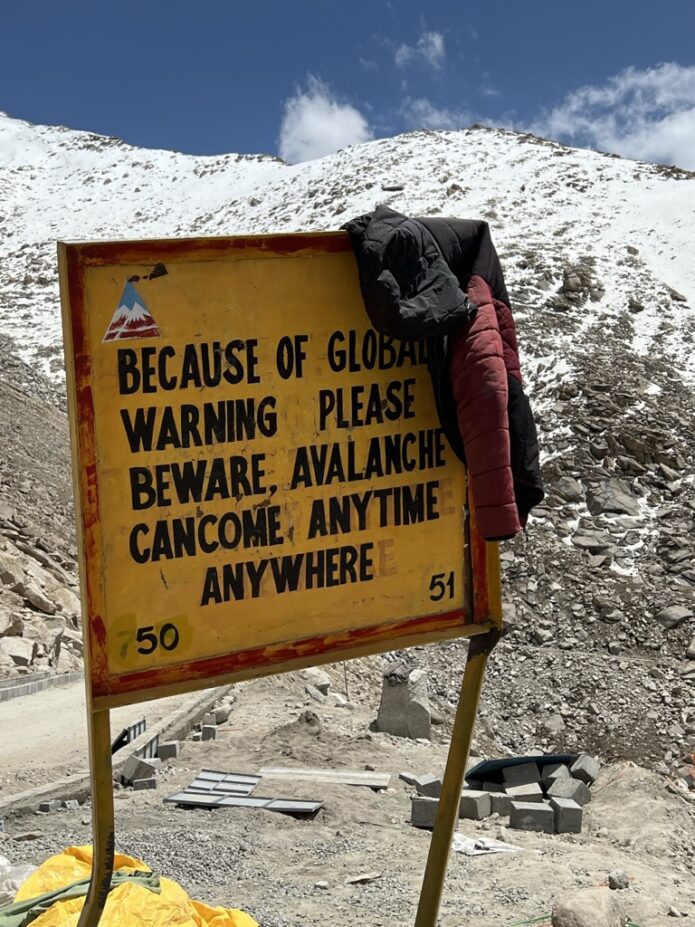
I clicked the picture above somewhere in Ladakh, where our car had been halted by an avalanche. Workers were labouring to clear the road, knowing full well that another could strike at any moment. That’s the nature of avalanches—sudden, disruptive, and unforgiving.

AI is that avalanche. In the real world, avalanches block roads. In the metaphorical world of fast change, they bury careers, industries, and entire ways of working. The only way to survive? Move, adapt, and find your slope.

Slope and Intercept

A professor whose work I follow is Mohanbir Sawhney. He wrote a piece titled “SLOPE, NOT INTERCEPT: WHY LEARNING BEATS EXPERIENCE” in LinkedIn. The piece resonated and helped me refresh my high school coordinate geometry 🙂

I have been thinking about it ever since. So, Indulge me for the next couple of minutes. Here we go.

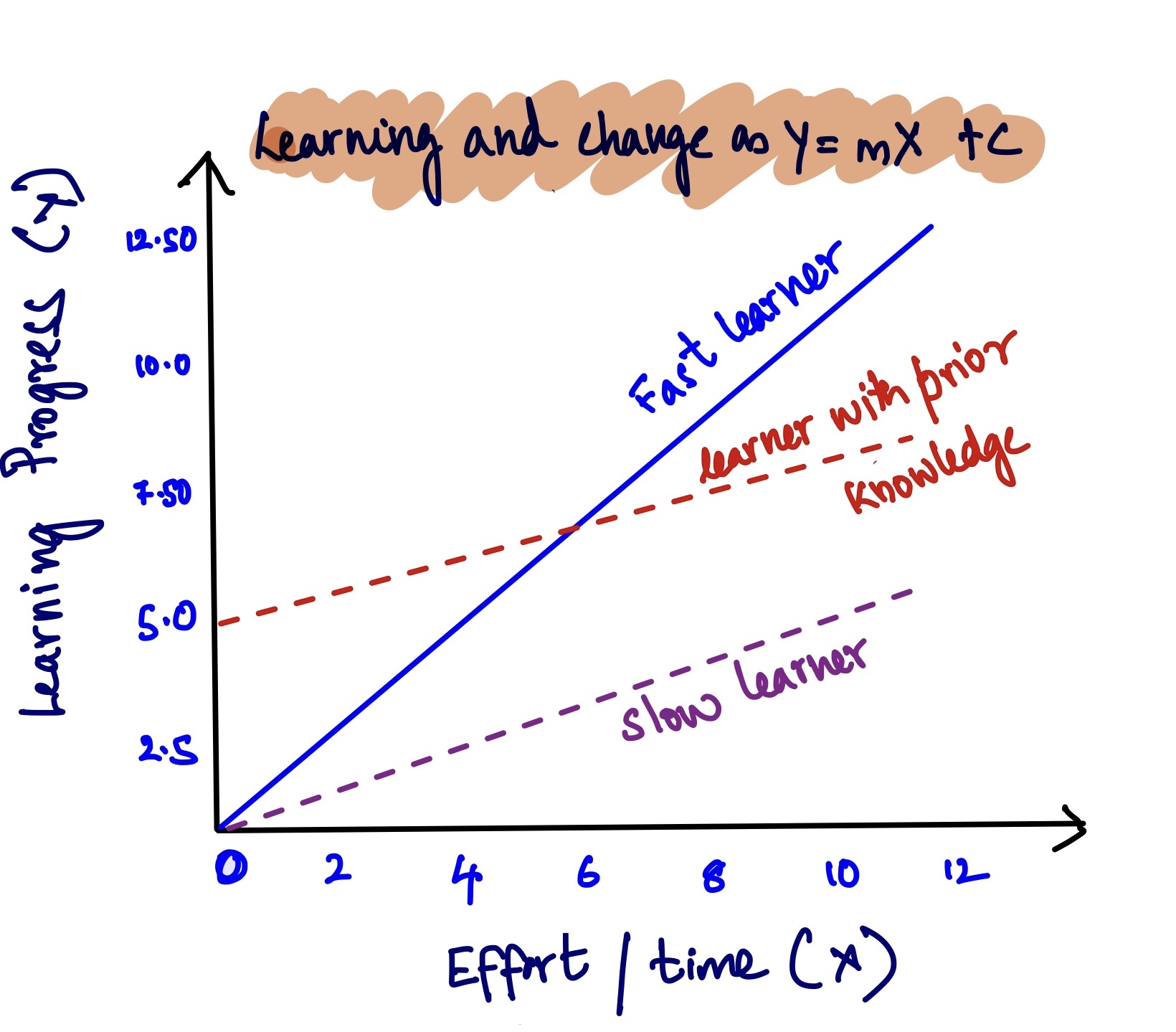
Equation of a straight line: y = mx + c

m: The slope—indicating how fast you’re learning.
c: The intercept—representing your starting point or existing knowledge.

Imagine three learners. Mr. Red starts ahead (high intercept) but learns slowly (low slope, small ‘m’). Mr. Purple starts lower (low intercept) and progresses steadily (moderate slope, medium ‘m’). 

Ms. Blue starts behind (low intercept) but picks up new skills quickly (steep slope, large ‘m’), eventually overtaking both. Over time, Ms. Blue’s higher slope (greater ‘m’) allows her to progress faster, proving that the speed of learning (slope) matters more than where one begins (intercept).

That’s Prof. Sawhney’s point. In a world moving at breakneck speed, slope beats intercept every time.

It’s a neat explanation that accentuates the importance of learning and the role of past experience. Which is the point to this post. Past experience can interfere with future learning.

What gets in the way of learning and change? Three things stand out for me.

1. Past Success is a Sneaky Obstacle

What got you here won’t get you there. Yet, we cling to past knowledge like a badge of honour. The problem? Yesterday’s wins can become today’s blind spots.

The best learners stay humble. They don’t assume what worked before will work again. Instead, they ask, “What do I need to unlearn to make space for what’s next?”

This isn’t just opinion—it’s backed by another favourite professor, Clay Christensen, in his classic work, The Innovator’s Dilemma.

Christensen showed how successful companies often fail when disruption hits. Why? Because their past success locks them into old ways of thinking. They keep optimising what worked before instead of adapting to what’s coming next. That’s how giants lose to scrappy newcomers unburdened by legacy thinking.

Exhibit A: BlackBerry

Once a leader in mobile technology, BlackBerry clung to its physical keyboard design, convinced loyal customers would never give it up. Meanwhile, Apple and Samsung bet on full-touchscreen smartphones. BlackBerry’s refusal to move beyond its own past success led to its decline.

Exhibit B: Zomato

Contrast that with Zomato. It started as a restaurant discovery platform but saw the market shifting. It let go of its original success model and pivoted to food delivery. Then to restaurant supplies. Then to quick commerce. By unlearning what had worked before, Zomato stayed ahead.

The same applies to individuals. If you define yourself by what has worked before, you risk missing what could work next. Adaptation isn’t about forgetting your strengths; it’s about not letting them become limitations.

2. Fear Kills Growth

New learning requires trying. Trying involves failing. And failure—especially when experience has given you relevance—can feel uncomfortable.

Many don’t fear learning itself; they fear looking foolish while learning. That’s why kids learn faster than adults. They don’t care if they fall; they just get up. Adults, on the other hand, hesitate. They protect their image, avoid risks, and stick to what keeps them looking competent.

This isn’t just instinct—it’s backed by research. In The Fear of Failure Effect (Clifford, 1984), researchers found that people with a high fear of failure avoid learning opportunities—not because they can’t learn, but because they don’t want to risk looking bad.

Think of it this way: If you’re only playing to avoid losing, you’re never really playing to win. The antidote? Make experimentation a habit. Small experiments create room for both success and failure—without the fear of high stakes. They provide just enough space to try, adapt, and grow.

Reflections on Rahul Dravid

Rahul Dravid’s career is an interesting study in adaptation. Once labelled a Test specialist, he gradually refined his game for ODIs, taking up wicketkeeping to stay relevant. Later, he experimented with T20 cricket and, post-retirement, started small in coaching—mentoring India A and U-19 teams before stepping into the senior coaching role. His evolution wasn’t overnight; it was a series of calculated experiments.

3. New Minds, New Paths

Left to ourselves, we reinforce what we already know, surrounding ourselves with the same familiar circles—colleagues, family, and close friends. That’s exactly why new perspectives matter. We don’t have enough of them. Our past experiences shape our networks, and over time, we rely on the same set of strong connections, limiting exposure to fresh ideas.

Sociologist Mark Granovetter’s research on The Strength of Weak Ties (1973) found that casual acquaintances (weak ties) expose us to new ideas and opportunities far more than close friends or colleagues (strong ties). Why? Because strong ties often operate in an echo chamber, reinforcing what we already believe. Weak ties, on the other hand, bring in fresh perspectives, unexpected insights, and access to new fields.

A few years ago, an MD I know took up cycling. What started as a fitness and lifstyle activity became something more. As he grew more integrated with his diverse cycling community, I saw firsthand how it influenced him—not just physically, but mentally. He hasn’t just learned new skills; he has unlearned old assumptions. His outlook, I realised, has changed simply by being around people who think and live differently.

He has transformed without realising it and is thriving professionally. I’ve been working on the sidelines with him and can see the transformation firsthand. I am not undermining his professional challenges and success, but I cannot help but see the changes his cycling community has brought to him.

The world is moving fast. The only way to keep up? Have more unexpected conversations, seek out people who challenge your views, and surround yourself with thinkers from different worlds.

Sometimes, seeing others take risks in adjacent spaces is all the permission we need to start experimenting ourselves.

Opportunity for Change

The ability to learn, unlearn, and adapt has never been more critical. In a world shaped by AI, rapid disruption, and shifting industries, clinging to past successes is the surest way to fall behind. The real competitive edge lies not in what you know today, but in how quickly you can evolve for tomorrow. Unlearning for success in an AI-driven world is mandatory.

So, ask yourself: What am I absolutely sure about? Because that’s often where the biggest opportunity for growth lies.

The world belongs to those who can learn fast, forget fast, and adapt even faster.

Learning from Experience: A Leadership Journey in Stories

Some conversations stay with you long after they end. They challenge you, nudge you, and sometimes, quietly reshape your thinking.

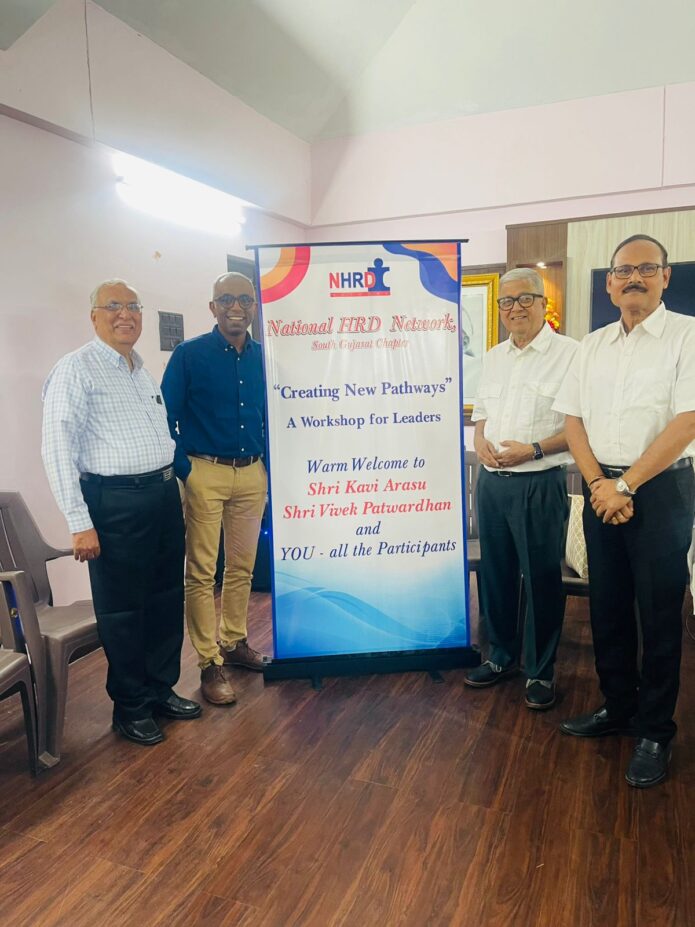
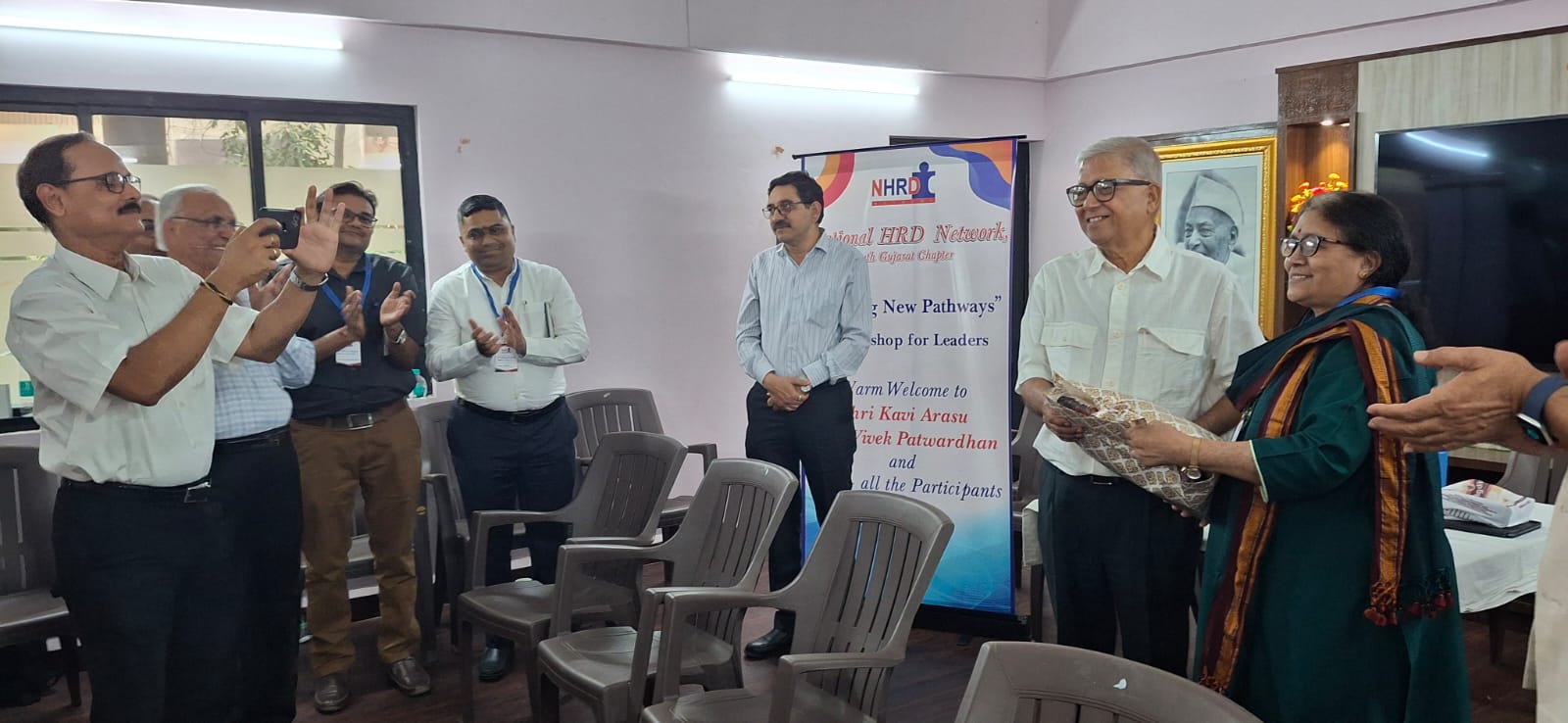
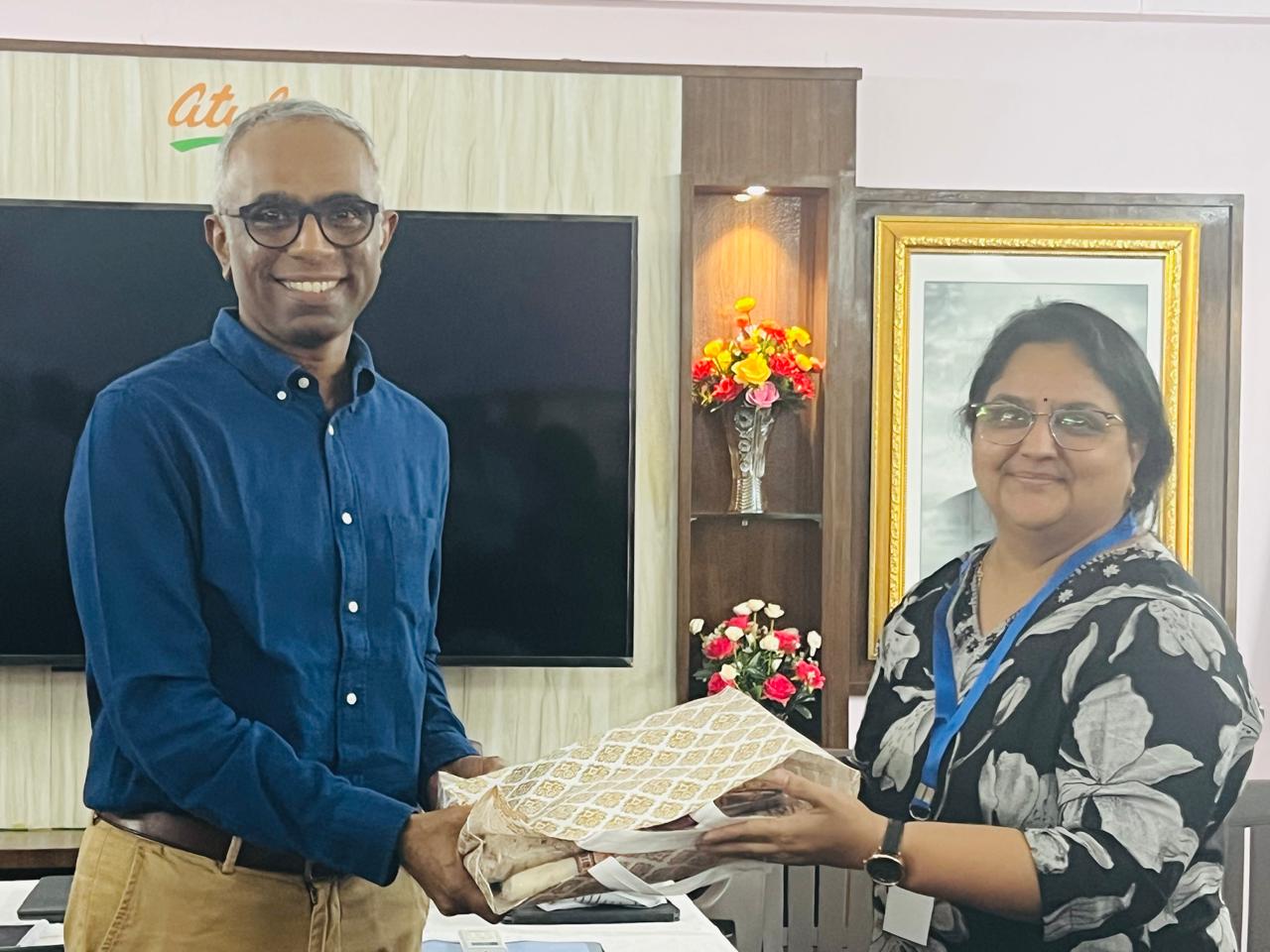
A leadership workshop with a diverse group of professionals from the South Gujarat region turned into one such experience. It wasn’t about grand theories or textbook leadership—it was about stories. Stories of beginnings, growth, setbacks, and decisions that shaped careers and lives.

At the heart of it was Vivek Patwardhan, whose wisdom and experience anchored the dialogue. Learning alongside him is always a privilege, and this time was no different.

What made it truly special, though, were the participants—their openness, their willingness to share not just successes but struggles and turning points. They gave themselves fully to the process, making the space richer for everyone. Learning wasn’t just something that happened; it was something we built—together.

Himanshu Bhatt steered in the participants with remarkable passion and persistence. Atul Industries and its leadership proved to be perfect hosts and provided the perfect setting for these reflections to unfold.

One moment stood out—a letter from the future. Writing to our 2025 selves from 2040 sparked something deeper. Reflection, possibility, and perhaps, a quiet resolve to shape the road ahead with intention.

This was not just another workshop. It was a shared journey—one where the greatest learning came not from a stage, but from each other. And that made all the difference.

Here is Dr.Kunal Thakkar, a participant, writing in Linkedin.

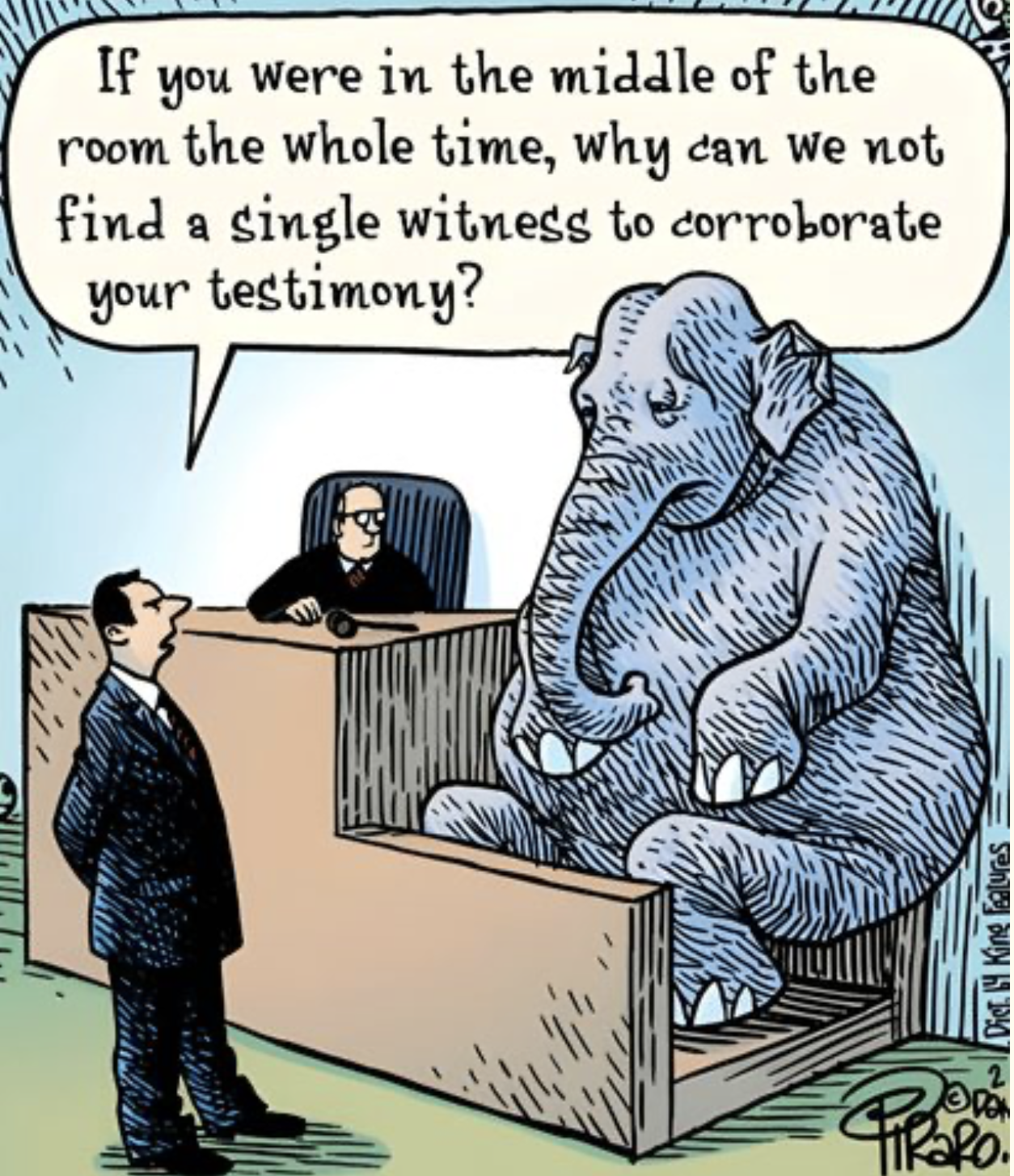
The Elephant in the Room – Not as Invisible as You Think

My work revolves around making change happen and stick—at all kinds of levels. And if there’s one universal truth, it’s this: there’s always something unsaid, something avoided. Sometimes, it’s just a small discomfort. An Elephant in the room! Sometimes, there’s a full herdThe other day, I wrapped up a conversation where everyone expertly avoided making eye contact with the massive, wrinkled reality in the room.


I’ve been thinking about these elephants in the room. Unspoken realities. They have a tough job. And honestly, so do I. Because the more I work with organisations and teams, the more I see how much avoidance of this elephant in the room stands in the way of progress. It can be incredibly frustrating to watch brilliant people, well-resourced teams, and ambitious strategies get stalled because no one wants to name the obvious.

Interestingly, the phrase “elephant in the room” has its roots in an old fable by Russian poet Ivan Krylov, titled The Inquisitive Man (1814). The story follows a man who visits a museum and marvels at all the tiny, insignificant details but somehow fails to notice the elephant right in front of him. If that isn’t the perfect metaphor for how most organisations and families deal with uncomfortable truths, I don’t know what is. We focus on minor distractions, but the massive, inconvenient reality remains untouched.

Wild thought. What would it be like to hire an elephant in the room? I mean, how would the job description look? What would be its responsibilities? How would you review its performance? What would the elephant say? Where would they go to cry? And what else could they do?

Some days of intense frustration make me think like this. Creative licence to deal with day-to-day difficulties, if you will.

Now Hiring: Elephant in the Room

Position: Elephant in the Room
Location: Every office, family gathering, and awkward social situation.
Reports To: No one, because no one acknowledges its existence.

Job Responsibilities:

  • Stand silently in meetings, absorbing tension like an unpaid intern.
  • Ensure everyone pretends everything is fine when it clearly isn’t.
  • Occasionally wave a trunk in frustration, only to be ignored.
  • Be the invisible force behind passive-aggressive emails that start with “As discussed earlier…”

Performance Review:

“Exceptional ability to be avoided. Maintains presence without making a sound. 10/10 at making people glance at their phones instead of addressing the real issue. Keep up the great work!”

A Word from the Elephant Itself

“Look, I didn’t apply for this job. But here I am. Stuck in boardrooms where people discuss alignment instead of accountability. Hovering over family dinners where everyone tiptoes around Cousin Ramesh’s mysterious ‘business venture.’ Sitting in post-crisis town halls where leadership promises ‘synergy’ while employees quietly update their LinkedIn profiles.

I’ve tried everything. Waving my trunk. Wearing a hat. Bringing snacks. (Nothing gets humans talking like free food, right?) But nope. Silence.

At this point, I just sigh and sit down. If you won’t acknowledge me, I might as well be comfortable.”

Support Group for Elephants in the Room

  • “I’ve been in an office for five years, and they still pretend I don’t exist!”
  • “Try being the elephant at a wedding where everyone knows the bride’s ex is in the audience.”
  • “At this point, I’m considering a career switch. Maybe become the ‘Monkey on Someone’s Back’ instead.”

Ways Forward: Working with the Elephant in the Room

Addressing the unspoken isn’t about charging headfirst into confrontation. It requires a mix of awareness, strategy, and patience. Leaders who handle these situations well focus on a few key things.

First, recognising discomfort is essential. What are the conversations being avoided? What patterns keep repeating? Naming the issue doesn’t always mean calling it out immediately but being aware of its impact.

Creating an environment where people feel safe to speak up makes a difference. If raising concerns is met with silence or punishment, people will simply stop trying. Timing also matters—some truths need gentle nudges, others require direct conversations.

Finally, not every situation can be resolved. Some rooms thrive on avoidance. And in those cases, knowing when to step away is just as important. Progress happens when people choose to see what’s right in front of them.

The Next Career Move

“With all the rooms filled with ignored elephants, I’m considering a career change. Maybe I’ll become the ‘Skeleton in the Closet’ instead. Seems like a better gig!”

What’s the biggest elephant you’ve seen in the room?
Let’s talk. No peanuts required.

Reacting to change

On December 31st, 2018 an interesting article appeared in the New York Times. It was titled “Wielding Rocks and Knives, Arizonans Attack Self-Driving Cars“.  It wasn’t a lazy review of some crazy future book. The fourth industrial revolution is here and our tools seem to be testing us. And some of us are running out of patience. The world is reacting to change. Like in Arizona, people were pelting stones at driverless cars! Including one man who jumped in front of one driverless car and waved a gun at it saying, ‘he despises it’!

Energy Revolutions

Every revolution is about a shift in energy. From physical to mechanical. From mechanical to digital.

The first industrial revolution (sometime between 1760 – 1840 or so) had the power of ‘steam’ as its thrust area.  Steam. Steel. Machine tools. Industrial looms. And the like. 

The second industrial revolution a.k.a “The technological revolution”, is about scale. Electricity. Petroleum. Iron & Steel. Railroads. Turbines. Engines. Etc. And the like. Perhaps a mention of Fredrick Taylor and his management principles is due. The second industrial revolution happened between 1870-1914. 

The third industrial revolution is the giant shift from mechanical to digital. Commencing sometime from the late 50s when computers began to make their first appearance. An important marker on the ground was the movement of music from vinyl records to CDs in the 80s!

Some argue that the fourth is primarily a continuation of the the 3rd. Obviously, it’s not that simple. Wearable devices. Implants. Networked devices. Data. Robotics. Internet of things. All point to a fusing of the physical, biological and digital. 

Reacting to change

Example after example from history points to non linear change leading to a forceful response .  Every significant change that disrupted an existing status quo provoked people of that time. Be that a wave of dismissal, royal proclamation or violent protests! 

Is it different this time?

If change is natural, so must our reactions to it. Isn’t it? Only this time, the scale of change isnt quite the same. Changes that are reaching us are more intense, simultaneous, interconnected like never before.  Klaus Schwab, who wrote “The Fourth Industrial Revolution” speaks of the difference in terms of Scale, Scope and complexity. The fusion of physical, digital and biological worlds will break boundaries of a number of disciplines. From economics to research. From biology to technology. 

Artificial Intelligence is changing professions. Lawyers. Doctors. Construction engineers. Construction engineers. Armed Forces. You name a domain and a passing lark will point to how AI and related stuff is sitting outside the door. 

The ramifications of such sweeping change presents dilemmas at scale. Most of it dished out simulataneously. Complex and interwoven, mankind’s sense of preservation is being tested. The scenario of mankind not cherishing all the progress made by its own is real. Worse, it is already happening every day. 

There is something more 

The fourth industrial revolution has in it an innate ability to amplify and showcase the inequalities that are omni present in the world. These inequalities have been a result of a thinking that gave ‘Capital’ a lot more heft. Perhaps this time it will be a tad different with ‘talent’ getting more attention than before.  

The amplification of inequalities and the new opportunity to amplify independent voice is a different deal. This change is not the usual change! 

In search of new frameworks and new mental models

Ways of thinking and working that aided us all these years are coming apart now. Not because they are wrong but because, they were designed for a different era. The new age citizen needs a new assortment of skills and mind maps. Needless to say that holds true for leaders and leadership as well. 

Klaus Schwab notes, “We need leaders who are emotionally intelligent, and able to model and champion co-operative working. They’ll coach, rather than command; they’ll be driven by empathy, not ego. The digital revolution needs a different, more human kind of leadership”.

We need to keep thinking and talking about this. It is only in our interest to do the same.

How Hard Is It to Do Nothing? Harder Than You Think!

To do nothing—how tough can it be? It sounds simple, yet it’s one of the hardest things to pull off.

Somewhere along the way, we started glorifying action. Movement. Hustle. Productivity. Not without reason. But the trouble begins when action takes over everything, leaving no space for stillness, reflection, or pause.

And that’s where the real wound forms—not from doing too little, but from never knowing the damage of doing too much.

Take a moment. Stand. Stare. Breathe. Watch the world go by. Because life isn’t just in the doing, but also in the being.