Travel Tales

“People don’t take trips, trips take people.” – John Steinbeck

Traveler vs. Tourist: How to Truly Experience a Place

Kevin Kelly is one of those people you take seriously. Not because he asks you to. But because he has lived a life that makes you want to listen. He co-founded Wired. He has written deeply about the future. And, more importantly for us today, he has spent over 50 years traveling the world. That’s half a century of airports, alleys, deserts, and detours. When someone like that gives travel advice, you pay attention.

Not all travel tips are equal. Some are practical. Some are poetic. A few are life-altering. The ones I’ve picked here are both useful and thought-provoking. They are not about checking places off a list. They are about soaking them in.

If you think travel is just about getting from one place to another, this might make you pause. If you already believe the best journeys are the ones where you lose track of time, read on.

Traveller or Tourist?

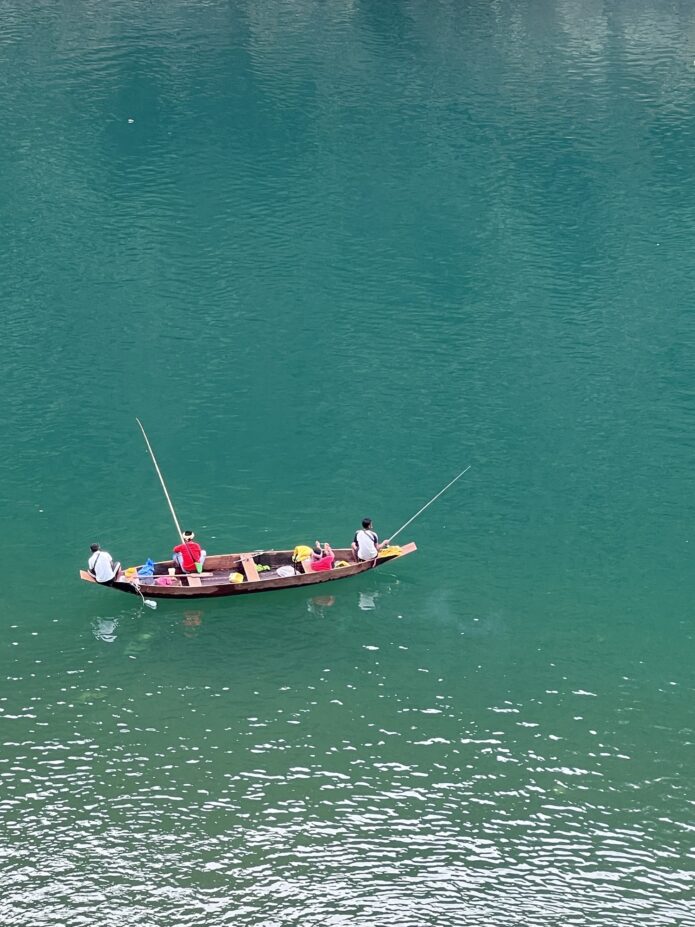
A tourist collects places. A traveller collects moments. The featured picture above is Dawki, Meghalaya. I remember the conversation with the boatman as much as I remember how bountiful nature is. It all comes together beautifully.

A tourist follows a plan. A traveller follows curiosity.

A tourist moves through a place. A traveller lets a place move through them.

The difference is subtle. But it is everything. It is the difference between taking a photo of a street market and sitting down for tea with the vendor. Between checking in at a famous site and wandering into a side street just because it looks interesting. Between skimming the surface and sinking into the depth of a place.

“Half the fun of travel is the aesthetic of lostness.” — Ray Bradbury

Travel Wisdom Worth Keeping

…..

From Kevin Kelly’s post, here are super special nudges to travel wisdom. Read the full post here.

Travel for a passion, not a place. Build a trip around cheese, jazz clubs, or ancient ruins. Not just cities and landmarks. You’ll remember that tiny family-run dairy in the Alps long after you’ve forgotten the famous cathedral in Rome.

Ask your taxi driver to take you to their mother’s home. Odd? Yes. But it works. You get a meal, a story, and a peek into real life. The driver gets to fulfill a family duty. The mother gets a guest to feed. Everyone wins.

Give yourself constraints. Travel isn’t just about where you go. It’s about how you go. Take only overnight trains. Carry just a day bag. Eat for a week on the price of a single fancy meal. Limits make things interesting.

Visit places that aren’t built for you. Cemeteries. Hardware stores. Small workshops. Real life happens there. Not everything has to be an Instagram moment.

It’s always colder at night than you think. Even in the tropics. Pack that extra layer.

Eat where the healthy locals eat. The fanciest restaurant may not have the best food. The street stall with a queue probably does.

Slow down. The best moments happen when you pause. The best conversations. The unexpected invites. The secret spots. They show up when you are not rushing.

Start your trip at the farthest point. Land. Then go far. Take an overnight train. A rickety bus. A long drive. Settle in at the most remote place you planned to visit. Then, slowly work your way back. Somehow, this makes the journey richer.

Buy souvenirs that have a home in your home. That intricate rug? Lovely. But where will it live when you return? If you don’t know, leave it behind.

When asking for restaurant recommendations, don’t ask where to eat. Ask where they ate last. You’ll get a real answer.

The Beauty of Travel

Bill Bryson, my favourite travel writer, once wrote, “To my mind, the greatest reward and luxury of travel is to be able to experience everyday things as if for the first time.”

That’s it.

Travel isn’t about crossing off landmarks. It’s about learning to see. To step into another world. Not as a tourist, but as a quiet observer. An eager participant. A respectful guest.

And when you do that, something else happens. You don’t just take a piece of the place with you. You leave a little of yourself behind.

So go. But don’t just go. Travel like a traveller. Soak it in.

(Read the whole thing. You might see travel differently.)

Hyderabad: More Than Just a City

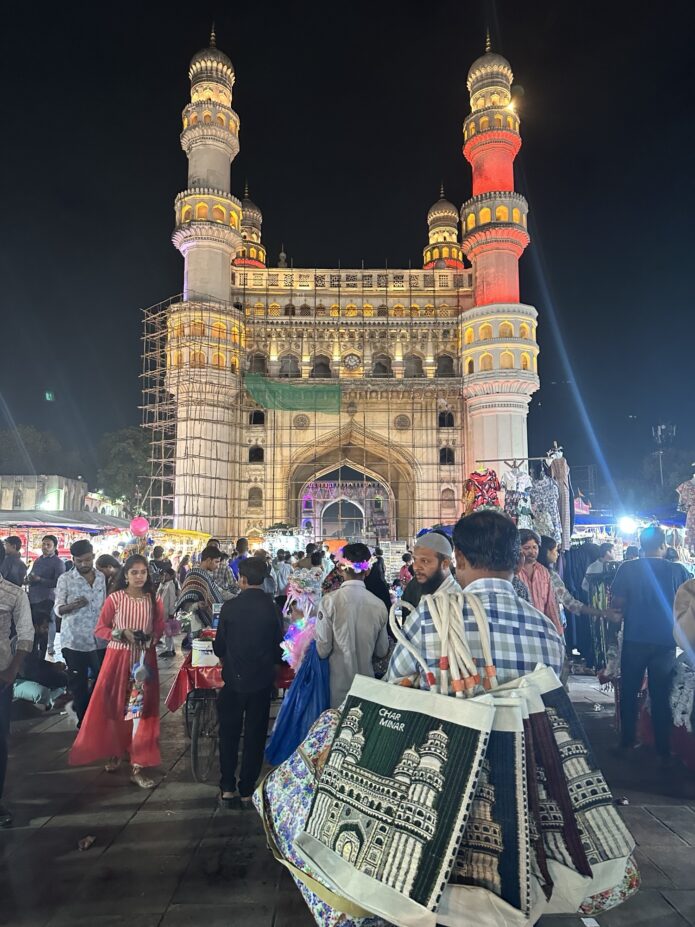
Hyderabad doesn’t try too hard. Old and new exist without fuss. Charminar and Cyber Towers. Bazaars and glass buildings.

People are warm, witty, and fluent in many worlds. A chai can spark an hour-long debate—about the past, the present, the US, or Tirupati.

The food? Yes, the biryani is legendary. But also kebabs, the softest osmania biscuits, and some delightfully spicy vegetarian preparations.

The city stays clean. Surprises with green spaces. KBR Park for morning walks. Durgam Cheruvu for sunsets.

There is history in its bones and tech in its DNA.

Hyderabad is where opposites don’t just coexist—they complete each other. It doesn’t force harmony. It just moves, breathes, and thrives. A quiet example for the rest. Not just as a city to live in, but as a way to live.

Someday Soon

Starting something new feels like stepping into a rain-soaked muddy puddle. I jump in and notice the mess. Tasks turn into Herculean labours. Cleaning the cardboard boxes in the cupboard above? Easy, until I find old report cards and spend hours reminiscing.

Beginnings are intimidating. Like the first day at a new school, the first word of this blog post, or that first step of a run when your last run is but a distant memory. Unknowns paralyse me. I cling to my cluttered garage and unread books.

“Someday Soon” whispers that tomorrow is better. It lures me with some immediate thing that must be done. Call the plumber. Check in on the US Election. But tomorrow is a myth. It’s where productivity goes to die. Meanwhile, today slips away, and my grand plans remain just that—plans.

I’m too good at imagining obstacles. Writing a book? The blank page mocks me. “What if it’s terrible?” I think. And so, it remains unwritten.

Beginnings are messy, awkward, and imperfect. But they’re also where great things start. I need to embrace the mess. Dive into the muddy puddle. It does not have as much muck as I make it out to be.

Starting is about momentum. Newton’s First Law: an object at rest stays at rest; an object in motion stays in motion. This applies to me, a “Someday Soon” adherent. I write in my journal, ‘Take that first step, and the next ones come easier.’

So, I plan to break tasks into bite-sized pieces. Clean one shelf. Write one page. Small victories build momentum. Soon, I’m not just starting—I’m continuing.

I need to be kind to myself. Fear of failure is powerful. But failure is part of the process. Every great achievement had false starts and mistakes. I must allow myself to fail, be imperfect, and learn as I go.

The hardest part is often the first step. Lao Tzu said, “The journey of a thousand miles begins with a single step.” So, I take that step. Write that sentence. Clean that shelf. Drink that health mix, even if it tastes like bad client feedback.

Starting isn’t as daunting as it seems. Silence “Someday Soon.” Embrace the mess. Some wise human quipped, “The best way to get something done is to begin.”

Ok, we are rolling. At least until the next station.

Embracing Grey

When it rains, it pours. Especially so if you are in the Western Ghats during the monsoon season. The rain brings alive many emotions.

I nurse a hot coffee—dark brown with a sting that somehow never fails to awaken my senses and keep me attentive to everything around me: the falling rain, passing clouds, and winds that seem eager to howl but end up whimpering as the rain pelts down.

Arundhati Roy once said, “The rain was beautiful to watch. The way it slanted across the road, forming fine curtains through which everything looked different.” Some writers and their words latch onto seasons. For me, the monsoon season calls for Arundhati Roy. Roy equals the monsoons.

Blinding sheets slip into to faltering drips and then offer a mirage-like pause, only to be followed by blinding sheets again. Meanwhile, my coffee is disappearing from my cup.

Bob Marley said something to the effect that some people feel the rain while others just get wet. I can’t stay in either camp for long. Sometimes, I want to soak it all in. Other times, I’m happy just to watch.

You see, life is never black and white. It’s a whole lot of grey. The rain reminds me of that. It’s never just this or that.

A whole lot of black and white is just grey masquerading as one of them. That thought gives me comfort. It helps me lay the quest to find and settle into one of those black or white territories to rest and find a small space on the margins.

Margins.

The rain pelts there as well. Perhaps it’s not about the margins, as much as it’s about the rain. “There is no place more comforting than being in the embrace of a rain-washed landscape,” said Kamala Das. And I couldn’t agree more.

It’s all grey. And it’s nice.

Distraction

It was evening. The still waters of Charlotte Lake were didn’t seem to care much about the Sun who was running away behind the hovering mountains.

Languid tourists with cameras, Kanda Bhajjis and sugar cane juice walked about trying to catch the sun for Instagram.

I walked away. After getting somewhere, I walked further to a place where I could be left alone with Charlotte lake. Almost as a reflex action, my hand cradled the phone and clicked a picture. It was when I examined what I had clicked, that I first saw him. In the frame. Sitting there and soaking up Charlotte Lake and its silence.

He sat there alone.

He did nothing. Just sat there. Motionless.

I put my phone away and watched him and Charlotte lake. He didn’t seem to care. I am not sure, if he even noticed. He sat still.

In a world filled with distraction, just sitting without doing anything is a rare sight. Here was someone who seemed to just do it! I put my phone away and immersed myself in watching him watch the still lake.

I don’t know how long we both did what we did. Suddenly, the mountains and fading light announced that the night was in. He didn’t seem to be bothered. But I had to get back. It was a bit of a trudge.

And as I walked back, I thought of him and his ability to just focus only to realise, I had done the same as well. I had put everything away, to focus on him.

A Culture Of Distraction

A couple of days ago, I chanced upon, Ted Gioia’s “The State of Culture, 2024”. There is some fascinating stuff there.

“The fastest growing sector of the culture economy is distraction. Or call it scrolling or swiping or wasting time or whatever you want. But it’s not art or entertainment, just ceaseless activity.”

“I see those sad-eyed junkies, hooked to their devices, wherever I go. And even their facial expressions convey that haggard strungout look.”

“And it’s a bigger issue than just struggling artists or floundering media companies. The dopamine cartel is now aggravating our worst social problems—in education, in workplaces, and in private life.”

“If you thought the drug cartels were rich, wait till you see how much money the dopamine cartel is making.”

“Also, do yourself a favor. Unplug yourself from time to time, and start noticing the trees or your goofy pets. They actually look better in real life than in the headset.”

As I read and made some notes and quiet resolutions, my thoughts raced back to the man in Charlotte lake. He showed me that I too can sit and gaze without the need to aimlessly move my finger over a glass screen.

In the age of constant connectivity and endless stimuli, mastering the art of focus is more crucial than ever. “You can’t go distraction free, overnight”, I hear me tell myself. Embracing routines and reflecting on them is the route.

Dopamine addiction is for real. To free oneself from it requires friction. Blank spaces and routines can well be the friction I am in search of. The man at Charlotte lake taught me that.

Travel For Growth

Travel is a pathway for growth and development. That’s why I say travel to grow. After years of conscious travel, I can say with emphasis that I have packed and unpacked disproportionately large self-awareness, new learnings and beliefs than I have of bags and suitcases. If there is one more thing that I can add with equal if not more emphasis, then it is this: Travel is hugely under rated as a catalyst for development.

My love for travel got accentuated after reading Pico Iyer’s famous ‘Why We Travel’ piece from March, 2000. It was comforting to realise that there was nothing wrong with me if I just didn’t want to go check places off a “must-see” list. For I was (and continue to be) slow in soaking up a place. In small conversations, observations and just hanging out!

There are four paragraphs from Pico Iyer’s post that have been my guideposts. They are here.

“We travel, initially, to lose ourselves; and we travel, next, to find ourselves. We travel to open our hearts and eyes and learn more about the world than our newspapers will accommodate. We travel to bring what little we can, in our ignorance and knowledge, to those parts of the globe whose riches are differently dispersed. And we travel, in essence, to become young fools again — to slow time down and get taken in, and fall in love once more.”

“Yet for me the first great joy of traveling is simply the luxury of leaving all my beliefs and certainties at home, and seeing everything I thought I knew in a different light, and from a crooked angle.”

“Thus travel spins us round in two ways at once: It shows us the sights and values and issues that we might ordinarily ignore; but it also, and more deeply, shows us all the parts of ourselves that might otherwise grow rusty. For in traveling to a truly foreign place, we inevitably travel to moods and states of mind and hidden inward passages that we’d otherwise seldom have cause to visit.”

Shorncliff Pier, Brisbane

“So travel, at heart, is just a quick way to keeping our minds mobile and awake. As Santayana, the heir to Emerson and Thoreau with whom I began, wrote, “There is wisdom in turning as often as possible from the familiar to the unfamiliar; it keeps the mind nimble; it kills prejudice, and it fosters humor.” Romantic poets inaugurated an era of travel because they were the great apostles of open eyes. Buddhist monks are often vagabonds, in part because they believe in wakefulness. And if travel is like love, it is, in the end, mostly because it’s a heightened state of awareness, in which we are mindful, receptive, undimmed by familiarity and ready to be transformed. That is why the best trips, like the best love affairs, never really end.“

Every time I have stood in the queue of a land where I clearly am ‘foreign’ irrespective of the passport I hold, I learn something new. Especially so, when am not peering into my phone or consumed by the desire to see more. Just being present to all thats happening around me and reflecting on the experiences and thoughts those experiences brought alive for me have been life-altering in many ways. Because, even if I dont immediately change or do something different, I am very present to the fact there is a different way.

When I get back to where I start from, I rarely find that some pronounced changes have taken place since the time I set out. But to my eyes that sprout new lenses because they have absorbed different places, everything seems different. My mind colours old realities with new beliefs, ideas and hopes. Giving new energy for action and reflection.

If that is not a pathway to development and change, I don’t know what is.

Pico Iyer’s essay is here. Go read.

Secret Destinations

Secret destinations are not so secret if you are not solely focused on the destination you came after. Martin Buber stitched travel to my heart with this immortal line.

“All journeys have secret destinations of which the traveller is unaware”.

Martin Buber

We all go on our journeys. There is a said destination that a contented traveller gets to. But a real traveller goes far beyond. Because the destination is not the end point. Several story(ies) start after you arrive!

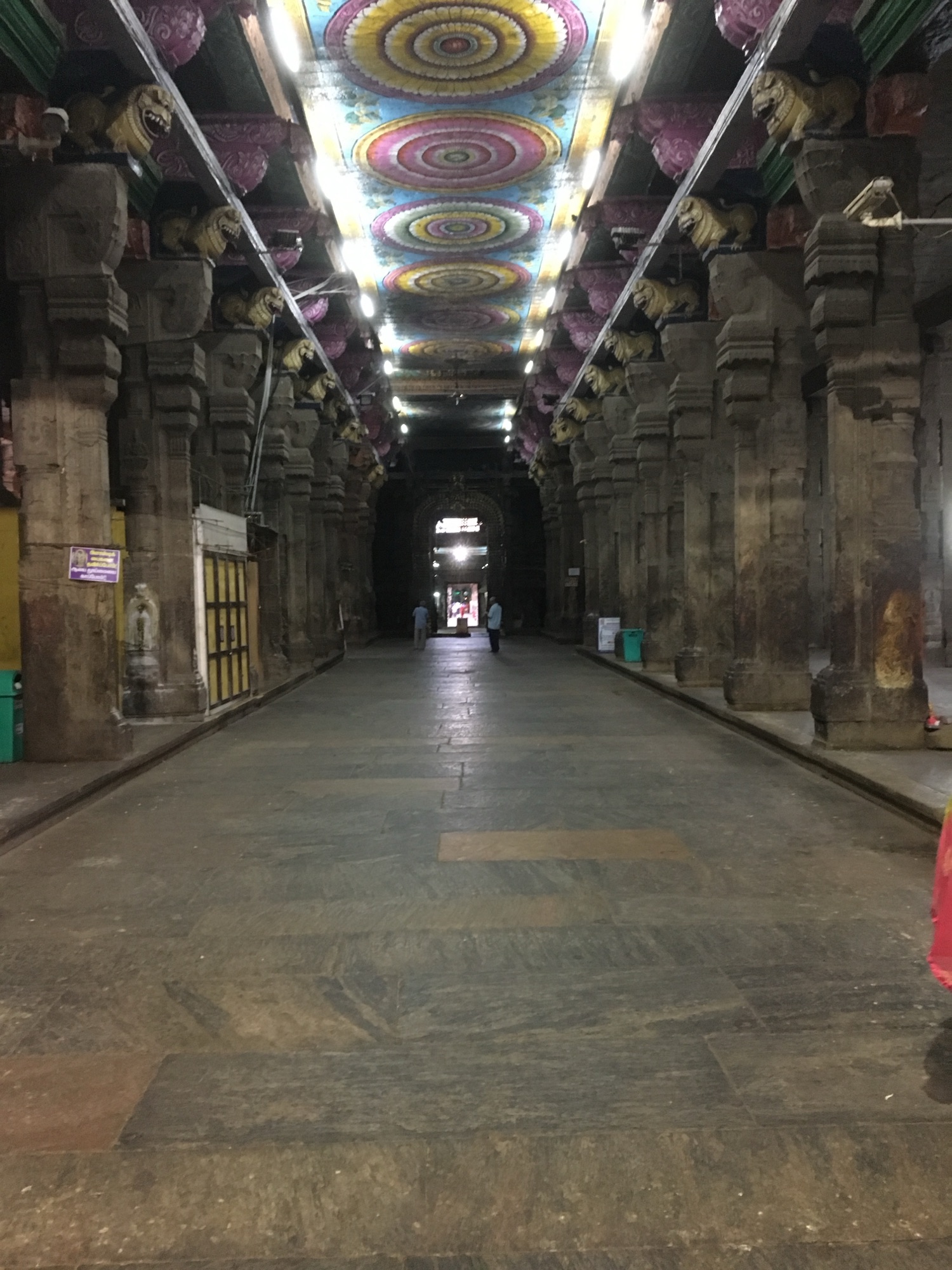
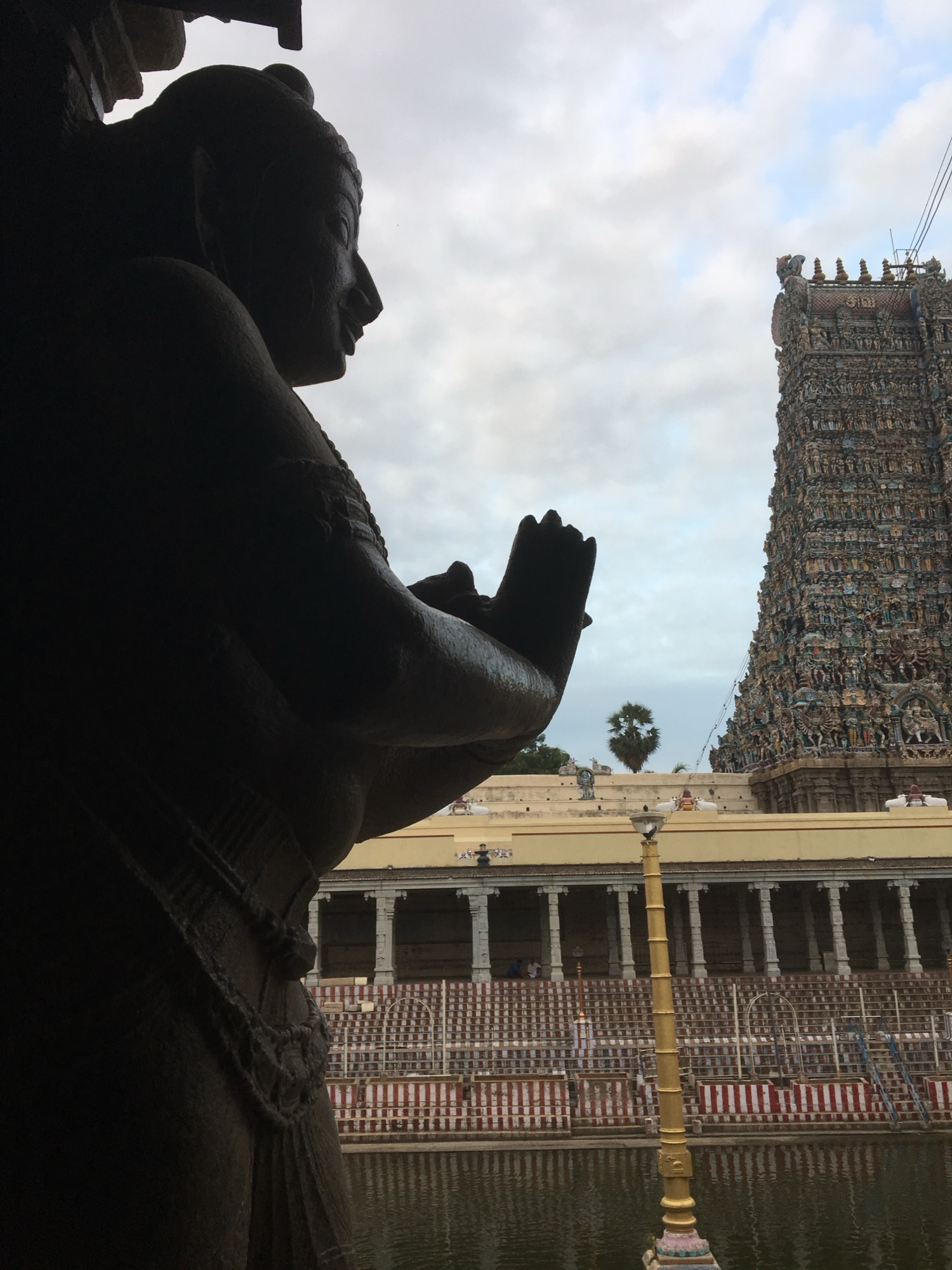
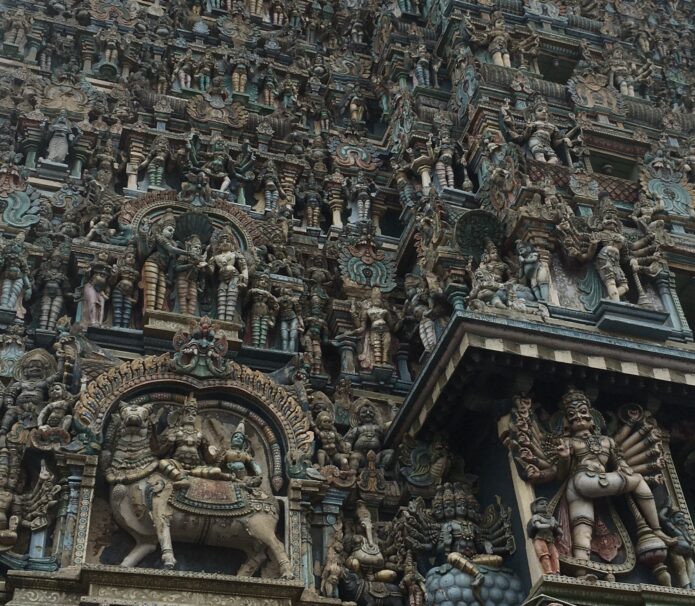
There are elements like what else you discover in a journey. Like the lay of the land and markers in its evolution. Like this glorious temple of a 1000 years. It’s historical undulations. Some scripted in stone and other new tales that are spun to suit today’s skies. The internet tells you about this land’s past glory, the minerals beneath it and the flow of the water across the hills and much else. You can drink all of it in like a voyeur with no skin in the game or like a lover who is immersed in her love.

The rich air tells you a few stories, only if you are ready to stop and take in a breath without necessarily being coveted by the dull lure of THE destination you came after. Sometimes, I infer my lessons by looking at the people and their ways. Their quick stride, the simple ways, easy smiles, the quite common afternoon snooze under the neem tree and the collective bath by the lakeside.

At night when I peruse my random notes to realise, secret destinations are not so secret if the focus is on curiosity and possibility beyond what is apparent.

Today, I make my notes sitting in the shade that the Sun and a 1000 year old wall come together to offer.

There are two others men there. Animated in conversation.

One tells another a story from history about the king and his valour. He speaks as though he has seen it first hand. Passionate. Lyrical. And filled with energy. I am hooked. The story meanders.

And suddenly, he looks into his watch and remembers that they have to be somewhere else by this time. The other agrees. Their destination interferes with a story that was building up well. Both of them get up, dust themselves up and move.

Leaving me with their incomplete story. I let the king stay within me whilst shuffling my feet and wondering what new secret destination awaits the king. And me.

Do You Know Who I Am?

It was a rather quiet cafe in the busy street in a big city. It had all the hallmarks of failed blitzcaling and a wretched afterlife. I liked the coffee. Every time I had been there. One of those places where they don’t have frills and shout outs. You order. You stand in the queue. You collect your coffee. Walk to a table of your choice. Read. Talk. Stare into the ceiling. Whatever.

The man in question waited for his turn. I figured quickly that his wallet ran out of money before his patience did. Without a coffee and brimming with embarrassment, he borrowed some righteous anger and thundered at the lady at the cash counter: “Do you know who I am?”

At this point the whole cafe, I mean, mostly tables, chairs and two people including yours truly, looked up. He could have been one of us. Tired look. Eyes desirous of coffee. Sparse strands of hair on his head making a feeble attempt to stand up. 

The young lady at the cash counter looked at him and said, “No Sir”. That his thundering evoked such a solid yet clear message shook the chill off me and I was fully awake.

Whatever penny that had to drop had dropped with a silent clang from the empty wallet. He looked around the cafe. There were two people in the cafe. Me. And an old lady huddled in a distant corner who stayed huddled in the company of her book.

I looked at him and he looked at me. He turned to the lady at the cash counter and said, “I come here every day and you don’t know who I am?”

The young lady with a Buddha-like economy with her words and her emotions repeated, “no sir”. He turned to look at me again. I looked at him with some curiosity. He swiftly turned to look at her. She looked at me.

The wretched long arm of embarrassment seemed to have enveloped him in a warm embrace. 

“You don’t know who I am. I don’t want your coffee” he said with some seriousness. With those words, he stomped out of the cafe.  Holding a sputtering assortment of other words just below his tongue, giving me a quick cold stare as he opened the door and disappeared into the street.

The door closed and I looked at the young lady. She was busy adjusting her lipstick using her phone as a mirror.  It was as though the tired man with sparse hair had never come in. The last shards of his coarse “I don’t want your coffee” was still floating in the room and ringing in my ear.

Perhaps she had seen enough and more of such people. Or maybe she was a brave lass. Maybe she didn’t care. Or she couldn’t tell. Or the phone and her lipstick helped her handle the tension. I was left with a bevy of questions.

I sat with my coffee. She played a good song as the coffee coursed my veins. I thought of the man. “Do you know who I am?”, he had asked. “Idiot”. I muttered.

I left after finishing the remainder of the book that I wanted to finish. The young lady was on selfie mode. Puckered lips and all that. The music played well.

As I stepped on to the posh street of a business district, many bobbing entitled heads walked by. I merged into it with ease. Carrying my questions and the words that I drank in with the coffee. After a couple of minutes, as I shuffled my feet along, I wondered if I should have taken a selfie at the cafe.

Picking on memory

Books have a way of growing on you. Sometimes when you read an old book again, you see new things. It is but obvious that the book is the same but you are new. Some books evoke memories like most others don’t far they embed themselves deep into the mind. Here is one: The Adventures of Tom Sawyer by Mark Twain.

Tom Sawyer and Huckleberry Finn. I remember them from school. My school life resurfaces every time I chance upon someone with a name Tom or with a chance reference to anything remotely connected to the fascinating novel. A white fence is one of them.

The incident about the white fence goes something like this. Tom skips school and is meted out a punishment: paint a fence white. He goes about enlisting a bunch of friends to partake some of their prized possessions to be allowed the privilege of the fence. It is a fascinating read and over the years ‘Paint Fence White’ has stood in for several things as I moved roles, managers and teams:).

What is exciting to one is a chore to another. With skill and some luck, you can make what is exciting look like a chore. And with some imagination and a sense of play, it can indeed be so!

We went Strawberry picking in somewhere close to the Bay Area. The little miss had a giant whale of a time. Yes.
Giant. Whale. Of. A. Time.

The set up is simple.
You drive to the farm.
You pick boxes.
You pick the produce.
You put the produce in the box.
You bring it back. ( You eat a few as well)
You weigh the produce.
You do the math of how much you need to pay.
You swipe your card.
You pack your stuff.
You leave in joy.
And then, when you come home, you ask for more.

I mean, isn’t this awesome.

Sure, strawberry picking is not something that you do daily and it is one of those things that you do once in a while. To seek different experiences and tell stories to ourselves ( and to the world) about those experiences make our lives. Or so I think.

And as the Pacific Ocean’s blustery moods rearranged the clouds above us in a hurry, kids punctuated the moves with shrieks of joy. Strawberries were the bright red trophies to take home along with a fresh coat of pride on tired parents.

Speaking of parents, I remember running about amongst paddy and sugarcane fields with my dad just letting me and my brother be. We didn’t have anything to pick those days except a fight or two between us. I recall the sweltering heat and the odd steady rain. We were free to do as we liked. Even as I wonder why we did precious little, I realise, we grew up.

Or so I think.

Of Borders and lines

For a trickle of Korean Won, we could peer through fixed telescopes and look into North Korea. To the clank of the coin settling into the metal box, I peered on. Blue skies. An occasional soldier. Green mountains, and fluttering birds. It could have been some nature reserve. But I was standing at the Korean border at Imjingak and staring into North Korea.

The Demilitarized Zone ( ‘Dee Emm Zee’) is a strip of land running across the Korean Peninsula separating the two Koreas. It is 250 kilometers long and 4 KM wide. With wire fences, watchful eyes and guns on either side its brought with it a side benefit. There are no apartment complexes, flyovers, malls with their attendant parking lots and the like. You get the picture, don’t you? Who doesn’t know the rampant poverty that ‘development’ ushers in the world over? The DMZ though is green and lush. Perhaps no other piece of green is as protected and watched by the rest of the world as much as this strip! Dark cloud, silver lining and all that.

Beyond the Demilitarized Zone is one of the heaviest military presence. And heavier posturing perhaps. The posturing and the promise of war have given life to some of the most endangered species thriving. DMZ plays host to some of the most exotic and endangered species. Like cranes, leopards, tigers, and bears. Perhaps these species, have over the years, learned to live under the gaze of the guns in the air and landmines beneath their feet.

That silver lining apart the DMZ is a dark area. It stands as a bright testimony to the limitless potential of human avarice, greed, and one-upmanship. The two Koreas have shouted at each other with loudspeakers ( actual loudspeakers belting out propaganda) across the border. They have tried to outdo each other building tall flag poles and sent balloons with leaflets across the DMZs. All these of course, when they weren’t busy staring each other down. Incredulous it seems. But from 1953, peace has reigned. By and large.Imjingak resort - Looking into North Korea


Mangbae pagoda at the Korean border - Imjingak. Yearning for reunification

The Korean border at  Imjingak which hosts the telescopes offers may a pointer. ‘Mangbaeddan‘ is one such. It’s an altar to pray for ancestors and their families. People from across South Korea whose origins were from somewhere in the North, come here to bow down. It’s a bowing down to their parents and ancestors as a sign of respect during new year and other important festivals. Parents who stayed back. Or could not be contacted. One whole country that is a black box. Not even a snail mail service.

There is a plaque that captures the sentiment than my words can. “After 36 years of Japanese colonial era rule, our country was liberated on August 15, 1945, thanks to the sacrifices of service personnel who fought for the nation’s independence and for an end to the Second World War. Before celebration could break out, however, Korea was arbitrarily divided into north and south according to a unilateral decision on the part of larger powers regardless of the desire of our people. Mangbaeden is a permanent alter established by the government at a cost of 500 million won (supervision by the Ministry of Home Affairs 5 North Korean Provinces, execution: Paju Country Office ), at Imjingak, overlooking the lands of North Korea.  

Five million people left their home in the north, where they had lived for generations, to avoid the Soviet army and the North Korea Communist Party’s persecution and brutalities. The refugees built a temporary altar at Imjingak on every Chuserok (Korean Thanksgiving day ), held an event to honor their ancestor and parents who had been left behind in North Korea, and longed for a permanent altar. In terms of scale and form, the censer and altar are located on a 400-m site. The Mangbae pagoda at the center represents the earnest longing for the reunification of the country and prayer for the welfare of those in North Korea. The characteristics of the historical remains, institutions and customs and mountains and streams of the 5 North Korean Provinces, and the non-reclaimed area, Gyeonggi and Gangwon were carved in seven granite stone-folding screens around the pagoda to ease the homesickness of the refugees.” 

A friend who was with us spoke with eloquence about her mom, who several years ago, had to be held back by border guards. As she dashed towards the border at Imjingak, sorely missing her mother who got left behind beyond the border.  I listened to the story with a keen ear and a pounding heart. The cruelty that permeates several lives in the planet needed explanation beyond borders, flags, and territory.

Madmen fire rockets and ramble from podiums around the world about destruction as though it were a lollipop. Even as the rest of us duck for cover, there are some who wonder if there is a silver lining somewhere.The dark clouds sprouting to the sky seem imminent. Costly, ghostly dark clouds. Will there be silver linings or will it too little, too late? Opinion is divided but hope springs eternal.

Figure of Eight Knot - Korean border Imjingak


There are citizens who yearn to be united. The “We are One” installation in Imjingak for instance, portrays this yearning for a peaceful reunification. “Installed by the Paju Government on February 14, 2006. This sculpture embraces our desire to achieve peaceful reunification. The joining of the two separated parts by the figure of 8-knot embodies the unification of North and South Korea. The height is 280 centimeters which represent the 28 metropolitan cities and provinces in the Korean peninsula”

Nothing perhaps captures the tragedy of the separation more than the bullet-ridden testimony that the engine of a steam locomotive that plied between the North and the South. The tracks from that time remain. The station names call attention to the staid tracks and lost ways. The bullet holes stare with vapid eloquence amidst the cackle of tourists, selfie sticks, and cameras. Somewhere in between the point of all suffering seems distant and removed from the priorities of the present day. Steam engine - Korean border Imjingak

Rail signboard - Korean border Imjingak


As I try to pack my memories from Imjingak into a neat stack, I realise they elude fitting in. They spring in different directions. The tears of separation and sadness seem to take away the sheen off the silver lining. That leaves me with a simple line and a dark cloud.

Ever since visiting Imjingak, any image of leaders and armchair commentators waxing eloquence on twitter or from podiums gets me ever more present to what it is on the ground. The stories that are not told. Stories about living through separation and war. It is 2017 and the world has made serious progress in several dimensions from electric cars to space travel. But can there be a greater travesty that vast tracts of the human mind continue to let the future to be held prisoner by the mistakes of the past?

Must not the imagination that has fuelled ‘progress’ also help us extricate us and co-create a better future? Even if it meant a slow, painful extrication? As I sat in silence at the Mangbaeddan, Tom Brokaw‘s commencement speech to the class of 2006 wafted in from memory. More than a decade old now, but has relevance.

Border guards - Korean border - Imjingak

Here is one part of his speech.

“So, welcome to a world of perpetual contradictions, welcome to a world of unintended consequences and unexpected realities. Welcome to a world in which war is not a video game, … in which genocide and ancient hatreds are not eliminated with a delete button. You won’t find the answer to global poverty in Tools or Help. You cannot fix the environment by hitting the Insert bar. You cannot take your place in the long line of those who came before you simply by sitting in front of a screen or at a keyboard.

The pace of change in your lifetime is at warp speed. We live now on a smaller planet, with more people, many of them on the move these days in a desperate search for economic opportunity and political freedom, a world of ever-diminishing open spaces, disappearing natural resources, with great seismic shifts in political, economic and cultural power wherever you may be on this planet…..

We cannot ignore them, and as the last four years have demonstrated in tragic fashion, a military response is inadequate. If … hostility is not addressed in a more effective manner in the West, and in the Islamic world as well, we will live in a perpetual state of terror and rage on both sides of the equation.

So a primary challenge of your time is to bank the fires of hostilities that are now burning out of control, to neutralize that hatred, to expedite not just global competition economically and politically, but also global understanding, and especially global opportunity.

To do that requires more than a fresh political strategy or imagination.”

The full text is here. The context has shifted a bit. But the fundamental contradictions remain. Only exacerbated by a new crop of leaders who whose jingoism and sabre rattling divides people even further.

Imjingak is a reminder that we need to look beyond the narratives that the unreasonable madness in the political leadership of the modern day. We need to search for and connect to a deeper humanity in each other. Cliched it may sound. There aren’t easy solutions. But the absence easy solutions must not get us lean towards letting the dark clouds loom from the ground. We still have several silver linings today. The capabilities that are present in us to operate from ‘imagination’ is one such. Perhaps we could start there.


Earlier Post on my Korean travel is here