Kavi Arasu

The Art and Attitude of Humble Inquiry: A Conversation with Peter Schein

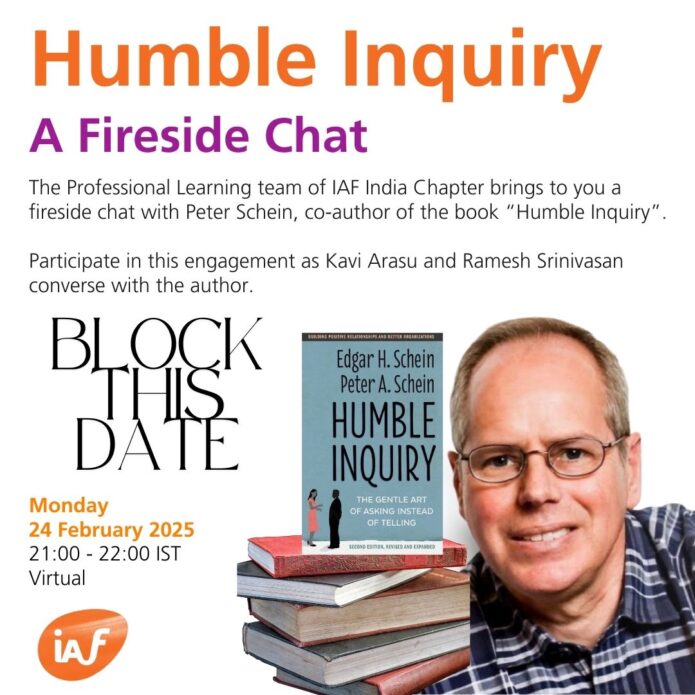
Edgar Schein’s work has been a personal north star for me. His thoughts on leadership, culture, and learning have shaped my work in profound ways. When he passed away in 2023, it felt like a personal void. So, it was particularly special to speak with Peter Schein, who is carrying forward his father’s legacy with clarity and depth.

This obituary described Ed not just as a founding father of organisational development but as a loving father who found renewal through co-authoring books with Peter. On his last outing, Edgar had said, “We have a new style, new topics, new interests to write about, and so it is a whole new way of being, again…” This Dad-Son collaboration is refreshing and good.

In the run-up to this event, we had a chat with Peter. Beyond Humble Inquiry, we touched upon other works, including Career Anchors, which has had a refresh and additions. I have made a mental note to refresh my understanding of this. Much has changed, but the core ideas remain powerful. These conversations reminded me why Schein’s work continues to be so relevant in today’s shifting world of leadership and learning.

What also stood out was Peter’s own journey. Unlike his father, who was a social psychologist, Peter took a different path—studying anthropology at Stanford. He was drawn to understanding how groups function, how cultures evolve, and how behaviour shifts over time. It was an epiphany for him that his father’s work had also been about groups and culture, though approached from a different lens. And yet, despite this contrast, father and son found a way to collaborate seamlessly.

Even Edgar’s own intellectual journey was shaped by another discipline—his father was a physicist. This meant Edgar grew up acutely aware of the divide between the physical and social sciences. He knew that leadership, culture, and change couldn’t be measured with the same precision as the laws of physics. Perhaps that’s what made him so committed to inquiry—asking, not telling. Understanding, not prescribing.

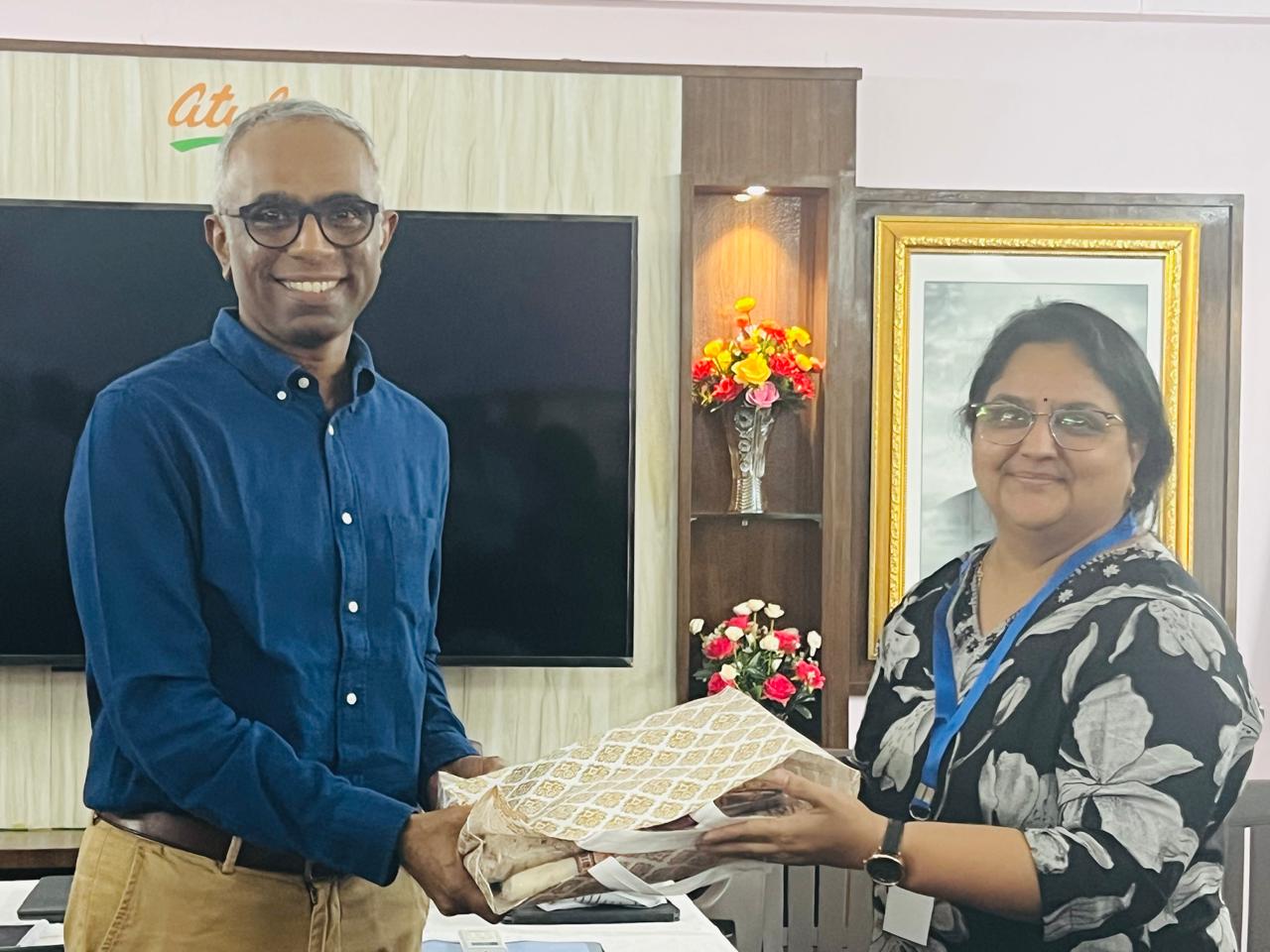
This wasn’t just a learning moment—it was a reinforcement of ideas I have long believed in. And I wasn’t alone in the dialogue. Ramesh Srinivasan played a key role in setting up the conversation and posed thoughtful questions, while Sushma Banthia ensured seamless tech support and community engagement. Together, we created a space for deep exploration.

Key Reinforcements from the Conversation with Peter Schein

  1. Humble Inquiry is an Attitude, Not Just a SkillHumble Inquiry is about embracing what you don’t know. It’s not just a leadership technique—it’s a way of being. Real influence doesn’t come from authority but from drawing out the collective intelligence of a group.
  2. From Transactions to RelationshipsWork is no longer neatly separated from life. The idea of personizing—bringing one’s whole self into interactions—creates deeper trust. Organisations that innovate foster strong relationships, not just functional exchanges.
  3. Unlearning the Habit of TellingMany leaders struggle with the instinct to tell rather than ask. The ‘learning trios’ method—where one person asks, another responds, and a third observes—helps leaders practice listening and creating discovery rather than defaulting to pre-packaged answers.

Expanding on Three Key Ideas

1. Leadership Through Inquiry

Leadership today isn’t about having all the answers. It’s about knowing how to ask. True leadership is about enabling collective wisdom to surface. Leaders who practice inquiry build teams that are more engaged, self-sufficient, and innovative. Asking thoughtful questions—rather than giving quick answers—creates a culture where people take ownership of problem-solving rather than waiting for directives.

Peter reinforced that inquiry also makes decision-making stronger. When leaders create an open space for dialogue, they expose blind spots and identify nuances they wouldn’t have considered on their own. The most effective leaders are those who foster a culture of shared curiosity rather than just direction-setting.

2. The Digital Shift—Can Inquiry Survive?

Virtual workspaces present a challenge to humble inquiry. Emails and Slack messages strip away nonverbal cues, making it harder to sense curiosity, intent, or hesitation. Video calls are helpful, but they need to be designed for meaningful conversations, not just efficiency. Peter highlighted that sometimes, removing visual distractions—like during a phone call or a ‘walk and talk’—can actually enhance listening.

Another key challenge is the tendency to over-rely on efficiency tools at the cost of deep engagement. Organisations must be deliberate in creating time for structured dialogue. Inquiry can survive in digital spaces, but it requires conscious effort—leaders must model it, encourage it, and create safe spaces for open-ended discussions.

3. Silence as a Leadership Tool

One of the most underrated aspects of inquiry is knowing when to stay silent. Peter shared a story about a leader at an organisation he worked with, who wielded power not through commands, but through silence. Instead of rushing to offer solutions, he created space for people to think, reflect, and contribute. His presence alone shifted the room.

Silence is uncomfortable for many, but it can be a game-changer. Leaders who hold back and allow moments of quiet give others permission to step up. Silence also helps in difficult conversations—rather than filling the void with explanations or justifications, staying quiet can allow new perspectives to emerge.

Great facilitators and leaders use silence strategically, allowing the weight of a question to sink in before rushing to the next point. Inquiry is as much about listening as it is about asking the right questions.1. Leadership Through Inquiry

Inquiry and My Own Reflections

This conversation also led me to revisit some of my own writings on the subject. Over the years, I’ve explored the themes of inquiry, facilitation, and conversations through different lenses. In The Lost Art of Fine Conversations, I reflected on the power of dialogue and the unseen impact of simple exchanges. In  Building an ‘an attitude of interes’- Humble Inquiry, I examined how Edgar Schein’s principles resonated with my experiences. And in Characteristics of Awesome Facilitators, I delved into what makes facilitation truly transformative. These themes continue to shape my thinking and reinforce the idea that learning is a lifelong journey.

Essential Truth

This conversation reaffirmed an essential truth: Humble Inquiry doesn’t make leaders passive. It makes them effective. The real test of leadership isn’t in confidence, but in knowing when to listen.

In an age of loud voices, true leadership may just be about asking better questions. Edgar Schein understood this deeply. And thanks to Peter, that legacy continues. And it’s a much needed legacy in the brusque times that we live in.

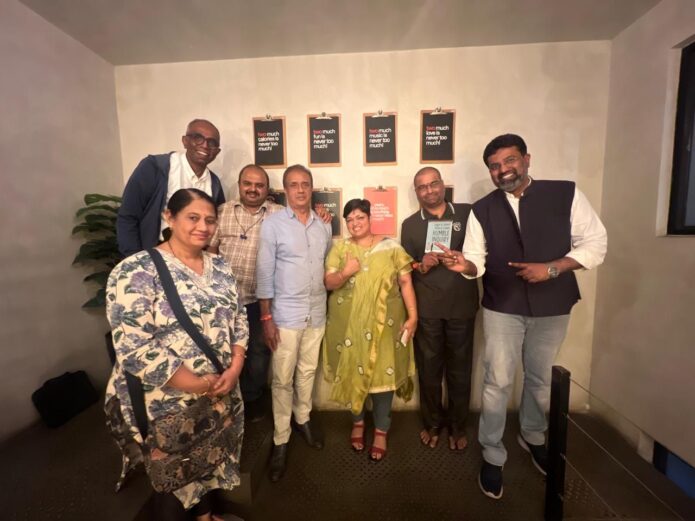
It was a fun evening with the members of the International Association of Facilitators and Peter. Thoughtful questions, engaged participation, and a shared curiosity made it memorable. If anything, it reinforced why inquiry—not assertion—is the foundation of real leadership.

Standing Still at Meenakshi Amman Temple: A Place Beyond Time

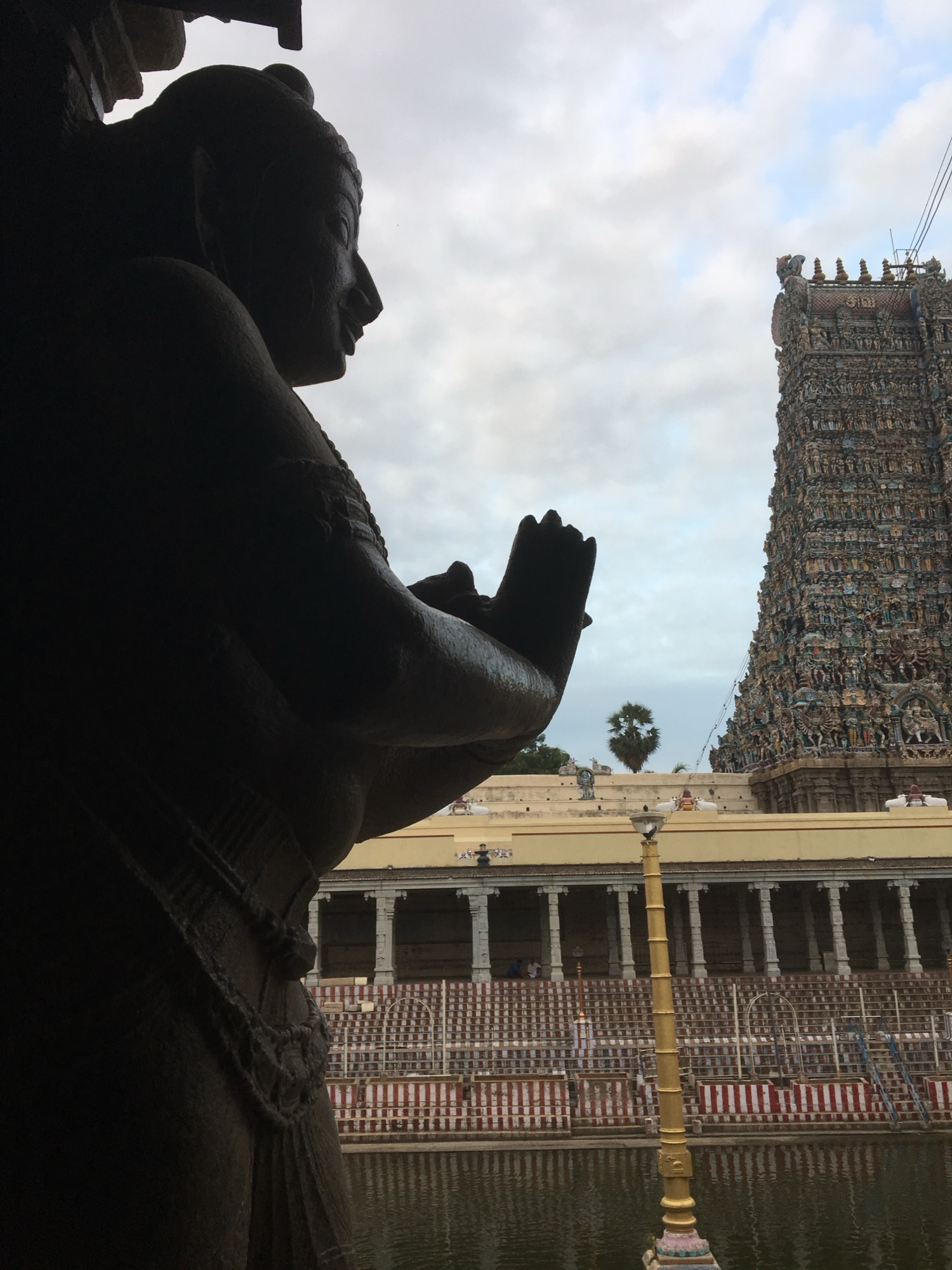
Some places demand silence. Not because they forbid noise, but because they leave you speechless. Meenakshi Amman Temple does that to me. Every single time.

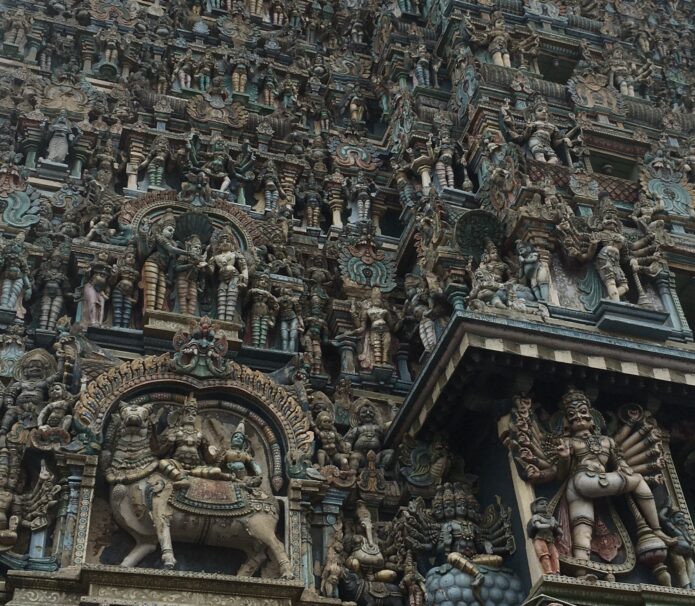
I went yesterday. And I saw scaffolding. It wrapped around the gopurams, covering the intricate sculptures. It was early in the morning. So, no workers, just stillness. If this much care is going into restoring it, imagine what it took to build it. No machines, no shortcuts—just patience, skill, and intelligence.

This temple has stood for nearly 2,500 years. It dates back to the Sangam period (6th century BCE), though much of what we see today was expanded in the 16th century by the Nayak rulers. It has survived wars, invasions, and the weight of time. Its corridors have heard prayers, wishes, and whispered hopes from millions. Mine included. Every single one of them.

Phones and cameras are not allowed inside after a fire in 2018. Perhaps the temple authorities trust that your memory has at least some storage space left. Later, as I scrolled through my old photos, I realised something—I had taken pictures of the ceilings, the pillars, the gopurams. But not the Yazhis. Perhaps I had wisely chosen to avoid making eye contact with a stone creature with teeth bigger than my head.

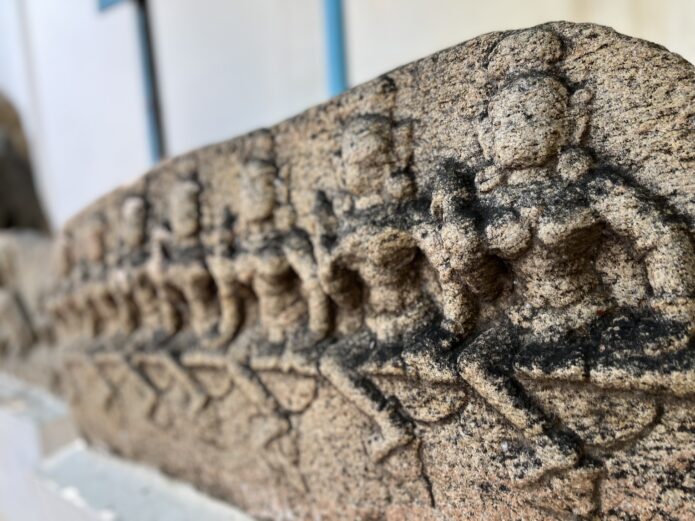
And yet, Yazhis are among the most stunning sculptures in the temple. These mythical beasts are carved with an astonishing mix of power and grace—lion-like bodies, an elephant’s trunk, a serpent’s tail. Strong claws. Giant teeth. A large penis. Elaborate decorations, all aesthetically done. A creature so fierce and fabulous that Hollywood fantasy films could learn a thing or two. If they ever reboot Jurassic Park with mythical beasts, I know where they should start. And these aren’t just still figures either—the giant sculptures are so elaborately done, they seem ever ready to jump out of the pillar and take on anyone into nonsense!

This time, I stood before them, staring. Ferocious yet elegant. My father once told me they were load-bearing structures. I had laughed. Who would carve something so intricate just to support a pillar?

But he was right. The Yazhis do hold up the structure, but they also hold up something else—imagination. Someone, centuries ago, looked at a block of stone and saw more than function. They saw movement, myth, and life itself. And they brought it to life.

As a child, I found them terrifying. Now, I find them familiar, almost reassuring. They have always been there. A solid as they were. My needs have shifted.

A Temple That Soothes the Soul

Whenever I visit with much time at hand, I just stand and stare. At the Yazhis. At the ceilings. At the sheer audacity of it all.

This is beyond religion. It is devotion, yes—but also craftsmanship, vision, and love.

And that is what makes it spiritual. Not just the rituals or the prayers, but the feeling of standing in a place that has stood for centuries. A place that has seen time pass but has remained unwavering. A place that, even in its silence, speaks.

It does something to the soul. It soothes, steadies, strengthens. It slows you down, pulls you iout of the present. For a few moments, the rush of the outside world fades. The doubts, the unfinished tasks, the endless scrolling—all of it seems distant.

There is a certain weight to this place. Not the kind that burdens you, but the kind that anchors you. It puts life back into your step. It reminds you that things of value take time, that endurance is built stone by stone. It gives you the courage to face the next uncertain moment.

In more than one sense, this is home.

Not in the way four walls define home, but in the way something familiar holds you when you need it most. In the way it reassures you that it has been here long before you arrived and will remain long after you leave.

Some long-form things are timeless. They stand tall, defying time and culture. Like the gopurams of Meenakshi Amman Temple. To me, they are a firm reminder that better is always possible.

Every single time I get there.

Traveler vs. Tourist: How to Truly Experience a Place

Kevin Kelly is one of those people you take seriously. Not because he asks you to. But because he has lived a life that makes you want to listen. He co-founded Wired. He has written deeply about the future. And, more importantly for us today, he has spent over 50 years traveling the world. That’s half a century of airports, alleys, deserts, and detours. When someone like that gives travel advice, you pay attention.

Not all travel tips are equal. Some are practical. Some are poetic. A few are life-altering. The ones I’ve picked here are both useful and thought-provoking. They are not about checking places off a list. They are about soaking them in.

If you think travel is just about getting from one place to another, this might make you pause. If you already believe the best journeys are the ones where you lose track of time, read on.

Traveller or Tourist?

A tourist collects places. A traveller collects moments. The featured picture above is Dawki, Meghalaya. I remember the conversation with the boatman as much as I remember how bountiful nature is. It all comes together beautifully.

A tourist follows a plan. A traveller follows curiosity.

A tourist moves through a place. A traveller lets a place move through them.

The difference is subtle. But it is everything. It is the difference between taking a photo of a street market and sitting down for tea with the vendor. Between checking in at a famous site and wandering into a side street just because it looks interesting. Between skimming the surface and sinking into the depth of a place.

“Half the fun of travel is the aesthetic of lostness.” — Ray Bradbury

Travel Wisdom Worth Keeping

…..

From Kevin Kelly’s post, here are super special nudges to travel wisdom. Read the full post here.

Travel for a passion, not a place. Build a trip around cheese, jazz clubs, or ancient ruins. Not just cities and landmarks. You’ll remember that tiny family-run dairy in the Alps long after you’ve forgotten the famous cathedral in Rome.

Ask your taxi driver to take you to their mother’s home. Odd? Yes. But it works. You get a meal, a story, and a peek into real life. The driver gets to fulfill a family duty. The mother gets a guest to feed. Everyone wins.

Give yourself constraints. Travel isn’t just about where you go. It’s about how you go. Take only overnight trains. Carry just a day bag. Eat for a week on the price of a single fancy meal. Limits make things interesting.

Visit places that aren’t built for you. Cemeteries. Hardware stores. Small workshops. Real life happens there. Not everything has to be an Instagram moment.

It’s always colder at night than you think. Even in the tropics. Pack that extra layer.

Eat where the healthy locals eat. The fanciest restaurant may not have the best food. The street stall with a queue probably does.

Slow down. The best moments happen when you pause. The best conversations. The unexpected invites. The secret spots. They show up when you are not rushing.

Start your trip at the farthest point. Land. Then go far. Take an overnight train. A rickety bus. A long drive. Settle in at the most remote place you planned to visit. Then, slowly work your way back. Somehow, this makes the journey richer.

Buy souvenirs that have a home in your home. That intricate rug? Lovely. But where will it live when you return? If you don’t know, leave it behind.

When asking for restaurant recommendations, don’t ask where to eat. Ask where they ate last. You’ll get a real answer.

The Beauty of Travel

Bill Bryson, my favourite travel writer, once wrote, “To my mind, the greatest reward and luxury of travel is to be able to experience everyday things as if for the first time.”

That’s it.

Travel isn’t about crossing off landmarks. It’s about learning to see. To step into another world. Not as a tourist, but as a quiet observer. An eager participant. A respectful guest.

And when you do that, something else happens. You don’t just take a piece of the place with you. You leave a little of yourself behind.

So go. But don’t just go. Travel like a traveller. Soak it in.

(Read the whole thing. You might see travel differently.)

Coffee, Conversations, and the Heart of Facilitation

Some conversations stay with you. This was one of them.

The IAF team captured our chat over coffee and hot chocolate in their words. Their reflections offer a glimpse into what we explored. And yet, as with all rich conversations, there was more—more nuance, more layers, more threads left to unravel.

What stood out to me was their curiosity. Their willingness to look inward, question what is, and imagine what could be. In the process, they also helped me examine some of my own beliefs.

Their hospitality was exceptional. The care, the follow-through, and the quiet determination to make this happen made it easy for me to balance this with a busy trip.

And as I left, I found myself thinking—not just about what we had discussed, but about what more is possible for us as a community.

Coffee and conversations can indeed do more.

Now, these are their words as posted below. The original post is here.

“Coffee & Conversations: The Heart Of Facilitation

Some conversations stay with you—like the one we had over hot chocolate with Kavi Arasu. What started as a casual chat became an insightful exploration of what makes facilitation truly impactful.

Mindset Over Methods

Facilitation isn’t about tools or structure—it’s about believing in yourself as the most powerful tool in the room. A great facilitator adapts, navigates group dynamics, and enables transformation. As Kavi Arasu put it: “Results get me high—not the design, not the facilitation.” It’s impact over process.

Fluidity in Facilitation

Facilitators shift roles—sometimes as a teacher, trainer, or expert—to bring clarity. The best sessions aren’t rigid; they evolve with the room. The focus is on listening deeply, building trust, and uncovering perspectives that lead to real, actionable change.

Facilitation as a Way of Being

Great facilitation isn’t about solving problems but creating the space for solutions to emerge. It starts with self-inquiry:
•            Am I truly listening?
•            How can I hold space without imposing my view?
•            What biases do I carry?

The Inner Work

Facilitation begins within. Our impact is tied to our awareness, biases, and ability to hold space. Real change starts with us before it happens in the room.

Kavi also recommended The Fifth Discipline, ICA Methods, and The Power of Facilitation—all valuable resources for facilitators.

A big thank you to Kavi for his time and wisdom. We left with more than insights—we left with a renewed commitment to the art of facilitation.”

Learning from Experience: A Leadership Journey in Stories

Some conversations stay with you long after they end. They challenge you, nudge you, and sometimes, quietly reshape your thinking.

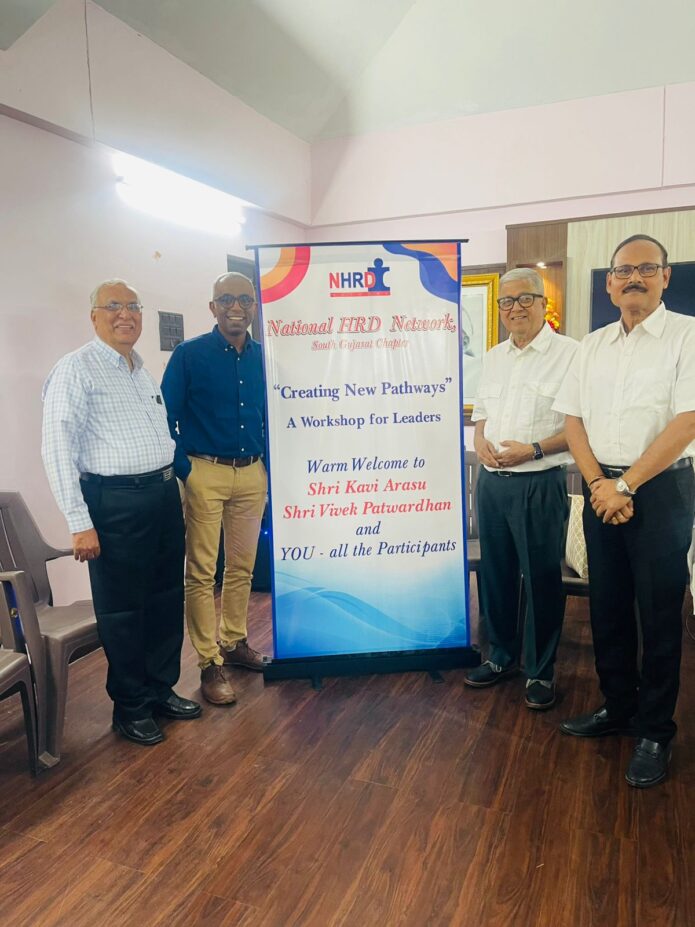
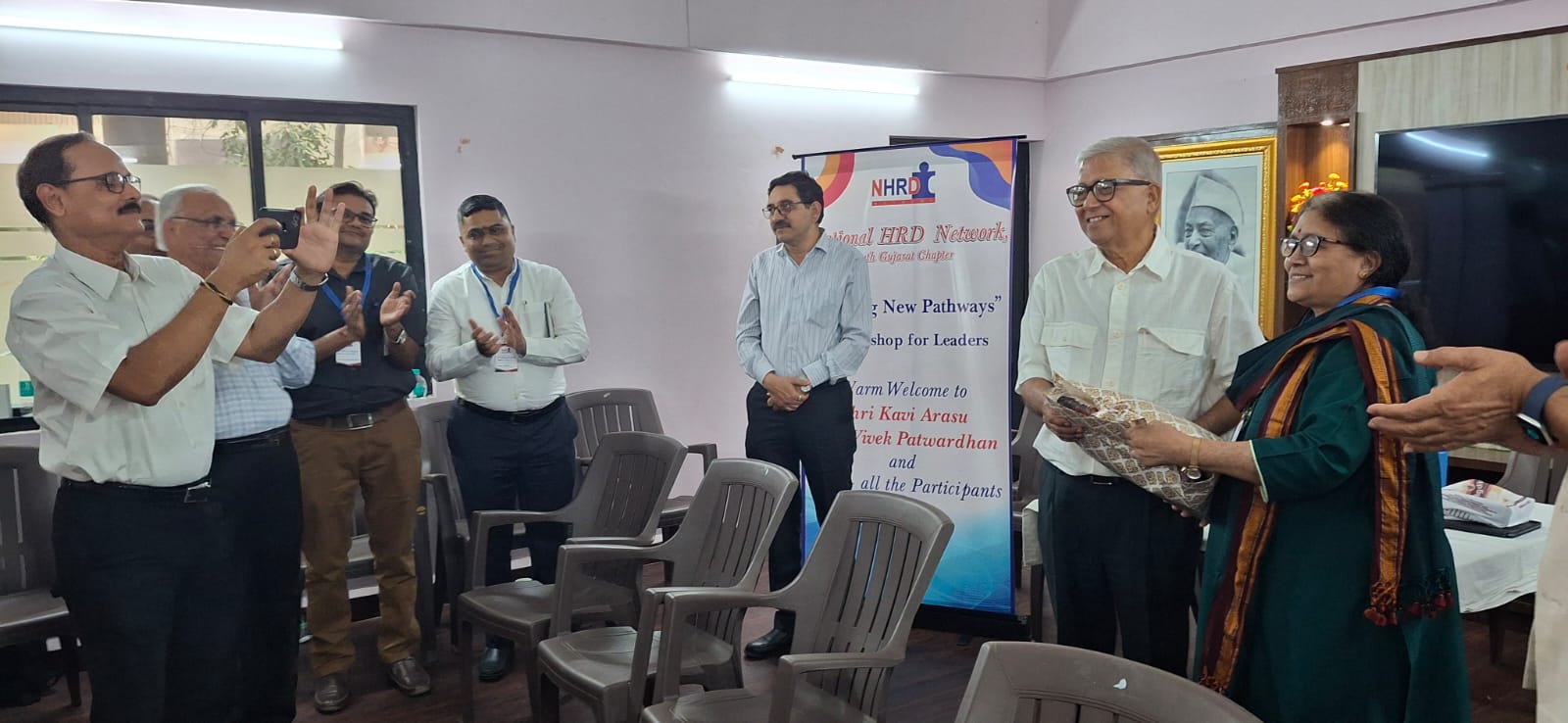
A leadership workshop with a diverse group of professionals from the South Gujarat region turned into one such experience. It wasn’t about grand theories or textbook leadership—it was about stories. Stories of beginnings, growth, setbacks, and decisions that shaped careers and lives.

At the heart of it was Vivek Patwardhan, whose wisdom and experience anchored the dialogue. Learning alongside him is always a privilege, and this time was no different.

What made it truly special, though, were the participants—their openness, their willingness to share not just successes but struggles and turning points. They gave themselves fully to the process, making the space richer for everyone. Learning wasn’t just something that happened; it was something we built—together.

Himanshu Bhatt steered in the participants with remarkable passion and persistence. Atul Industries and its leadership proved to be perfect hosts and provided the perfect setting for these reflections to unfold.

One moment stood out—a letter from the future. Writing to our 2025 selves from 2040 sparked something deeper. Reflection, possibility, and perhaps, a quiet resolve to shape the road ahead with intention.

This was not just another workshop. It was a shared journey—one where the greatest learning came not from a stage, but from each other. And that made all the difference.

Here is Dr.Kunal Thakkar, a participant, writing in Linkedin.

The Elephant in the Room – Not as Invisible as You Think

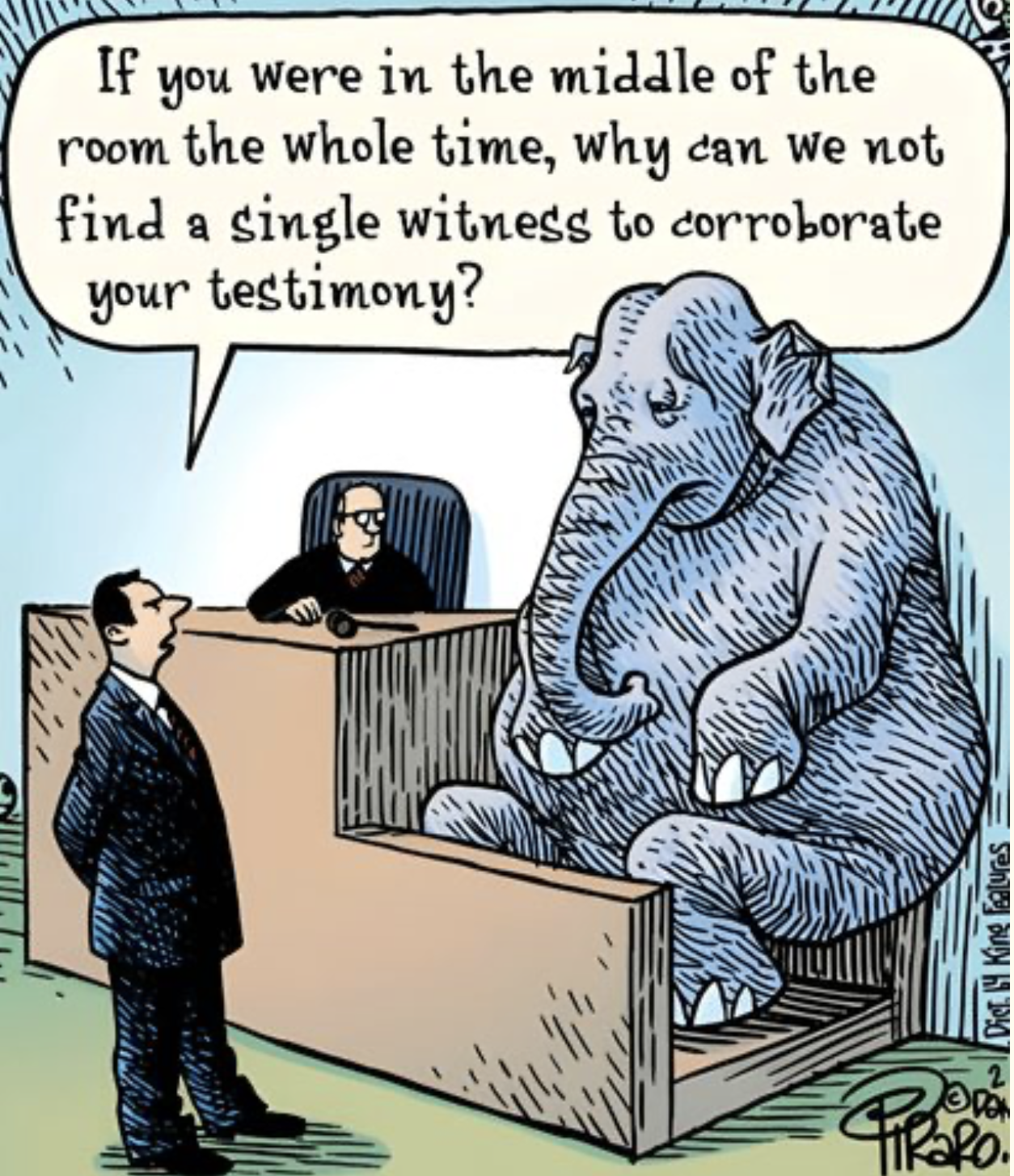
My work revolves around making change happen and stick—at all kinds of levels. And if there’s one universal truth, it’s this: there’s always something unsaid, something avoided. Sometimes, it’s just a small discomfort. An Elephant in the room! Sometimes, there’s a full herdThe other day, I wrapped up a conversation where everyone expertly avoided making eye contact with the massive, wrinkled reality in the room.


I’ve been thinking about these elephants in the room. Unspoken realities. They have a tough job. And honestly, so do I. Because the more I work with organisations and teams, the more I see how much avoidance of this elephant in the room stands in the way of progress. It can be incredibly frustrating to watch brilliant people, well-resourced teams, and ambitious strategies get stalled because no one wants to name the obvious.

Interestingly, the phrase “elephant in the room” has its roots in an old fable by Russian poet Ivan Krylov, titled The Inquisitive Man (1814). The story follows a man who visits a museum and marvels at all the tiny, insignificant details but somehow fails to notice the elephant right in front of him. If that isn’t the perfect metaphor for how most organisations and families deal with uncomfortable truths, I don’t know what is. We focus on minor distractions, but the massive, inconvenient reality remains untouched.

Wild thought. What would it be like to hire an elephant in the room? I mean, how would the job description look? What would be its responsibilities? How would you review its performance? What would the elephant say? Where would they go to cry? And what else could they do?

Some days of intense frustration make me think like this. Creative licence to deal with day-to-day difficulties, if you will.

Now Hiring: Elephant in the Room

Position: Elephant in the Room
Location: Every office, family gathering, and awkward social situation.
Reports To: No one, because no one acknowledges its existence.

Job Responsibilities:

  • Stand silently in meetings, absorbing tension like an unpaid intern.
  • Ensure everyone pretends everything is fine when it clearly isn’t.
  • Occasionally wave a trunk in frustration, only to be ignored.
  • Be the invisible force behind passive-aggressive emails that start with “As discussed earlier…”

Performance Review:

“Exceptional ability to be avoided. Maintains presence without making a sound. 10/10 at making people glance at their phones instead of addressing the real issue. Keep up the great work!”

A Word from the Elephant Itself

“Look, I didn’t apply for this job. But here I am. Stuck in boardrooms where people discuss alignment instead of accountability. Hovering over family dinners where everyone tiptoes around Cousin Ramesh’s mysterious ‘business venture.’ Sitting in post-crisis town halls where leadership promises ‘synergy’ while employees quietly update their LinkedIn profiles.

I’ve tried everything. Waving my trunk. Wearing a hat. Bringing snacks. (Nothing gets humans talking like free food, right?) But nope. Silence.

At this point, I just sigh and sit down. If you won’t acknowledge me, I might as well be comfortable.”

Support Group for Elephants in the Room

  • “I’ve been in an office for five years, and they still pretend I don’t exist!”
  • “Try being the elephant at a wedding where everyone knows the bride’s ex is in the audience.”
  • “At this point, I’m considering a career switch. Maybe become the ‘Monkey on Someone’s Back’ instead.”

Ways Forward: Working with the Elephant in the Room

Addressing the unspoken isn’t about charging headfirst into confrontation. It requires a mix of awareness, strategy, and patience. Leaders who handle these situations well focus on a few key things.

First, recognising discomfort is essential. What are the conversations being avoided? What patterns keep repeating? Naming the issue doesn’t always mean calling it out immediately but being aware of its impact.

Creating an environment where people feel safe to speak up makes a difference. If raising concerns is met with silence or punishment, people will simply stop trying. Timing also matters—some truths need gentle nudges, others require direct conversations.

Finally, not every situation can be resolved. Some rooms thrive on avoidance. And in those cases, knowing when to step away is just as important. Progress happens when people choose to see what’s right in front of them.

The Next Career Move

“With all the rooms filled with ignored elephants, I’m considering a career change. Maybe I’ll become the ‘Skeleton in the Closet’ instead. Seems like a better gig!”

What’s the biggest elephant you’ve seen in the room?
Let’s talk. No peanuts required.

AI in Academia: The Grind, The Gain, and the Great Recalibration

A few months ago, I was teaching a bright MBA class when a student raised his hand in the middle of a lecture. He said he had misgivings about my arguments. And then, right there in class, he told me he had been using an AI tool to critique my points.

I learned a thing or two that day. Not just about the subject, but about how AI was changing the very nature of learning. I left the class not thinking about how students should avoid AI, but about how I could use AI to prepare better.

I wasn’t prepared for the question, and I’ll admit—I felt mildly threatened.

Now, my parents were both professors. I’ve been teaching a paper at a top-tier business school for over a decade, in addition to my other work. I’ve seen academia up close—the passions, the programmes, and the politics. So when I came across the California Faculty Association (CFA) resolution on AI, I paid attention.

California, after all, is at the heart of the tech world. If any faculty association could chart the future of AI in academia, I thought it would be this one.

But what the CFA put out was quite the contrary.

The CFA is pushing for strict rules on AI in universities, raising concerns that AI might replace roles, undermine hiring processes, and compromise intellectual property. As they put it:

“AI will replace roles at the university that will make it difficult or impossible to solve classroom, human resources, or other issues since it is not intelligent.”

I respect their concerns. But I also believe the real challenge isn’t what AI should do—it’s what humans should still do in a world where AI can do so much.

And that leads to some fundamental dilemmas.

A Moment to Recalibrate

The goal of education was always to teach thinking—knowledge was simply a measure of that thinking. Somewhere along the way, we confused the measure with the goal.

Instead of focusing on fostering deep thought, we turned education into a test of memory. AI now forces a reckoning. If AI can retrieve, process, and even generate knowledge faster, more accurately, and with greater depth than most students, what does that mean for education?

AI offers an opportunity not to restrict learning, but to recalibrate it—to return to the real goal: teaching students how to think, question, and navigate complexity.

Three Dilemmas Academia Must Confront

1. Who Does the Work—Humans or AI?

AI can grade essays, draft research papers, and provide instant feedback. It’s efficient. But efficiency isn’t learning.

Law firms now use AI for contract analysis. Junior lawyers “supervise” the process. The result? Many don’t develop the deep reading skills that once defined great legal minds. If universities follow the same path—letting AI mark essays and summarise concepts—students may pass courses but never truly engage with ideas.

Douglas Adams once said, “We are stuck with technology when what we really want is just stuff that works.” AI works—but at what cost?

2. Who Owns the Work?

Professors spend years developing course material. AI scrapes, reuses, and repackages it. Who owns the content?

The entertainment industry has been fighting this battle. Writers and musicians pushed back against AI-generated scripts and songs trained on their work. Academia isn’t far behind. If AI creates an entire course based on a professor’s lectures, who gets the credit? The university? The AI? Or the human who originally built it?

The CFA resolution warns about this:

“AI’s threat to intellectual property including use of music, writing, and the creative arts as well as faculty-generated course content without acknowledgement or permission.”

The same battle playing out in Hollywood is now knocking on academia’s door.

3. Does Efficiency Kill Learning? Or Is That the Wrong Question?

It is easy to assume that efficiency threatens deep learning. The grind—rewriting a paper, wrestling with ideas, receiving tough feedback—has long been seen as an essential part of intellectual growth.

AI makes everything smoother. But what if the rough edges were the point?

A medical student who leans on AI for diagnoses might pass exams. But will they develop the instincts to catch what AI misses? A student who lets AI refine their essay may get a better grade. But will they learn to think?

Victoria Livingstone, in an evocative piece for Time magazine, described why she quit teaching after nearly 20 years. AI, she wrote, had fundamentally altered the classroom dynamic. Students, faced with the convenience of AI tools, were no longer willing to sit with the discomfort of not knowing—the struggle of writing, revising, and working their way into clarity.

“With the easy temptation of AI, many—possibly most—of my students were no longer willing to push through discomfort.” – Victoria Livingstone

And therein lies the real challenge.

The problem isn’t efficiency itself—it is what is being optimised for.

If learning is about acquiring knowledge, AI makes that easier and more efficient. But if learning is about developing the ability to think, question, and synthesise complexity, then efficiency is irrelevant—because deep thinking requires time, struggle, and iteration.

So maybe the question isn’t “Does efficiency kill learning?” but rather:

What kind of learning should be prioritised in an AI-enabled world?

If efficiency removes barriers to learning, then we must ask:

What should learning look like when efficiency is no longer a limitation?

A Complex Problem Without Simple Answers

It is tempting to look for quick fixes—ban AI from classrooms, tweak assessments, introduce AI literacy courses. But this is not a simple or even a complicated problem. It is a complex one.

Dave Snowden, from his Cynefin framework, would call this a complex problem—one that cannot be solved with predefined solutions but requires sense-making, experimentation, and adaptation.

Livingstone’s frustration is understandable. AI enables students to sidestep the very struggle that shapes deep learning. But banning AI will not restore those lost habits of mind. Universities cannot rely on rigid policies to navigate a world where knowledge is instantly accessible and AI tools continue to evolve.

Complex problems do not have rule-based solutions. They require adaptation and iteration. The real response to AI isn’t restriction—it is reimagination.

Engage with AI, rather than fight it. Encourage students to think critically about AI’s conclusions. Reshape assessments to focus on argumentation rather than recall.

In a complex system, progress does not happen through control. It happens through learning, adaptation, and deliberate experimentation.

Reimagination, Not Regulation

Saying no to AI is a false choice. AI will seep into academia like a meandering tsunami that doesn’t respect traffic lights at the shore. The real challenge is not limiting AI, but reimagining education.

The CFA is right to demand a conversation about AI in education. But academia must go beyond drawing lines in the sand. It must reinvent itself.

AI is not the threat. The real danger is holding on to learning models that worked well in an earlier time.

That time is past.

It is time to unlearn. And recalibrate.

The Spotlight and the Stage: Who Really Makes It Work?

The trouble begins when we assume that being visible is the same as being valuable. But life, like a well-run play, needs both the stage and the backstage, both the voice and the silence.

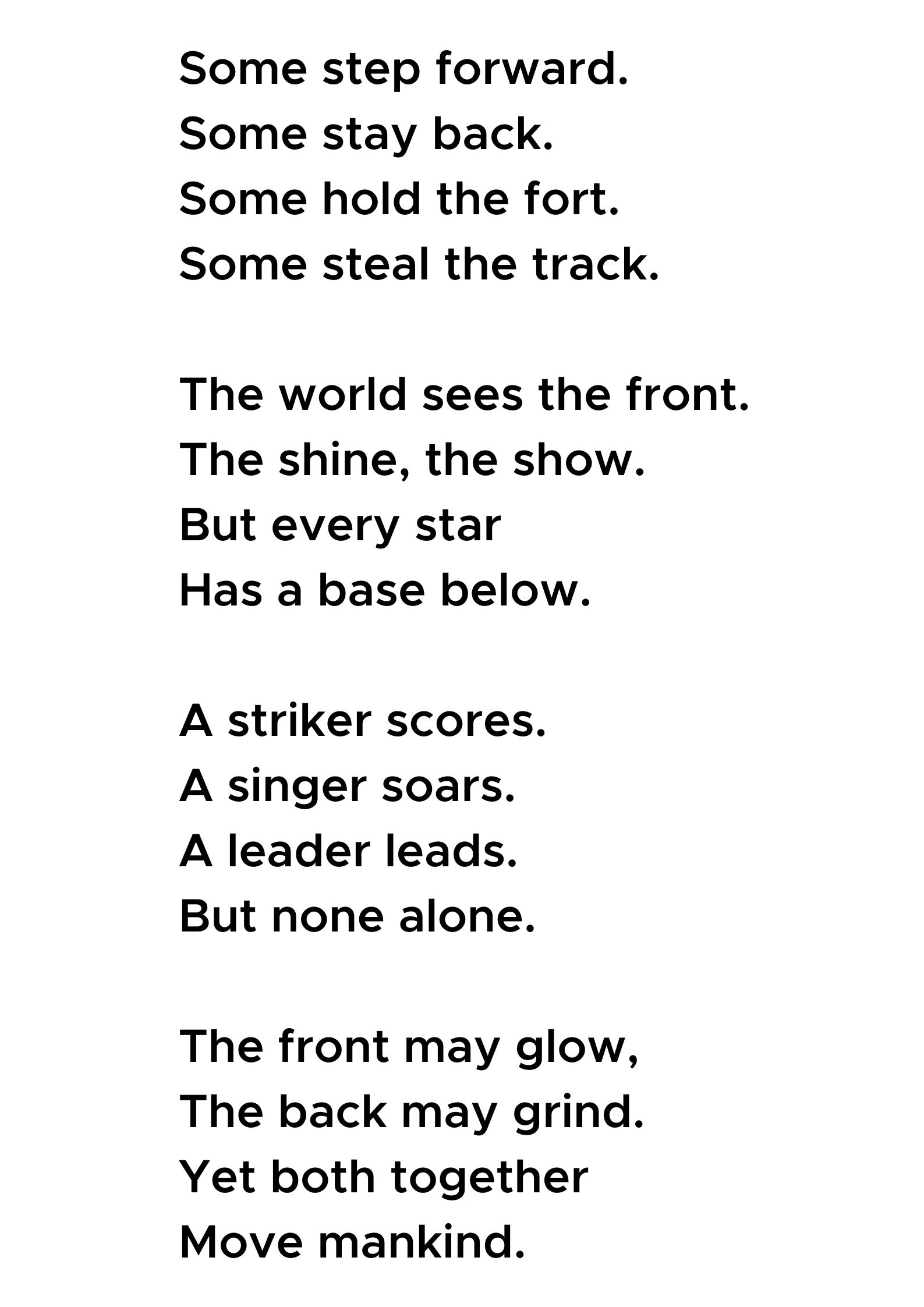
Some roles demand the mic. Others work the lights. Some take the step forward. Others make sure there is a step to take.

The best teams don’t just celebrate the stars. They celebrate the system. Because in the end, what matters is not who stands where—but whether the whole thing stands strong.

Hyderabad: More Than Just a City

Hyderabad doesn’t try too hard. Old and new exist without fuss. Charminar and Cyber Towers. Bazaars and glass buildings.

People are warm, witty, and fluent in many worlds. A chai can spark an hour-long debate—about the past, the present, the US, or Tirupati.

The food? Yes, the biryani is legendary. But also kebabs, the softest osmania biscuits, and some delightfully spicy vegetarian preparations.

The city stays clean. Surprises with green spaces. KBR Park for morning walks. Durgam Cheruvu for sunsets.

There is history in its bones and tech in its DNA.

Hyderabad is where opposites don’t just coexist—they complete each other. It doesn’t force harmony. It just moves, breathes, and thrives. A quiet example for the rest. Not just as a city to live in, but as a way to live.

AI Natives Are Here: Are You Keeping Up?

It’s a question that used to be common. “What’s your native place?” It was a way of asking where you were from, where your roots lay. The word native carried warmth. It evoked childhood memories, a sense of belonging, and the unmistakable comfort of home.

The word native, I have since learned, comes from the Latin nativus, meaning “born” or “innate.” It later traveled through Old French as natif and reached Middle English, where it took on meanings tied to birthplace and inherent qualities.

Years later, in 2001, Marc Prensky introduced me to a new kind of native—the digital native. His essay Digital Natives, Digital Immigrants described those who had grown up in the digital world, instinctively fluent with technology, unlike the digital immigrants who had to painstakingly learn it. The metaphor was compelling until David White and Alison Le Cornu refined it further. They suggested that digital engagement was less about birth year and more about behavior—some were Visitors, using technology as needed, while others were Residents, living deeply within it.

For the first time, I understood what it meant to be an immigrant—not just in a country but in a way of thinking. To be a native was to belong effortlessly; to be an immigrant was to adapt, often clumsily.

And then, last week, I read about HudZah.

A New Native

Meet Hudhafaya Nazoorde aka HudZah. HudZah is changing how people interact with knowledge. He built a nuclear fusor—a device that accelerates ions to create nuclear fusion. And he did it with the help of an AI assistant, Claude, right inside his rented house in San Francisco.

Using AI, he gathered information from fusor.net, spoke to experts, and studied diagrams. AI refused to help at first. But HudZah found a way. He asked better questions, breaking big problems into smaller ones. Slowly, AI started guiding him. Piece by piece, he built the fusor.

It’s a fascinating story. (Read more here).

The AI Native

The part of HudZah that really caught my attention in that piece is this:

“I must admit, though, that the thing that scared me most about HudZah was that he seemed to be living in a different technological universe than I was. If the previous generation were digital natives, HudZah was an AI native.

HudZah enjoys reading the old-fashioned way, but he now finds that he gets more out of the experience by reading alongside an AI. He puts PDFs of books into Claude or ChatGPT and then queries the books as he moves through the text. He uses Granola to listen in on meetings so that he can query an AI after the chats as well. His friend built Globe Explorer, which can instantly break down, say, the history of rockets, as if you had a professional researcher at your disposal. And, of course, HudZah has all manner of AI tools for coding and interacting with his computer via voice.

It’s not that I don’t use these things. I do. It’s more that I was watching HudZah navigate his laptop with an AI fluency that felt alarming to me. He was using his computer in a much, much different way than I’d seen someone use their computer before, and it made me feel old and alarmed by the number of new tools at our disposal and how HudZah intuitively knew how to tame them.”

Managing the Shift

Change is never easy. Some people jump in eagerly, others hold back until they have no choice. Everett Rogers’ Diffusion of Innovations model explains this well. There are innovators, the risk-takers who embrace the new before anyone else. Then come the early adopters, who follow closely behind. The majority waits and watches, taking time to adjust. And at the very end are the laggards—those who resist until change is unavoidable.

HudZah is an innovator. He hasn’t waited for AI to become mainstream. He has explored, experimented, and pushed boundaries, using AI to do what few would even attempt—build a nuclear fusor in his bedroom. His approach isn’t just about technology; it is about mindset. He sees AI not as a tool to be feared but as an ally to be mastered. That’s what sets innovators apart.

The question is, where do you stand? Are you adapting, exploring, or waiting for change to push you forward?

The Immigrant Elephant

Even as the world debates immigration and NIMBYism, an elephant grows in the room. Borders are tightening, and immigrants are being sent back. Yet, at the same time, a new kind of nativity is emerging—AI natives, like HudZah, who navigate the digital world with an ease that others struggle to match. And then there’s the rest of us—the AI immigrants, trying to find our place in this rapidly changing landscape.

But here’s the real question: if the world is sending back immigrants, where do AI immigrants go? What happens to those who can’t—or won’t—adapt? That’s the elephant in the room, and it’s only getting bigger.

I am an optimist. There are some realities that can’t be ignored. The pace of AI development is rapid, and there are legitimate concerns. At the same time, we cannot underestimate the prowess of the human mind and humankind. We have adapted to every technological shift in history, and we will do so again.

AI is not something to be feared. It is something to be embraced. Perhaps the best way forward is to experiment—to incorporate AI into our daily rhythms, much like HudZah does. Of course, this is going to greatly change how we all work and, most importantly, who we will become. Like Marshall McLuhan said, man shapes the tools, and then tools shape the man!

If the world belongs to the young, AI might just be the elixir that helps the rest of us stay young at heart—and in deed. More importantly, it can help us engage with the world in new ways, rather than being stuck in old paradigms.

Perhaps the only thing required? A willingness to experiment and take to it.