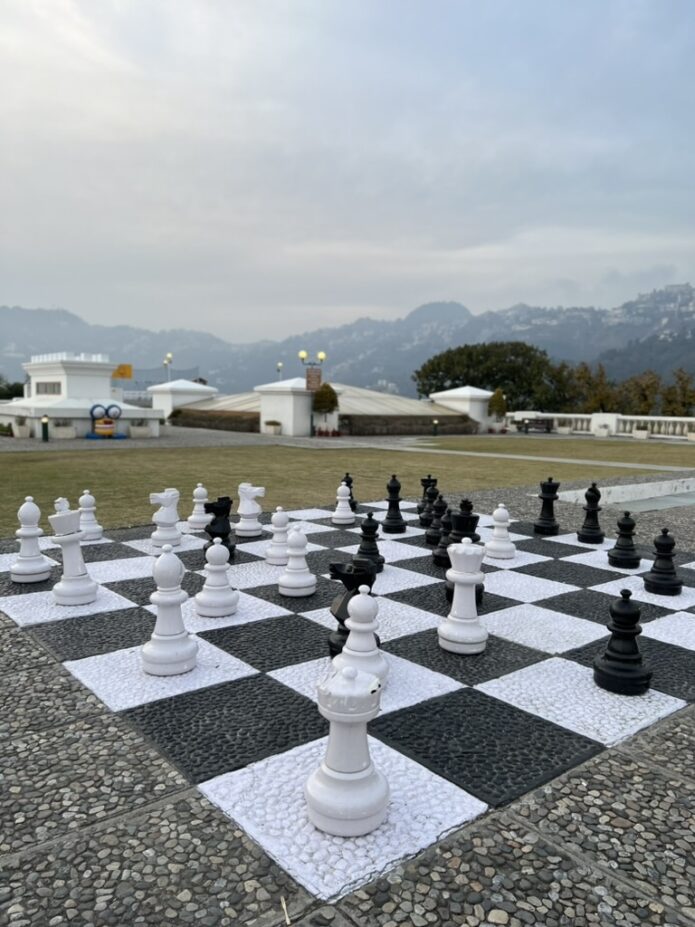
The headlines remembered his fists. I remembered his friendship. With Muhammad Ali.
They gave us one of boxing’s greatest rivalries. The Rumble in the Jungle was brutal. Ali won. Foreman fell. But the real story began much later. They became close. Joked with each other. Grew old together. Foreman once said, “Ali was the greatest man I ever met.” Not the greatest boxer — the greatest man.
It reminded me how often fierce competition leads to something deeper. A kind of friendship that’s only possible after both have given their all.
Like Jesse Owens and Luz Long. Berlin, 1936. One Black, one white. One American, one German. Hitler in the stands. And yet, Long helped Owens adjust his take-off. Owens won gold. Long stood beside him. They exchanged letters until Long died in the war. Owens later said, “You can melt down all the medals and cups I have, and they wouldn’t be a plating on the 24-karat friendship I felt for Luz Long.”
Or Federer and Nadal. Their rivalry defined modern tennis. They fought over every inch of grass and clay. But off court, something shifted. They laughed together, practiced together, cried together. When Federer retired, Nadal flew in just to sit beside him. He said, “When Roger leaves the tour, an important part of my life also leaves with him.”
Some friendships are forged not despite the competition, but because of it.
Like Leander Paes and Mark Woodforde. They played on opposite sides of the net. But somewhere along the way, Woodforde became more than a rival. He became a mentor, a guide. Paes said he learned how to be a better player — and a better person — from him. Woodforde, in turn, called Leander “a brother in tennis.” Sometimes the real partnership begins after the match.
And speaking of brothers — Ashok and Vijay Amritraj. Sometimes opponents, sometimes doubles partners. Always, a team in the bigger picture. Their rivalry never came in the way of their bond. You could watch them play and not know who won. You could only tell they cared.
Even across borders, this thread holds.
Neeraj Chopra and Arshad Nadeem throw javelins for different countries. But after the finals, it’s always the same scene. A handshake. A smile. A shared photo. “Neeraj is my brother,” said Arshad. And Neeraj replied, “Sport brings us together.” They compete with full force. And then, they connect with full heart.
Maybe that’s the point.
You have to compete. You don’t have to hate. That’s a higher order — not everyone reaches it. But those who do leave behind more than medals and records. Sports makes it visible.
They remind us that when the final whistle blows, what remains isn’t the scoreboard. It’s the story. And sometimes, the friendship.
Because eventually, all the coins go back in the box. What stays is who you became while playing the game. And who stood beside you when it was over.
I didn’t get to know of Robert Paul Wolff’s passing until recently. And yet, his work has been with me for years.
He made Kant and Freud more accessible to me. For that, I will always be grateful to him. I was an Eklavya of sorts—learning from a distance, drawing from his words, and inspired by a life that fought on despite odds that I only knew too well.
His personal blog, with all its warts and all, is a window to his mind. It is unfiltered, deeply intellectual, sometimes grumpy, often humorous, and always honest. It is a rare thing—to get inside the head of a philosopher, not through curated books but through everyday reflections, political rants, and candid stories of struggle.
This is a personal tribute to the man.
A Teacher Until the End
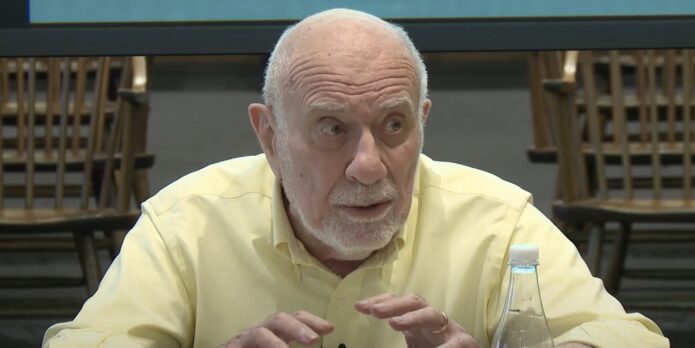
In the spring of 2024, at the age of 90, Robert Paul Wolff was still teaching. From a nursing home in North Carolina, he logged into Zoom every Friday to lead a discussion on Das Kapital. His students weren’t just eager undergraduates—among them were Harvard faculty and graduate students, all drawn in by his ability to make Marxist theory come alive.
“It was one of those very rare Harvard events where people actually showed up, not because of some resume item, but because they were actually interested,” said Social Studies lecturer Bo-Mi T. Choi in The Harvard Crimson, who helped design the course.
Even through a screen, his presence was unmistakable.
“Even on the Zoom screen, you could tell he was probably one of the most compelling teachers one could ever meet, a truly extraordinary man,” said David Armitage, Chair of the Committee on Degrees in Social Studies.
It wasn’t about status or prestige for Wolff. Teaching was simply what he did.
The Man Who Built Ideas
Robert Paul Wolff was the last surviving co-founder of Harvard’s Social Studies concentration—one of the first interdisciplinary programs of its kind. Launched in 1960, it brought together philosophy, politics, and economics to help students engage with the complexities of the real world. The idea was simple: problems don’t fit neatly into academic departments, so why should education?
During his time at Harvard, Wolff was one of the founding members of the Social Studies concentration in 1960 and became the head tutor for the program’s first year. At its inception, the program admitted only 20 to 30 honours degree candidates a year, hoping to train them in cross-disciplinary thinking unconstrained by departmental boundaries.
Armitage said Wolff, in the 1950s, felt that the world’s problems were “so big that they cannot be handled by one single department”—something Armitage believes is still true today.
But Wolff didn’t just build programs. He built ways of thinking.
At the University of Massachusetts Amherst, he co-founded the Social Thought and Political Economy (STPEC) program, and when UMass wanted to establish a PhD program in African American Studies, he was asked to help. He had no background in the field. So, as the story goes, he spent an entire summer reading every major book in the discipline—because if he was going to be involved, he would do it right.
Why He Matters
1. He Made Philosophy Accessible
Philosophy can be dense and difficult. Wolff had a way of making it clear. His works on Kant, Freud and several others continue to be read by students around the world. His lectures—many of which remain freely available on YouTube—are a reminder that great teachers don’t just explain things well; they make you care about them.
His blog, The Philosopher’s Stone, was an extension of this. He wrote about the subjects that fascinated him, but also about his personal struggles, his frustrations with academia, and his reflections on life. It wasn’t always polished. But it was real.
2. He Never Stopped Teaching
By 2021, he had already been living with Parkinson’s disease for over a year. His handwriting had become nearly illegible, and he relied on speech-to-text software to continue his work. In a deeply personal note on his blog, he shared that while his body had begun to slow down, his mind remained clear.
By January 2024, at the age of 90, he reflected on how much his mobility had declined. He accepted it with characteristic bluntness. But what mattered to him most? He had one more chance to teach. He was preparing for a study group—one that would explore ideas he had studied for decades. That, more than anything, brought him joy.
3. He Stood for What He Believed In
Wolff wasn’t just an academic; he was an activist. He protested against apartheid, fought for university divestment from South Africa, and stayed politically engaged until the very end. For him, philosophy was never just about ideas—it was about action.
A Legacy That Carries On
Robert Paul Wolff passed away on January 6, 2025, at the age of 91.
Even Parkinson’s couldn’t stop him. Even when his body failed, his mind kept working, his passion for learning never dimmed.
His work lives on. His ideas live on. And if you haven’t looked him up before, now might be a good time. His books, his lectures, and his blog are still out there.
And if you want to see his mind in its rawest, most unfiltered form, start with his blog. It’s all there.
There are more fascinating insights about his generosity and commitment to change in his obituaries inThe Harvard Crimson and UMass Amherst.
Thats my most favourite quote. By Ernest Hemingway in The Sun Also Rises
To me, his words aren’t just about money. They hold true for everything—careers, health, relationships, and even ambition. Because decline doesn’t happen in one dramatic collapse. It happens quietly, unnoticed, until the damage is done.
The slow erosion of standards isn’t dramatic. It doesn’t announce itself with alarms. It’s just small compromises made in moments of exhaustion—one deadline missed, one corner cut, one excuse justified. At first, they feel harmless. But over time, what was once non-negotiable becomes optional, and then, eventually, forgotten.
The quiet dulling of ambition doesn’t happen overnight. It starts with settling—choosing comfort over challenge, convenience over growth. The fire that once pushed you forward dims, not because you chose to give up, but because you stopped choosing to push. The hunger fades, replaced by a vague sense of inertia.
The steady lowering of expectations is the final piece. What you once aspired to feels distant, even unrealistic. You adjust—not because you believe less is enough, but because expecting more feels pointless. The extraordinary becomes unattainable, the average becomes acceptable, and before you know it, mediocrity becomes the norm.
Then, one day, you look around and wonder: How did things get here?
Not in a single moment. Not with a single decision. But with a thousand tiny ones.
Decline Creep is real. It thrives on neglect. It doesn’t need effort—it just needs you to stop paying attention. Many a time decline creep happens while you were busy with other things!
Progress, on the other hand, is different.
It doesn’t happen by accident. It requires intent. Effort. Discipline.
It’s never overnight. It’s never one sweeping transformation. It’s the small things, held steady. The right habits, practised consistently.
It starts with paying attention—continuously reflecting on what’s working and what isn’t. It requires taking corrective action before small missteps turn into major setbacks. A bit of optimism keeps you moving forward, but real progress demands a lot of focus.
Good things don’t come in sudden bursts. They come from the little things, done right, again and again.
Progress is built by design. Decline is powered by defaults.
Good things take time. So does decline.
The difference? One is a choice. The other is what happens when you stop choosing.
Walking through Brisbane, I saw something simple but powerful. Storefronts, still under construction, covered in bright art. Not just a splash of colour. Thoughtful, intentional design. It changed the whole street. Made it feel alive. Inviting.
“But isn’t that fake?”
If a store isn’t ready, shouldn’t it show its real state? The half-built shelves, the bare floors, the mess? Isn’t authenticity about showing things as they are?
Authenticity doesn’t mean exposing every flaw. A closed store with bright art isn’t hiding the truth. It’s offering something better to those who pass by. It’s saying, “Yes, we’re still getting ready, but here’s something beautiful in the meantime.”
It reminded me of a conversation in India. Someone told me, “Art comes after the family is fed.” A full stomach before a feast for the eyes. The argument was clear—art is an optional extra, a luxury.
But is it?
Hunger is real. Survival comes first. But beyond physical hunger, there is another kind—the hunger for beauty, and connection. A need that isn’t always felt, but exists. A need that, when ignored, leaves something empty in us.
Yes. There is a cost angle. Keeping things well-designed takes money. That’s true. But neglect costs more. The Broken window syndrome is real. When a place looks abandoned, it slides further. When it looks cared for, people respect it.
And that’s the point—intentionality. Art, design, and care shape how we experience a space. They change how we interact with it. How we treat it. A well-kept street, a thoughtfully designed workplace, a welcoming public space—these aren’t just about looking good. They change behaviour. They build connection. And remind us that we aren’t just individuals passing through.
Fixing a cracked pavement, adding colour to a dull wall, keeping a space inviting—these aren’t small things. Just as we change ourselves, we must care for our surroundings. Because they shape us too.
Yes, form has a price. But leaving it perhaps costs much more.
The latter part just made me pause. “To understand yourself, watch what you envy”. Envy is slippery surface.
To notice envy. Not just the fleeting kind—someone’s holiday photos or a shiny new car—but the deeper twinges. The ones that linger.
Perhaps it isn’t just about wanting what they have. Perhaps it’s about something unspoken. Freedom?
Recognition?
A sense of ease?
Sitting with it, even briefly, might help. Naming it, writing it down, noticing when it shows up. Over time, a pattern might emerge. A quiet revelation of what truly matters to you.
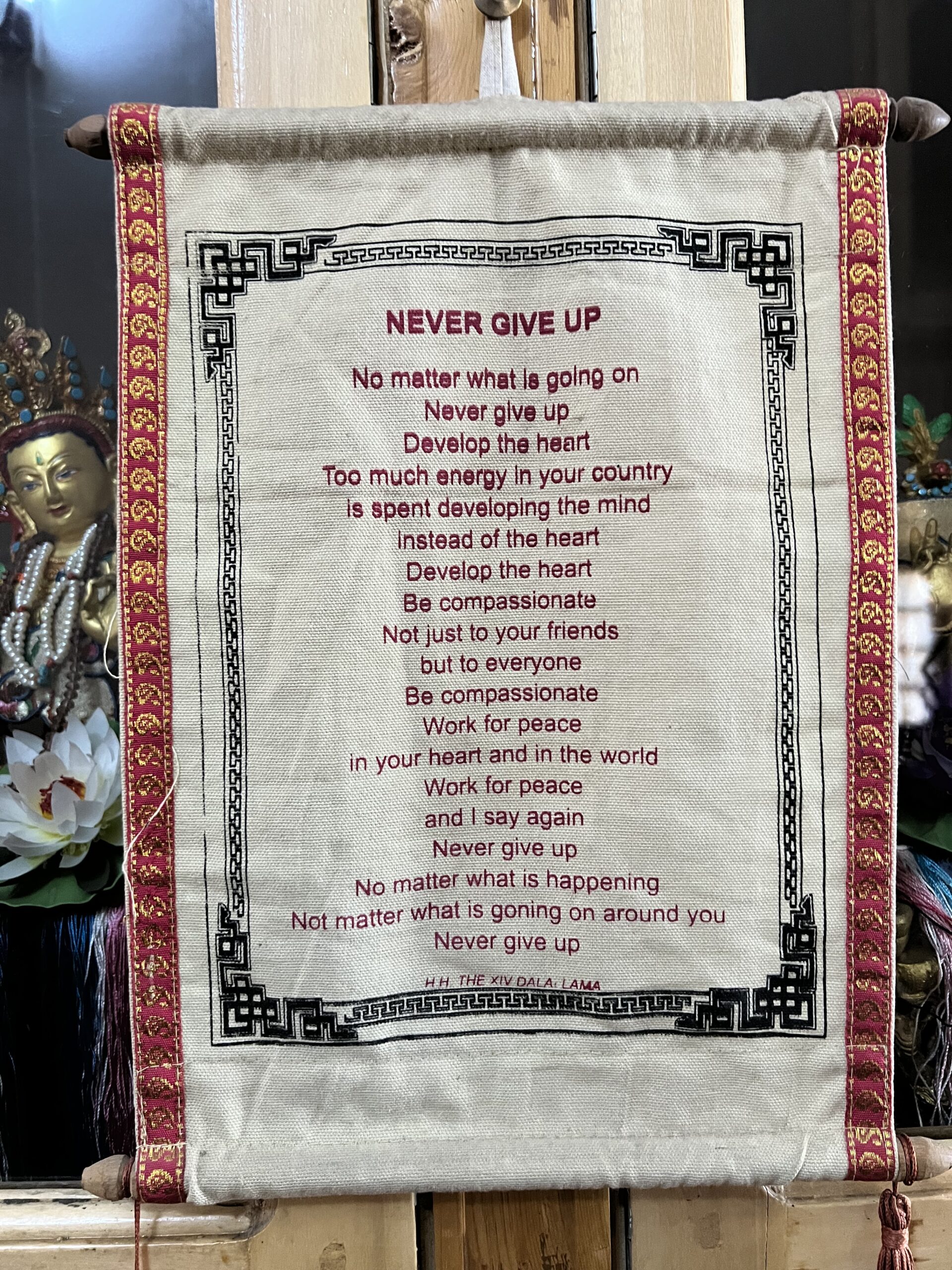
I was flipping through my photos when I found this one—words painted on a monastery wall in Diskit, Nubra valley of Ladakh.
A simple message, but powerful:
“Never give up. Develop the heart. Too much energy is spent developing the mind instead of the heart.”
It made me pause.
We chase sharp minds. Smarter, faster, more efficient—that’s the dream. We analyse, strategise, optimise. But how often do we develop the heart?
Imagine if compassion was a skill, like coding or negotiation. If kindness was a KPI. If success was measured not just by what we built, but by how we made people feel.
The mind is important. But it can’t do the job alone. Logic without empathy is cold. Intelligence without kindness can be dangerous. A brilliant mind with no heart can justify anything—even things that hurt people.
Developing the heart is different. It means listening, even when you disagree. Choosing understanding over being right. Caring—not just for friends, but for strangers too.
Nalla Sivam, the unforgettable character from Anbe Sivam, puts it beautifully: “தயவுதான் கடவுள். எது நடந்தாலும் மனிதன் மனிதனாக இருக்கணும்.” (“Compassion is God. No matter what happens, a person must remain human.”)
It’s easy to be clever. It’s harder to be kind. Some think kindness is weakness—a soft option, a surrender. It’s not. Kindness is strength. Empathy takes effort. It’s much easier to argue than to understand.
A friend asked me, “But how do you define it exactly?” I told him that’s part of the problem. Not everything needs a precise formula. Sometimes, it’s just about helping people see that they too can help.
If that doesn’t make sense, well, it’s ok. That’s part of the deal.
To be ok with imperfection. To see the human beyond. And notice the deep, jagged edges of people and not miss them in the quest for surface-level perfection.
That’s what developing the heart is about.
This is perhaps the best message I can give myself. A note to self.
Peppa Pig is Getting a Sibling. Life Will Never Be the Same.
I walked into a hotel. It was a warm Sunday morning in cold Guwahati. On the bed, a towel had been folded into something soft and cuddly. My mind leapt to Peppa Pig. Years of watching the show had clearly left a mark.
There was a time when Peppa and George were permanent residents in our home. My daughter, in her early years, was hooked. Every day was a Peppa day. Every evening was a George evening. She even looked for muddy puddles in our apartment complex. There were none. Great disappointment.
I was roped in, of course. I have watched many Peppa Pig episodes. Some, multiple times. Enough to know that Daddy Pig is not as useless as he looks, that Suzy Sheep is a questionable friend, and that Peppa is, quite honestly, a bit of a bully.
But let’s talk business. The Peppa Pig franchise is massive. Multi-billion-dollar massive. Toys, books, theme parks, endless merchandise. Peppa-branded spaghetti exists. So do Peppa shoes, Peppa toothpaste, and Peppa bedding. Kids love it. Parents buy it. The empire keeps growing.
And now, change is in the air.
In February 2025, it was announced that Mama Pig is expecting. Peppa Pig is getting a sibling. George is no longer the baby of the house. Chaos is guaranteed.
What could change?
• George loses his ‘baby of the house’ status. Tears may follow.
• Peppa takes charge. Expect unsolicited parenting tips from a 4-year-old pig.
• Daddy Pig looks overwhelmed. Because, of course.
Thankfully, my daughter is past her Peppa Pig phase. But nostalgia reigns. And when I read that a new baby was on the way, I couldn’t help but say oink oink and read it out to my young miss. She rolled her eyes. I felt old.
Life is about change. Even in the world of animated pigs.
The world feels heavy with crisis—wars, climate disasters, and a growing sense that things are falling apart. But here’s something worth paying attention to: India has made remarkable progress in reducing poverty. Over the last few decades, millions have moved out of extreme poverty, quietly reshaping the country’s economic landscape.
This isn’t just a feel-good statistic. It’s hard evidence that things can get better, even in challenging times.
And Yet, the Doomsday Clock Ticks Closer
Despite such progress, the Doomsday Clock, that dramatic symbol of how close we are to global catastrophe, was reset to 89 seconds to midnight this year. It has barely moved—stuck at 100 seconds for years, then 90, now 89. The change is cosmetic, not meaningful.
At a Founding Fuel Masterclass on The World in 2025, Sundeep Waslekar called this reset a cop-out. He argues that the real number should be closer to 60 seconds. He pointed to a joint article by Prince Hassan of Jordan, advocating for a sharper reset.
But while the world debates whether catastrophe is inevitable, there’s another story playing out—one of real, measurable progress. One that gives me hope amidst all the gloom and doom.
India’s Role in Reducing Poverty
A recent study by Armentano, Niehaus, and Vogl found that global extreme poverty fell from 44% in 1981 to just 9% in 2019—and India played a huge role in that shift. The study found that 57% of those who started in poverty in rural India managed to escape it—one of the highest exit rates among all countries surveyed.
How Did India Do It?
Some long-held assumptions don’t hold up. The study found that:
People didn’t need to switch careers. Most who escaped poverty kept working in the same industry, improving gradually rather than making risky jumps.
Moving to cities wasn’t the golden ticket. Rural-to-urban migration wasn’t a major factor, and in some cases, rural-to-rural moves worked better.
Self-employment was key. Unlike in Mexico or South Africa, where wage jobs mattered more, in India, self-employment played the biggest role in lifting people out of poverty.
Handouts Helped, But Progress Was Broader
Government support, cash transfers, and aid helped cushion families from falling back into poverty. The study found that when people slipped below the poverty line, social protection measures often softened the blow and gave them a fighting chance to recover.
But the biggest long-term gains came from economic activity—steady income, better opportunities, and gradual improvements in livelihoods. India’s 1991 economic liberalization, expansion of micro-businesses, small-scale farming improvements, and informal work created conditions for many to climb out of poverty while staying in familiar trades.
What’s the Big Takeaway?
Poverty isn’t a static trap. People move in and out of it constantly. The good news? In India, more people have been moving up than down.
The Doomsday Clock may be ticking, but time isn’t running out just yet. The world has seen real progress—and with the right focus, there’s more to be done.
Read the full study [here]. It’s messy, surprising, and hopeful.
Ice Cream Happiness is not just a feeling—it’s science. Researchers—real ones—put people in an MRI machine and fed them vanilla ice cream. The results? Their brains lit up like Deepavali lamps. A study conducted by the Institute of Psychiatry in London found that eating ice cream activated the orbitofrontal cortex, the part of the brain associated with pleasure and reward.
Our ancestors weren’t spoiled for choice. Before supermarkets and food delivery apps, food was hard to find. Fat and sugar meant survival. So, the brain rewarded every bite with a dose of joy. Thousands of years later, we don’t need to hoard calories, but the brain still thinks we do. Which is why ice cream makes us happy.
Some say joy can be found in other things. These people are wrong. The MRI scans don’t lie. The next time someone judges my double scoop, I am going to point them to science.
Interestingly, the research also found that different flavours trigger different responses. Vanilla, the classic choice, brings a sense of comfort and nostalgia. Chocolate lights up more intense pleasure centers. But whatever your preference, the effect is undeniable—ice cream is a shortcut to happiness.
This might explain why ice cream parlours have been cultural landmarks for generations. From old-school softy vendors to artisanal gelato shops, they’ve always been places of joy. Whether celebrating a victory or nursing heartbreak, the cure is often found in a cone or a cup.
Speaking of nostalgia, there was an Arun Ice Cream shop at Simmakkal, Madurai. An odd place for an ice cream shop. In the middle of a busy road with no parking. But that never mattered. Arun Ice Cream was the first big name in mass retail ice cream in my life! Before Arun, ice cream was a fleeting treat, not a destination. Arun changed that. It gave ice cream a home. A shop. A menu.
The pushcart was replaced by the thrill of stepping into a store, choosing from a board full of flavours, and watching the shopkeeper handover happiness in a cup.
Or better still, a slice of Cassatta. A rainbow of flavours with a soft cake surprise at one end. The ultimate jackpot. The store in Simmakkal is long gone, but I look at the place fondly. Arun Ice Cream remains special. Their playful ads, delightful products, and bold entrepreneurship have kept them a favourite.
But back then? Well, those were the days. Sparse traffic. Slow afternoons. Ice cream melting slightly before the first bite.
Me, my brother, and dad would drive there on his good old Hero Honda. The wind in our faces, the thrill of the ride, and the promise of ice cream at the end of it—it was an adventure of its own. I can’t imagine how that would be possible now, with the traffic and chaos. But back then, it was simple. And sweet. Ice cream happiness was worth living for!
And by the way, this is not the first time I write about ice creams here.
AI is breaking boundaries and dismantling old ways of thinking. It has made a rather impolite but firm introduction to irrelevance. Leaders today must prioritise unlearning for success in an AI-Driven world —or risk being left behind.
AI is rewriting the rules of work, creativity, and competition. Every day, new breakthroughs make yesterday’s expertise obsolete. The old playbooks? No longer enough. The rate of change is massive. And it’s not slowing down.
The real question is: How fast can you adapt?
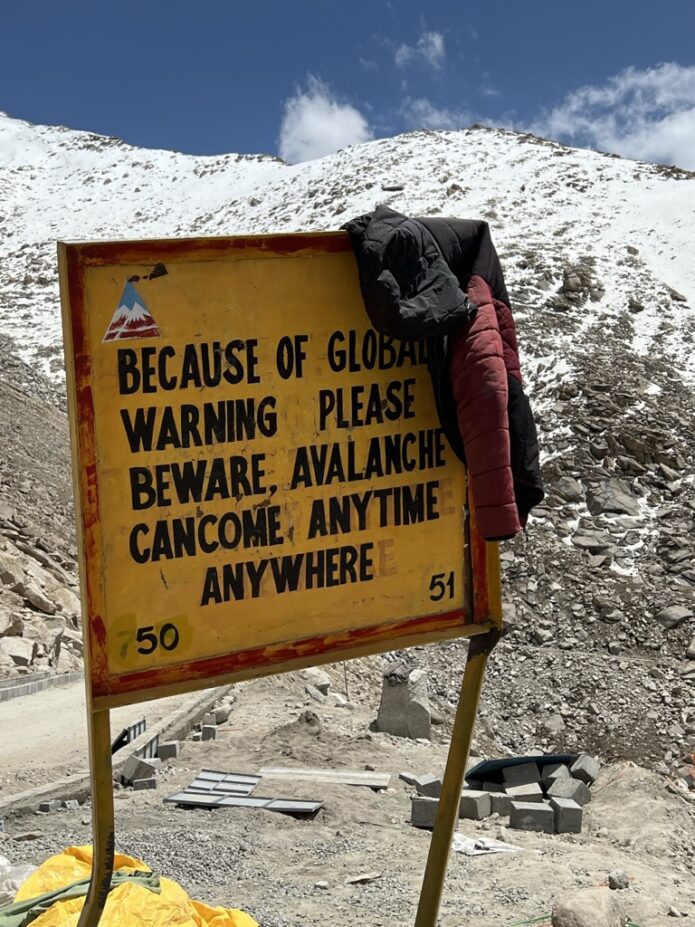
I clicked the picture above somewhere in Ladakh, where our car had been halted by an avalanche. Workers were labouring to clear the road, knowing full well that another could strike at any moment. That’s the nature of avalanches—sudden, disruptive, and unforgiving.
AI is that avalanche. In the real world, avalanches block roads. In the metaphorical world of fast change, they bury careers, industries, and entire ways of working. The only way to survive? Move, adapt, and find your slope.
I have been thinking about it ever since. So, Indulge me for the next couple of minutes. Here we go.
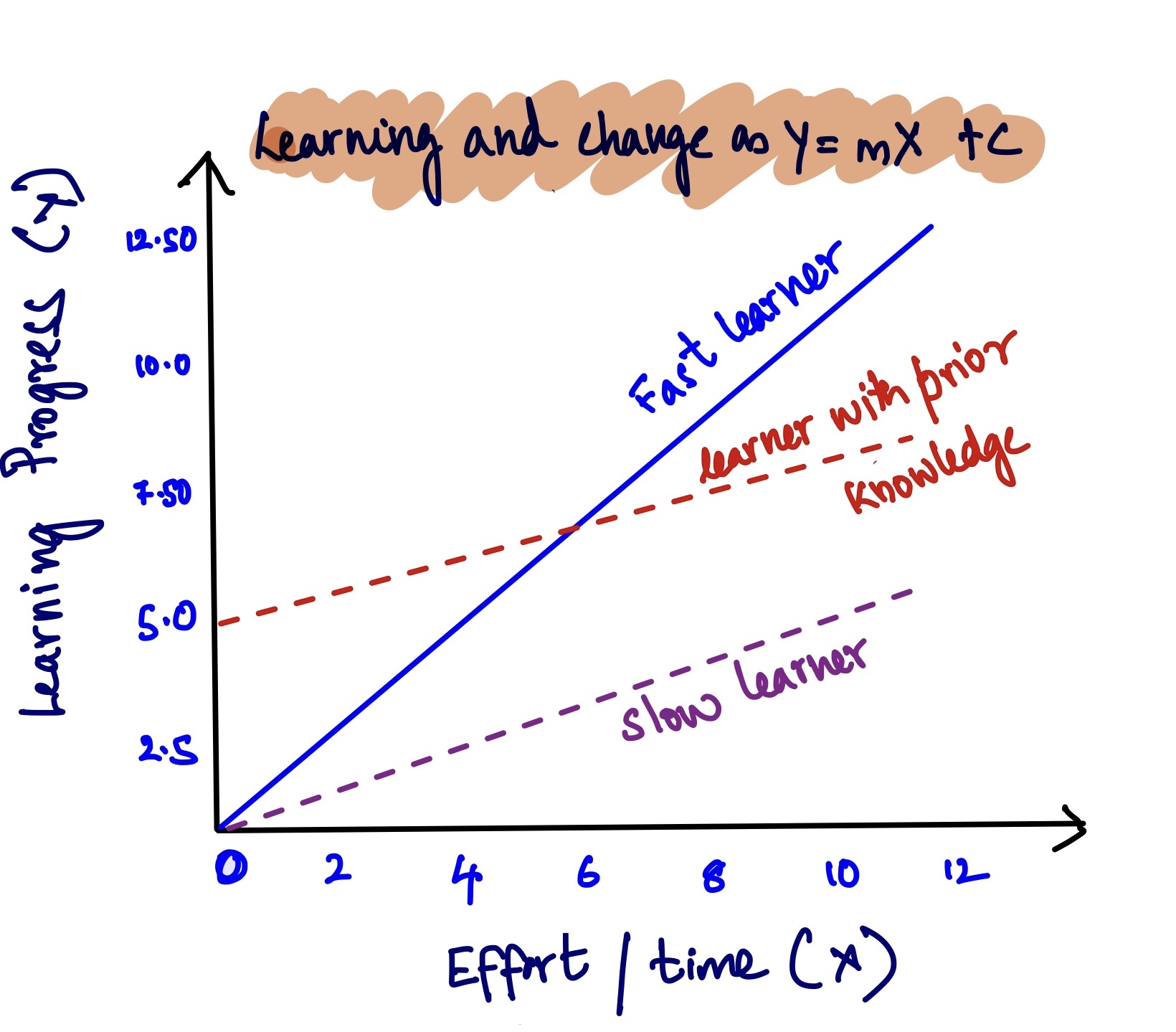
Equation of a straight line: y = mx + c
m: The slope—indicating how fast you’re learning. c: The intercept—representing your starting point or existing knowledge.
Imagine three learners. Mr. Red starts ahead (high intercept) but learns slowly (low slope, small ‘m’). Mr. Purple starts lower (low intercept) and progresses steadily (moderate slope, medium ‘m’).
Ms. Blue starts behind (low intercept) but picks up new skills quickly (steep slope, large ‘m’), eventually overtaking both. Over time, Ms. Blue’s higher slope (greater ‘m’) allows her to progress faster, proving that the speed of learning (slope) matters more than where one begins (intercept).
That’s Prof. Sawhney’s point. In a world moving at breakneck speed, slope beats intercept every time.
It’s a neat explanation that accentuates the importance of learning and the role of past experience. Which is the point to this post. Past experience can interfere with future learning.
What gets in the way of learning and change? Three things stand out for me.
1. Past Success is a Sneaky Obstacle
What got you here won’t get you there. Yet, we cling to past knowledge like a badge of honour. The problem? Yesterday’s wins can become today’s blind spots.
The best learners stay humble. They don’t assume what worked before will work again. Instead, they ask, “What do I need to unlearn to make space for what’s next?”
Christensen showed how successful companies often fail when disruption hits. Why? Because their past success locks them into old ways of thinking. They keep optimising what worked before instead of adapting to what’s coming next. That’s how giants lose to scrappy newcomers unburdened by legacy thinking.
Exhibit A: BlackBerry
Once a leader in mobile technology, BlackBerry clung to its physical keyboard design, convinced loyal customers would never give it up. Meanwhile, Apple and Samsung bet on full-touchscreen smartphones. BlackBerry’s refusal to move beyond its own past success led to its decline.
Exhibit B: Zomato
Contrast that with Zomato. It started as a restaurant discovery platform but saw the market shifting. It let go of its original success model and pivoted to food delivery. Then to restaurant supplies. Then to quick commerce. By unlearning what had worked before, Zomato stayed ahead.
The same applies to individuals. If you define yourself by what has worked before, you risk missing what could work next. Adaptation isn’t about forgetting your strengths; it’s about not letting them become limitations.
2. Fear Kills Growth
New learning requires trying. Trying involves failing. And failure—especially when experience has given you relevance—can feel uncomfortable.
Many don’t fear learning itself; they fear looking foolish while learning. That’s why kids learn faster than adults. They don’t care if they fall; they just get up. Adults, on the other hand, hesitate. They protect their image, avoid risks, and stick to what keeps them looking competent.
This isn’t just instinct—it’s backed by research. In The Fear of Failure Effect (Clifford, 1984), researchers found that people with a high fear of failure avoid learning opportunities—not because they can’t learn, but because they don’t want to risk looking bad.
Think of it this way: If you’re only playing to avoid losing, you’re never really playing to win. The antidote? Make experimentation a habit. Small experiments create room for both success and failure—without the fear of high stakes. They provide just enough space to try, adapt, and grow.
Reflections on Rahul Dravid
Rahul Dravid’s career is an interesting study in adaptation. Once labelled a Test specialist, he gradually refined his game for ODIs, taking up wicketkeeping to stay relevant. Later, he experimented with T20 cricket and, post-retirement, started small in coaching—mentoring India A and U-19 teams before stepping into the senior coaching role. His evolution wasn’t overnight; it was a series of calculated experiments.
3. New Minds, New Paths
Left to ourselves, we reinforce what we already know, surrounding ourselves with the same familiar circles—colleagues, family, and close friends. That’s exactly why new perspectives matter. We don’t have enough of them. Our past experiences shape our networks, and over time, we rely on the same set of strong connections, limiting exposure to fresh ideas.
Sociologist Mark Granovetter’s research on The Strength of Weak Ties (1973) found that casual acquaintances (weak ties) expose us to new ideas and opportunities far more than close friends or colleagues (strong ties). Why? Because strong ties often operate in an echo chamber, reinforcing what we already believe. Weak ties, on the other hand, bring in fresh perspectives, unexpected insights, and access to new fields.
A few years ago, an MD I know took up cycling. What started as a fitness and lifstyle activity became something more. As he grew more integrated with his diverse cycling community, I saw firsthand how it influenced him—not just physically, but mentally. He hasn’t just learned new skills; he has unlearned old assumptions. His outlook, I realised, has changed simply by being around people who think and live differently.
He has transformed without realising it and is thriving professionally. I’ve been working on the sidelines with him and can see the transformation firsthand. I am not undermining his professional challenges and success, but I cannot help but see the changes his cycling community has brought to him.
The world is moving fast. The only way to keep up? Have more unexpected conversations, seek out people who challenge your views, and surround yourself with thinkers from different worlds.
Sometimes, seeing others take risks in adjacent spaces is all the permission we need to start experimenting ourselves.
Opportunity for Change
The ability to learn, unlearn, and adapt has never been more critical. In a world shaped by AI, rapid disruption, and shifting industries, clinging to past successes is the surest way to fall behind. The real competitive edge lies not in what you know today, but in how quickly you can evolve for tomorrow. Unlearning for success in an AI-driven world is mandatory.
So, ask yourself: What am I absolutely sure about? Because that’s often where the biggest opportunity for growth lies.
The world belongs to those who can learn fast, forget fast, and adapt even faster.