

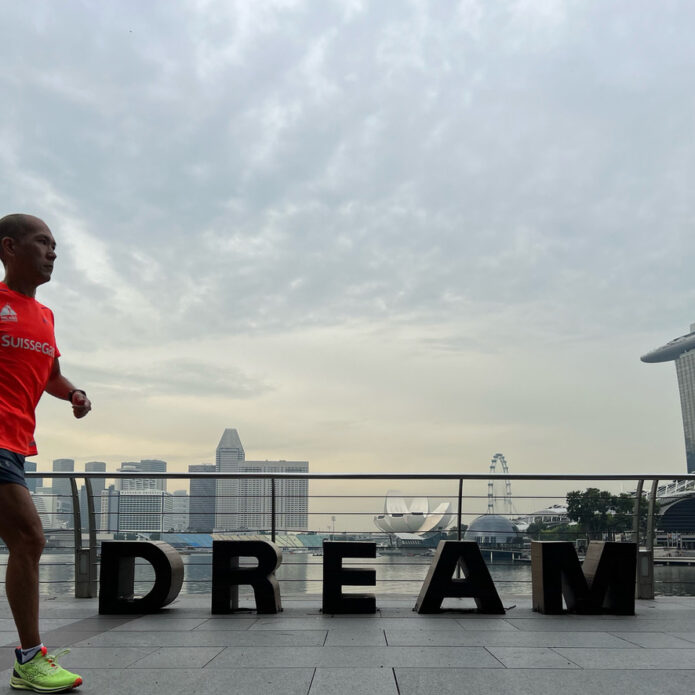
“I work physically very hard every day of my life. It’s got nothing to do with cricket anymore. It’s the way I live. So as long as my fitness levels are up and my mental enjoyment and sharpness is there, when you can visualise the game and see yourself running as hard, reacting fast on the ball, you know it’s fine.”
That is Virat Kohli. And thank God he scored runs before saying that.
Because if he had nicked one to slip for a duck, this philosophy would not have been printed anywhere. It would have been dismissed as a post-match consolation line. Success brings applause. Failure brings silence.
But the message matters, because it points to the stuff no one claps for.
The hours before the match.
The recovery routines.
The quiet mornings.
The invisible discipline.
None of it is dramatic, yet all of it is essential.
James Clear speaks the same language. Systems. Habits. Tiny steps.
MS Dhoni did the same thing without saying anything. One process at a time.
The Bhagavad Gita said it centuries ago. Act without attachment. Let the fruit take its time.
Outcomes get the spotlight.
Process sits backstage and holds up the ceiling.
Virat Kohli’s words are not a motivational poster. They are a reminder of how performance is built. Not on inspiration, but on daily structure. Not on hype, but on small habits. The world celebrates the big shot. The body remembers the small drills.
Sport keeps offering examples. Look at Roger Federer.
Roger made tennis look like silk.
People saw the elegance, not the repetition.
They admired the one-handed backhand, not the endless balance and footwork drills that came before it. They talked about grace, not the maintenance that kept him injury-free for two decades.
Federer’s genius was simple. He took care of the stuff no one claps for. Strength work. Recovery. Rehearsal. The glamorous “effortlessness” was built on ordinary routines repeated thousands of times.
This is the part we often forget.
Outcomes depend on timing, luck, conditions, moods, even the bounce of a ball.
Process depends only on you.
People imagine confidence comes from results.
But most confidence comes from doing the work when no one is watching.
You trust yourself because yesterday’s effort is still in your bones.
That is why the stuff no one claps for ends up shaping the very things people cheer for.
The unseen half carries the seen half.
The quiet routines make the loud moments possible.
So here is the simple truth in all this.
Stop staring at the scoreboard. Stop refreshing the result. Build the routines you can control.
Do the boring work. Do it when it is raining. Do it when you are not in the mood. Do it because it steadies you.
The applause will find its own time.
The work must find yours.