2025

The Things That Worked. And the Ones That Quietly Didn’t.

Yesterday, I completed an audit of the year. I counted things. Books finished. Posts written. Work delivered. It felt good. Numbers tend to behave themselves, which is more than can be said for most of life.

But numbers are polite. They tell you what happened. They rarely tell you what it cost.

This piece stays with what the numbers were quietly pointing to, while I was busy admiring them.

What Seemed to Work

Quite a few things worked this year, and it would be churlish not to acknowledge them.

I read nine books, properly and without hurry. I have not done that in years. In a world that rewards skimming, scrolling, and nodding along to things one has not actually read, this felt like a small act of resistance. Or stubbornness. Possibly age.

More than sixty blog posts also escaped my head and entered the world. That has not happened in a long time either. Writing returned as a habit, not as an occasional ceremony involving coffee, good intentions, and eventual disappointment. If 2025 had a quiet win, this was it.

Ten pieces appeared in Founding Fuel. That mattered far more than the number suggests. The editing was demanding in the best way. Soft ideas did not survive. Better ones came back leaner and sharper. The conversations that followed were longer, deeper, and occasionally uncomfortable, which is usually how you know something worked.

I enrolled in three courses. I completed two. One remains, politely reminding me of its existence every few weeks. Each asked for time, money, and attention. All of them gave something back, which already puts them ahead of many commitments that quietly take all three and return very little.

At work, there were fresh experiments. New formats. New ways of framing familiar problems. These required courage and a fair amount of gumption, or at least the ability to sound as if I had both. Some ideas surprised me by working better than expected. A few even behaved sensibly.

I also stayed away from the news more than usual, and this time it was deliberate. It had been charging rent in my head without doing much useful work. The daily cycle is loud, repetitive, and faintly theatrical. It feels urgent while you are inside it, and oddly empty once you step out. I realised I was spending more time being informed than being wiser.

So I changed how I paid attention. I watched actions, not announcements. What actually moved once the cameras left. With the help of some outstanding friends, I stayed loosely connected to what mattered. Less churn. More patterns. It felt healthier, and oddly more informed. Not indifferent. Just clearer. This is special.

I travelled to new places this year. I will write about them in a separate post. I also worked on some relationships. They get a paragraph here. The difference between a full post and a paragraph probably says more about the distance covered in each than any honest accounting ever could.

If I stopped here, the year would look solid.

Which is exactly where trouble usually begins.

What Stayed Standing

Other things never quite worked, but they also refused to fail properly.

A few projects quietly became something else. They did not collapse. They simply declined to become what I had imagined. They stayed alive in an awkward middle state. These are worse than failures. A failure ends the story. A half-working project keeps clearing its throat and asking for attention.

Some habits looked productive while slowly draining energy. Days filled themselves effortlessly. Messages were answered. Meetings multiplied, as meetings always do, regardless of whether anyone invited them. Everything appeared under control. Over time, it became harder to tell whether effort was producing momentum or merely the appearance of it.

Health did not collapse. It was fitness slipped badly.

Family time did not disappear. It thinned. There is a suitcase that spent more time with me than my family did, which is not an achievement I intend to repeat.

No alarms went off. No urgent intervention was required. This is how deeper problems usually arrive. Quietly. Gradually. With excellent manners.

Relationships followed a similar pattern. Some were cared for properly. Conversations deepened. Trust grew. Others survived mainly because people were generous. Kindness covered many small absences. Kindness is wonderful like that. It also postpones reckoning.

I renewed connections with classmates from school, which was special. At the same time, there were many friends I meant to meet for coffee. These intentions remained noble, heartfelt, and entirely stationary.

The Questions That Wouldn’t Go Away

Even the things that worked left questions behind.

Did writing become my refuge as much as my craft? Did reading stretch my thinking, or did it soften the edges a little too comfortably? And whatever happened to the plays, performances, and long evenings of soaking in other people’s art that I was so confident I would make room for?

The fact that these questions have come up is data enough.

I am often told I am a hard marker. I usually disagree. But sitting with this year, I can see why the reputation exists.

It is easy to manage appearances. Outputs help. Stories help too. But it is much harder to mislead oneself for long. Somewhere beneath the busyness, I know what is alive and what is running on habit. I know which efforts deserve energy and which ones continue mainly because stopping would require explanation. I also know which win I wanted but did not get. No amount of other credit quite fills that gap. And that is that.

Carrying the Right Questions Forward

As the year closes, a familiar set of questions stops being polite and starts lingering.

What should I start? What should I stop? What should I do more of? What should I do less of?

Most years, these are treated like planning prompts. Lists are made with enthusiasm. Intentions are declared confidently. The calendar listens, nods, and then carries on exactly as before.

This year, the questions feel urgent. Not only because time is sprinting away, but because attention leaks are more than frustrating. These are not productivity questions. They are system questions. They ask where life actually goes once motivation gets bored and habit takes over the controls.

One question, in particular, refuses to leave.

What would I stop doing next year, even if it still sort of works?

This matters because what still works is rarely challenged. It is functional, defensible, and comfortably respectable. It quietly sets the ceiling on change. Most decline does not arrive loudly. It arrives wearing slippers and saying, “This will do.”

Wanting change turns out to be mostly decorative. Deciding helps, but not much. Without changing the system around attention, behaviour stays put. This is the point James Clear makes plainly. You do not rise to your goals. You sink to your systems.

Which makes the work ahead refreshingly practical.

What the calendar protects.
What friction gets added.
What gets removed without ceremony.
What is designed so the better choice stops requiring willpower.

This is where reflection stops being writing and starts becoming proof. Defaults win when left alone. Comfort compounds faster than effort. “Later” has a remarkable way of becoming “never.”

So the aim is not a dramatic reset. It is a structural one. Fewer defaults. Clearer constraints. Lighter suitcases. More room for what actually deserves to stay. Once the system shifts, behaviour usually follows. Quietly. Reliably. Without heroics.

That is the urgency. And that, inconveniently, is the work.

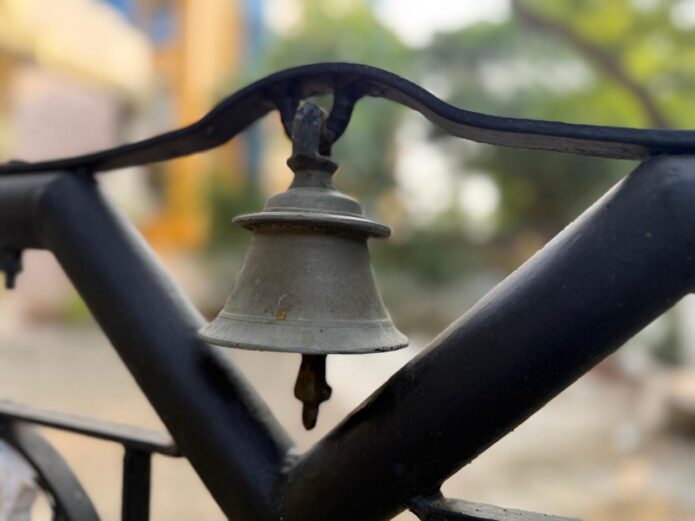
Somewhere between cheer and caution, a bell does its job. It doesn’t explain itself. It simply rings. Paying attention is left to the listener.

Merry Christmas. May your defaults behave themselves for a few days.
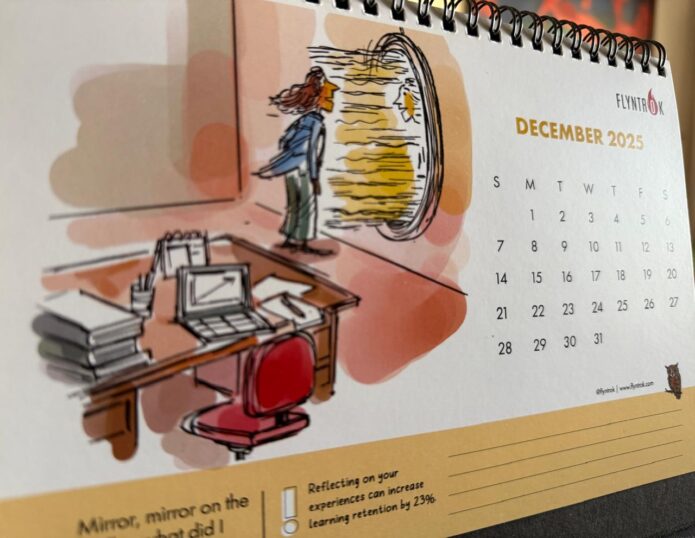
Audit of Me: A December Reflection on Time, Attention, and Patterns

Last week, I was trying to get a suitcase under seven kilos so it could travel with me into the cabin of an airline where certain staff members stand near the boarding gate with a stern-looking weighing scale. They do not smile. They do not negotiate. They do not believe in intentions.

This is a strange modern sport. It involves rules, judges, and quiet humiliation.

Items that had travelled loyally with me across cities and countries were suddenly asked to leave. Some without notice. The weighing scale remained unmoved. The staff remained polite and implacable.

The suitcase eventually closed. Barely.
I did not feel victorious.
I felt informed.

December has the same effect.

Time slips away quietly through the year. It carries minor shifts and major changes in the same sweep. One day you are beginning something with enthusiasm. The next, you are wondering when it became routine. And where another cherished habit quietly retreated to, without leaving a forwarding address.

That is what time does best. It does not announce change. It just keeps moving.

Boundaries of time force a pause. A year ending is, of course, an artificial boundary. The sun and sky do not care. Monday looks much like Tuesday. But the turn of the year helps us keep score. Like a measuring tape pulled out reluctantly. Slightly crude. Still useful. You may not like the number it shows you, but at least you know where you stand.

That is why December is a good time for an annual personal audit.

The gentle art of keeping score

An audit sounds serious. It need not be. This is not forensic accounting. No spreadsheets. No colour codes. Just a calm look at where things went.

Every December, I start with the calendar. I scroll slowly. Meetings appear like family photographs. Some familiar. Some puzzling. Who did I spend time with? What claimed my attention? What expanded? What quietly disappeared?

Then comes the inbox. This is where things get personal.

Which conversations mattered? Which ones grew richer and more human over time? Which relationships were nourished, sometimes deliberately, sometimes by accident? And which ones gathered dust despite the best intentions, friendly check-ins postponed indefinitely under the noble excuse of being busy?

Emails reveal more than schedules. They reveal attention. Who we return to. Who we avoid. Who stayed present through the year, and who quietly slipped into the “will reply soon” category, where messages go to rest.

Then the credit card and UPI statements. These are always revealing. Where did the money go? More importantly, does it reflect how I thought I was living? What stories am I telling myself? Behavioural economists call this data. The rest of us call it evidence.

The point is not detail.
The point is pattern.

Ordinary lives, useful reflections

Over the next few days, I am sharing my own reflections from this annual personal audit.

Now, I am, by nature, private. What follows will be general. Pointers, not particulars. There will be no confessions, no revelations, and nothing remotely sordid. I will spare you the details and offer patterns and pauses instead. Think sketches, not surveillance footage. Hopefully, just enough provocation to get you smiling and thinking about a few things of your own.

My life itself is reassuringly ordinary. Travel. Work. Conversations. Writing. A clutch of modest successes. A few misses. Some bets that went wrong with impressive efficiency. A handful taken on knowingly, which sounds bold and usually means thinking, This could go wrong, and proceeding anyway.

Why do this at all?

Because reflection rarely arrives with drama. It comes quietly. While waiting for boarding. While staring at a hotel ceiling. While realising you have told the same story twice and it sounds different the second time.

Doing it deliberately forces attention. I remember, in school, a friend playing a rather cruel prank on a teacher who took afternoon naps under a tree.

A magnifying glass.
A patch of sunlight.
A sudden awakening.

The teacher woke up with a start, clutching his forearm, which now bore a small but unmistakable scorch mark. The kind that makes a man reassess both his nap and his life choices. Let’s leave out what happened to my classmate.

The point is simpler.
Attention wakes things up.

That is why I do an annual personal audit. To clear my head. Putting thoughts into public view forces order. It removes clutter. It makes you confront what stayed and what did not. If it nudges you to glance at your own year, even briefly, that is enough.

I will write about things I got wrong and what worked despite me. The places I went and what they did not change. The people I met and the conversations that refused to be forgotten. The patterns that only show up when you stop long enough to notice.

A few questions worth sitting with

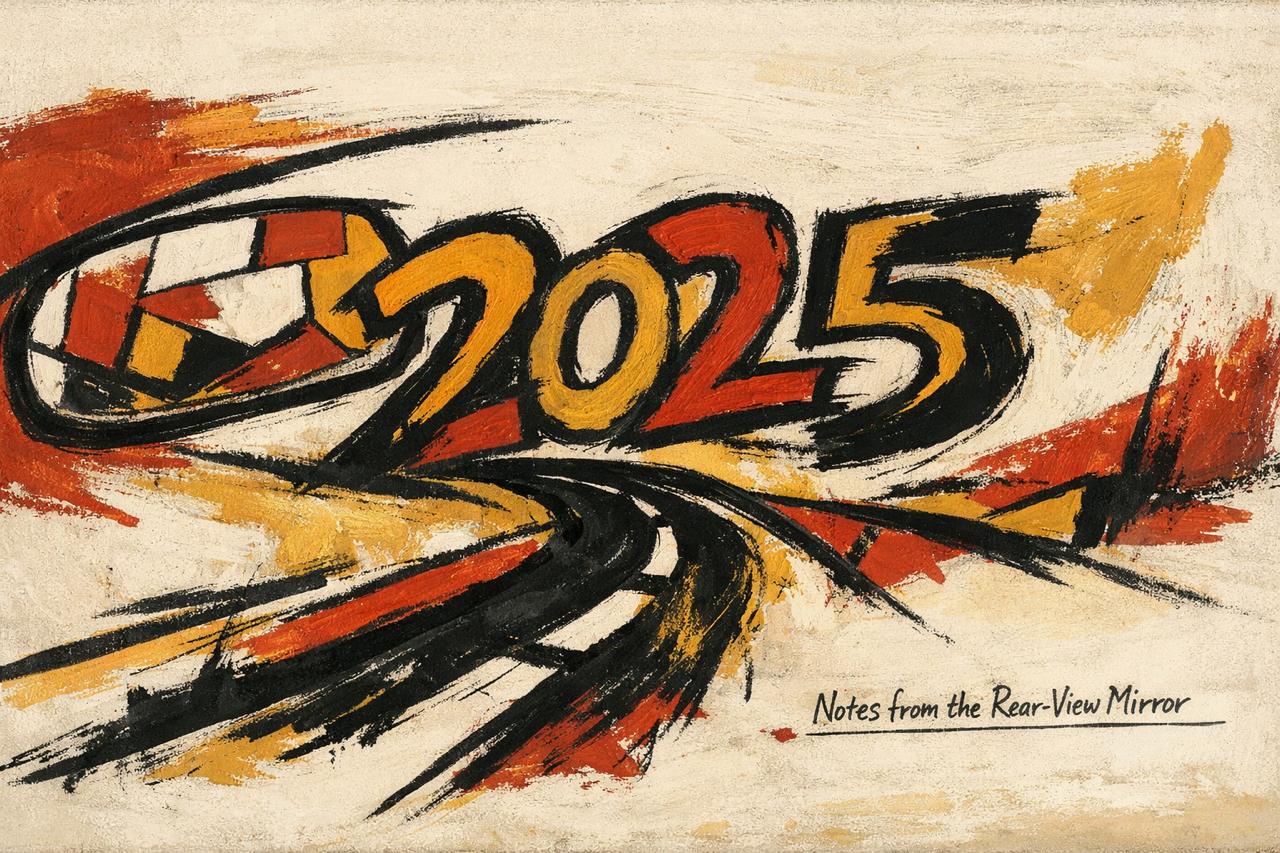
Notes From The Rear View Mirror

What did you give time to this year?
What held your attention without asking?

Which habits strengthened?
Which ones thinned out?

What is still alive?
And, what needs closing, gently, without regret?

What promises were made?
Which ones were kept?
Which ones were quietly postponed?

If these questions create mild discomfort, that is a good sign. It usually means growth occurred somewhere without sending a memo.

December invites this kind of pause. With coffee. With Wi-Fi that generously accommodates my inconsistent sense of humour. No drama required. Just enough stillness to notice what moved, what stayed, and what quietly asked for more care than it received.

Suitcases tell the truth when weight limits apply. Years do the same, if you stop long enough to listen.

Win or Die: Notes from a Noisy Nation

“There are only two possibilities here, right? Win or die.”
That’s not a war general. That’s Aravind Srinivas, CEO of Perplexity AI.

He said this after his fledgling startup made an audacious offer to buy Google Chrome just as Google was considering acquiring his company. It wasn’t a stunt. It was a statement. Stand your ground. Don’t wait to be chosen. Act. Or disappear.

The clarity in those three words hit me harder than I expected. Because it reminded me of something else entirely: home.

A few months ago, I was traveling overseas. I was in Queensland, Australia. Clean air. Empty roads. Birds louder than people.

A woman who had once travelled to India leaned in and asked, not unkindly, “How do you live there? You’re packed like sardines.”

Fair question. All of Australia has as much people as in the city of Mumbai. We are packed. In trains. In queues and contradictions. We live close—to each other, to chaos, to survival.

And for millions, survival itself is a kind of victory.

India Wasn’t Meant to Make It

In 1947, perhaps that was the national mood. Survival. That’s all we had. A bruised nation, a broken economy, and a whole lot of people with very little of everything else.

India wasn’t meant to make it. Winston Churchill famously scoffed that India was just a “geographical expression” and predicted it would splinter into chaos after the British left.

We were a “developing country” before the term became polite. A country stitched together by courage and imagination.

And Yet—Here We Are

Seventy-eight years later. Messy. Loud. Functionally dysfunctional. Fractious. But moving. Rising.

There are parts of India today that can beat the world on any stage. Others still trying to find the stage. And yet others just finding their feet.

We are world-class in patches and at cross purposes in others. But we are trying. We are showing up. That counts. India is no superpower. But it is a super possibility. Our lived experiences vary more than all climate zones of the world. But deep down, the story is the same. The fight is the same.


One. Because of Many.

What makes India remarkable isn’t just its size or scale—it’s its stunning, often stubborn, diversity. Languages, cultures, cuisines, gods, gods within gods. We are made up of parts. Gloriously different parts. And yet, we are one. Not in spite of our differences, but because of them.

This plural existence that is messy, layered and opinionated is not a bug in the system. It is the system.

It may look inefficient from a distance. And may confound those seeking sleek, clinical uniformity. But in India, sameness has never been the soul. Diversity is. And that predates independence!

To truly be Indian is to celebrate that. To respect what is not ours. And honour where we came from. And to defer, with humility, to where we are headed.

We can disagree—on politics, beliefs, or the best way to eat dosa. But when we hold hands, we can move forward. That is our superpower.

One. Because of many.

Victory Means Living Fully

Victory, my dad used to say, is living to your full potential. Anything less, and something inside quietly dies. You may not acknowledge it at first. But a part of you knows. And shrinks a little further each time.

That’s the real journey. Especially for a country like ours. To go from simply surviving to fully showing up.

From “How do you live there?” to “How do they do that?” That arc takes courage. Not the loud, chest-thumping kind. But the quiet, daily, persistent kind.

The kind that keeps going even when things seem okay. The kind that still believes.

Aravind Srinivas’s clarity in that pithy statement reminded me of the many times India has stood at a cliff’s edge and chosen to jump forward—uncertain, unready, but unwilling to back down. Here are my top five moments India had no choice but to Win or Die. Of course, these are through my imperfect lens. And you would have yours!

Five Moments India had no choice but to show up. And win!

1. 1991: Economic Liberalisation

India was on the brink. Foreign reserves were down to a few weeks. A default loomed. As a last resort, the government flew out gold reserves to secure emergency credit. In response, Finance Minister Manmohan Singh and Prime Minister Narasimha Rao dismantled decades of economic protectionism. And how! The reforms were unpopular. Risky. Uncertain. But the alternative was collapse. That pivot didn’t just save the economy. It opened up opportunity for millions. Win. Or die.

2. 1960s–70s: The Green Revolution

Post-independence India was trapped in a cycle of food shortages and foreign aid.
Famines were frequent. Hunger was normalised. Then came a wave of scientific intervention: high-yield seeds, irrigation projects, fertilisers. Led by M.S. Swaminathan and supported politically, the Green Revolution transformed agriculture. India went from begging for grain to becoming self-sufficient. And feeding a large and growing population! More than food, it was about dignity. Win. Or die.

3. 1983 & 2011: Cricket World Cup Wins

In 1983, India entered the World Cup as rank outsiders. The West Indies were expected to cruise.
But Kapil Dev’s team defied every expectation and rewrote history at Lord’s.
It wasn’t just a cricketing upset. It was a shift in national imagination: maybe we can win.
In 2011, the stage was different. India was expected to win. But the pressure was immense.
When Dhoni hit that final six, it wasn’t just a sporting victory—it was emotional closure for a generation.
Two decades. Two trophies. (Read more)
Same mindset: Win. Or die.

4. 2016 onwards: The Data Disruption

Before 2016, mobile data was expensive and unevenly distributed. Internet access was a luxury in many parts of the country. Reliance’s Jio changed the game. Offering cheap data and forcing every telecom operator to adapt or perish. It became more about participation than a phone plan. Rural India started streaming. Teenagers started coding. Small businesses went digital.
Digital inclusion became the new frontier. Win. Or die.

5. 2010s – Present: Aadhaar and UPI

How do you bring a billion people into the financial system? You start by giving them a unique identity—Aadhaar. You link that to banking, subsidies, and digital payments. And build UPI. Today, Indians make millions of real-time transactions a day without cards or cash.
It’s not flashy, but it’s revolutionary. No other country has done it at this scale, with this quiet confidence. Win. Or die.

The Thread That Connects Them All

There are countless others. Partition. Operation Flood. The space programme. The vaccine rollout. Operation Sindhoor. Kargil and other wars. And so on. Besides the ones that make it to the news, there are several personal and community triumphs in unnoticed corners of the country. All of them have imperfections galore. But each one is stitched with the same thread: courage in the face of reality. The refusal to be defined by what is. And the constant push to discover what could be.

More in the Tank

Because in this messy, magnificent democracy of ours, there is always more fuel in the tank of potential. Something that we can access when we come together with mutual respect and collective intent. And when it comes to embracing Win or Die, the latter isn’t really an option.

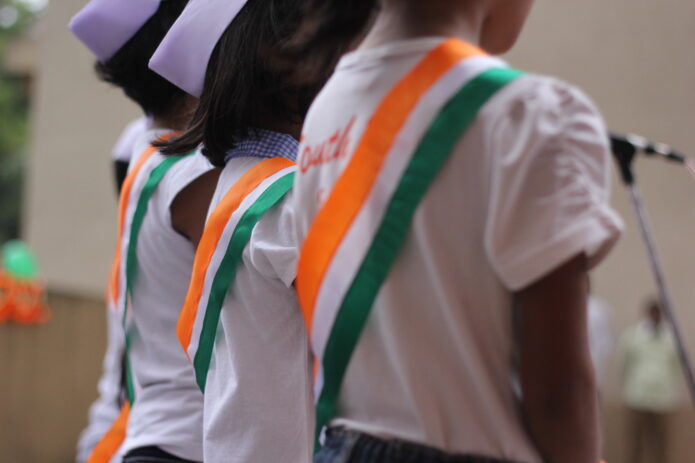
Happy Independence Day.

My Word Of The Year for 2025

A Word of the Year (WOTY) has been my annual fling with optimism. It’s my way of tying a metaphorical balloon to my tent of goals, hoping it doesn’t drift off while I’m busy untangling earphones.

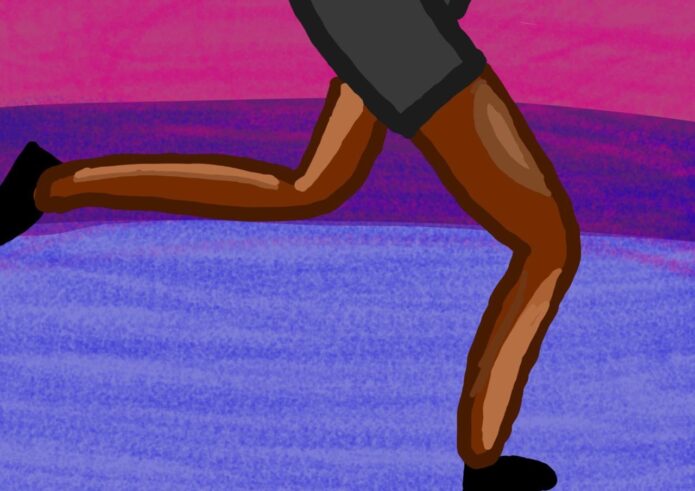
Past words like ‘Dare’ and ‘Believe’ have served me well—prodding, poking, and occasionally tripping me into action. This year’s word, however, comes with walking (I wanted to say ‘running’) shoes and a firm handshake. My WOTY for 2025 is ‘Stride’.

But Why?

Because life isn’t a sprint. That alone is good enough. Ask any entrepreneur. Your progress is as good as mer next stride.

Stride feels right. Purposeful. Measured. It’s the Goldilocks of movement—neither too fast nor too slow.

Stride, to me, suggests progress without panic. It’s walking into a room like you belong there, even if you’re mentally rehearsing your introduction. It’s moving ahead, step by step, with just enough confidence to take the next stride!

Lessons from Last Year

In 2024, my WOTY was ‘Believe‘. And believe, I did. Frankly, I couldnt have made it through the year without it. I believed when optimism felt like an economy seat in an airline that charges extra for a stale sandwich—cramped and uncomfortable. I believed, and sometimes, things actually worked out.

But belief works best with motion. Otherwise, it’s just hope in a yoga pose. Hence, ‘Stride’.

Stride Means Moving (Even When It’s Awkward)

Stride is about:

  • Showing up, even when the mirror suggests sweatpants.
  • Taking the stage, even when I feel my voice is wobbly.
  • Keeping pace, even when the road ahead feels like a labyrinthine maze.

Stride is a reminder that confidence isn’t a pre-requisite—it’s often a by-product. The act of moving forward builds it. One step at a time.

Stride also suggests dressing the part. Not just in tailored blazers, but in chiseling a mindset. It’s about carrying myself like someone who belongs in the big leagues, even if my inner voice occasionally snorts. It’s asking, “What’s the next step?” rather than “What’s the worst that could happen?”. It’s rarely as bad as imagined.

Striding into 2025

As I take these strides, I know it won’t be a solo effort. The world has a funny way of turning eyebrow-raising surprises into head-nodding support when it sees genuine effort. And I’ll need plenty of that. Striding into bigger challenges and broader horizons isn’t going to be possible without the encouragement, belief, and occasional push from those around me. So, here’s to striding together—one deliberate step at a time.

This year, I plan to stride into rooms I’ve avoided. Conversations I’ve postponed. And challenges that look suspiciously like hurdles but might just be stepping stones if I’m willing to move closer.

Stride isn’t about theatrics. It’s about steady, deliberate steps. The kind that leave footprints worth following.

What About You?

What word will you walk—or stride—into the new year with? Pick one. Give it some teeth. And then, take the first step.

As for me, my shoes are laced. Ready to take the next stride. And one more from there on. One stride at a time.

Happy New Year!