Learning & Change

Unlearning for Success in an AI-Driven World: Why Past Wins Can Hold You Back

AI is breaking boundaries and dismantling old ways of thinking. It has made a rather impolite but firm introduction to irrelevance. Leaders today must prioritise unlearning for success in an AI-Driven world —or risk being left behind.

AI is rewriting the rules of work, creativity, and competition. Every day, new breakthroughs make yesterday’s expertise obsolete. The old playbooks? No longer enough. The rate of change is massive. And it’s not slowing down.

The real question is: How fast can you adapt?

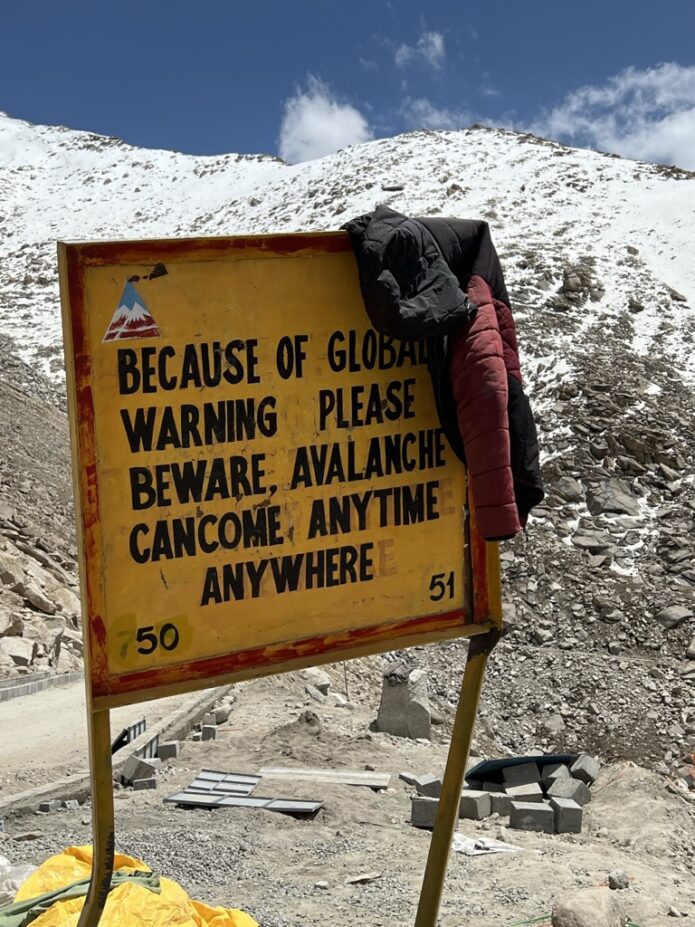
I clicked the picture above somewhere in Ladakh, where our car had been halted by an avalanche. Workers were labouring to clear the road, knowing full well that another could strike at any moment. That’s the nature of avalanches—sudden, disruptive, and unforgiving.

AI is that avalanche. In the real world, avalanches block roads. In the metaphorical world of fast change, they bury careers, industries, and entire ways of working. The only way to survive? Move, adapt, and find your slope.

Slope and Intercept

A professor whose work I follow is Mohanbir Sawhney. He wrote a piece titled “SLOPE, NOT INTERCEPT: WHY LEARNING BEATS EXPERIENCE” in LinkedIn. The piece resonated and helped me refresh my high school coordinate geometry 🙂

I have been thinking about it ever since. So, Indulge me for the next couple of minutes. Here we go.

Equation of a straight line: y = mx + c

m: The slope—indicating how fast you’re learning.
c: The intercept—representing your starting point or existing knowledge.
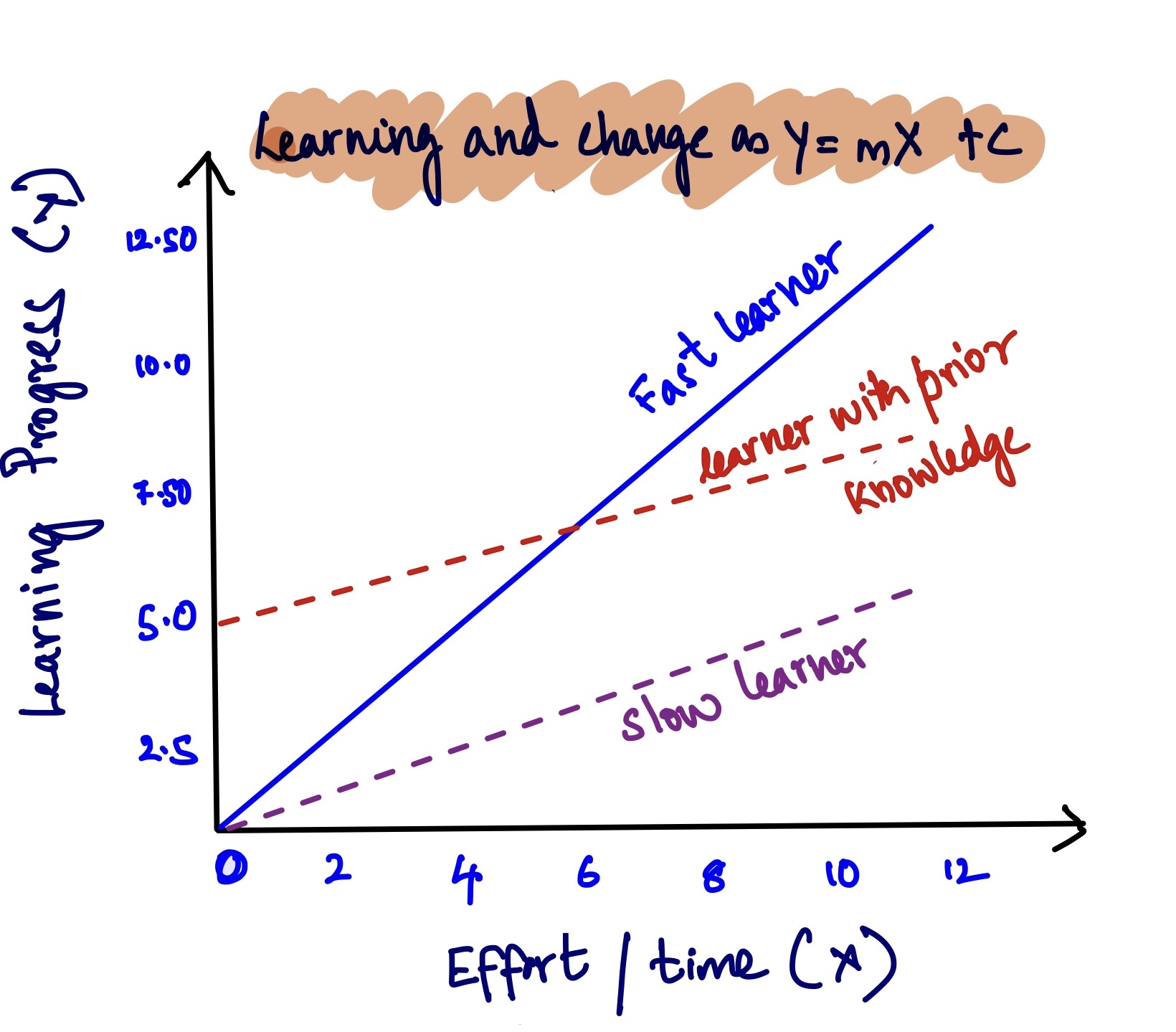
Imagine three learners. Mr. Red starts ahead (high intercept) but learns slowly (low slope, small ‘m’). Mr. Purple starts lower (low intercept) and progresses steadily (moderate slope, medium ‘m’). 

Ms. Blue starts behind (low intercept) but picks up new skills quickly (steep slope, large ‘m’), eventually overtaking both. Over time, Ms. Blue’s higher slope (greater ‘m’) allows her to progress faster, proving that the speed of learning (slope) matters more than where one begins (intercept).

That’s Prof. Sawhney’s point. In a world moving at breakneck speed, slope beats intercept every time.

It’s a neat explanation that accentuates the importance of learning and the role of past experience. Which is the point to this post. Past experience can interfere with future learning.

What gets in the way of learning and change? Three things stand out for me.

1. Past Success is a Sneaky Obstacle

What got you here won’t get you there. Yet, we cling to past knowledge like a badge of honour. The problem? Yesterday’s wins can become today’s blind spots.

The best learners stay humble. They don’t assume what worked before will work again. Instead, they ask, “What do I need to unlearn to make space for what’s next?”

This isn’t just opinion—it’s backed by another favourite professor, Clay Christensen, in his classic work, The Innovator’s Dilemma.

Christensen showed how successful companies often fail when disruption hits. Why? Because their past success locks them into old ways of thinking. They keep optimising what worked before instead of adapting to what’s coming next. That’s how giants lose to scrappy newcomers unburdened by legacy thinking.

Exhibit A: BlackBerry

Once a leader in mobile technology, BlackBerry clung to its physical keyboard design, convinced loyal customers would never give it up. Meanwhile, Apple and Samsung bet on full-touchscreen smartphones. BlackBerry’s refusal to move beyond its own past success led to its decline.

Exhibit B: Zomato

Contrast that with Zomato. It started as a restaurant discovery platform but saw the market shifting. It let go of its original success model and pivoted to food delivery. Then to restaurant supplies. Then to quick commerce. By unlearning what had worked before, Zomato stayed ahead.

The same applies to individuals. If you define yourself by what has worked before, you risk missing what could work next. Adaptation isn’t about forgetting your strengths; it’s about not letting them become limitations.

2. Fear Kills Growth

New learning requires trying. Trying involves failing. And failure—especially when experience has given you relevance—can feel uncomfortable.

Many don’t fear learning itself; they fear looking foolish while learning. That’s why kids learn faster than adults. They don’t care if they fall; they just get up. Adults, on the other hand, hesitate. They protect their image, avoid risks, and stick to what keeps them looking competent.

This isn’t just instinct—it’s backed by research. In The Fear of Failure Effect (Clifford, 1984), researchers found that people with a high fear of failure avoid learning opportunities—not because they can’t learn, but because they don’t want to risk looking bad.

Think of it this way: If you’re only playing to avoid losing, you’re never really playing to win. The antidote? Make experimentation a habit. Small experiments create room for both success and failure—without the fear of high stakes. They provide just enough space to try, adapt, and grow.

Reflections on Rahul Dravid

Rahul Dravid’s career is an interesting study in adaptation. Once labelled a Test specialist, he gradually refined his game for ODIs, taking up wicketkeeping to stay relevant. Later, he experimented with T20 cricket and, post-retirement, started small in coaching—mentoring India A and U-19 teams before stepping into the senior coaching role. His evolution wasn’t overnight; it was a series of calculated experiments.

3. New Minds, New Paths

Left to ourselves, we reinforce what we already know, surrounding ourselves with the same familiar circles—colleagues, family, and close friends. That’s exactly why new perspectives matter. We don’t have enough of them. Our past experiences shape our networks, and over time, we rely on the same set of strong connections, limiting exposure to fresh ideas.

Sociologist Mark Granovetter’s research on The Strength of Weak Ties (1973) found that casual acquaintances (weak ties) expose us to new ideas and opportunities far more than close friends or colleagues (strong ties). Why? Because strong ties often operate in an echo chamber, reinforcing what we already believe. Weak ties, on the other hand, bring in fresh perspectives, unexpected insights, and access to new fields.

A few years ago, an MD I know took up cycling. What started as a fitness and lifstyle activity became something more. As he grew more integrated with his diverse cycling community, I saw firsthand how it influenced him—not just physically, but mentally. He hasn’t just learned new skills; he has unlearned old assumptions. His outlook, I realised, has changed simply by being around people who think and live differently.

He has transformed without realising it and is thriving professionally. I’ve been working on the sidelines with him and can see the transformation firsthand. I am not undermining his professional challenges and success, but I cannot help but see the changes his cycling community has brought to him.

The world is moving fast. The only way to keep up? Have more unexpected conversations, seek out people who challenge your views, and surround yourself with thinkers from different worlds.

Sometimes, seeing others take risks in adjacent spaces is all the permission we need to start experimenting ourselves.

Opportunity for Change

The ability to learn, unlearn, and adapt has never been more critical. In a world shaped by AI, rapid disruption, and shifting industries, clinging to past successes is the surest way to fall behind. The real competitive edge lies not in what you know today, but in how quickly you can evolve for tomorrow. Unlearning for success in an AI-driven world is mandatory.

So, ask yourself: What am I absolutely sure about? Because that’s often where the biggest opportunity for growth lies.

The world belongs to those who can learn fast, forget fast, and adapt even faster.
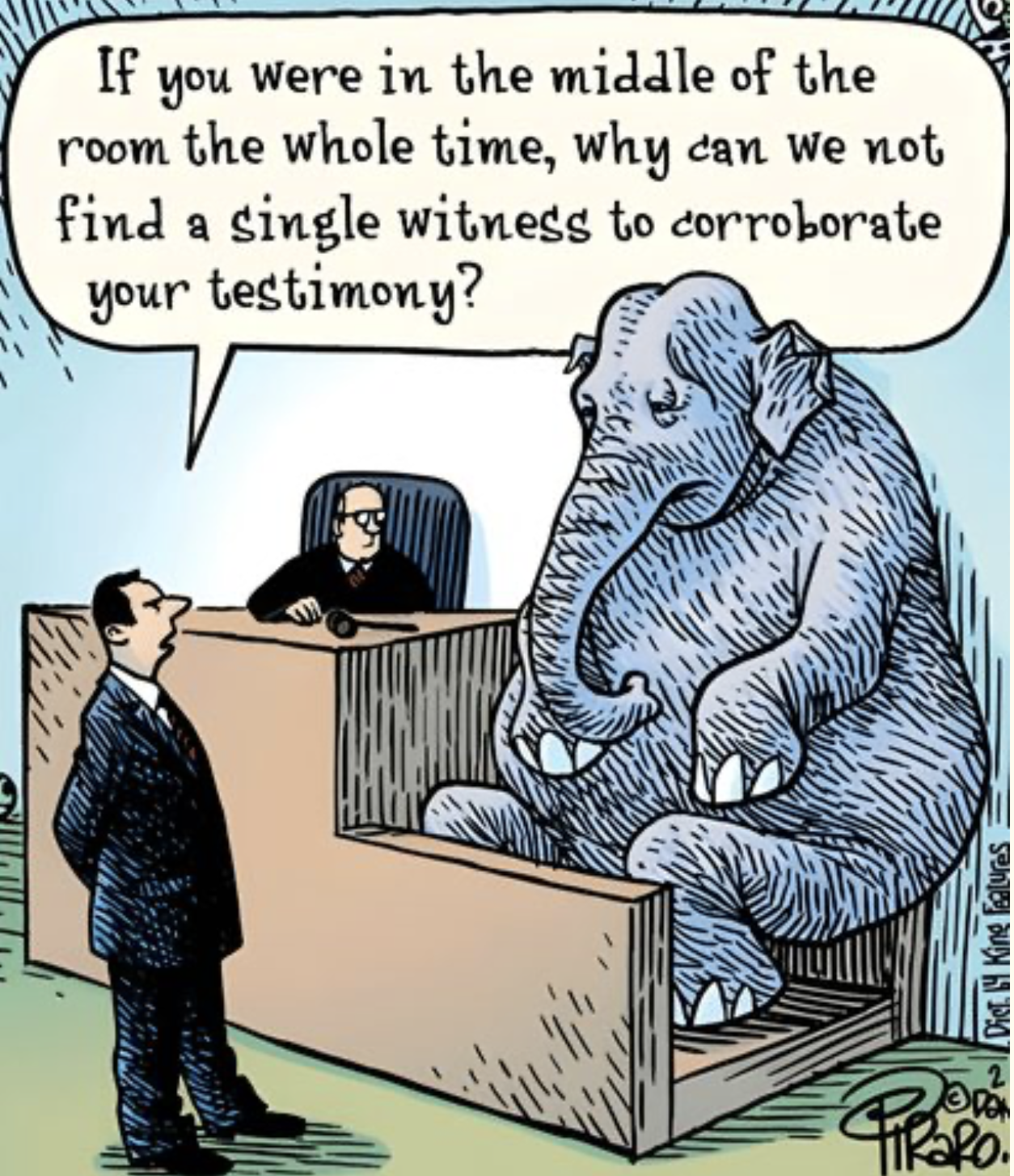
The Elephant in the Room – Not as Invisible as You Think

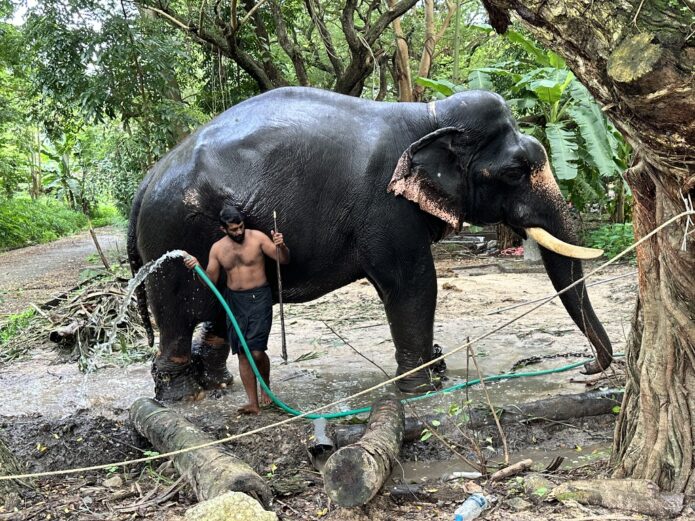
My work revolves around making change happen and stick—at all kinds of levels. And if there’s one universal truth, it’s this: there’s always something unsaid, something avoided. Sometimes, it’s just a small discomfort. An Elephant in the room! Sometimes, there’s a full herdThe other day, I wrapped up a conversation where everyone expertly avoided making eye contact with the massive, wrinkled reality in the room.


I’ve been thinking about these elephants in the room. Unspoken realities. They have a tough job. And honestly, so do I. Because the more I work with organisations and teams, the more I see how much avoidance of this elephant in the room stands in the way of progress. It can be incredibly frustrating to watch brilliant people, well-resourced teams, and ambitious strategies get stalled because no one wants to name the obvious.

Interestingly, the phrase “elephant in the room” has its roots in an old fable by Russian poet Ivan Krylov, titled The Inquisitive Man (1814). The story follows a man who visits a museum and marvels at all the tiny, insignificant details but somehow fails to notice the elephant right in front of him. If that isn’t the perfect metaphor for how most organisations and families deal with uncomfortable truths, I don’t know what is. We focus on minor distractions, but the massive, inconvenient reality remains untouched.

Wild thought. What would it be like to hire an elephant in the room? I mean, how would the job description look? What would be its responsibilities? How would you review its performance? What would the elephant say? Where would they go to cry? And what else could they do?

Some days of intense frustration make me think like this. Creative licence to deal with day-to-day difficulties, if you will.

Now Hiring: Elephant in the Room

Position: Elephant in the Room
Location: Every office, family gathering, and awkward social situation.
Reports To: No one, because no one acknowledges its existence.

Job Responsibilities:

  • Stand silently in meetings, absorbing tension like an unpaid intern.
  • Ensure everyone pretends everything is fine when it clearly isn’t.
  • Occasionally wave a trunk in frustration, only to be ignored.
  • Be the invisible force behind passive-aggressive emails that start with “As discussed earlier…”

Performance Review:

“Exceptional ability to be avoided. Maintains presence without making a sound. 10/10 at making people glance at their phones instead of addressing the real issue. Keep up the great work!”

A Word from the Elephant Itself

“Look, I didn’t apply for this job. But here I am. Stuck in boardrooms where people discuss alignment instead of accountability. Hovering over family dinners where everyone tiptoes around Cousin Ramesh’s mysterious ‘business venture.’ Sitting in post-crisis town halls where leadership promises ‘synergy’ while employees quietly update their LinkedIn profiles.

I’ve tried everything. Waving my trunk. Wearing a hat. Bringing snacks. (Nothing gets humans talking like free food, right?) But nope. Silence.

At this point, I just sigh and sit down. If you won’t acknowledge me, I might as well be comfortable.”

Support Group for Elephants in the Room

  • “I’ve been in an office for five years, and they still pretend I don’t exist!”
  • “Try being the elephant at a wedding where everyone knows the bride’s ex is in the audience.”
  • “At this point, I’m considering a career switch. Maybe become the ‘Monkey on Someone’s Back’ instead.”

Ways Forward: Working with the Elephant in the Room

Addressing the unspoken isn’t about charging headfirst into confrontation. It requires a mix of awareness, strategy, and patience. Leaders who handle these situations well focus on a few key things.

First, recognising discomfort is essential. What are the conversations being avoided? What patterns keep repeating? Naming the issue doesn’t always mean calling it out immediately but being aware of its impact.

Creating an environment where people feel safe to speak up makes a difference. If raising concerns is met with silence or punishment, people will simply stop trying. Timing also matters—some truths need gentle nudges, others require direct conversations.

Finally, not every situation can be resolved. Some rooms thrive on avoidance. And in those cases, knowing when to step away is just as important. Progress happens when people choose to see what’s right in front of them.

The Next Career Move

“With all the rooms filled with ignored elephants, I’m considering a career change. Maybe I’ll become the ‘Skeleton in the Closet’ instead. Seems like a better gig!”

What’s the biggest elephant you’ve seen in the room?
Let’s talk. No peanuts required.

AI in Academia: The Grind, The Gain, and the Great Recalibration

A few months ago, I was teaching a bright MBA class when a student raised his hand in the middle of a lecture. He said he had misgivings about my arguments. And then, right there in class, he told me he had been using an AI tool to critique my points.

I learned a thing or two that day. Not just about the subject, but about how AI was changing the very nature of learning. I left the class not thinking about how students should avoid AI, but about how I could use AI to prepare better.

I wasn’t prepared for the question, and I’ll admit—I felt mildly threatened.

Now, my parents were both professors. I’ve been teaching a paper at a top-tier business school for over a decade, in addition to my other work. I’ve seen academia up close—the passions, the programmes, and the politics. So when I came across the California Faculty Association (CFA) resolution on AI, I paid attention.

California, after all, is at the heart of the tech world. If any faculty association could chart the future of AI in academia, I thought it would be this one.

But what the CFA put out was quite the contrary.

The CFA is pushing for strict rules on AI in universities, raising concerns that AI might replace roles, undermine hiring processes, and compromise intellectual property. As they put it:

“AI will replace roles at the university that will make it difficult or impossible to solve classroom, human resources, or other issues since it is not intelligent.”

I respect their concerns. But I also believe the real challenge isn’t what AI should do—it’s what humans should still do in a world where AI can do so much.

And that leads to some fundamental dilemmas.

A Moment to Recalibrate

The goal of education was always to teach thinking—knowledge was simply a measure of that thinking. Somewhere along the way, we confused the measure with the goal.

Instead of focusing on fostering deep thought, we turned education into a test of memory. AI now forces a reckoning. If AI can retrieve, process, and even generate knowledge faster, more accurately, and with greater depth than most students, what does that mean for education?

AI offers an opportunity not to restrict learning, but to recalibrate it—to return to the real goal: teaching students how to think, question, and navigate complexity.

Three Dilemmas Academia Must Confront

1. Who Does the Work—Humans or AI?

AI can grade essays, draft research papers, and provide instant feedback. It’s efficient. But efficiency isn’t learning.

Law firms now use AI for contract analysis. Junior lawyers “supervise” the process. The result? Many don’t develop the deep reading skills that once defined great legal minds. If universities follow the same path—letting AI mark essays and summarise concepts—students may pass courses but never truly engage with ideas.

Douglas Adams once said, “We are stuck with technology when what we really want is just stuff that works.” AI works—but at what cost?

2. Who Owns the Work?

Professors spend years developing course material. AI scrapes, reuses, and repackages it. Who owns the content?

The entertainment industry has been fighting this battle. Writers and musicians pushed back against AI-generated scripts and songs trained on their work. Academia isn’t far behind. If AI creates an entire course based on a professor’s lectures, who gets the credit? The university? The AI? Or the human who originally built it?

The CFA resolution warns about this:

“AI’s threat to intellectual property including use of music, writing, and the creative arts as well as faculty-generated course content without acknowledgement or permission.”

The same battle playing out in Hollywood is now knocking on academia’s door.

3. Does Efficiency Kill Learning? Or Is That the Wrong Question?

It is easy to assume that efficiency threatens deep learning. The grind—rewriting a paper, wrestling with ideas, receiving tough feedback—has long been seen as an essential part of intellectual growth.

AI makes everything smoother. But what if the rough edges were the point?

A medical student who leans on AI for diagnoses might pass exams. But will they develop the instincts to catch what AI misses? A student who lets AI refine their essay may get a better grade. But will they learn to think?

Victoria Livingstone, in an evocative piece for Time magazine, described why she quit teaching after nearly 20 years. AI, she wrote, had fundamentally altered the classroom dynamic. Students, faced with the convenience of AI tools, were no longer willing to sit with the discomfort of not knowing—the struggle of writing, revising, and working their way into clarity.

“With the easy temptation of AI, many—possibly most—of my students were no longer willing to push through discomfort.” – Victoria Livingstone

And therein lies the real challenge.

The problem isn’t efficiency itself—it is what is being optimised for.

If learning is about acquiring knowledge, AI makes that easier and more efficient. But if learning is about developing the ability to think, question, and synthesise complexity, then efficiency is irrelevant—because deep thinking requires time, struggle, and iteration.

So maybe the question isn’t “Does efficiency kill learning?” but rather:

What kind of learning should be prioritised in an AI-enabled world?

If efficiency removes barriers to learning, then we must ask:

What should learning look like when efficiency is no longer a limitation?

A Complex Problem Without Simple Answers

It is tempting to look for quick fixes—ban AI from classrooms, tweak assessments, introduce AI literacy courses. But this is not a simple or even a complicated problem. It is a complex one.

Dave Snowden, from his Cynefin framework, would call this a complex problem—one that cannot be solved with predefined solutions but requires sense-making, experimentation, and adaptation.

Livingstone’s frustration is understandable. AI enables students to sidestep the very struggle that shapes deep learning. But banning AI will not restore those lost habits of mind. Universities cannot rely on rigid policies to navigate a world where knowledge is instantly accessible and AI tools continue to evolve.

Complex problems do not have rule-based solutions. They require adaptation and iteration. The real response to AI isn’t restriction—it is reimagination.

Engage with AI, rather than fight it. Encourage students to think critically about AI’s conclusions. Reshape assessments to focus on argumentation rather than recall.

In a complex system, progress does not happen through control. It happens through learning, adaptation, and deliberate experimentation.

Reimagination, Not Regulation

Saying no to AI is a false choice. AI will seep into academia like a meandering tsunami that doesn’t respect traffic lights at the shore. The real challenge is not limiting AI, but reimagining education.

The CFA is right to demand a conversation about AI in education. But academia must go beyond drawing lines in the sand. It must reinvent itself.

AI is not the threat. The real danger is holding on to learning models that worked well in an earlier time.

That time is past.

It is time to unlearn. And recalibrate.

AI Natives Are Here: Are You Keeping Up?

It’s a question that used to be common. “What’s your native place?” It was a way of asking where you were from, where your roots lay. The word native carried warmth. It evoked childhood memories, a sense of belonging, and the unmistakable comfort of home.

The word native, I have since learned, comes from the Latin nativus, meaning “born” or “innate.” It later traveled through Old French as natif and reached Middle English, where it took on meanings tied to birthplace and inherent qualities.

Years later, in 2001, Marc Prensky introduced me to a new kind of native—the digital native. His essay Digital Natives, Digital Immigrants described those who had grown up in the digital world, instinctively fluent with technology, unlike the digital immigrants who had to painstakingly learn it. The metaphor was compelling until David White and Alison Le Cornu refined it further. They suggested that digital engagement was less about birth year and more about behavior—some were Visitors, using technology as needed, while others were Residents, living deeply within it.

For the first time, I understood what it meant to be an immigrant—not just in a country but in a way of thinking. To be a native was to belong effortlessly; to be an immigrant was to adapt, often clumsily.

And then, last week, I read about HudZah.

A New Native

Meet Hudhafaya Nazoorde aka HudZah. HudZah is changing how people interact with knowledge. He built a nuclear fusor—a device that accelerates ions to create nuclear fusion. And he did it with the help of an AI assistant, Claude, right inside his rented house in San Francisco.

Using AI, he gathered information from fusor.net, spoke to experts, and studied diagrams. AI refused to help at first. But HudZah found a way. He asked better questions, breaking big problems into smaller ones. Slowly, AI started guiding him. Piece by piece, he built the fusor.

It’s a fascinating story. (Read more here).

The AI Native

The part of HudZah that really caught my attention in that piece is this:

“I must admit, though, that the thing that scared me most about HudZah was that he seemed to be living in a different technological universe than I was. If the previous generation were digital natives, HudZah was an AI native.

HudZah enjoys reading the old-fashioned way, but he now finds that he gets more out of the experience by reading alongside an AI. He puts PDFs of books into Claude or ChatGPT and then queries the books as he moves through the text. He uses Granola to listen in on meetings so that he can query an AI after the chats as well. His friend built Globe Explorer, which can instantly break down, say, the history of rockets, as if you had a professional researcher at your disposal. And, of course, HudZah has all manner of AI tools for coding and interacting with his computer via voice.

It’s not that I don’t use these things. I do. It’s more that I was watching HudZah navigate his laptop with an AI fluency that felt alarming to me. He was using his computer in a much, much different way than I’d seen someone use their computer before, and it made me feel old and alarmed by the number of new tools at our disposal and how HudZah intuitively knew how to tame them.”

Managing the Shift

Change is never easy. Some people jump in eagerly, others hold back until they have no choice. Everett Rogers’ Diffusion of Innovations model explains this well. There are innovators, the risk-takers who embrace the new before anyone else. Then come the early adopters, who follow closely behind. The majority waits and watches, taking time to adjust. And at the very end are the laggards—those who resist until change is unavoidable.

HudZah is an innovator. He hasn’t waited for AI to become mainstream. He has explored, experimented, and pushed boundaries, using AI to do what few would even attempt—build a nuclear fusor in his bedroom. His approach isn’t just about technology; it is about mindset. He sees AI not as a tool to be feared but as an ally to be mastered. That’s what sets innovators apart.

The question is, where do you stand? Are you adapting, exploring, or waiting for change to push you forward?

The Immigrant Elephant

Even as the world debates immigration and NIMBYism, an elephant grows in the room. Borders are tightening, and immigrants are being sent back. Yet, at the same time, a new kind of nativity is emerging—AI natives, like HudZah, who navigate the digital world with an ease that others struggle to match. And then there’s the rest of us—the AI immigrants, trying to find our place in this rapidly changing landscape.

But here’s the real question: if the world is sending back immigrants, where do AI immigrants go? What happens to those who can’t—or won’t—adapt? That’s the elephant in the room, and it’s only getting bigger.

I am an optimist. There are some realities that can’t be ignored. The pace of AI development is rapid, and there are legitimate concerns. At the same time, we cannot underestimate the prowess of the human mind and humankind. We have adapted to every technological shift in history, and we will do so again.

AI is not something to be feared. It is something to be embraced. Perhaps the best way forward is to experiment—to incorporate AI into our daily rhythms, much like HudZah does. Of course, this is going to greatly change how we all work and, most importantly, who we will become. Like Marshall McLuhan said, man shapes the tools, and then tools shape the man!

If the world belongs to the young, AI might just be the elixir that helps the rest of us stay young at heart—and in deed. More importantly, it can help us engage with the world in new ways, rather than being stuck in old paradigms.

Perhaps the only thing required? A willingness to experiment and take to it.

Arrivals and Departures

I have been on a break and taking the time to examine the life I lead. Between quiet times, copious notes and filter coffee, unvarnished truths strut around. I hope to write and post some thoughts, ideas and “notes to myself” here. This post ‘Arrivals and departures’ is based on some notes I scribbled sitting at a roadside coffee shop.

Many moons ago, English August by Upmanyu Chatterjee gave me an unforgettable line. A line that I have used many times over now about arrivals and departures. It goes like this.

“The excitement of the arrival never compensates for the emptiness of the departure.”

Arrivals are filled with joy and celebration. A birth in the family. Joining a new organisation. Starting a new account. Buying a new car. Or a phone. Arrivals are joyous. Departures in contrast are quiet affairs. Sometimes, happening without a trace with a hint of “let’s get done with this quickly’. At other times, they are solemn. With a muffled tear, a hint of sadness or a full throated wail.

The ceremony of the arrival and departure obscures the time in between.

Arrivals and departures through the lens of learning and change

I view every new learning is an arrival of sorts. There is an aha moment and a flicker of bright lights. A new piece of information or skill brings a heightened moment of possibility filled emotion. There is a genuine happy emotion of discovery. An arrival that is filled with excitement.

But change is a different matter altogether. Change requires a ‘departure’ of a way of living or working or being. It requires a letting go for the letting in to happen. That is not an easy act. The excitement of picking up a new skill does not automatically translate to change happening. That is a long boring process by itself.

Every departure is its own arrival. And every arrival, a departure. To learn hard things quickly, you must focus intensely without distraction. To learn, in other words, is an act of deep work. If you’re comfortable going deep, you’ll not only win now, you will also develop the foundations for future victories.

If you instead remain one of the many who skim the surface, for whom depth is uncomfortable, life will be on the hamster wheel.

My current challenge levels at work have gotten me to stare at a new horizon. A horizon that spans newer geographies, greater scale and an incessant complexity that redraws the ‘Normal’. It’s a good problem to have for it reveals areas that I am out of depth in!

To discover new depths I have to depart from my old ways that have brought me success (and comfort). And for that, I have to depart from where I have been.

Arrivals and departures are inevitable part of our lives. When we live our lives consciously, we chart a plan to live by. In more than one way, it makes the journey worthwhile!

Good Design

The Netflix docu-series Abstract: The Art Of Design has been quite something. One of my favourites there is the one that features the Greek photographer Platon.

Perhaps it is my fledgling interest in photography (that has resolutely stayed fledgling). But, I would like to think that it is more than that. I think, it is at the core, the philosophy of design that that I deeply resonate with.

At the end of it, I asked myself ‘what is good design?’

Here are some sponataneous thoughts that emerged.

Good design goes beyond aesthetics. It is a seamless weave of form and functionality. To get to get to awesome design, you sure need imagination and a certain courage to go beyond immediate feedback.

But at the very core, design to me, is about how much you care.

Design manifests in subtle and obvious ways, when deep empathy and listening beyond what is said is the norm. Good design is often mistaken to be an outcome. It actually is a way of thought. Sure, it looks pretty and feels good. But if you look deeper than that, you would find that the designer ‘cared’!

I liked a couple of lines from the episode with Platon.

“Before a shoot I am not thinking of how can I get a good picture, but what can I learn from this person.”

“Taking a picture is very technical, but 99.9% of it is the connection that allows me to reach someone.  And through that connection, there’s just a chance you’re going to feel something too.”

Great design is about connecting with other people. That is something that I am inspired by and try to practice. Every single client interaction and consequent solution design is about care and empathy. At least, that’s my endeavour.

There is another widely held belief that good design is a function of awesome tools that you have. Sure, tools help. Heres my opinion: design that is purely a function of the tools at hand is a lazy mind at work.

Good design brings out the human in the other. It evokes an emotion. That’s a function of connections. Be it a photograph, a costume, car or a workshop, good design is a function of how much you really care.

That’s why good design is rare.

Why am I interested in the future?

I have been interested in the future for a couple of decades. Perhaps more. My wonder years went by between my indulgences in daydreaming and the whimsies of those days. The future was a good escape chute from the pressing dilemmas of the present, back then. Ironical, when I consider how often I dip into the nostalgia of those times, to escape the difficult times we live in now! Those were pristine days. 

But the future has always given me hope. Back then and now. Hope about a better life.  

The trouble with the future. 

William Gibson said it well. The future is already here – it is just not very evenly distributed. 

Sample this. 

A few months ago on one of my rural sojourns, I was at a small village in rural India. I was shooting the breeze with villagers and as always, they were saying some rather profound truths. I reached for my iPad and started scribbling some notes.  Little did I think that the iPad would become the cynosure of the village’s attention for a bit. They had never seen an iPad. To them, it seemed that the iPad was a magical device! Imagine that happening in 2019. 

Another example. 

Two different organisations I consult with had similar asks of me. They both wanted to decipher their futures. They operate in different contexts but the pictures that emerged for them were a study in contrast. One team spoke of robots, holograms and the like. The other team’s best version of the future was video calls and not relying on emails to communicate. 

Both were valid and predicated by their present worlds, their exposure and expectations they had of the future.  

The future is already here – it’s just not evenly distributed. What is a magical dream that will come alive in the distant future for some is already alive and kicking for a few!  The other deceptive element about the future is that it comes in trickles. One day at a time. It does not arrive with cymbals chiming and trumpets piercing through the air. The future is amoebic. It seeps in steadily and occupies centre stage for a bit. Only to be swept away by a newer version. 

So, why should you be interested in the future? 

Well, for one, the future is where we and our children will spend time in. Plus, the future bristles with possibility while being cloaked by uncertainty. We have ideas about what might be. We have hopes about what perhaps should (and shouldn’t) be. 

While what will be will be. But there is no limit to human curiosity about what will be.  There are different providers for this market that extends from the local astrologer to Linda Goodman to futurists!  

My interest in the future extends far beyond it being an escape from the present. It has a simple logical premise as the base. It reads something like this: The present is a product of the past. Our futures are going to be a function of what we do now. Our understanding of what can possibly shape the world will help us sculpt our action now. Wayne Gretzky the famed ice hockey player said it well. “I skate to where the puck is going to be, not where it has been”. 

Reason number two. The rate of change that is accompanying our everyday life is at such a fast clip, that a lack of understanding of the change would be debilitating. I don’t want to be the person who brings morbid news to a happy world. On second thoughts, I might as well be. We need to be aware and prepared to be able to embrace the change. If not, the inequality between the haves and the have nots will have a new dimension. A defining dimension at that. 

The flux will create will mean that the ones who are better prepared have a better chance at adapting and surviving. 

Over the years, I have a four-pronged way of working on my understanding of the future. 

Indulge in reading, listening & conversation. (Soaking). Indulge in experimentation at the edge of your comfort levels. (Playing)
Indulge in reflection. (Reflecting). Feed the reflection back into the conversation. (Re-soaking). 

Soaking.

Read up. Listen in. Speak up. The more I read and indulge in conversations about what I have read and listened in to, I am left with more questions. It is almost like a curious detective going after clues. That’s the thing about thinking about the future. I have learnt that I stop looking for answers, but more for clues! 

One result of this endeavour is The OWL Despatch (OWL standing for Our Work in Learning) that I publish every other Tuesday that reaches the inbox of numerous subscribers around the world. Just putting it together has been such a fulfilling experience that its the best example I can think of for ‘soaking’.  

Playing.

If soaking it in is one component, experimenting with a sense of play is another. Experiments at the frontiers of comfort zones test levels of comfort and push learning. Often asking myself ‘when was the last time I tried something out for the first time’ has kept me on alive. 

Experiments in robotics, in new technologies for everyday work, in play etc always reveal something new. Many are hopeless flops. But the few that remain make it worthwhile. They reveal more about blowing winds of change in the world. Even better, they reveal a thing or two about myself! Over to you, what was the last experiment about the thing of future you have had? How did it go?

Reflection.

That question, ‘how did it go?’ is a question of reflection. Having a reflective conversation about my experiments with sparring partners has offered me insights that would have been otherwise beyond me. Yes, a sparring partner helps quite a lot. I have been ever so thankful for the handful that I have! 

Feeding forward.

Feeding the reflection back into the soaking and playing anew is a crucial part. Sharing ideas, collecting conversations and continuing the ideas keeps it in the perpetual beta mode. 

By the way, there is a webinar coming up. Hosted by the International Association of Facilitators. I am so looking forward to it. 

One such is this webinar at the International Association of Facilitators. The IAF has such amazing people that a fantastic conversation is guaranteed. Conversations are the ideal stages for learning and change. Stay tuned for more updates on how the conversation went. 

Image Credit: www.unsplash.com

Reacting to change

On December 31st, 2018 an interesting article appeared in the New York Times. It was titled “Wielding Rocks and Knives, Arizonans Attack Self-Driving Cars“.  It wasn’t a lazy review of some crazy future book. The fourth industrial revolution is here and our tools seem to be testing us. And some of us are running out of patience. The world is reacting to change. Like in Arizona, people were pelting stones at driverless cars! Including one man who jumped in front of one driverless car and waved a gun at it saying, ‘he despises it’!

Energy Revolutions

Every revolution is about a shift in energy. From physical to mechanical. From mechanical to digital.

The first industrial revolution (sometime between 1760 – 1840 or so) had the power of ‘steam’ as its thrust area.  Steam. Steel. Machine tools. Industrial looms. And the like. 

The second industrial revolution a.k.a “The technological revolution”, is about scale. Electricity. Petroleum. Iron & Steel. Railroads. Turbines. Engines. Etc. And the like. Perhaps a mention of Fredrick Taylor and his management principles is due. The second industrial revolution happened between 1870-1914. 

The third industrial revolution is the giant shift from mechanical to digital. Commencing sometime from the late 50s when computers began to make their first appearance. An important marker on the ground was the movement of music from vinyl records to CDs in the 80s!

Some argue that the fourth is primarily a continuation of the the 3rd. Obviously, it’s not that simple. Wearable devices. Implants. Networked devices. Data. Robotics. Internet of things. All point to a fusing of the physical, biological and digital. 

Reacting to change

Example after example from history points to non linear change leading to a forceful response .  Every significant change that disrupted an existing status quo provoked people of that time. Be that a wave of dismissal, royal proclamation or violent protests! 

Is it different this time?

If change is natural, so must our reactions to it. Isn’t it? Only this time, the scale of change isnt quite the same. Changes that are reaching us are more intense, simultaneous, interconnected like never before.  Klaus Schwab, who wrote “The Fourth Industrial Revolution” speaks of the difference in terms of Scale, Scope and complexity. The fusion of physical, digital and biological worlds will break boundaries of a number of disciplines. From economics to research. From biology to technology. 

Artificial Intelligence is changing professions. Lawyers. Doctors. Construction engineers. Construction engineers. Armed Forces. You name a domain and a passing lark will point to how AI and related stuff is sitting outside the door. 

The ramifications of such sweeping change presents dilemmas at scale. Most of it dished out simulataneously. Complex and interwoven, mankind’s sense of preservation is being tested. The scenario of mankind not cherishing all the progress made by its own is real. Worse, it is already happening every day. 

There is something more 

The fourth industrial revolution has in it an innate ability to amplify and showcase the inequalities that are omni present in the world. These inequalities have been a result of a thinking that gave ‘Capital’ a lot more heft. Perhaps this time it will be a tad different with ‘talent’ getting more attention than before.  

The amplification of inequalities and the new opportunity to amplify independent voice is a different deal. This change is not the usual change! 

In search of new frameworks and new mental models

Ways of thinking and working that aided us all these years are coming apart now. Not because they are wrong but because, they were designed for a different era. The new age citizen needs a new assortment of skills and mind maps. Needless to say that holds true for leaders and leadership as well. 

Klaus Schwab notes, “We need leaders who are emotionally intelligent, and able to model and champion co-operative working. They’ll coach, rather than command; they’ll be driven by empathy, not ego. The digital revolution needs a different, more human kind of leadership”.

We need to keep thinking and talking about this. It is only in our interest to do the same.

The Chemistry In Digital Transformation

Back in school, the chemistry lab with its test tubes, beakers and such stuff was a pure joy. It was magical to see new substances emerge out of old ones in beakers. And it was created right there! On a few occasions, my experiments went completely awry, in a deeply invigorating way. The lab was special. Because the lab was the first place for me to witness transformation before my eyes. That is where I learnt about mixtures and compounds as well. The days in the labs help me make better sense of the chemistry in transformation. The chemistry in digital transformation as well!

The distinction between mixtures and compounds was simple to understand. A compound was a new substance. You couldn’t separate its constituents even if you wanted to. Unlike a mixture. In essence, a compound represented a transformation. A compound meant the original constituents gave up their properties for a new set of properties. Oftentimes it was physical and magical too. An irrevocable change.

What about chemistry in digital transformation?

There isn’t any shortage of Digital Transformation projects that are announced. The question really is, do end results from these projects resemble ‘mixtures’ or do they resemble ‘compounds’?

When digital technology is slapped on top of existing work/ways of work, where it runs as a parallel stream, it is analogous to a mixture. It is a mixture when leadership thinks ‘transformation’ is for “those others”. That it is done to other teams! With sanctions of resources and leadership bandwidth.

The output of real change and transformation is more like compounds. That is when work is reimagined for digital! Digital is not a layer atop work. Digital technology gets enmeshed into work so much so, that work looks different. Such transformation is lasting because the old way of working has ceded space to a new way of working.

I will go so far as to argue, that complete transformation takes places when the change alters the way organisations think and approach their dilemmas. It may take a while and it is difficult. But there are no shortcuts in the long road to transformation.

As much as the allure of a transformed future is inviting, any organisation that seeks to go through digital transformation journeys needs to be prepared to endure pain. The change will cause enough and more disruption to current ways of working and leadership teams must be ready to face these.

There is no dearth of the technology that is available for change. The problems rest in us and our incapability to imagine work differently.

Vectors for digital transformation

“Why are Digital Transformation projects tough?”, he asked me. We were just starting a conversation why the vectors for digital transformation were simple to see yet not commonly practiced. This was a CEO of a large enterprise who has been at his wit’s end, trying to evangelise digital change. The conversation meandered and the two vectors that stayed on the table are outlined here.

A growing number of leaders understand the importance of digital and the impending changes that knock on our gates. At one level, that is good news. The other piece of good news is the surfeit of new technology that docks at our ports every minute. They call it the fourth industrial revolution and thats not without reason.  Technology at that scale accompanied by executive backing should be a sufficient multiplier you would reckon. True, it implies raw power. But digital transformation is more nuanced than that.

Digital Transformation is tough.

Despite all the promise it holds, any transformation is tough. Particularly so for digital transformation. For starters, Digital transformation cannot be achieved through diktats. There are no silver bullets, gilded warriors and ornamented events.

There are many other reasons why digital transformation is tough.  These range from having a common understanding of what digital is to evolving a strategy for getting the organisation ready to leverage it in full. The digital space is dynamic, with both actual change and a lot of noise leaving people confused and leaden-footed. This is often exacerbated by leaders seeking lasting change at a furious pace. Like any other initiative!

The only trouble is that going digital is not an initiative.  On the contrary, it is patient work at organisation social design and reimagining of the work that is important.

The difficult part about the change does not pertain to technology but about conversations about work. To fundamentally reimagine a set way of working with all stakeholders concerned, is not a function of technology alone. Therefore, it requires an inviting way for people to examine their new context owing to shifts heralded by technology. Processes go redundant. Policies will require a relook. Skills are different. Etc etc. These warrant careful examination via conversation. Human and work-centric facilitated conversations make a difference.

Change management with digital is a messy dialogue. It needs patience and a series of sustained activities. Two vectors for digital transformation are outlined here.

a. Portfolio of initiatives:

Any transformation project doesn’t get accomplished with one swish of a sword. It needs multi-pronged initiatives over a period of time. Work and accomplishment of work tasks being at the center, a multidimensional patient effort is a bare minimum. Communication, org design, workflow, processes and policies, skills enhancement and several others. All targeted at a few work-related outcomes that can flourish through conversation, ideation and perhaps experimentation. Teams that are willing to invest the time in conversation and evolve new ways of working have far more chance at engineer lasting change.

b. The necessity of the big moves and the small wins:

Digital transformation success stories have often an adroit balance between ‘big moves’ and ‘small wins’. The big moves provide stability and the foundations. Investments of money and time, infrastructure, commitment, and communication etc are all examples of the big moves. Small wins are like speedometers on the journey. They show that there is progress in the direction of the Big Moves.

Several leaders recognise the importance of these and bring about a play in both. A celebration of the Small Wins in the context of the Big Move brings clarity to a wider population about what is what. Not to mention, a clear understanding of the need to keep going forward.

To be able to hold the space for all stakeholders to come together to reimagine their roles, skills, and ways of working, in the wake of digital, is a key skill for modern day change makers. We must remember that the days of ‘herding into a room for a powerpoint based announcement’ are long over.

All this is for ones that are serious about orchestrating a mindset that embraces digital transformation. The essence to lasting Digital Transformation is getting ready to change again, just after you have changed! It is a continuing conversation with no finish line in place. That makes it perpetual.