Kavi Arasu

How Deep is Deep?

Depth is having its moment. With a nod to DeepSeek, it’s shaking things up. Portfolios have suffered deep losses, and the technology world — after pouring billions from their deep pockets into AI — is staring at deep consternation. Even Nvidia, the darling of the AI boom, is in the deep red.

And it’s not just the markets. WhatsApp groups are buzzing with deep discussions on DeepSeek. Even the neighbourhood aunty — who usually reserves her advice for hair oil and weekend shopping deals — stopped me in the lift and asked, “What is this deep stuff everyone’s talking about?” Clearly, DeepSeek has gone mainstream.

Plus, most sensational things these days have “deep” in them: Deep Fakes, Deep State. Perhaps, depth has become the vicarious flavour of the season, albeit with its own mix of intrigue and fear.

But what is deep, really?

For far too long, we’ve celebrated the triumphant dance of skimming the surface. The quick wins. The instant applause. The obsession with cheaper, faster, better. Deeper rarely makes it to the conversation. Yet ironically, going deeper is often the best way to achieve all those surface-level wins — in the long run.

Of course, the long run comes with its caveat. As someone once quipped, “In the long run, we are all dead.” So depth has been sacrificed at the altar of speed — the modern world’s favourite deity. Speed gets you attention. Depth? That takes time, patience, and work.

Albert Camus once said, “In the depth of winter, I finally learned that within me there lay an invincible summer.” Khalil Gibran added, “The deeper sorrow carves into your being, the more joy you can contain.” These aren’t just poetic musings. They remind us that depth is where life hides its surprises — if you dare to seek them.

Depth is where breakthroughs are born and resilience is built. It’s hard, messy, and sometimes downright terrifying. It involves steady work — getting better at what you do, step by step, without stopping to glance at the podium. It’s about chipping away, persistently, even when no one’s watching. And that? That’s an ask.

The surface is tempting. It’s where the shiny ideas float. It’s where blog posts like this one live. Quick, easy, and shallow. Because let’s face it — while everyone is exploring the depth of Deepseek, this might just be another surface-level discussion.

But here’s the thing: the surface only sparkles because of what lies beneath. Without depth, there’s no brilliance. So, maybe it’s time to stop writing and start diving. Until then, dear reader, let’s enjoy the shimmer on top.

Because going deep? That’s where the real treasure is. And when you rise, you might just find your own invincible summer. Or at the very least, an answer for aunty in the lift.
Trust, Scars, and Stormy Places

I have seen flowers come in stormy places
And kind things done by men with ugly faces,
And the gold cup win by the worst horse at the races
So I trust, too.
John Masefield.

Life is messy, unpredictable, and occasionally brilliant. Stormy places can grow flowers. Horses you’d bet against can take home the gold. The world isn’t always what it seems, and that’s precisely why it’s worth sticking around.

How you see it, though, depends a lot on where you stand. The lenses you wear—shaped by your past, your scars, and your hopes—colour everything. Storms might look like chaos to one person and necessary rain to another. The trick isn’t to pretend you’re lens-free but to recognise the tint. To pause and ask, “Is this how things are, or just how I see them?”

And then, there’s trust. Not the kind you offer blindly, but the kind you live with—a quiet understanding that life, for all its storms, has a way of working things out. Trust is sitting with uncertainty, even when it’s uncomfortable. It’s knowing that flowers can grow through cracks and that a “no-hope” horse might just surprise you.

Hope isn’t naïve. It’s stubborn. It keeps you showing up, even when the odds don’t look great. It reminds you that the scars you carry aren’t just wounds—they’re proof you’ve lived through storms before.

That’s my note to myself. For today.

Stay alive to the oddities.

Be present to what’s in front of you, even if it doesn’t fit your map.

Trust that the story is unfolding as it should.

And keep an eye out for flowers. They show up in the strangest places.

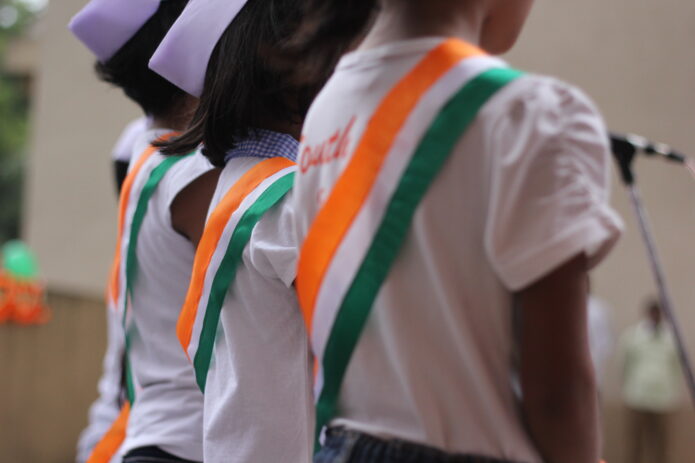
Republic Day: What’s in a Republic?

The word republic comes from Latin—res publica, meaning “public affair.” A system where the power belongs to the people. Sounds grand, doesn’t it?

America kicked off the modern republic idea with its Constitution in 1787. But here’s a thought: a republic isn’t a gift. It’s like a group project. And the grade depends on everyone showing up.

What does it mean to belong to a republic? Is it about flags and songs once a year? Or is it about the everyday stuff—doing my bit, following rules, enduring the messy compromises that make things better for all? ALL.

It’s time to talk about it. To ask what we owe this public affair. Because a republic works only when the public does.

What do you think?

Sempur Gratus

I look out of the window, having taken a pause today.

The road winds on, quietly and without pause. Life isn’t a straight highway; it’s a tangle of detours, pit stops, and serendipitous turns. At each bend, someone appears.

Some walk with you for a few meters, sharing a word or a smile before drifting away. Others stay for a few kilometers, steady companions on a shared path. And a rare few walk into the horizon with you, step by step, for a lifetime.

Sometimes, they chatter incessantly, filling the journey with laughter and stories. At other times, they walk in solemn silence, their presence speaking louder than words. And their silence, a quiet reassurance that they are with you.

The rhythm of life often finds itself somewhere in between—a blend of conversation, reflection, connection and the unspoken comfort of simply being.

The journey offers all kinds of moments: the rough seas that test your strength and the islands of calm that invite you to pause. The smile of a stranger, the nod of acknowledgment from a fellow runner, and the extended arm of an unknown helper—each adding a quiet beauty to the winding road.

Through it all, Sempur Gratus—Latin for “ever grateful”—is a gentle reminder. Grateful for the people who stayed, those who passed through, and the moments that made it all meaningful. For the chatter, the silence, and the steady companionship of life’s rhythm.

Life isn’t about grand gestures or monumental events. It’s about these small, imperfect moments that string together to create something extraordinary.

Sempur Gratus. Ever grateful. For the road, the companions, and the story that continues to unfold, one moment at a time.

Hope

Hope is the thing with feathers
That perches in the soul,
And sings the tune without the words,
And never stops at all,

And sweetest in the gale is heard;
And sore must be the storm
That could abash the little bird
That kept so many warm.

I’ve heard it in the chillest land,
And on the strangest sea;
Yet, never, in extremity,
It asked a crumb of me.

– By Emily Dickinson

Hope is like a quiet companion, always there when you need it most. It doesn’t shout or demand attention, but it has a way of showing up in the darkest moments, whispering that things can get better.

Dead inside. Numb. Frozen. Beaten. And yet, alive—because of a tiny trickle of hope. It’s not loud or grand, but it’s enough. Enough to keep going, to take one more step, even when the road ahead seems not just endless, but stripped of purpose and meaning.

If we are blessed enough, we can access hope. If it feels out of reach as it can sometimes, hopefully, there will be a hope to find hope.

Hope isn’t loud or flashy, but it’s stubborn and steady. It lingers through monsoon downpours, scorching heat, and bone-chilling cold, offering a quiet push to hold on. To whatever.

That’s hope—it changes the game.

The Fourth Place: Building Bridges, Breaking Walls

Far back in time, I was part of a theatre group called The Fourth Wall. It was led by a passionate, artistic, and wonderful gentleman, Prof. Elango. A truly exceptional man who made even the most hesitant actors feel like stars. The group was also home to some incredibly talented people who have gone on to become real stars in so many different fields. Those were life-defining days. Oh, to experience what it means to be a protagonist!

For a long time, I thought The Fourth Wall was just a clever name. Until one day, after I stumbled through my lines and felt utterly defeated during rehearsal, Prof. Elango sat me down over tea – tea with enough sugar to put me into orbit – and explained it all.

As far as I can recall, the “fourth wall” is the invisible line between the actors on stage and the audience watching them. The actors act as if the audience isn’t there, and the audience pretends not to interrupt. It’s what keeps the story alive, contained in its own world. That was an education I have always remembered!

A few weeks ago, I was having an invovled chat with some very bright people who I respect. Thats when I heard about something called The Fourth Place, for the first time. I couldn’t help but smile. The name felt oddly familiar. Since then, I learned that sociologist Ray Oldenburg had once described the Third Place – informal spaces like cafés, parks, or libraries where people come together. And now, here was the Fourth Place, a new idea shaped by our digital age.

The Fourth Place isn’t about stages, coffee shops, or bustling parks. It’s about digital spaces. It’s where people meet online to connect, share ideas, and feel a sense of belonging. Gaming platforms, Reddit threads, Discord servers – all these create a kind of virtual stage where geography doesn’t matter, and time zones are mere suggestions.

Here is something more on Fourth Places that I read with great interest. Something for you to chew on too.

Here’s how the “places” stack up:

  1. Home – where we relax.
  2. Work or study – where we focus.
  3. Third Place – where we meet others face-to-face.
  4. Fourth Place – the digital worlds where connection happens without proximity.

Our conversation centred around how our priorities have shifted over time. Home, the First Place, remains a personal and private space. Work, the Second Place, is still essential and structured. The Third Place, like cafés or parks, provides a social escape. But the Fourth Place captures something unique about modern life: it’s where people go online to build meaningful connections, explore hobbies, and create virtual communities that go beyond physical boundaries.

I remember the thrill of Yahoo chat rooms back in the day. Talking to someone halfway across the world felt magical. The Fourth Place takes that magic and makes it ordinary – part of our everyday lives.

And yet, I wonder: does this digital world replace the joy of sitting across a table, laughing over tea with too much sugar? Or is it just another act in the play – something to add, not replace?

Perhaps the Fourth Place isn’t the end of the story but the beginning of a new one. A dialogue where we keep discovering new walls to break. Or maybe, to keep just as they are.

Rethinking the Future

The Fourth Place is redrawing boundaries we once thought were fixed. Where does an organisation end when communities stretch across industries, countries, and time zones?

Workplace design has no choice but to adapt. Offices must now accommodate people who may never sit at a shared desk.

The idea of community is shifting too. It’s no longer about catching up over coffee in the pantry. It’s about shared passions, often nurtured on digital platforms, with people you might never meet in person.

While desks, chairs, and coffee are easy enough to provide, the real challenge lies in fostering a mindset that thrives in this new setup. It’s not about the tools themselves – it’s about using them imaginatively to fit the times we live in.

As these boundaries blur, the focus must shift to making connections meaningful. Can digital interactions ever feel as warm as a conversation over tea with far too much sugar? And as organisations embrace this changing world, how do they stay grounded in what makes them unique?

The Fourth Place isn’t just a new act – it’s an entirely new stage. The question is: are we ready to step onto it?

Pongal, Sugarcane, and the Art of Holding On

The Tamizh month of Thai comes with promises of new beginnings. My grandmother always used to say, “Thai pirandhal Vazhi pirakkum”—when Thai arrives, new paths emerge. Pongal is not just a festival. It’s a connection to home and to a different time. A time when life was carefree, when simple acts nourished the soul, and joy didn’t come with a price tag.

My fondest memories of Pongal begin with Sakkarai Pongal. Bubbling in a mud pot over a stoked fire of fresh pieces of wood. The pot brimming with jaggery, filling the air with the richness of ghee. And then, sugarcane. Thick, juicy, and wonderfully messy. Sugarcane is a festival in itself. Chewing through it feels like embracing life’s natural sweetness, mess, shaff, and all.

These days, traditional festivals are more than just about food. They’re my tenuous link to my roots. They transport me back to memories of innocence, laughter, and togetherness. A quiet search for belonging, perhaps.

For those of us living far from home, these festivals become something more. They are no longer simply celebrations but yearnings—yearnings for the familiar sounds, smells, and sights of a life left behind. Pongal, like so many other traditions, brings with it a longing for a time and place that feels so close yet so far! It’s a reminder of where I come from, even as I navigate a different life filled with its own rhythms and routines.

It’s easy to stay blind to that longing. Life in a different home, with its own traditions, aromas, and sounds, is a new reality. A rich one at that. Yet, I can’t deny the reality of the longing. Dipping into nostalgia won’t change the reality of distance—of time and geography. But making the effort to celebrate, even in small ways, perhaps soothes the soul. Pongal made on a gas stove or shared in a simple gathering refreshes me beyond what the jaggery can.

These traditions dig deeper, clearing the confusion about the “why” of what I do every day. Sure, they can seem like symbolic motions. And yes, symbols can sometimes feel superficial. But not this one. This one puts a little spirit back into the soul. I don’t have a perfect answer if you ask me why that is. Perhaps, I don’t want to find out. Besides, I have some Pongal to dip into and sugarcane to chew on.

This year, I’ve reminded myself to carve out time. To pull out old pictures. To tuck into some Pongal. To relive the times gone by. Perhaps even to sit down and write. After all, holding on to these traditions, even in small ways, is like holding on to a part of yourself.

( Here’s something that I wrote in 2009. Something things done change. Even as change dances all around me).

My Word Of The Year for 2025

A Word of the Year (WOTY) has been my annual fling with optimism. It’s my way of tying a metaphorical balloon to my tent of goals, hoping it doesn’t drift off while I’m busy untangling earphones.

Past words like ‘Dare’ and ‘Believe’ have served me well—prodding, poking, and occasionally tripping me into action. This year’s word, however, comes with walking (I wanted to say ‘running’) shoes and a firm handshake. My WOTY for 2025 is ‘Stride’.

But Why?

Because life isn’t a sprint. That alone is good enough. Ask any entrepreneur. Your progress is as good as mer next stride.

Stride feels right. Purposeful. Measured. It’s the Goldilocks of movement—neither too fast nor too slow.

Stride, to me, suggests progress without panic. It’s walking into a room like you belong there, even if you’re mentally rehearsing your introduction. It’s moving ahead, step by step, with just enough confidence to take the next stride!

Lessons from Last Year

In 2024, my WOTY was ‘Believe‘. And believe, I did. Frankly, I couldnt have made it through the year without it. I believed when optimism felt like an economy seat in an airline that charges extra for a stale sandwich—cramped and uncomfortable. I believed, and sometimes, things actually worked out.

But belief works best with motion. Otherwise, it’s just hope in a yoga pose. Hence, ‘Stride’.

Stride Means Moving (Even When It’s Awkward)

Stride is about:

  • Showing up, even when the mirror suggests sweatpants.
  • Taking the stage, even when I feel my voice is wobbly.
  • Keeping pace, even when the road ahead feels like a labyrinthine maze.

Stride is a reminder that confidence isn’t a pre-requisite—it’s often a by-product. The act of moving forward builds it. One step at a time.

Stride also suggests dressing the part. Not just in tailored blazers, but in chiseling a mindset. It’s about carrying myself like someone who belongs in the big leagues, even if my inner voice occasionally snorts. It’s asking, “What’s the next step?” rather than “What’s the worst that could happen?”. It’s rarely as bad as imagined.

Striding into 2025

As I take these strides, I know it won’t be a solo effort. The world has a funny way of turning eyebrow-raising surprises into head-nodding support when it sees genuine effort. And I’ll need plenty of that. Striding into bigger challenges and broader horizons isn’t going to be possible without the encouragement, belief, and occasional push from those around me. So, here’s to striding together—one deliberate step at a time.

This year, I plan to stride into rooms I’ve avoided. Conversations I’ve postponed. And challenges that look suspiciously like hurdles but might just be stepping stones if I’m willing to move closer.

Stride isn’t about theatrics. It’s about steady, deliberate steps. The kind that leave footprints worth following.

What About You?

What word will you walk—or stride—into the new year with? Pick one. Give it some teeth. And then, take the first step.

As for me, my shoes are laced. Ready to take the next stride. And one more from there on. One stride at a time.

Happy New Year!

Heroes Without Headlines

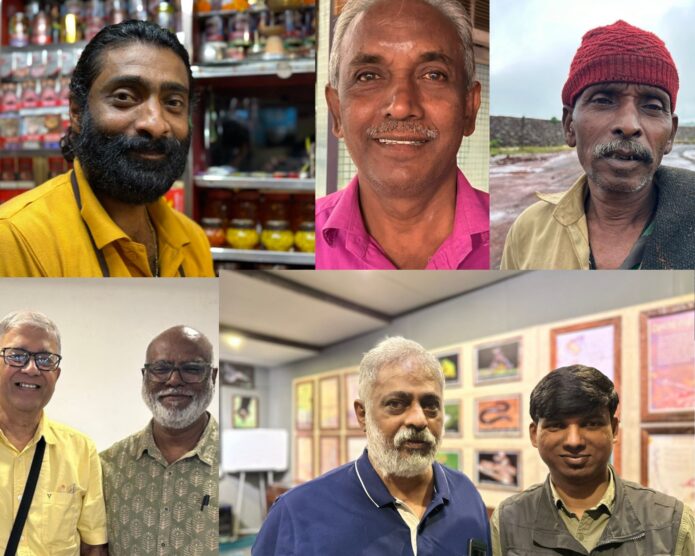
There’s a certain kind of magic in talking to ordinary people. Not the kind who wear capes, but the kind who wear aprons, helmets, or binoculars slung casually around their necks. They don’t ask for attention. Yet, they grab it—not by making noise but by making sense.

My hairdresser, for instance, lives with a quiet grace that reveals the wisdom in ordinary lives. In between snips and sprays, he shares thoughts sharper than his scissors. His adult kids are settled, but he keeps going. Responsibilities don’t tire him. Business has its ups and downs, but I’ve never seen his outlook twitch. He takes his work seriously but himself lightly, reminding me how much there is to learn from the ordinary.

Or take Shashikant, the paan seller in Matheran. A man who redefined priorities for me. He’s fully present during business hours. His paan is carefully crafted, perfectly folded, and handed over with a flourish. And the conversation that comes free with it? Better than anything money can buy. As he explained the balance between work and life, I found myself wondering if I had been chewing over the wrong priorities. Shashikant’s ability to delight customers while keeping his focus firmly on life outside work is a lesson I’m still learning. Proof, yet again, that wisdom in ordinary lives often arrives wrapped in betel leaves.

The Padma Shri award-winning photographer I once met was another revelation. You’d think a person with a national honour might carry it like a crown. Not him. He carried his photograph-laden presentation instead. No fuss. No airs. Just the weight of stories waiting to be told. His photographs spoke louder than he ever did, pulling you into their frame and making you linger. About people you’d rather not see. When he finally spoke, it wasn’t about awards but about angles and light and the sheer joy of capturing and bringing alive lives that are lived in obscurity. If wisdom in ordinary lives had a lens, he owned it—and he used it to focus on the world, not himself.

Khan, my newspaper guy in Madurai, is another example of this quiet brilliance. He delivers headlines about the world while quietly living a life worth a front-page story. Rain, heat, elections, pandemics—he has shown up. Every single day. Once, I asked him why. “Because I don’t want to depend on anyone,” he said. Then he pedalled off, leaving me to think about independence and its quiet power.

The goat herder in Satara offered lessons without meaning to. No TED Talk. No book deal. But his sheep-herding philosophy deserves its own stage. “Keep the herd moving, but don’t rush them,” he said. Then added, “Come to nature often,” as he wandered off into a winding road. I stood there, wondering if he realised the depth of what he had just said. Probably not. And perhaps that’s why his words stayed with me. They were free of pretence, rooted in the kind of clarity that only comes from experience. It’s another example of the wisdom in ordinary lives—steady, grounded, and honest.

And then there are the naturalists Anil Zachariah and David Raju. Men who have entire species named after them. But you wouldn’t know it unless you sat with them long enough—long enough for their humility to wear thin and their quiet brilliance to slip through. I spent hours talking to one, mistaking their silence for simplicity. Until, slowly, their stories unfolded—tales of forests explored, creatures discovered, and legacies etched in scientific journals. They chipped away at my expertise-led arrogance and left me feeling like a novice. It was humbling, to say the least. Proof that wisdom in ordinary lives often hides in plain sight, camouflaged by humility and patience.

The cab driver in Surat took this further. He taught me the essence of the Gita without ever mentioning it. He spoke of duty without expectations. And the fallacy of not putting in effort. It was a 35-minute ride, but it felt like a masterclass in doing what matters. I’m no Arjun. But that day, I felt like I’d met the Parthasarathy himself. Sometimes wisdom in ordinary lives comes wrapped in unexpected conversations. You just need to listen carefully enough to catch it.

And then there’s Mr Patwardhan. The man could out-think most think tanks and still stop to ask if you wanted chai. His curiosity could power a research lab, and yet it’s his interest in solving real people’s real problems that sets him apart. Every conversation with him feels like a spiral staircase—you keep going up, pausing now and then to catch your breath, only to realise he’s already a few steps ahead. Reinvention isn’t a buzzword for him; it’s a daily habit. Central to life and living. He doesn’t just collect knowledge. He questions it, reshapes it, and dares it to evolve—often dragging those around him along for the ride.

I met these people in 2024. They made my year—and the years ahead—better. I’ve been meaning to write about them before their words slip away. Next year, I plan to take better notes. Build a longer list. Because the list is endless. These are the unsung philosophers among us. They are reminders that wisdom in ordinary lives is everywhere—folded in a newspaper, shared in a cab, or handed over with a haircut and a smile.

May we talk to them more often. And may we listen.

Trapped in Feedback: A Day in the Life of Ratings and Reviews

It started as a regular day. A taxi ride to the airport. Smooth. No complaints. As I got out, the driver smiled. “Please rate your ride,” he said. I tapped a number on my phone. Simple enough—or so I thought.

Next stop—the airport restroom. I washed my hands and reached for a towel. An attendant appeared with a clipboard. “Feedback, please,” he said, shoving a form into my damp hands. I scribbled something quickly. Who rates restrooms anyway?

Coffee time. The coffee was lukewarm. The feedback form was fresh. “How would you rate your drink?” the barista asked. I stared at the form. Then at my cup. Was I rating taste? Temperature? Or my general disappointment with life? I gave it a “3.” It felt safe.

And that’s the problem, isn’t it? The 5-point scale. Looks simple. But what does “3” even mean? “Okay, I guess”? Or “I don’t want to be rude”? What about “2” and “4”? Are they just there to confuse us?

I was on edge by then. Would I be asked to rate the waiting area chairs? Or the airport temperature? Just as I relaxed, my phone rang.

“Your car has been serviced,” the voice said. “You’ll get a feedback form shortly.” Of course, I would. Why stop now?

And then came the upgrade—the 7-point scale. Or the 10-point one. As if we needed more ways to be unsure. How do you rate coffee between “lukewarm” and “slightly less lukewarm”? Can anyone tell the difference between a “6” and a “7” on a 10-point scale?

The day dragged on. More forms. More questions. It felt like a game show where the prize was exhaustion. No moment was safe from feedback.

Finally, I got home. Kicked off my shoes. Sank onto the couch. Peace.

Then I heard it.

“Dad,” my daughter asked sweetly, “on a scale of 1 to 5, how was your day?”

I stared at her. Then I laughed. Because, really, what else could I do?

Even at home, the Likert Scale had followed me.