Kavi Arasu

Starting Line of Age

I used to run. Not like Fauja Singh, of course. But I did run. Early mornings. Dodging dogs, potholes, and the determined scooter that seemed coming my way.

These days, it’s more of a shuffle. A quiet negotiation between my feet and my pride. But every time I see a runner glide past, I pause. There’s something magical about steady feet and flying shoulders. Especially when your joints creak like old furniture.

Which is why Fauja Singh leaves me speechless.

He didn’t just run marathons. He began running them at 89. Yes, began.

Most people that age are asked to slow down. He tied his laces tighter.
And he kept going. Past 90. Past 100. Till 104.

That’s not just inspiring. That’s gently rebellious.

No fancy shoes. No watches that beep. Just a turban flapping in the wind and a belief that age was just the starting line.
He once said,

“I won’t stop running until I die. The day I stop running, take me to the crematorium.”

He ran for healing. He ran for joy.
He ran for something deeper that words can’t always catch.

To me, Fauja Singh is an anchor. A reminder that ageing isn’t about winding down. Sometimes, it’s just the warm-up lap.

And when he finally stopped? He wasn’t running. He was simply walking, in his village in Punjab, when a speeding car hit him.

The reports called it a hit and run.
Even the accident, it seems, couldn’t resist referencing his life.

He may be gone. But every shuffle forward, every second wind, every late start? That’s still his race.

Strength In Silence

There is strength in silence.
It comes from knowing. From grounding.
From the quiet confidence that doesn’t seek applause.

Silence isn’t the absence of thought—it’s the presence of depth.
It doesn’t rush to fill space.
It allows space to speak for itself.

The greater strength in silence lies beyond words.
Not just when the tongue is still—
but when the mind is calm.

When the mind doesn’t scramble to react.
When it listens, observes, absorbs.
When it allows things to be, without needing to control them.

That is the truest strength in silence—
A presence that doesn’t perform.
A stillness that holds its own.

It doesn’t retreat. It doesn’t resist.
It simply is—anchored, awake, and fully there.

Over the Moon

The moon has always been close to the heart.

It’s lit up poems, songs, movies—and many a lonely terrace. Shakespeare warned us not to swear by it. Sangam poets poured longing into it.

In Tamil, as in several other languages, the moon just doesn’t stop with setting the scenery. It’s emotion. It’s memory. And, It’s mood lighting for a thousand songs.

If you grew up with Ilaiyaraaja, you know this. He turned moonlight into music. “Ilaya Nila” played like a breeze across the night. “Nilaave Vaa” was a heartfelt invitation. They weren’t just songs. They were midnight conversations with the sky.

And years later, A.R. Rahman joined the moonlight symphony with “Vennilave Vennilave” (“Chanda Re” in Hindi), where Kajol and Prabhu Deva danced under its glow. The moon became a stellar witness to yearning—even as it received an invitation to descend, play, and promised a safe send-off.

They weren’t just songs. They were midnight conversations with the sky.

Back then, the moon stored everything. First loves. Break-ups. Dreams we were too shy to share.

And now?

The moon has upgraded to the cloud. Literally.

From Music to Metadata

A company called Lonestar Data Holdings is sending tiny data centres to the moon. Why? Because it’s cold out there. Minus 173°C cold. Perfect for keeping servers cool. And thanks to uninterrupted sunlight, solar power works like a dream.

Engineers are doing what poets did—staring at the moon. But instead of sonnets, they’re uploading files.

There’s something deliciously ironic about it all. For centuries, poets looked up at the moon for inspiration. Now, engineers are looking at the dark side of the moon for server racks. Somewhere, a bard is sighing while a CIO is smiling.

Even better? These moon-based data centres are being designed to withstand radiation, dust storms, and the general grumpiness of outer space. No mood swings here. The dark side of the moon may be inconstant in poetry, but it’s becoming pretty dependable in IT infrastructure.

Once a metaphor for mystery and madness, now a hub for metadata. The moon used to hold lyrics and longing. Now, it might hold your cloud backup.

And a few moons from now, if someone asks where your data is—well, irrespective of how bright the data is, it could well be on the dark side of the moon.

The Hidden Costs of WiFi (and Other Stories of Progress)

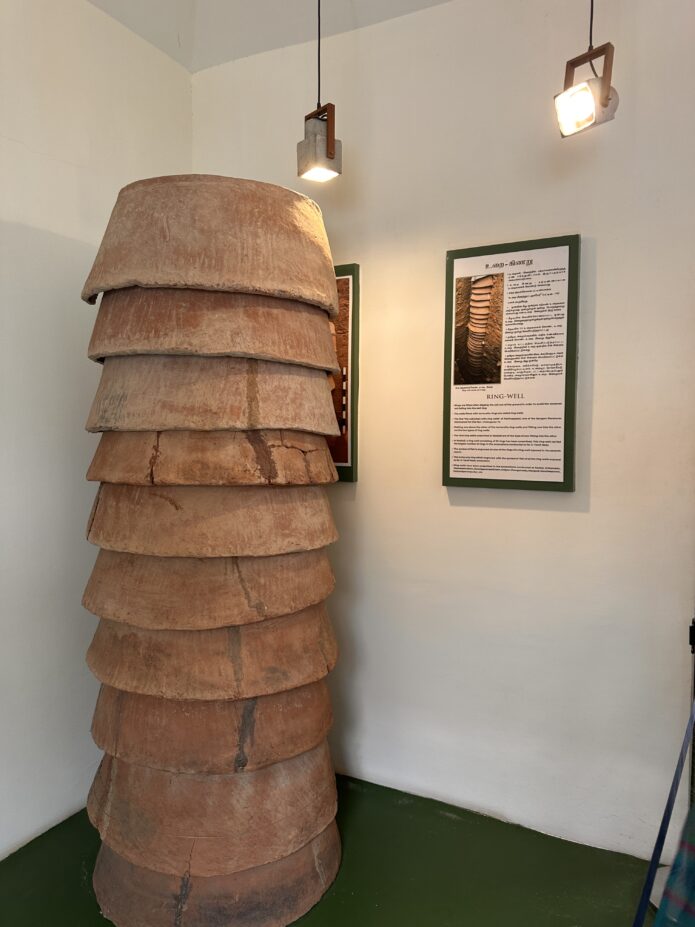
I visited Keezhadi recently—a quiet village near Madurai, where the ground is giving up secrets that are 2,600 years old. Brick houses, water systems, writing on pottery… all part of a once-thriving civilisation during the Sangam period.

They had trade routes, poetry, tools, and systems. They crossed seas without GPS. Built cities without cement trucks. Passed down knowledge without cloud backups.

It made me wonder—how much have we really gained through “progress”? And what have we lost along the way?

Phones gave us connection on tap. But they took away long, meandering conversations. The kind where you talked just because you had nothing else to do.

Google Maps made life easier. But it also took away the chance encounters—the awkward, hilarious, occasionally helpful conversations with strangers while hunting for that elusive street corner.

The elevator saved our knees. But it also saved us from cardio, eye contact, and the accidental small talk that sometimes brightens a dull day.

Microwaves gave us convenience. But they also gave us uniformly hot but uniformly dull meals. The kind of food that’s warm but somehow lifeless—like a hug from a vending machine.

Air-conditioning gave us comfort. And buildings with sealed windows, where fresh air is just a theory.
Social media gave us reach. But often at the cost of depth.

Even the humble washing machine—blessing that it is—removed a time when people sat together, washing clothes by the river, exchanging gossip, jokes, sometimes wisdom. (It also reduced arm strength.)

I’m not arguing against technology. I’m not packing for a cave just yet.

But here’s the thing: with every upgrade, something old and human quietly exits the frame. Not with a bang, but with a polite shrug—like the friend who left the party without saying goodbye.

We rarely keep track of what we lose.
We almost never count the things that disappear.

What Do We Lose When Everything Gets Easier?

In trying to smoothen every experience, we may have polished off something essential. Friction isn’t always a flaw—it’s often the fingerprint of effort, presence, and care.

The delay before a letter arrived. The clumsy directions from a stranger sitting at the corner tea stall. The slow-cooked meal that made you wait—and talk while waiting. These weren’t bugs. They were features. They made us pause. Pay attention. They made the world—and each other—a little more real.

In our obsession with speed, scale, and seamlessness, maybe it’s time we asked: what’s the value of a little resistance? Of things that take effort, but leave a mark? Of progress that still lets humanity show through?

Friction reminds us that something is being done. That time is being taken. That life is still being lived in full sentences, not just swipes.

Progress is not the enemy. But friction is not always the villain. Sometimes, it’s the only thing standing between us and forgetting what it means to be human.

Keezhadi reminded me: our ancestors were inventive, but not obsessed with convenience. They built thoughtfully. Slowly. With care and friction.

Maybe that’s what made them civilisations worth unearthing.

Me? Quit?

A young man in his mid-20s came to me a few years ago. Well, technically, his parents sent him. They wanted me to “talk some sense into him.” He had decided he was done with the corporate world. Said it was petty. Petulant, even. He didn’t believe in it, didn’t enjoy it, and didn’t want to stick it out.

He had no grand plan for what came next—just a clear conviction that there had to be something better.

We had a fantastic conversation. We explored possibilities, entertained wild dreams, and poked at what really mattered to him. He didn’t need advice. He needed space to think.

His parents, on the other hand, were unimpressed. They were hoping I’d march in, deliver a sermon about hard work and perseverance, and send him back to the grind. Instead, I made quitting sound even more interesting.

In their eyes, I’d joined the rebellion. Alas.

Quitters Never Win?

Let’s face it—quitting gets a bad rap.

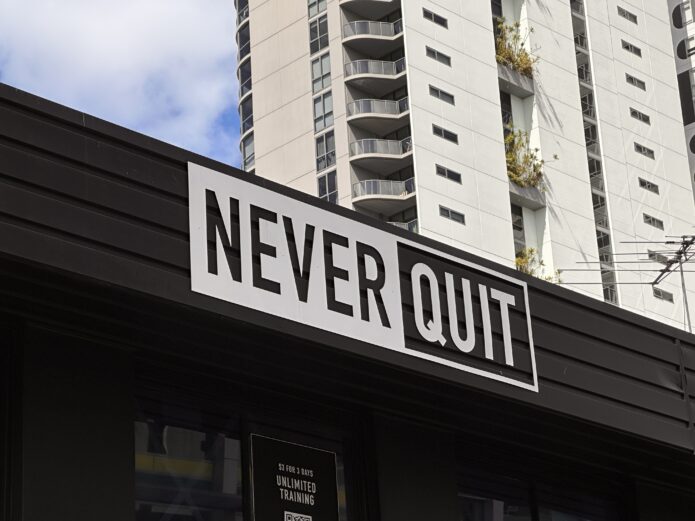
Everywhere you look, there’s something preaching against it. Posters shouting “Never give up!” Books with suitably motivating titles. And videos of people crawling across finish lines while orchestras swell in the background.

It’s all very dramatic. And, frankly, slightly exhausting.

But what if quitting isn’t failure? What if, instead, it’s a deliberate, thoughtful choice?

We tend to think of quitting as dramatic or desperate. But some of the most thoughtful people have done it with calm, clarity, and purpose.

A Bend in the Road

Simone Biles, the world’s most celebrated gymnast, stunned everyone at the Tokyo Olympics by withdrawing from several events. She was at the top of her game, but “the twisties” had set in—a mental block that could have caused serious harm. So, she stepped back. It wasn’t weakness. It was wisdom.

Ashleigh Barty retired from tennis. Twice. The first time, she left to play professional cricket. The second, after winning Wimbledon and the Australian Open, she walked away for good. Why? She’d achieved what she wanted and didn’t see the point in chasing more.

Ravichandran Ashwin recently retired from Test cricket. He’s known for adapting and reinventing himself. His decision wasn’t emotional or sudden. It was calm, careful, and clear-eyed.

These aren’t stories of people giving up. They’re stories of people turning corners.

The Quiet Quitting Trap

Then there’s the other kind of quitting. The quiet kind.

You show up every day, but your mind isn’t in it. You go through the motions, but the spark is gone. The work feels dull. The goal is a blur.

It’s not quitting, technically. But it might as well be. Quiet quitting isn’t dramatic. It’s just sad.

The Sunk Cost Spiral

Knowing when to stop isn’t easy. Especially when you’ve poured so much of yourself into something.
But not everything we invest in is worth continuing. Sometimes, we keep going for all the wrong reasons.

Sendhil Mullainathan, Harvard professor and co-author of Scarcity, explains this beautifully using a simple classroom game. He auctions off a $20 note. The rules are simple: the highest bidder gets the $20, but both the highest and second-highest bidders must pay their bids.

It starts off small—$1, $2—but then things get out of hand.

Someone bids $1. Someone else says, “No way he’s getting $20 for just $1,” and bids $2.

Now both are stuck. The highest bidder may get the $20, but the second-highest still has to pay.

The $1 bidder thinks, “I can’t lose $1 for nothing. I’ll bid $3—maybe I’ll win.” The other counters with $4. Then $5. It still feels like a bargain.

But soon, it becomes about something else. Not losing face. Not “wasting” what’s already spent.

And just like that, it spirals. $10. $20. $30. Even more.

It sounds silly. But we do this all the time. Stay in jobs we don’t enjoy. Stick with plans that no longer excite us. Keep going just because we’ve already spent time, effort, or money.

It’s not about the $20 anymore. It’s about the fear of letting go.

The Strength of Knowing

Here’s the thing about quitting: it’s not about giving up. It’s about knowing when to step back and ask, “Is this still worth it?”

Some goals begin as passing desires. But they can grow into something deeper, if nurtured. Other times, we realise the goal was never really ours to begin with.

Both are perfectly okay. What matters is that we notice the difference.

And just to be clear—this isn’t about walking away the moment something gets hard.
Challenge is part of the journey. Stay. Struggle. Figure things out.

What I’m speaking of is the opposite: don’t stay in something just because you’ve already stayed for a bit.

Not every story of quitting makes headlines. Some play out quietly, with a different kind of courage.

Moving Forward

As for the young man who walked away from the corporate world? He’s doing well—for now. He’s a tour guide and runs a fledgling travel company, employing four other people. Still figuring things out, but loving the journey. “I wake up with joy,” he told me.

Quitting didn’t end his story. It helped him start a better one—at least for this chapter.

I’m not saying he’s found his forever. Or that every day is perfect. Just that, at this point in time, this is where he is. And it seems to fit.

Sometimes, what looks like the end of the road is just a bend.
You pause. You breathe. And then, you move forward—lighter, clearer, and ready for what’s next.

Flyover: What Birds Can Teach Us About Teamwork

At Nudgee, I once saw something curious. Two birds — clearly different species — were standing a little apart, watching the water. One flapped its wings noisily, stirring up fish. The other swooped in and grabbed a snack. Then they did it again. And again. It looked rehearsed. It made me think about what birds can teach us about teamwork — not just within their own flocks, but even across species.

I didn’t know what they were at the time. I just stood there, amused. Impressed. A few clicks and a bit of help from the internet later, I figured them out — one was a white-faced heron, the other an eastern great egret. Different birds, different styles. But clearly in sync.

They didn’t speak. Didn’t exchange glances. But they worked together like seasoned professionals. It was quiet, effective teamwork. And it stayed with me.

We’ve been studying animals for years. Not in the wild, but in labs. Think of Skinner’s pigeons. Pavlov’s dogs. Harlow’s monkeys. Thorndike’s cats. All of them in cages, pressing levers, solving puzzles, or drooling on cue. From them, we learned about rewards, conditioning, learning curves, even motivation.

Great science. But very controlled. And very individual.

Push a button. Get a treat.
Climb a pyramid. Reach your potential.
Respond to a bell. Salivate on time.

Useful frameworks, no doubt. But they often missed something that birds in the wild seem to understand naturally — the power of doing things together.

Birds Of Different Feathers

A new study from the Smithsonian Conservation Biology Institute changes the frame. Researchers analysed more than 20 years of data from five bird banding stations in the Americas. What they found was remarkable. Certain migratory songbirds — like the American redstart and magnolia warbler — regularly travel together, across species lines.

Not by accident. On purpose.

These birds form what the researchers call “cross-species communities.” They migrate together, stop at the same places, forage in the same areas. Not because they’re best friends. But because it works. More eyes to spot predators. More beaks to find food. Less energy wasted. Better odds of survival.

Emily Cohen, co-author of the study, put it well: “We found support for communities on the move — considering migrating birds as part of interacting communities rather than random gatherings.”

It’s a lovely phrase: communities on the move.

Not networks. Not teams. No. Not even flocks. Communities.

It makes you pause and ask again: what birds can teach us about teamwork may be deeper than we assumed.

Together Is Smarter

We humans still cling to the idea of the lone genius. The hero’s journey. The self-made success story. But the truth is usually more tangled. Behind every solo act is a hidden chorus. A parent. A mentor. A partner. A team. A silent helper who made the win possible.

Flying solo might get you a headline. But it rarely gets you very far.

Those birds at Nudgee reminded me of that. Different feathers. Different instincts. But a shared goal. They weren’t doing a trust fall exercise. They were trying to eat. And they knew they could do it better together.

Nature doesn’t do TED Talks. It does what works.
And what seems to work — even across species — is collaboration.

So next time someone says, “I built this myself,” you might want to ask:
Really?
Or did someone help stir the fish?

The Checklist Trap: How We Turned Leadership into a Lifestyle Product

Leadership used to be messy, thoughtful, human work. Now, it risks becoming a lifestyle product—complete with listicles, morning routines, and pastel-quote inspiration. That is the essence of Satish Pradhan’s post titled The Seductive Simplicity of ‘7 Steps to Greatness’. Satish is a thought leader I immensely respect and whose views have guided me for a while now. This time, as always, his writing offers a sharp take.

He writes: “Leadership becomes a lifestyle—a performative state of constant optimisation and vague inspiration.” Ouch. True.

I couldn’t help but add this in the comments:

“Also begs the question—who made it this way?
Boards, wanting bandaids?
Leaders, craving a formula?
HR, trying to package potential?
Consultants, with frameworks that look good on slides?
Academia, chasing citations over messy reality?
Or TED Talks, with applause timed to the speaker’s smile?
Not a blame game. Just a call to reflect.
If leadership is now theatre—who wrote the script?
And more importantly… who’s still reading the footnotes? 🙂”

Truth is, we didn’t land here overnight. As I wrote earlier in a piece titled Decline Creep,” these shifts happen gradually, then suddenly. The seductive simplicity of seven steps isn’t a glitch—it’s a feature of a broader cultural operating system.

Leadership development is a multi-billion dollar global industry. Estimates put it at over USD 350 billion annually. With that kind of investment, you’d expect profound change. We often get ‘pass me the popcorn’ stuff.

The Current Cultural Operating System

The milieu we operate in shapes our defaults. Leadership and its development has not escaped the broader shift toward speed, scale, and surface over substance. Here are some attributes of this time and space.

1. Everything must be tangible.

If it’s not tangible, it must not matter. This is a tragic oversimplification. Real progress in leadership is often subtle. A better conversation. A delayed reaction. An unexpected apology. Tangible, if you know where to look—and if you look with intent.

Deep learning and behavioural change are not immediately visible, but they are transformational over time. Sitting with the intangible, the ambiguous, the unresolved—this takes patience. But that’s precisely what we seem to be losing.

2. We live in a fast-food world.

Everyone wants nourishment in the form of a nutrient bar they can eat before catching a train. Sure, it feeds the immediate hunger. But it cannot offer the satisfaction of a full-course meal. Or the long-term health. Leadership frameworks are now nutrition bars: portable, efficient, and forgettable.

Herbert Simon, who coined the term “bounded rationality,” reminded us that humans tend to satisfice—settling for what’s good enough. Quick lists cater to that tendency. But leadership needs more than adequacy. Over time, ‘adequate’ becomes the benchmark. And then the ceiling.

3. The tyranny of the quarterly result.

The short term is now. The long term is the next quarter. It’s as if the world will cease to exist beyond the quarter. If something doesn’t shift short-term metrics, it’s dismissed. Leadership development doesn’t always give you a spike in numbers. Sometimes it just quietly prevents a disaster. Or helps someone stay.

Peter Drucker is often quoted as saying, “What gets measured gets managed.” Full stop. But that’s not where he stopped. He actually said: “What gets measured gets managed — even when it’s pointless to measure and manage it, and even if it harms the purpose of the organisation to do so.”

Perhaps we were in a hurry and didn’t soak up the full sentence.

4. The obsession with machine-like efficiency.

We’ve come to admire speed, standardisation, and output so much that we expect people to behave like machines. Fast. Predictable. Always on. That logic has quietly crept into leadership development too.

It’s now packaged like a factory model—designed to scale, deliver uniform results, and run on schedule. But leadership doesn’t work on conveyor belts. It doesn’t follow a clean workflow or offer batch processing.

People are messy. They take time. Conversation. Reversals. Detours. Leadership requires recalibration, not just repetition. Efficiency looks good on paper. But it rarely builds trust or courage.

This obsession leads to box-ticking: feedback session done, 360 report filed, coaching logged. But that’s not growth. That’s admin. Cookie cutters work well with cookies—not people.

5. We’ve unhooked from research.

There is a deep and evolving body of work in the social sciences and leadership literature—decades of inquiry into motivation, learning, group dynamics, and organisational culture. Thinkers like Chris Argyris, Edgar Schein, and Mary Parker Follett have explored the nuances of influence, systems thinking, and human potential. Their work offers complex, often uncomfortable truths.

But such research rarely makes it to the glossy handouts or keynote slides. Why? It demands thought. It questions assumptions while resisting slogans. And isn’t easily reduced to three boxes and a circle.

Instead, we pick up ideas stripped of their richness—psychological safety as a checklist item, or systems thinking reduced to bullet points. The substance is lost in the translation.

Academia speaks in nuance. Practitioners crave action. Somewhere in between, we abandoned the bridge.

We need to reclaim it. Not for the sake of theory—but for depth, integrity, and honest conversation. Leadership deserves nothing less.

6. Deliberate effort on development is seen as optional.

Focused development is treated like a side hobby—something to do if there’s time. A luxury. Not core. There’s a comforting belief that leadership emerges on its own. That wisdom arrives with age. That real work is separate from leadership work.

But the demands are more complex now. The path to leadership is often shorter, with less grounding. And the illusion of expertise is everywhere. Ten-second clips pass off as wisdom. Everyone has an answer. Few ask better questions.

What’s missing? Time. And deliberate effort. To learn. To experiment. And reflect. The pause to ask, “What did I learn from that?” feels indulgent. But without it, growth is shallow.

7. Real change happens at work. And it is bespoke.

You can have perspective in a classroom. Maybe even a breakthrough in an offsite. But change? That happens on the ground. In Monday meetings. In the pause before a reply. When noticing what you once missed.

One size doesn’t fit all. It doesn’t even fit most. What works for one leader may confuse another. The best leadership development is bespoke—stitched with care and context. You can learn from shared perspectives. But applying them? That’s personal. That cannot be outsourced.

As Manfred Kets de Vries once quipped, “Leadership is like swimming—it cannot be done by reading a book about it.”

Change is contextual. It escapes formula. It demands participation. So yes, the seven steps might sell. They might even help a little. But let’s not forget: leadership is a practice. Not a product. Not a performance. And definitely not a PowerPoint.

It is messy, slow, human work. And if we want real change, we must learn to value that again—even when it doesn’t come with a checklist or a bestselling cover.

So, there. 7 points. Stacked and ordered. I have a few more. But they won’t fit seven. I am part of the problem you see 🙂

I Am the Traffic

A road safety campaign in Sweden once carried a brilliant line: “You are not in traffic. You are traffic.” Simple. Sharp. It flipped the narrative—from blame to ownership.

That idea travels well. In leadership, culture, and checklist thinking, we aren’t bystanders. We’re not stuck in the system. We are the system. Participants. Sometimes even enablers.

It was never just about traffic. It was about agency. And responsibility. In many ways, it’s a reminder for all of us engaged in leadership and development work.

We may not like the system. But let’s admit it—we help make it. Through what we reward. What we tolerate. And what we scroll past without question.

Culture is not created in boardrooms alone. It’s created in choices. Daily ones. A ticked box here. A skipped conversation there. Over time, these become norms.

We are not stuck in it. We are it.

Development doesn’t happen by accident. It needs intentional choices. Time. Attention. Depth.

So, what do we do? I don’t know. Perhaps, start with Satish’s post. Maybe read the comments. Linger. See what resonates. What provokes. What’s missing.

Because no framework—however snappy—can replace the quiet courage of doing the hard, human work of change. And yes, let’s still read the footnotes. 🙂

The Second Story: Seeing Beyond Failures and Success

In December 2017, Charlene Murphey, a 75-year-old patient, was admitted to Vanderbilt University Medical Center in Tennessee after suffering a brain bleed. Within two days, her condition had improved. Doctors ordered a PET scan before she was discharged, and prescribed Versed, a mild sedative, to help calm her nerves.

Nurse RaDonda Vaught was assigned to administer the medication. She went to the automated medication cabinet, typed in the drug name—but it didn’t show up. This was a familiar glitch. Staff had grown used to bypassing it. So Vaught used the override function, a routine workaround in the hospital.

But something went terribly wrong. Instead of Versed, she pulled out vecuronium—a powerful paralytic. She administered the drug and left. Murphey stopped breathing and never woke up.

The First Story and Its Limits

The hospital fired Vaught. Her license was revoked. She was convicted of criminally negligent homicide.

To many, the case seemed open and shut. A nurse made a fatal error. Justice was served.

But that’s only the surface story—the one that provides a name, a mistake, a punishment. Sidney Dekker, Professor in the School of Humanities, Languages and Social Science at Griffith University in Brisbane invites us to look deeper: Why did this make sense to the nurse at the time?

That’s where the Second Story begins.

A System Set to Fail

Vaught was not careless. She worked in a system that had quietly normalised risk. Medication cabinets were glitchy. Overrides were expected. Nurses weren’t trained on the risks of the override function. No one flagged it, because everyone used it.

This wasn’t just human error. It was a system error.

Organisational thinker Chris Argyris called the surface-level response Single-Loop Learning—fixing the behaviour without questioning the system. The real opportunity lies in Double-Loop Learning: changing the underlying rules and culture that made the behaviour possible.

Culture in Action—And Why It Matters

Every organisation has two cultures: the one printed in posters and handbooks, and the one people actually live.

One says, “We value safety.” The other says, “Don’t slow down.” When those messages clash, people choose the one that protects their job or helps them survive the day. It’s that simple.

Over time, shortcuts become habits. Risks become invisible. And when something breaks, the system often blames the person it failed to support.

But it doesn’t have to be that way. In Japanese train stations—some of the safest and most efficient in the world—staff follow a practice called “pointing and calling.” I saw them point to signals, say them aloud, and actively confirm their actions. It looked dramatic, but I learnt that it significantly reduces errors. There, safety isn’t a statement. It’s a system. It’s culture by design—not by hope.

That’s why the Second Story in organisations matters so much for managers, leaders and of course, consultants. The First Story gives you a neat diagnosis and a fast fix. The Second Story in organisations requires deeper listening and more courage—but it reveals where change is truly needed. It shows the disconnect between values and behaviour. It helps leaders shift from blame to learning and therefore, to change.

Questions To Ask

Crucially, the Second Story isn’t only for understanding failure—it helps explain success too. When an athlete wins gold, it’s not just about training hard. It’s about the coach, the physiotherapist, the diet plan, the mental support, the facilities, DNA—everything behind the scenes that made excellence possible.

In organisations, too, when a team thrives, don’t just clap. Ask: What made this work? What conditions allowed people to do their best work? When we see the system behind the success, we can repeat it. When we ignore it, we leave future outcomes to luck.

Final Thought

The Second Story is always there. It’s not about blame—it’s about learning. It helps us see not just what went wrong or right, but why it made sense, and what needs to change.

Charlene Murphey didn’t just deserve a trial; she deserved a transformation. A system that looked at what failed her—not just who did. And perhaps the Nurse RaDonda Vaught, too, didn’t just need punishment; she needed a system that supported her, trained her, and designed work that made safety easier, not harder.

Because the best way to honour a tragedy is to make sure the system learns from it—and becomes less likely to repeat it.

If you’re willing to look deeper, you’ll see more. And in that, lies the path to better systems, better culture, and better outcomes.

The Real Deal Isn’t Signed

Many moons ago, as a teenager, I had a bad fall while riding my bicycle. A sharp stone hit my head. I started bleeding and eventually passed out on the road. There were no phones. No emergency helpline. Just the road, my bleeding head, and the sky above.

But help came.

A few passing strangers stopped. They sprinkled water on me. Teased out my name and address from my semi-conscious brain. Got me to a hospital. Found my parents. And then—they disappeared. No names exchanged. No credit taken. Just people who saw a teenager in trouble and stepped in—because they could.

I still have a scar on my head from that day. But I also have a memory. A quiet one that reminds me I survived not only because I was lucky—but because someone chose to be kind.

Whose Quid? What Quo?

We’ve quid pro quo our default setting. Latin for “this for that”—but really, “don’t do anything unless you get something in return.” It sounds neat. Fair, even. Until you ask: Whose quid? What quo? And what happens when kindness comes without a price tag?

Actor Nawazuddin Siddiqui once walked the streets of Mumbai broke, hungry, and almost invisible. In his words:

“There were days when I had no money for food. But there was always someone—someone I didn’t know—who’d offer chai or a meal.”

No conditions. No contracts. Just chai. Just kindness.

When Life Becomes a Ledger

Today, deal-making is fashionable. Everything is a deal. A pitch. A negotiation. The word transaction has crept into places where it doesn’t belong—like friendships, partnerships, even parenting. If you do X, I’ll do Y. If you help me, I’ll remember you. If you don’t, I’ll remember that too.

But here’s the problem. If life becomes a ledger, what happens to the things we can’t count?

Gratitude. Care. Listening. Sitting quietly with someone. Standing by a friend even when they’ve messed up. These don’t show up on balance sheets. And yet, these are the very things that make us human.

The Kindness That Doesn’t Trend

Everyday kindness is far too ordinary for primetime.

It doesn’t trend. It doesn’t come with background music.

No one’s cutting a reel when you offer your seat to someone or help them pick up a fallen grocery bag.

It’s instinctive. Like scratching your head when thinking or offering tea when someone visits. It’s coded into our DNA, so natural we barely notice it ourselves.

And when it does make the news—“Man helps elderly woman cross street!”—you know the world’s a little upside down. That headline should be the default setting, not the exception.

Kindness doesn’t ask for attention. It just shows up, quietly, like it always has.

Holocaust survivor Eddie Jaku, who later became an Australian citizen and author of The Happiest Man on Earth, put it plainly:

“Kindness is the greatest wealth. It costs nothing, but it means everything.”

The Real Deal

So if you must make a deal, make this one:

Offer kindness without calculating return. Build trust without waiting for leverage. Be generous without expecting applause. Because the real deal isn’t signed.

It’s just done. Silently. With grace. Often without anyone watching. And maybe that’s the point: the real deal isn’t signed.

It becomes part of your signature move—how you show up for others, without fanfare or fine print. Kindness is not weakness. It is strength.

We get by because of others. Even if we sometimes forget to say so.

Not everything is a transaction. Life is the bigger deal—larger than all the deals you can ever make. Because the real deals in life—the ones that change you—are never signed.

They are simply made. By people who show up, sprinkle water on your bruised head, and walk away quietly.

She Stood Her Ground

At different stages of life, different parts of my great grandmother have come into my awareness.
It was all in her, always. I just get to see more of it when a particular context envelopes me.

The last few years—and especially the last few months—have been about resilience.
And when I think of resilience, I think of her.

She was as strong-willed a woman as a woman could get.
Educated in the University of Hard Knocks, but never cowed by it.
She took a few punches from life. And landed a few herself.

She was knocked down, more than once.
But from her, I learnt something I now value deeply—how to get up again.
To dust off. To start all over.

That takes grit. Just raw grit.
To stand when no one is in your corner.
To take on men. In a man’s world.
To fight without formal education, without the safety net of support.

She had little formal education.
But she made sure her grandkids got the best.
She argued her way through with academicians of the time—sharp, clear, and unrelenting.

Then there was her poise.
Being tough didn’t mean she let go of grace.

Her days had rhythm. Her habits had structure.
Her sarees had bold checks, bright patterns, and vivid colours.
I have clear memories of the comfort they offered.

Her hair was always in place.
Her routines, never rushed.
She wore her bright, bold tattoos as her second skin — not a style statement.

She lived with intention. Always.
“Face everything,” she used to say. And she did.

And then, her humanity.
Anyone passing by and pausing near the steps would hear it:
“Who is there?”
Followed quickly by, “Have you eaten?”

Didn’t matter who it was. If you hadn’t eaten, something would reach you.
Food, yes. But also warmth, without ceremony.

And of course, her stories.
She never performed them. She remembered them out loud.

I was far too young to understand most of them.
But I remember the tone. The pauses.
The look in her eyes. The smell of the room.
Those stories stayed. Somewhere in me, they still echo.

She’s been gone a long while.
But grit, poise, humanity, and story—that’s a strong mix.

Every now and then, I catch a glimpse of her.
In a routine. A question. A memory.
And I sit up straighter.

Today, I remember her.
It was on this day that she left.
But in many ways, she never did.


Some years ago, I wrote another piece about her — from a different time, with a different lens.
It has a few more anecdotes and details that some of you may enjoy.
If you’d like to read it, here it is:
What Would It Take To Live Life Tall?
She’s always had more stories than I’ve been able to tell.