
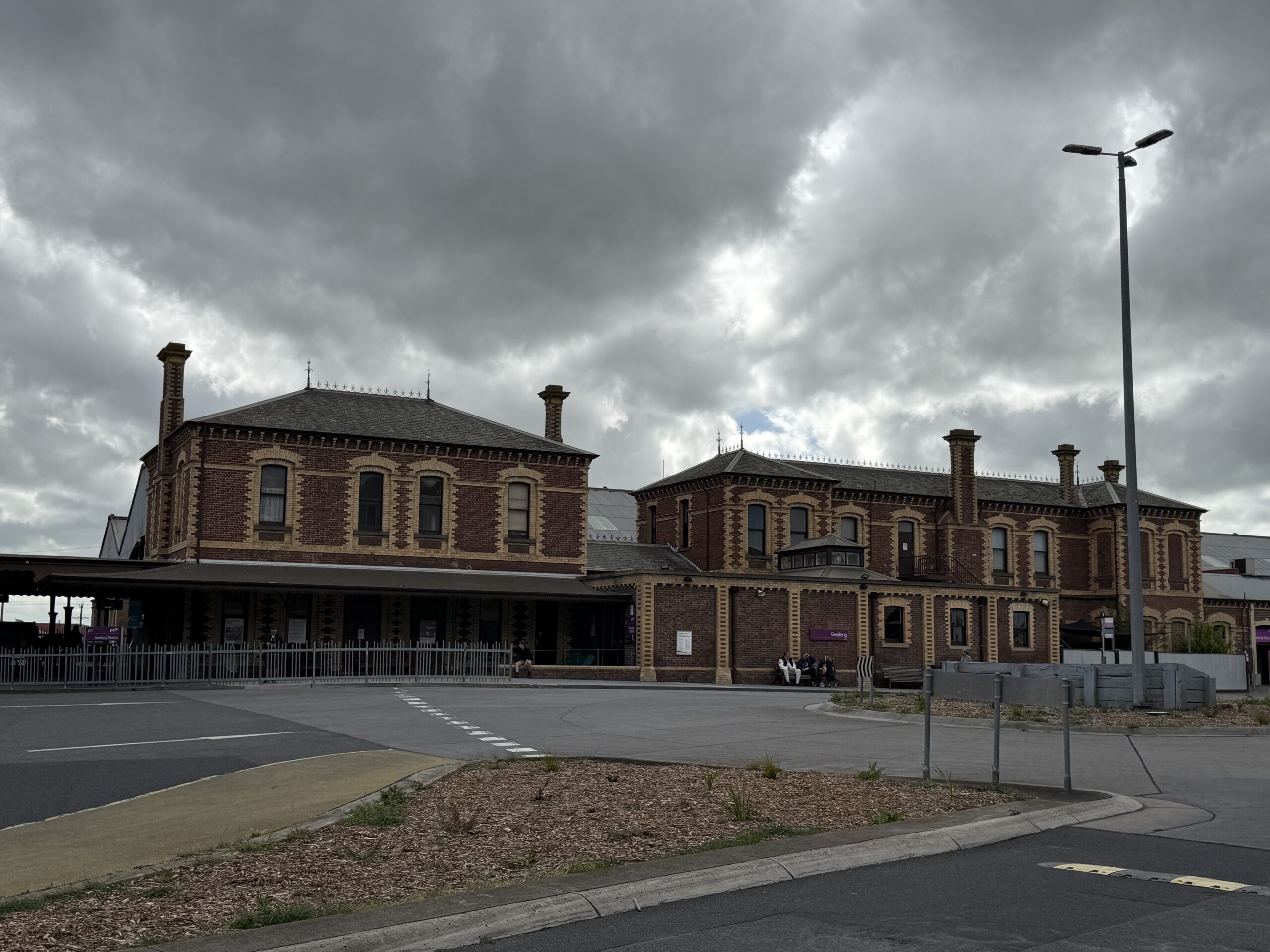
Geelong sits about seventy-five kilometres south-west of Melbourne, tucked around the western curve of the bay, close enough to be a suburb and far enough to have stayed itself.
It is the state of Victoria’s second city. It was once a wool town and then a car town, now a waterfront town selling the view. What it offers is beautiful, and on this trip, to me, it was only a web search away. I did not see much of it.
Some of my travels take me to places I so wish I could have walked more of. Gaped more at. Sat longer in. Sometimes the itinerary is filled with could have, should have. So every time, I do the next best thing. I write down what I did see, carefully, and I can vouch for exactly two things in Geelong.
A very pretty railway station, and a coastline with art strung along it.
The station, and eight tons of food
The railway station is a beauty. The grand building standing today went up between 1877 and the early 1880s, all polychrome brick, patterned like a biscuit tin, the largest set of such buildings the Victorian Railways ever made. It still keeps its old iron train shed, one of only two left in the state.
The train line itself has a good story. The Geelong to Melbourne railway, opened in 1857, was the first country railway in Australia. There was only one catch. It did not actually reach Melbourne.
Early passengers rode to the edge of the bay, climbed off, and finished the trip by steam ferry, which is a very Australian way to build the nation’s first country line and then stop just short of the city it is named for.
When the first train pulled into Geelong, the town laid on a banquet with eight tons of food. I did not make that up. Eight tons.
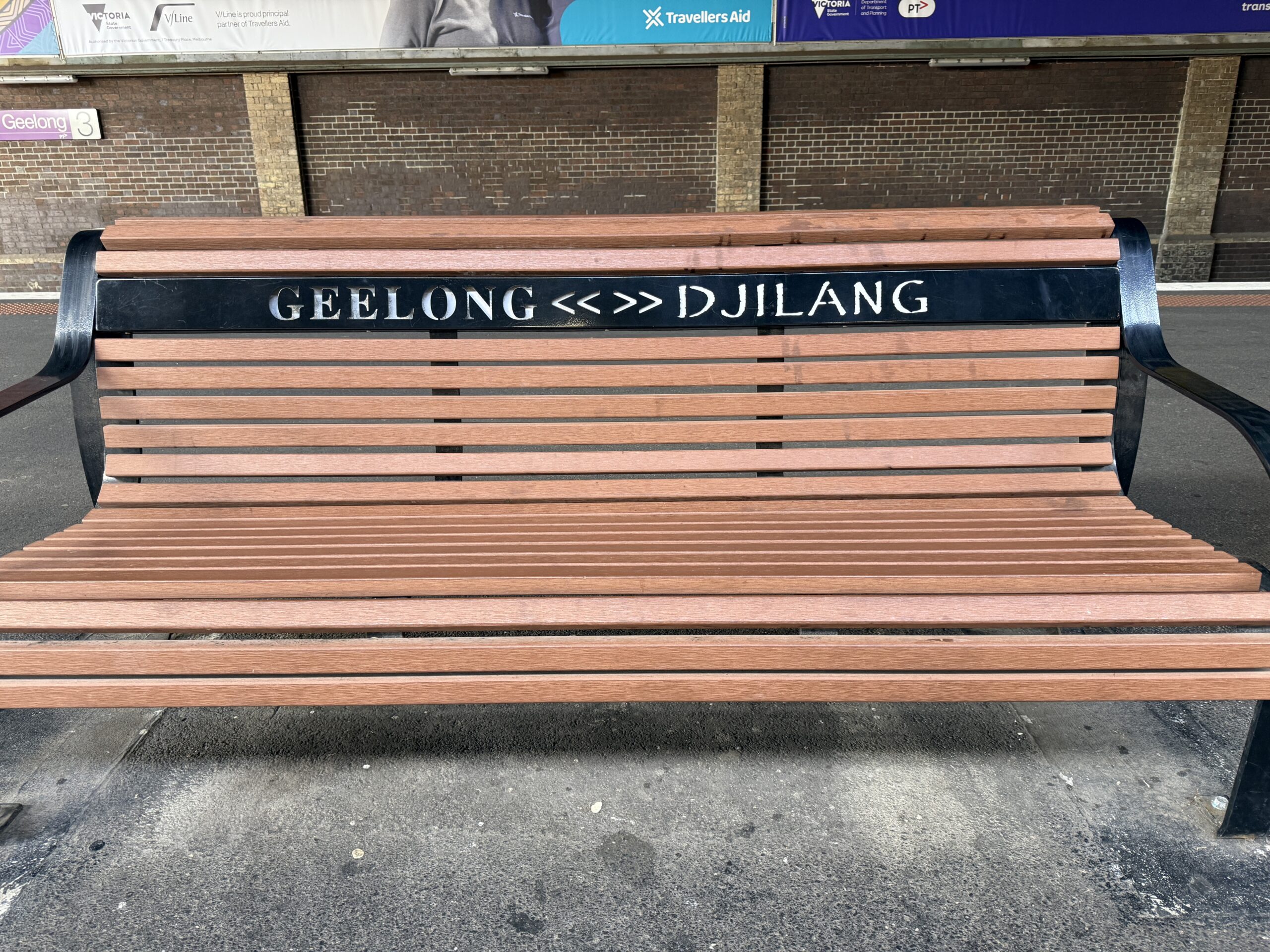
On the platform sits a plain wooden bench with two names cut into it. GEELONG, and beside it DJILANG. Djilang is the name the Wadawurrung people gave this place, the traditional owners of this part of the country, long before the first brick was laid.
Across Australia the old names are being set back beside the new ones, and here the two of them share a single bench. The translations argue among themselves and I will not try to referee them. Two names, one seat, which says the useful thing without a plaque.
The waterfront, briefly
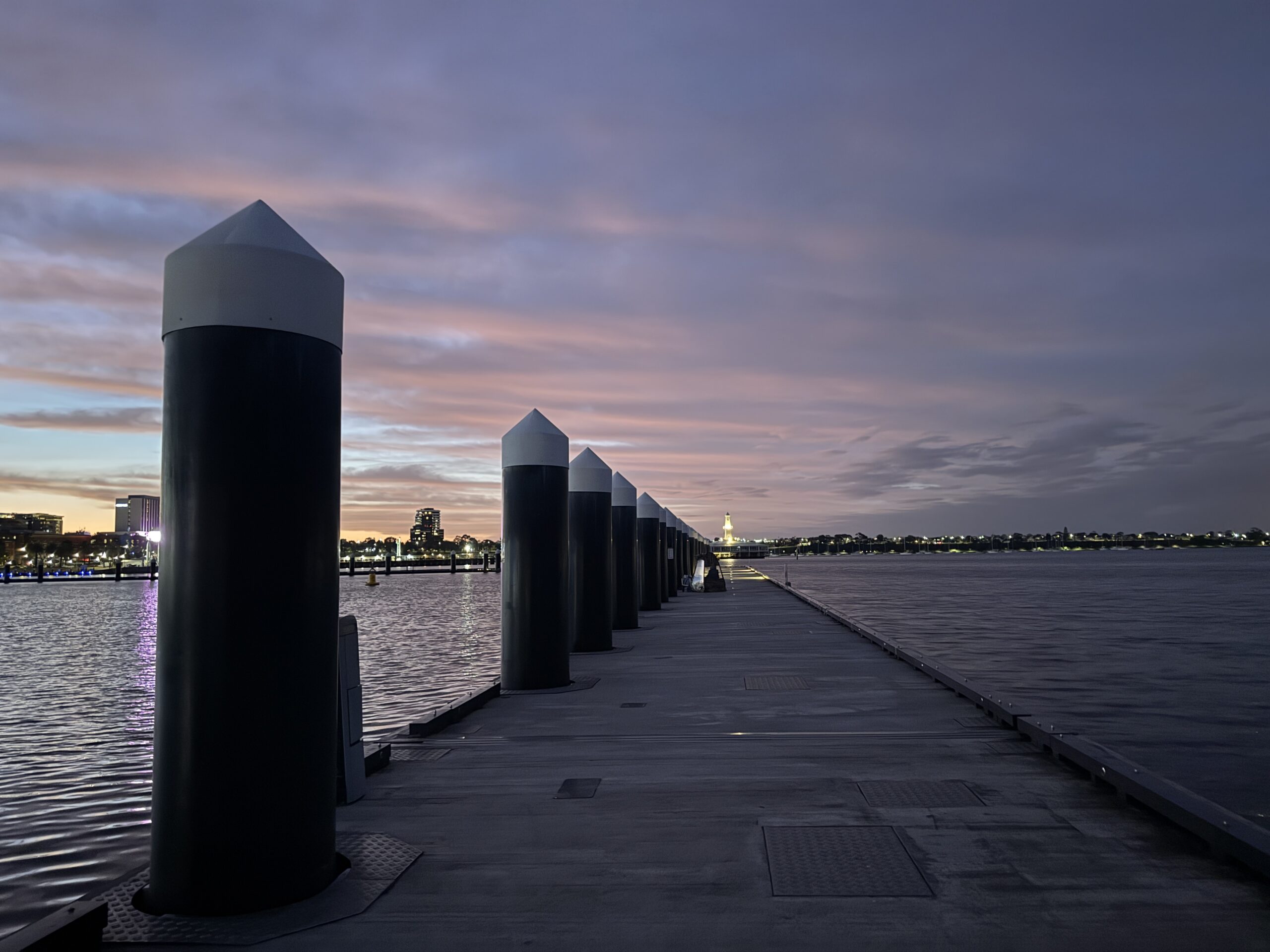
Down at the water, Cunningham Pier runs out into Corio Bay with a white-towered building at its head, a grand old jetty currently the subject of a very large plan to make it glossier. I will leave the pier there, because I only walked past it.
The art I did stop for. Along the promenade stand more than a hundred bollards, carved and painted from the timbers of a pier pulled down in the 1980s, turned by the artist Jan Mitchell into sea captains and bathing belles and footballers, a whole town made of its own old wood.
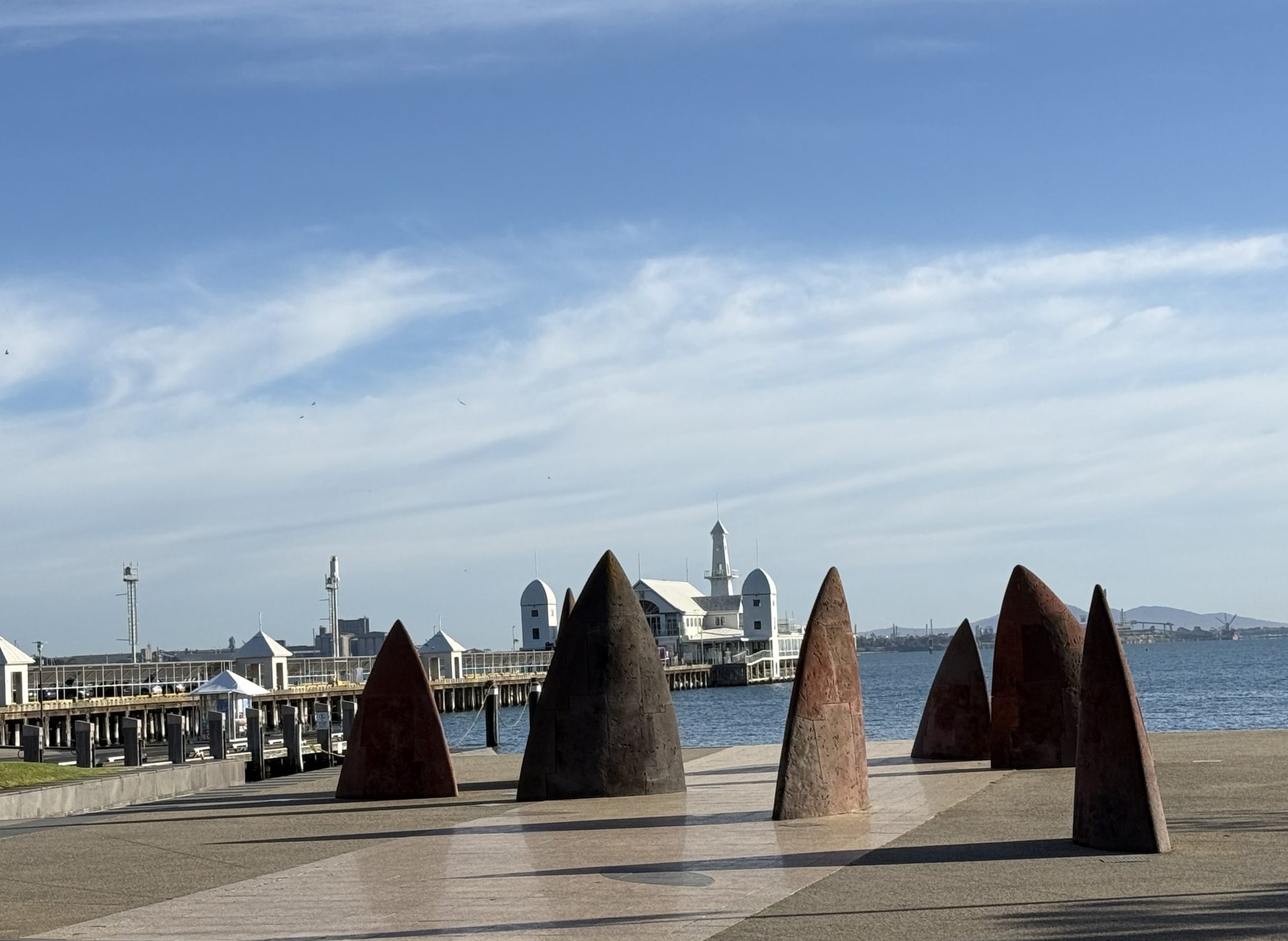
Further along, a cluster of rust-coloured cones, taller than a man, set on the paving like the sails of boats that never put to sea. Seven of them, in cement, by an artist named Mark Stoner, and the work is called North. Whether you read them as sails or fins, the trail notes, you are right either way. No two panels sit on the same frame, so the shapes shift as you walk around them. I liked that, which is the correct response to most public art.
And then the road
That is the sum of my Geelong. A station, a bay, and some clever use of old pier timber. It is unfair to the place, and I know it. A city is not a waterfront photographed at dawn, any more than a person is a handshake at the door.
But the road was waiting, and the road out of Geelong has only one real destination. Everyone on it faces the same way, towards the coast, the cliffs, the long drive with the ocean on one side. Geelong, gracious about this, waves you through. It is used to being the place people pass on the way to the place they came for.