

Last week, I was trying to get a suitcase under seven kilos so it could travel with me into the cabin of an airline where certain staff members stand near the boarding gate with a stern-looking weighing scale. They do not smile. They do not negotiate. They do not believe in intentions.
This is a strange modern sport. It involves rules, judges, and quiet humiliation.
Items that had travelled loyally with me across cities and countries were suddenly asked to leave. Some without notice. The weighing scale remained unmoved. The staff remained polite and implacable.
The suitcase eventually closed. Barely.
I did not feel victorious.
I felt informed.
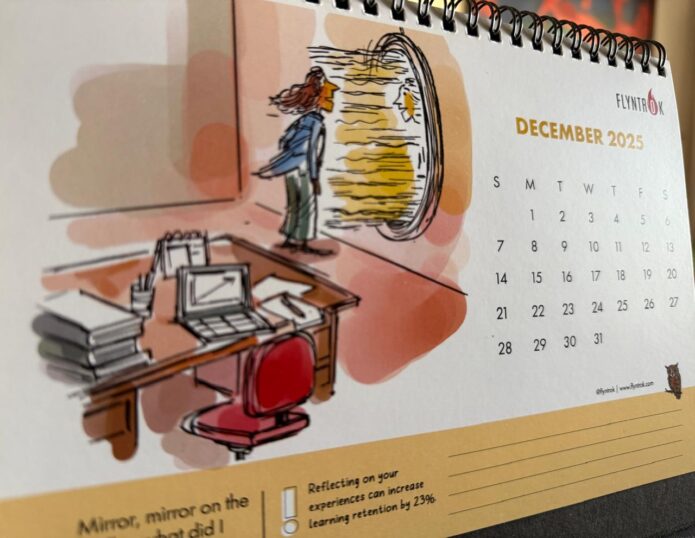
December has the same effect.
Time slips away quietly through the year. It carries minor shifts and major changes in the same sweep. One day you are beginning something with enthusiasm. The next, you are wondering when it became routine. And where another cherished habit quietly retreated to, without leaving a forwarding address.
That is what time does best. It does not announce change. It just keeps moving.
Boundaries of time force a pause. A year ending is, of course, an artificial boundary. The sun and sky do not care. Monday looks much like Tuesday. But the turn of the year helps us keep score. Like a measuring tape pulled out reluctantly. Slightly crude. Still useful. You may not like the number it shows you, but at least you know where you stand.
That is why December is a good time for an annual personal audit.
The gentle art of keeping score
An audit sounds serious. It need not be. This is not forensic accounting. No spreadsheets. No colour codes. Just a calm look at where things went.
Every December, I start with the calendar. I scroll slowly. Meetings appear like family photographs. Some familiar. Some puzzling. Who did I spend time with? What claimed my attention? What expanded? What quietly disappeared?
Then comes the inbox. This is where things get personal.
Which conversations mattered? Which ones grew richer and more human over time? Which relationships were nourished, sometimes deliberately, sometimes by accident? And which ones gathered dust despite the best intentions, friendly check-ins postponed indefinitely under the noble excuse of being busy?
Emails reveal more than schedules. They reveal attention. Who we return to. Who we avoid. Who stayed present through the year, and who quietly slipped into the “will reply soon” category, where messages go to rest.
Then the credit card and UPI statements. These are always revealing. Where did the money go? More importantly, does it reflect how I thought I was living? What stories am I telling myself? Behavioural economists call this data. The rest of us call it evidence.
The point is not detail.
The point is pattern.
Ordinary lives, useful reflections
Over the next few days, I am sharing my own reflections from this annual personal audit.
Now, I am, by nature, private. What follows will be general. Pointers, not particulars. There will be no confessions, no revelations, and nothing remotely sordid. I will spare you the details and offer patterns and pauses instead. Think sketches, not surveillance footage. Hopefully, just enough provocation to get you smiling and thinking about a few things of your own.
My life itself is reassuringly ordinary. Travel. Work. Conversations. Writing. A clutch of modest successes. A few misses. Some bets that went wrong with impressive efficiency. A handful taken on knowingly, which sounds bold and usually means thinking, This could go wrong, and proceeding anyway.
Why do this at all?
Because reflection rarely arrives with drama. It comes quietly. While waiting for boarding. While staring at a hotel ceiling. While realising you have told the same story twice and it sounds different the second time.
Doing it deliberately forces attention. I remember, in school, a friend playing a rather cruel prank on a teacher who took afternoon naps under a tree.
A magnifying glass.
A patch of sunlight.
A sudden awakening.
The teacher woke up with a start, clutching his forearm, which now bore a small but unmistakable scorch mark. The kind that makes a man reassess both his nap and his life choices. Let’s leave out what happened to my classmate.
The point is simpler.
Attention wakes things up.
That is why I do an annual personal audit. To clear my head. Putting thoughts into public view forces order. It removes clutter. It makes you confront what stayed and what did not. If it nudges you to glance at your own year, even briefly, that is enough.
I will write about things I got wrong and what worked despite me. The places I went and what they did not change. The people I met and the conversations that refused to be forgotten. The patterns that only show up when you stop long enough to notice.
A few questions worth sitting with

What did you give time to this year?
What held your attention without asking?
Which habits strengthened?
Which ones thinned out?
What is still alive?
And, what needs closing, gently, without regret?
What promises were made?
Which ones were kept?
Which ones were quietly postponed?
If these questions create mild discomfort, that is a good sign. It usually means growth occurred somewhere without sending a memo.
December invites this kind of pause. With coffee. With Wi-Fi that generously accommodates my inconsistent sense of humour. No drama required. Just enough stillness to notice what moved, what stayed, and what quietly asked for more care than it received.
Suitcases tell the truth when weight limits apply. Years do the same, if you stop long enough to listen.