History

An old gate opening a new Window : The Brandenburg Gate

a gate
 
Having come so near to the earlier post, its only fitting that I continue to linger a while longer. To what can possibly be called the Gate which threw up so many new windows to the world : The Brandenburg Gate. 
 
Please allow me to explain. 
 
Gates and arches often hold more history than mere architectural splendour. They catch a symbolic strain and colour the ground they stand on, in myriad ways.  A visit to the Brandenburg gate is de rigueur when one visits Berlin. (Or so I am told and would automatically believe now, given what I have experienced). It has truckloads of history, poignant appeal and a remarkable pageantry in the present day to complete a colourful ensemble. 
 
But, History first. Built in the late 17th century, the Brandenburg gate has stood as a gateway of sorts for victory and peace.  To date, the Quadriga atop the gate, representing the Goddess of Victory (or peace) on a four horse chariot is a fetching sight and provokes free thought. 
 
Years after it was built, Napoleon marched in, had his victory parade here and even took the Quadriga and the Goddess of Victory, all the way back to Paris!  In a few years, when the wheels of fortune turned, Napoleon was defeated and the Goddess with her four horses reclaimed their place.  
 
The Germans thought it fit to add, when they were reinstalling the Goddess of Victory atop her old perch, a new iron cross and the famed Prussian eagle to her lance.  That one addition to the Goddess of Victory, kind of gave her a German stamp! 


Of the six large columns that the Brandenburg gate has, passing through the inner most ones was reserved for the royal family. Common citizens could use the passages between the outer columns if they willed. The gate has seen sways in political powers after Napoleon too. Hitler rose. His Nazi party even adopted this as their symbol. The allies bombed. 
 
People died. Victors were defeated. And the defeated arose again. The gate just stood on. That very thought made me feel vulnerable. Days later, when I was thinking of the place and researching all the tales that it probably held in it, the internet threw up some pictures and videos. Some pictures like the ones below from the annals of history make what it is today, a far cry by many miles. Yet, it is remarkable that it continues to stand the way it does. 


The three pictures above are obviously not mine. I dont have rights over them. Showing them to here to make a point on how much the place has transformed.
 
Through later years, much of the cold war happened on either side. The Berlin wall ran very close to the gate and Ronald Reagan gave his famous speech of “Tear Down this wall” from somewhere close by.  
 
Theres a plaque on a footpath nearby, that everybody tramples on in their aimless saunter or vigil filled gaze of the gate. 


Enough of history. Lets cut to now. Every visiting leader and commoner comes to the gate to get a window into what was once, and what the ‘once’ is now! 
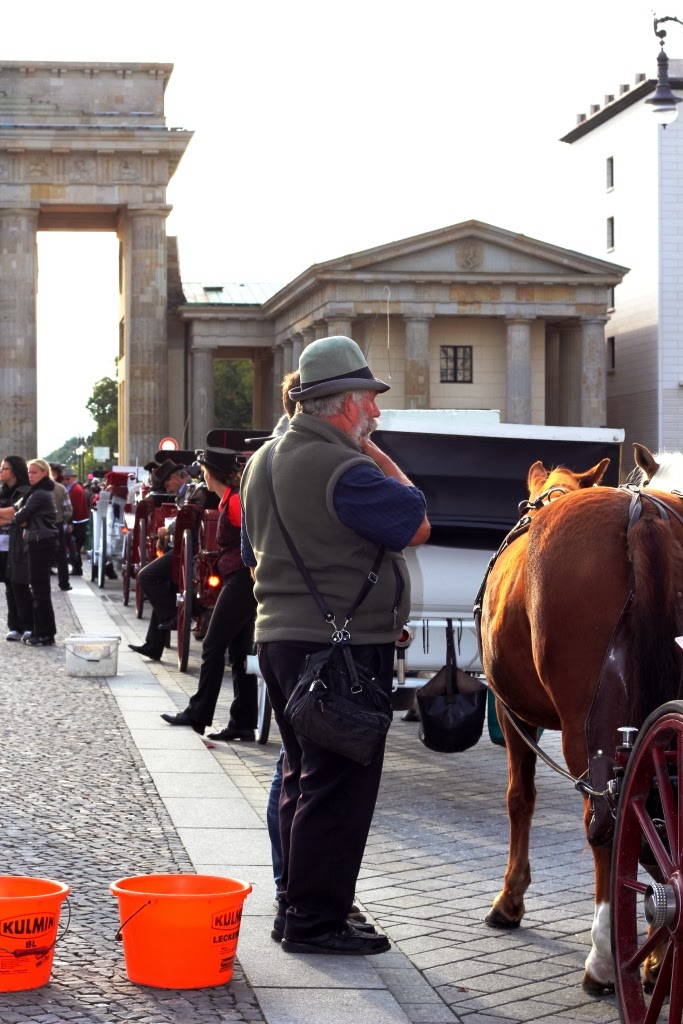
 

The transformation is gargantuan at many levels. First off, there is no traffic. No cars. No bikes. Only people on foot, and a few horse carriages. The sombre spectre of war, persecution and division, replaced by joy and a certain bouncy vibrancy in the mood. 


Just in case you wanted to see how the Soviet stamp on the passport was like, 
there was a man and a post to this too!
Right underneath the Brandenburg Gate a variety of perpetually alive fancy dress kind of stuff is on. Soldiers in uniform carrying flags of different countries play to the gallery.  It is a sight to see people have a good time in the name of a flag and under the covers of uniform. Uniform of the past, became sort of a fancy dress outfit for today.  And that singular thought held both the astonishing silliness of war and the beguiling hope for the future.  
 
It was sheer delight to watch the sense of humour. No one is “taking offense”  that some sensibilities are affected etc!  There are many ways to look at flags, nationalities, uniforms, symbols and the like. One way is to just look at them as artifacts and leave them at that.
 
There is so much happening at the Brandenburg Gate of such order that it completely eclipses the suffering, the separation and pain it has seen. People seem to be at ceaselessly working to turn all the sorrow that war and loss left behind in the quest for victory and supremacy.  Commerce, pluck and pageantry hold centrestage. 
 
The Goddess of Victory extends her steady gaze from atop.  I wanted to stop and just look at her intensely too and hoped my intensity will catch her attention and that she will entertain me in person with a story or two from a time that only history books and the internet bring alive


And then I looked at the people having fun. The horses neighed. Flags unfurled. Artists performed. Giggles of joy all around. I turned away from the Goddess of Victory. Some other time, the history bit, my heart tells her. For now, I was going to soak into the simple joys that people were having here.   
War and Peace

There were all kinds of moments in Berlin. A couple of poignant ones for this post.  Berlin packs enough and more of history in the most modern of settings that the contrasts are not just obvious but rather arrestingly present their friendly coexistence in every crevice and corner.
 
Somewhere close to the Branderburg Gate are two relatively small places ( read as ‘less opulent’) that held my attention and fetchingly sought my thinking going.
 
One was the “Neue Wache” or “The New Guard House”.  The twists and turns of time stood firmly etched in poignant detail here.  Think about this. A building starts out as a Guard House in the early 18thcentury and gets transformed into a war memorial in the 1930s. Going on to get bombed in World War II, surviving to see a revival and continue to serve as war memorials of some kind through the cold war era and now in the Unified Germany era as well.


IMG_7461

IMG_7460

 
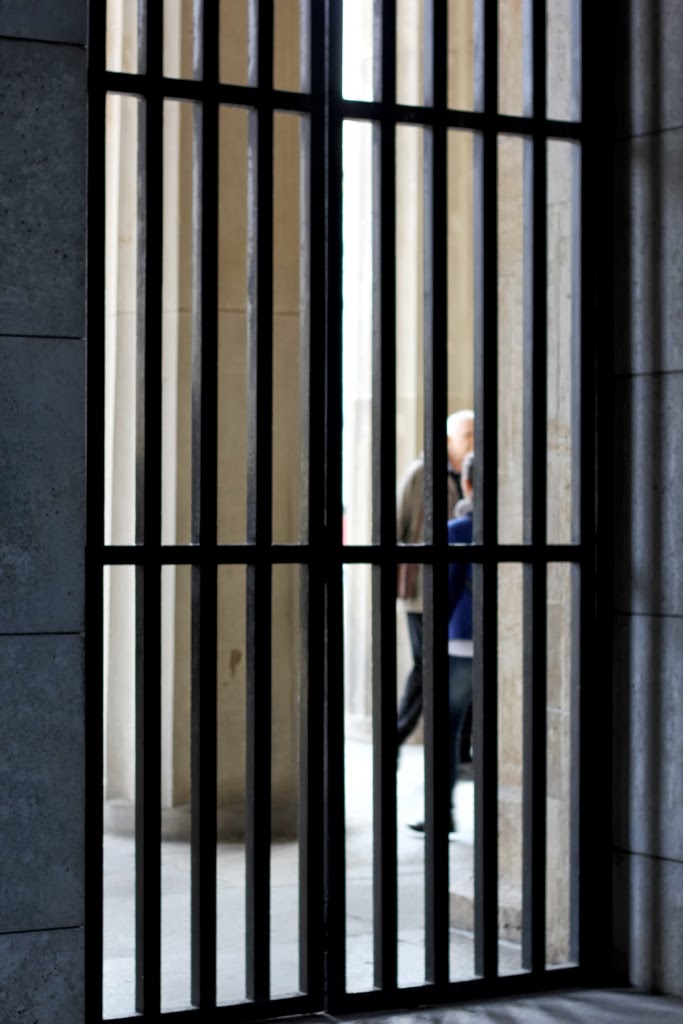
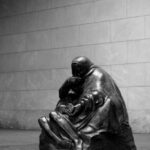
There are no guards there now.  Behind the huge pillars that welcome you well, I could imagine guards walking about. There are none of them now, but the iron in the gates could let you know how it was. For now, there sit a  statue of a Mother and her dead son by Kathe Kollwitz.  It is an impeccable work of art and if you stare at it for long enough and soak the wrinkle and the despondency of mother and son, and the uselessness of war will almost call out your name. 
 
In the middle of a large hall, the mother and son sit there and implore you to think. An opening right, a circular, and well done opening above them, shows the sky.  No glass. The statue has the sky as the ceiling. On the day I was there, a stream of light hit the statue with masterly elegance but then, it didn’t take me long to realise that the elegance of streaming light could stand replaced by the harshness of rain. Or snow, for that matter. 
 
And then I learnt that it was done to symbolise  the suffering commoners go through during times of war.  It couldn’t be more appropriate. 
 
The steady shuffle of the tourist footwear accompanied by incessant clicks of digital cameras and mobile phones didn’t for a minute cause the mother or her dead son to flinch. As people took pictures of themselves before the statue. A few of those perhaps would have made it Facebook or to other albums showing off a visit to Berlin!  
 
I would have preferred a trifle more of sombre. A moment in reflection.  Perhaps some silence even. But me and my preferences stood engulfed by the sepulchral mother and her dead son even as natural light continued to shower all its attention on them!
 
Speaking of silence, down the road, right under the noses of the horses of the God of victory, atop the Brandenburg Gate is the “Room of silence”. An incredible place of quiet.  In the thoroughfare of all the commercial cacophony that envelopes what was, until a few decades ago, a place of great history, stands this simple room. 


A room bereft of everything but a a couple of chairs, a large painting and a some amazing silence. Its website reads
 
“…provides an opportunity for everyone, independent of background, colour, ideology, religion and physical condition to enter and remain in silence for a while to simply relax, to gain strength for the daily life, or to remember inside this historic place the dark but also hopeful events, to meditate, to pray..”
 
I sat there for a while, noticing the number of people that came in and went out initially. But shortly, I didn’t notice anything beyond the peace that enveloped me. There were some details like the fact that the UN has a similar room like this in New York and Dag Hammarskjöld, the former Secretary General of the United Nations had it built and used to get there often to just sit in silence, were consumed later. 
I don’t think of a better, bigger time than now, for this room to scream ‘silence’ down your ear drum.  Poignancy personified, in the most delightful and delicate of ways. Its a small room. But if you are in Berlin and standing under the Brandenburg Gate, well, this room can be missed easily. 
 
And so, watch out. Step in. And be still. For a while. It is helpful.   
 

Statue !

This is second in the Madurai series. The first one is here.

Ever remember playing a game called ‘Statue’ in school? Well, I do. You didn’t have to do much. Someone had to point to someone else and say ‘statue’. You were required ‘freeze’. Just pretend you are a statue and watch the other chaps lick their lollipops and wallop their chocolates.  And you had to wait till they came around to point in your direction and say ‘statue’ again. If you wanted to be a winner that is. 

In most cases, as soon as the lollipop was unwrapped, people gladly embraced defeat, disgorged themselves from the statues they were forced to become and went after the lollipop like an animal in heat. That story is for another time. 

But there are several statues that adorn roadsides and have watched the world go by and sort of had a ringside view of the change that is happening in the world. Every city has a few. Madurai has them too. 

Those that bear the names, shapes and figures of political leaders, leaders of a sect, a community etc have automatic addition to the following. Like being born in that community. In that sect. Or being sold to a political ideology.  These statues themselves undergo a clean up or two. Regularly. 

But how about literary figures?  People who made a difference to an art scene? To language and therefore to culture and life?  How good are their statues? There are few such statues that I found.  As I slugged the camera around and decided to rediscover ‘home’ as I sought balance on a roller coaster of a trip back home. Pardon me however for the poor quality of my snaps here. Most of them are tilted. Perhaps indicative of the state of my mind then.

These statues have seen me grow from a young boy to a bristling young man and then morphing slowly into the graying balding chap that I am. That is, THEY have seen me. Never before have I paused to give them a second look. Never. Which is surprising considering that I normally am interested in such stuff. I have passed this road as many times as perhaps there are rain drops in a monsoon shower. These are in the Tallakulam area of Madurai. A small area of less than 2-3 Sq KM. 

Here are a few statues that I found and some looking up the web lead me to some people that I didn’t know of that well and lives that made a difference to a different generation of people. 

So here is an invitation for you to dive deep into their lives and see if we can make more meaning. Perhaps you would like to dig more. Or if you already know more, maybe share  here!

If only God came back and waved his magical fingers and brought them alive, I am sure these statues would spout stories that world doesn’t know. How fascinating would that be! And for that reason, and for that reason only, I think we must petition God to walk the roads again. 

Most of these statues are ones erected as part of the World Tamil Conference held in 1981, I have recollections of that conference as a massive event that got talked about for a while. I was too young to understand the nuances of language and the passion in the conversations at home but was old enough to soak into the pomp and pageantry! That these statues have been there from then on is a ‘nice to know’ thing. 

In an area that is earmarked for rain water puddles, marketing campaigns for two wheelers, protest strikes of various political parties and Kabaddi matches sit two piercing statues. 


First off, there is Kavimani Desika Vinayagam Pillai. A tamil poet who translated the work of Omar Khayyam. Wikipedia  doesn’t give me much else. The name is more than merely ‘familiar’ but the thirst for knowing him more stands revived. The tags underneath the post on Wikipedia point to a few things that points in a direction.  They read : “•  People from Kanyakumari district •  Tamil poets •  Indian Tamil people •  1876 births •  1954 deaths •  Indian writer stubs”. Helpful!   


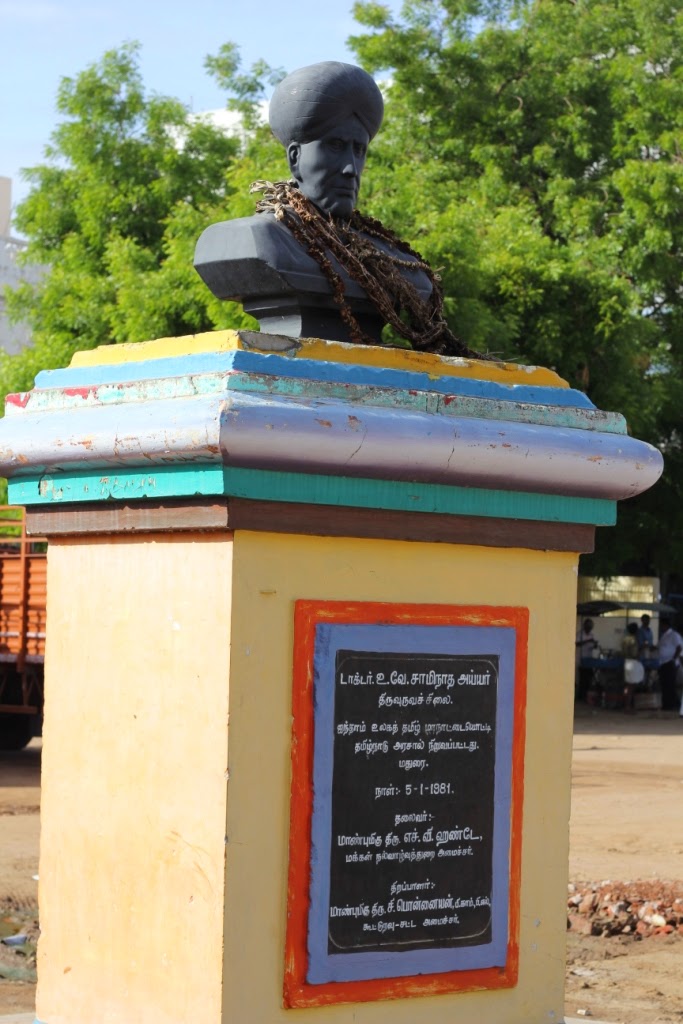
A little distance from there stands U.V.Swaminatha Iyer.  Wikipedia   holds much more on him than Desika Vinayagam Pillai. U.V.Swaminatha Iyer  called ‘Tamil Thaatha” ( The grandfather of Tamil ) is credited with extracting ancient Tamil literature written on palm leaves and publishing them on more readable material.  Wikipedia also tells me Civaka Chintamani was a “Jain classic”. Ignorance is limitless. Mine that is!  

Do give My.Iyer a look up.  Atleast for the sake of his statue that has looked at every single passing vehicle on Alagar Koil Road, Madurai. Come rain or shine!


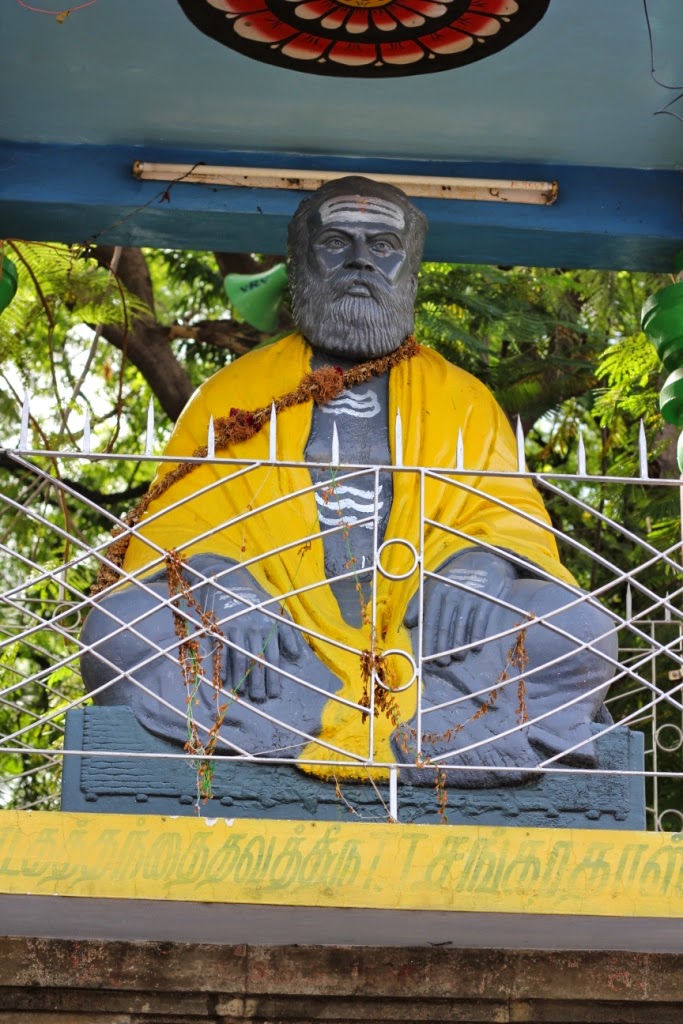
A little further down the road is the statue of Shankardas Swamigal. A man well regarded as the Everest of Tamil theatre.   To the best of my memory the auditorium at Tamukkam is also named after him. I promptly read more about him here and figured he must have been a pioneer and a fantastic passionate man of his time. The industry could get to new lows with juvenile ‘masala’ movies but there are some film makers who would make him proud.  Where the industry is, is a different matter. His statue sits right at the junction of four roads and what a ringside view he has. This statue has been up since 1967. I wish it could speak. The world can be the stage. Seriously! 


Diagonally opposite to him is this pillar. It sure must have some history but nothing that I could find. I am curious if anyone knows more.

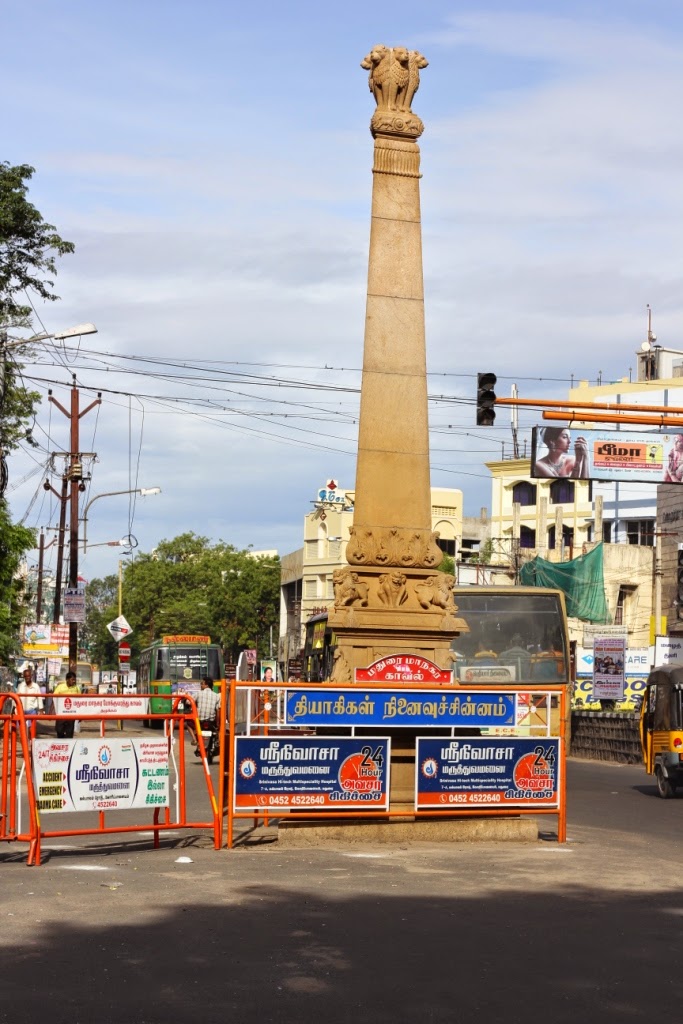
A couple of kilometers  away in what is now called KK.Nagar junction sits this man. Tholkappiar. Right under the KK Nagar Arch. 


A statue again bearing the time stamp of the World Tamil Congress, 1981. For me, KK Nagar is like home! And right under his nose, I have been upto mischief, had run ins, worked studiously, ran campaigns, bought medicines and what not. But never before did I realise that Tholkappiar was looking at it all. 


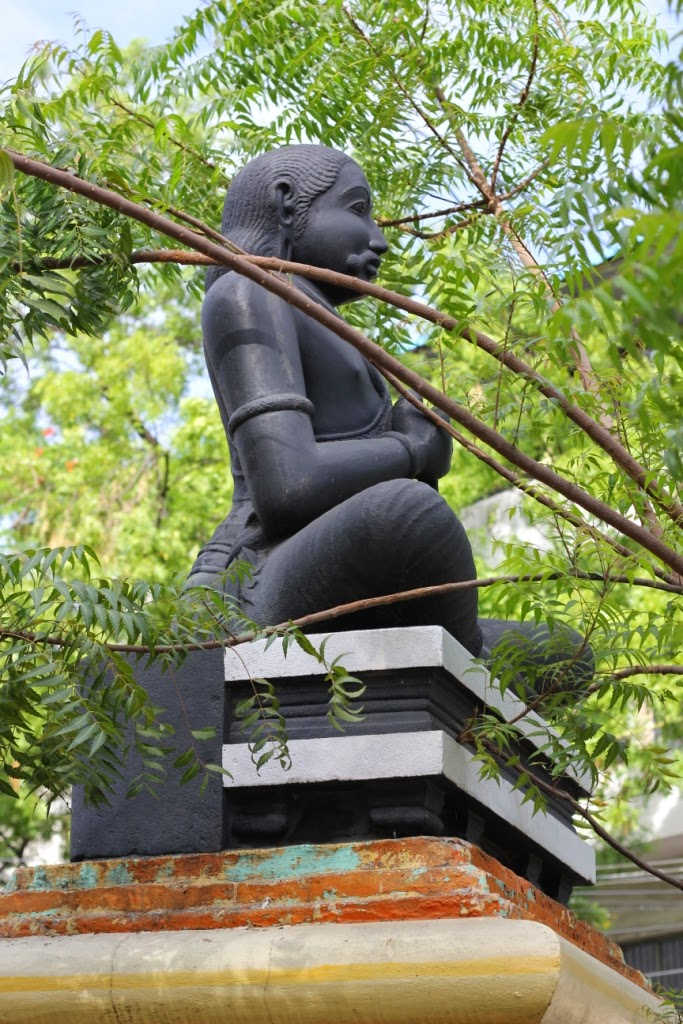
I recall reading Tholkappiar as one of the foremost grammarians of the world. Around 2000 years ago. Google doesn’t throw up any proper leads on Tholkappiar on the first page of search. There are politicos opening parks in his name but about the man himself, there is little except a mention of his being Agastya’s disciple. Some more diving deeper keeps me glued to the monitor for a good hour. Debates have raged on the net and you may want to look up here  or here

I have no inclination and remarkably shorn of knowledge on this subject to get any close to such a debate. More pertinently, the fact that Tholkappiar’s statue stood right there and I had no idea that it stood there painted a rather dim view of how much I knew of ‘home’! 

As I stood there, camera in hand, the traffic whizzed by. Buses. Cars. Cycles. Bullock Carts. Mopeds. From the corner of my eye, I notice many curious eyes looking at me. I wonder how many people know of Tholkappiar or atleast aware of his statue sitting there!  

I wonder if the general populace of the land care much about its true roots, language and culture. I wonder. But Tholkappiar sits there.  Blissfully peaceful. With a handle bar moustache and huge ears. 

He stares me down as the unkempt undergrowth and random wreck of a landscaped garden dominates my picture frame. Perhaps it indicates the state of the language today. Or maybe it just points in the direction of how much people know of their own backyard while they strive to build their futures in other lands. Whatever. 

More coming.   

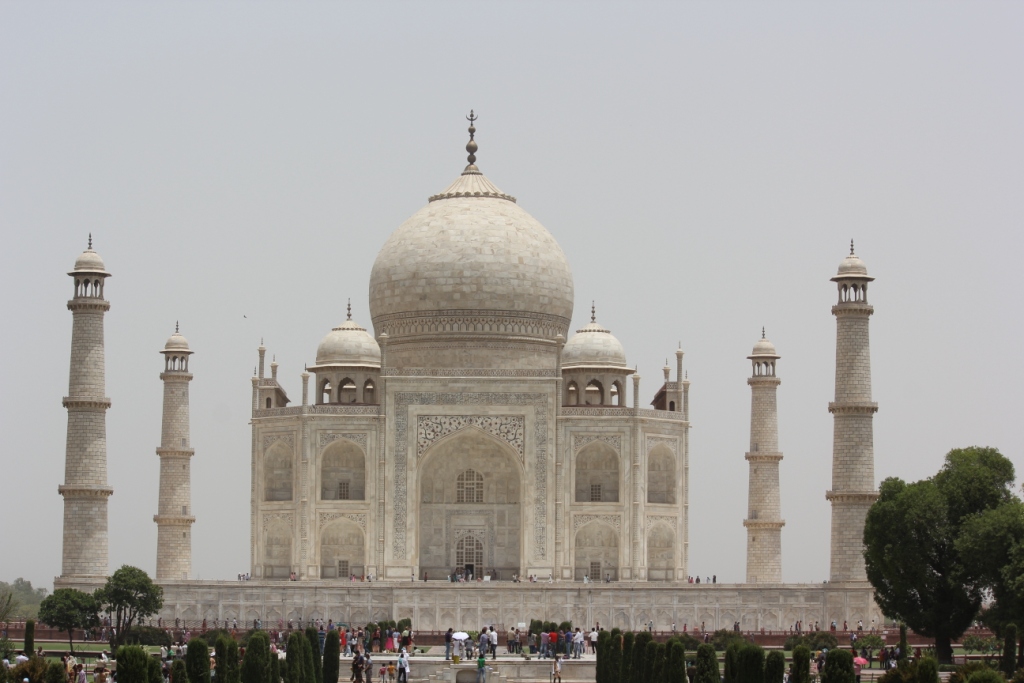
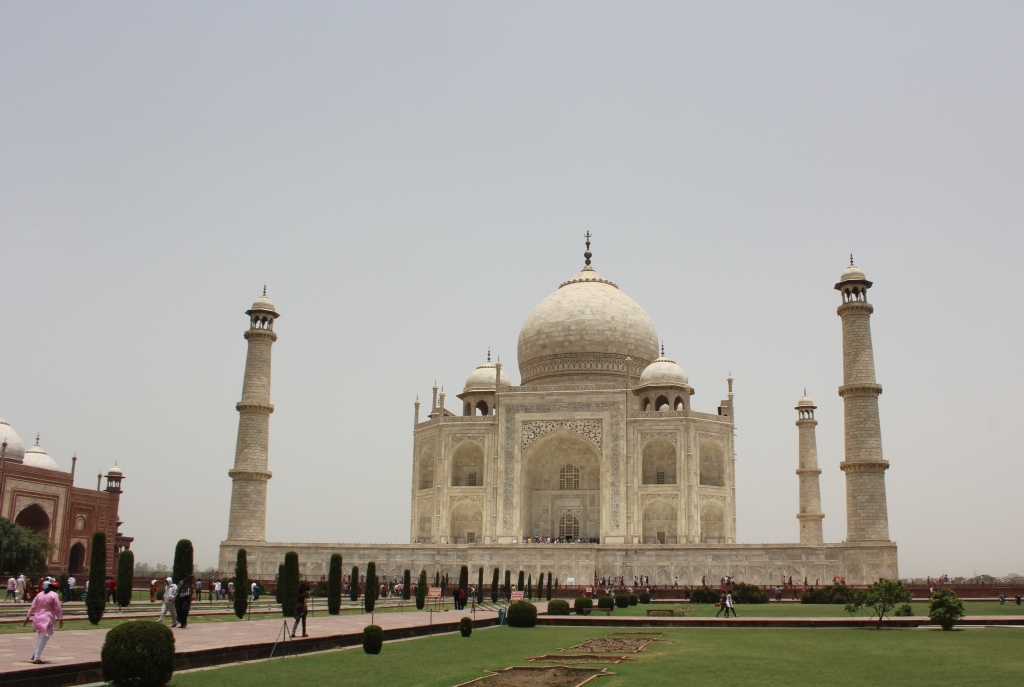
Wah Taj !

Many call emperor Shah Jahan a mad man. To have built such wonderous a monument like the Taj.  And I would agree.  Not only did he build such a monument of magnificence, for several years he has had families like mine, visiting this place in the dead heat of summer!

And still left shaking their heads with disbelief at the scale, splendour and the sheer magnificence of the place.  The fact that it is still standing after some 380 odd years ( and earrning money for the government and many others, is another aspect altogether). 

His love for his wife Mumtaz Mahal and her death (while bearing his 14th child) brought him to build this monument.  As far as I can recall, my history books didn’t talk of his post Mumtaz marriages. But apparently he did and was still a disappointed man. 

Bollywood, tollywood, kollywood and such other ‘woods’ have woven the mystique of love into countless songs . Poets have sighed over its splendour while crafting wily lines of love, longing and such else.  

Presidents of the world, some of them after signing arms deals with the government, have had photographs of themselves and their companions taken at the Taj. Striking poignant poses , sitting on whats come to be known as ‘Lady Di’s chair’ named after Princess Diana ( sitting alone) !


Our guide told us of Shah Jehans plans to build a replica of the Taj adjacent to the current one, in black marble. He told us as though the Mughal emperor had summoned him to his private chambers and whispered his desire in his ear.   


Going on to narrate a story of Aurangazebs cruelty and Shah Jehan’s forlorn lost last days.  It was happening in real time : melodrama spiking history big time in present continuous tense ! 

I digress. 

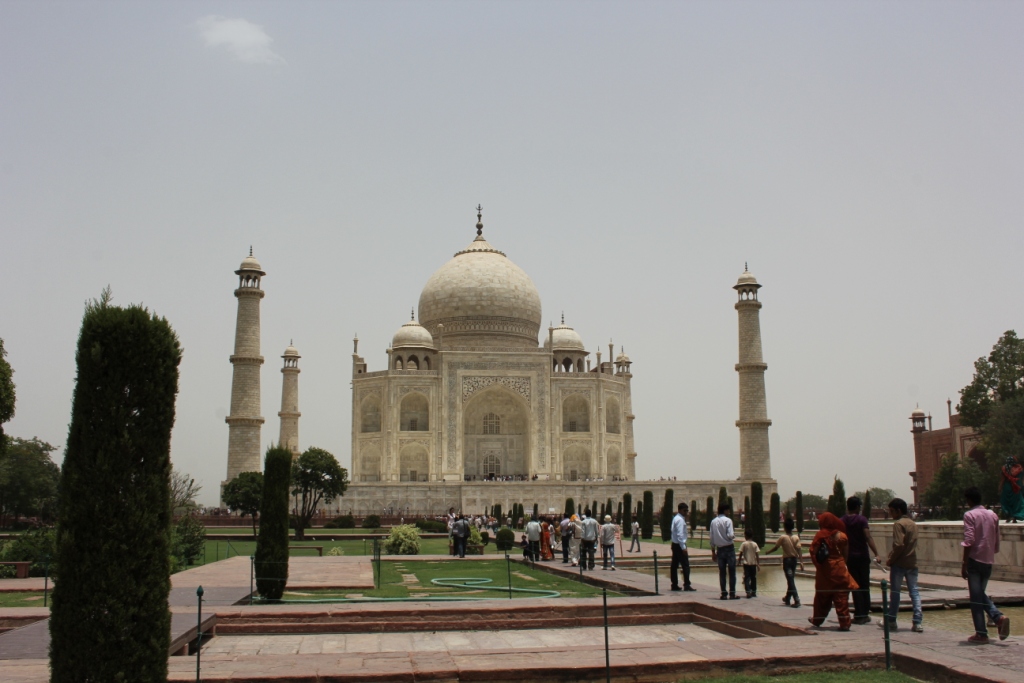
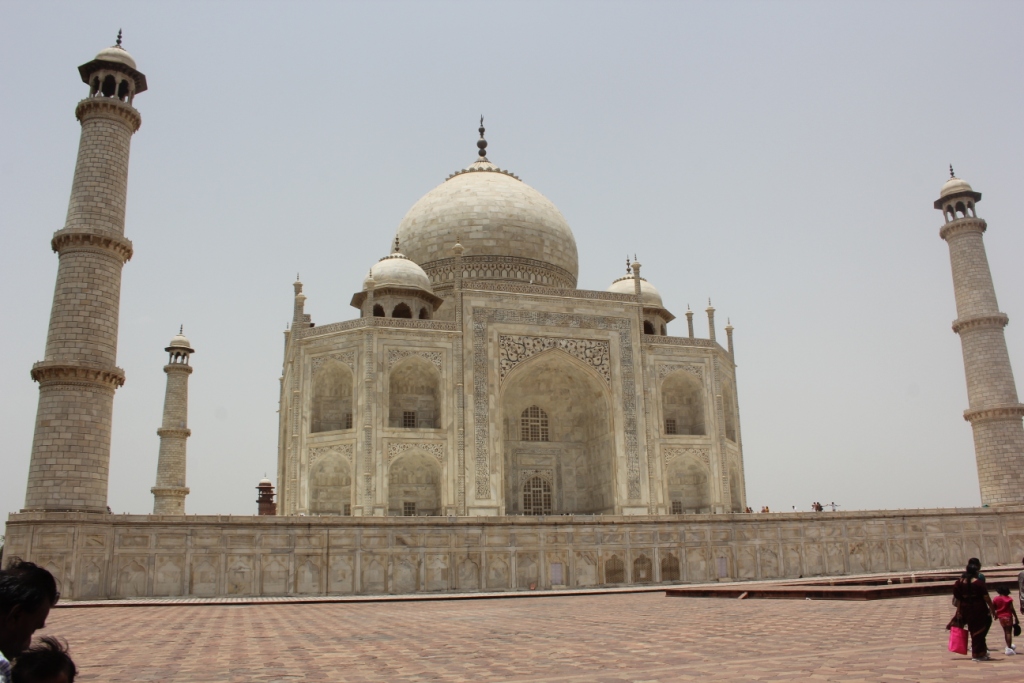
The Taj itself is a fantastic monument. We visited in blinding daylight. The moonlit Taj we were told was far more resplendent.  As an afterthought, it was mentioned, the fees for moonlit viewing were different

Obviously it’s a ‘must see’. It’s a place teeming with security and a global melting pot of people. All trudging in to see the’ monument of love’.  

Every visitor has lasting memories of this place. Every visit has left me with a memory or two. This one was when about half a dozen people at varying lengths in time, walked upto me, seeing the camera, the camera bag et al, and asked, ‘how much do you charge for a photograph’.

I seem to have arrived as a photographer. At the Taj ! 🙂