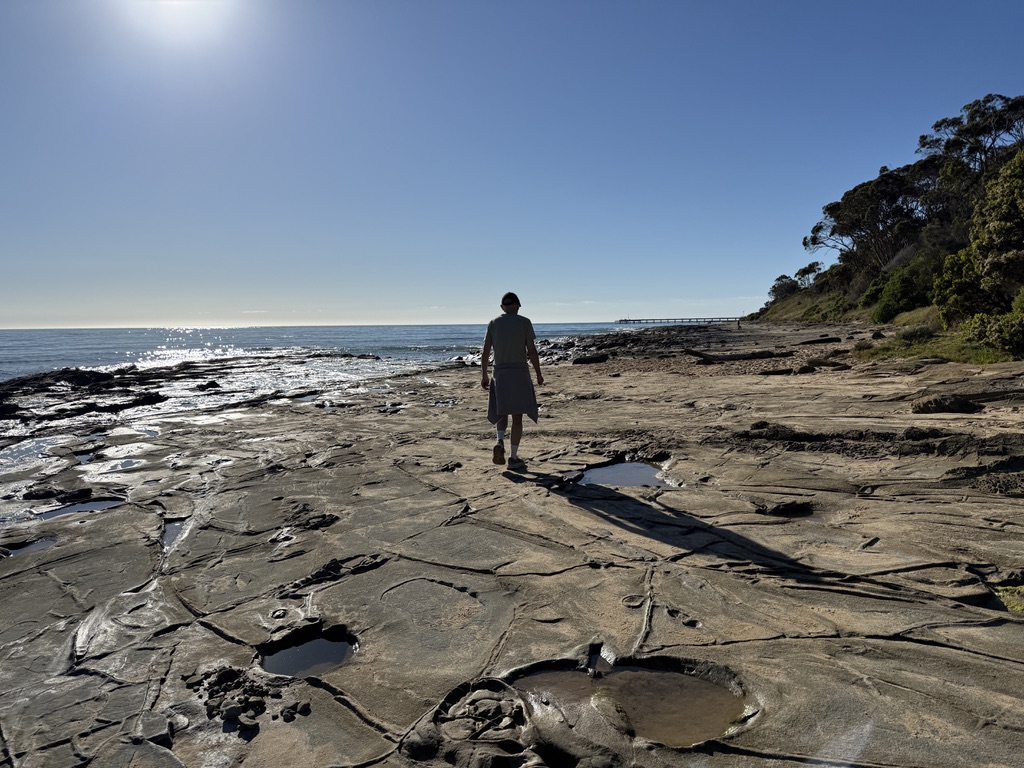
Lorne is a small town, further down the coast from Geelong, south-west again, where the road stops pretending to be a way out of a city and settles into the drive people actually come for. I read about it before I went, and one line hooked me and would not let go. Stand on the beach, face the sea, and the next land is Antarctica. Nothing in between.
So I got there, planted myself on the sand, and faced the sea with great expectations. I saw the sea. That was it.
No ice, no distant white coast, no penguins waving. Just water, behaving. And yet the line kept working on me. Technically, if you let your imagination off its leash, or had some sort of divine vision, it was true.
So I did the modern version of divine vision and opened Google Maps on my phone. There I was, a small blue dot on the edge of a continent. One pinch of two fingers, and the screen slid all the way down to Antarctica. I looked up from it, and the same blue, cold water washed over my feet.
A small place
Lorne is tiny. The last census counted 1,327 people. That is roughly the number eyeing the same red tube of discounted toothpaste at a D-Mart sale, or the number who can fold themselves into a six-seater space on a Mumbai local at rush hour. Of course I exaggerate. But that is how small it feels.
Then summer comes, the number leaps past thirty thousand, and I am sure every one of them wants the same car park. If my experience of Australian car parks is anything to go by.
The morning I was there a cockatoo crossed the grass like a landlord doing his rounds. Down on the sand, small children in pink vests ran screaming into water cold enough to stop a grown man’s heart. Nippers, they are called. Junior lifesavers, learning the sea before they are old enough to argue with it. I could watch this all day. A whole country teaching its kids, early and cheerfully, to respect the thing that might one day try to drown them.
The pier
I have a soft spot for piers. A pier is the land refusing to stop at the water’s edge. It pokes out over the deep and asks, politely, what else is out there.
Ships used to dock here. Now it is just people fishing, each one folded into the patience of a man waiting for a fish to make a decision. I did not fish. I watched, which is cheaper and keeps you feeling better than fishing and catching nothing at all.
Speaking of which, I really ought to try fishing one day. It looks like a wonderful sport, if you have the patience for it, and I am beginning to suspect that is the whole point.
A man near me hauled up a small carpet shark, held it out for a boy to admire, and threw it straight back. A pufferfish went in after it. Both go back, and both for good reason, I learnt later.
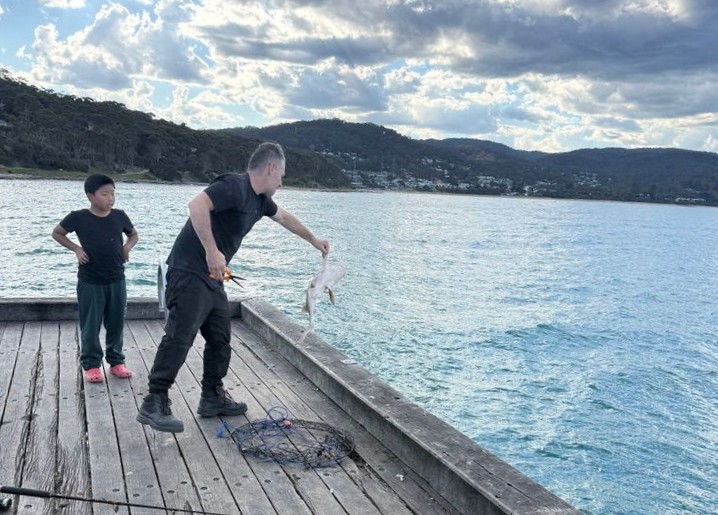
The puffer carries a poison with no cure, enough in one small fish to finish off several people, which is why serving it is a job for trained chefs in Japan and absolutely nobody on a pier in Victoria. The carpet shark is just too small and too protected to keep. You take what you are allowed. The rest gets to go home.
Fifteen minutes to another world
Turn your back on the sea, drive fifteen minutes, and the whole place changes species. The cafés, where the coffee is taken very seriously, give way to the Great Otway National Park. Tall tree ferns that look like they were here long before anyone invented brunch. Cool air. A river, the Erskine, running down through the green. Waterfalls at the end of short walks.
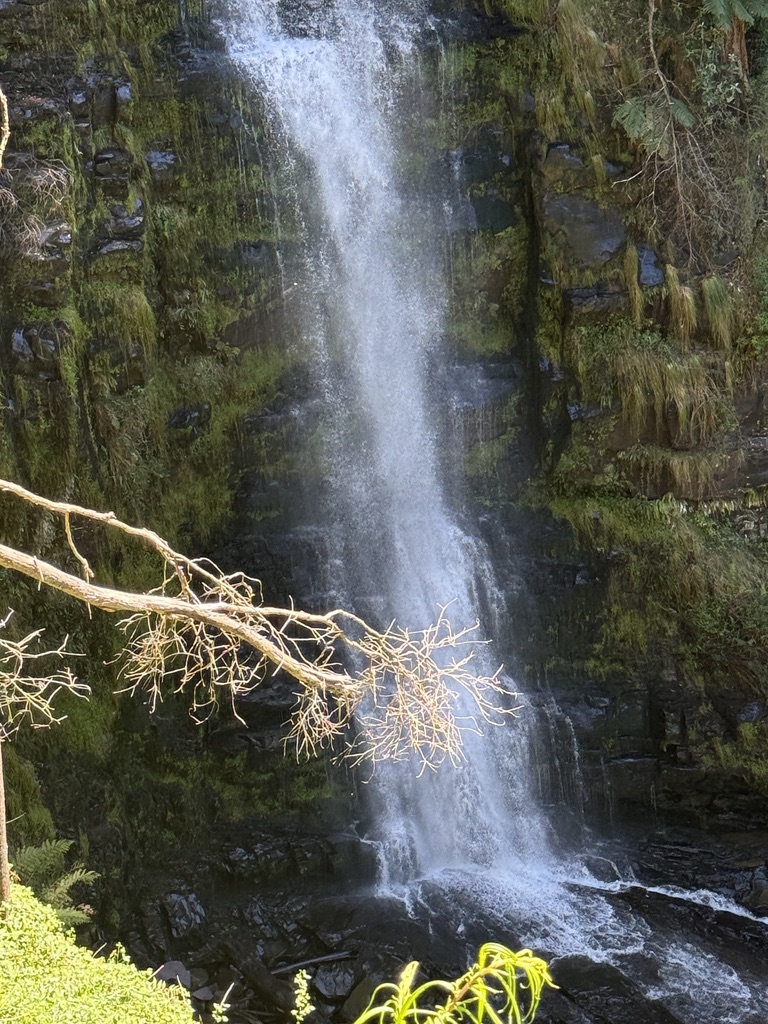
This is the trick of this coast. One short drive, and it hands you a beach, a rainforest and a river, all before lunch. It does not ration the good stuff. Just beyond beautiful. And 1,327 people have it all to themselves for most of the year.
The ships that came too late
I was happily soaking all this up when the history ambushed me. Along the foreshore, half swallowed by scrub, little signs mark the ships this coast has wrecked. One was a small trading boat lost in 1862, carrying nothing grander than supplies for the local shops. Another was blown onto the beach in an 1854 storm and simply never left.
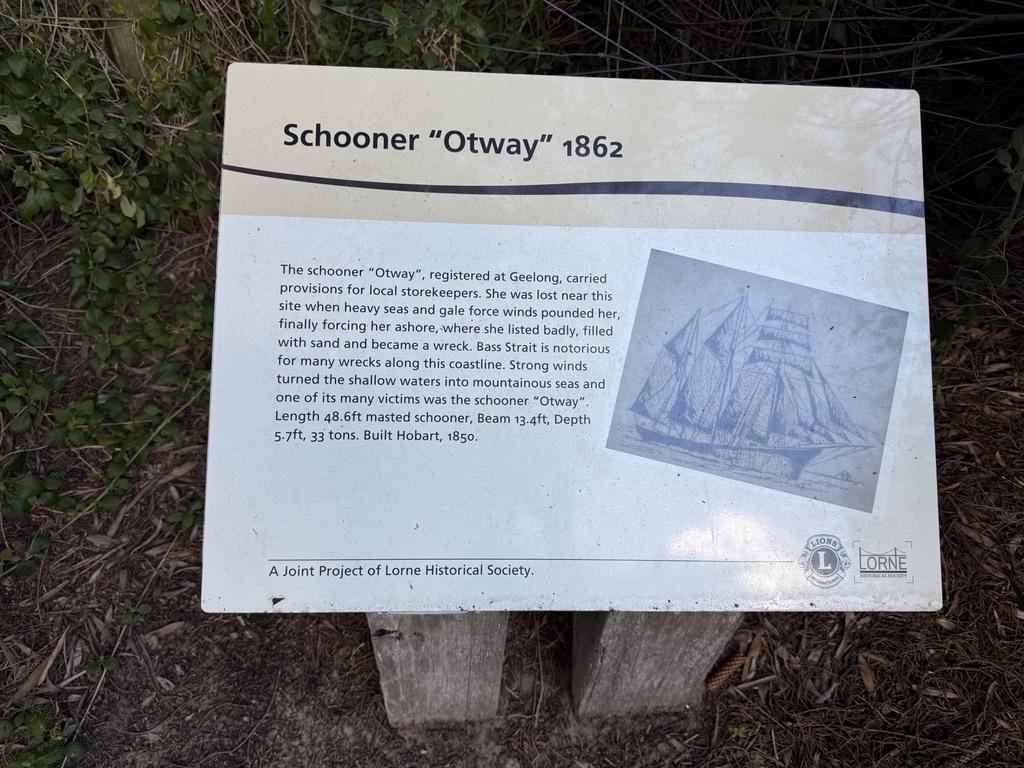
They sailed all this way to one of the loveliest coasts on earth and never got a single morning to enjoy it. The same sea that drowned them now hands out cockatoos and clear skies as if butter would not melt.
The holes in the rock
At low tide the beach shows a wide shelf of flat rock, pocked all over with round holes, each one holding its own small pool of sea. The water made them, slowly, over an unhurried few thousand years. They sit there filled and quiet, waiting for the tide to come back and tuck them in.
The plaques told good stories. I suspect the holes keep better ones, older than any ship, if only they would say. I crouched for a closer look at one and nearly joined it, which is the usual fee for crouching on wet rock to look clever. Then I stood, faced south, and was right back where I began.
Nothing out there but sea, all the way to the ice.