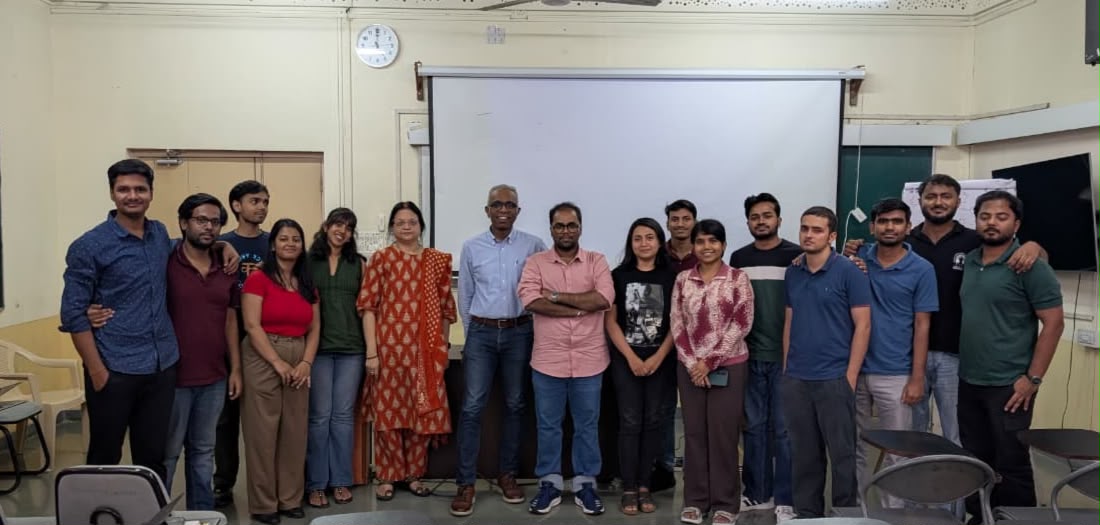
Every year around this time, I teach a module on advanced learning and change to second-year MBA students at the Tata Institute of Social Sciences, Mumbai.
Much has changed in the campus world since when I started. What hasn’t changed is the sense that teaching future leaders asks something of me that I only partly understand, even now.
Both my parents were academicians. I grew up watching them make it look easy, which I now know is the hardest thing to do. A class either holds or it doesn’t. You can feel the difference in the room within minutes. I saw that difference at our dinner table before I ever felt it in front of a class.
I think that’s part of why I keep saying yes to this course. Not the whole reason. Teaching sharpens my own thinking as much as, or more than, it sharpens anyone else’s. It sends me back to research I thought I’d finished with.
Every year, at TISS, I find myself amidst the brightest minds of that year. It isn’t a comparison across cohorts. Each year’s students are the sharpest I’ve engaged with, for that year, and I’ve learned not to be surprised by this any more.
What teaching future leaders keeps testing
This year tested something more specific. When I bring a practical application of the framework, one I’ve actually tried in the field, I’m not always sure the application has stayed honest to the framework itself. It may have drifted, quietly, while still borrowing the framework’s language. A room this sharp finds that drift faster than I do.
I used to think my parents’ gift was patience. I’m less sure now. Watching them, and now doing this myself, I think the gift was something closer to willingness. Willingness to be asked whether the thing you built still matches the thing you promised, in front of a room, and stay standing while you work it out.
I don’t know if I have that fully yet. Some years I think I do. This year, a student’s question left me pausing, not certain whether my answer was defending my interpretation and application of a framework, or examining it. Most times I know which one I’m doing. This time, I wasn’t fully sure.
There’s an obvious irony in someone my age still learning this from students less than half his age, and from a mother I could still ask, if I chose to.
I’ve stopped finding it ironic.
The people who will run organisations in ten years seem to come preloaded with instincts about how to handle age, authority, hierarchy and disagreement with confidence. In more ways than one I am being shaped by rooms like this one.
I still don’t know if I’ve inherited what my parents had, or if I’m building something adjacent to it that only looks similar from the outside.