

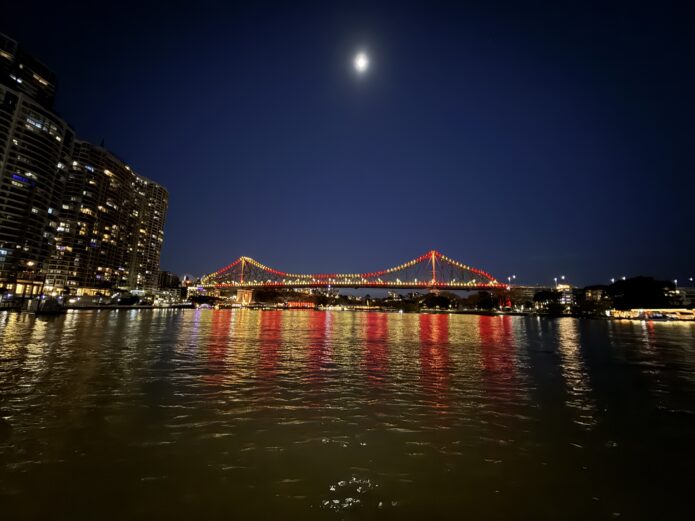
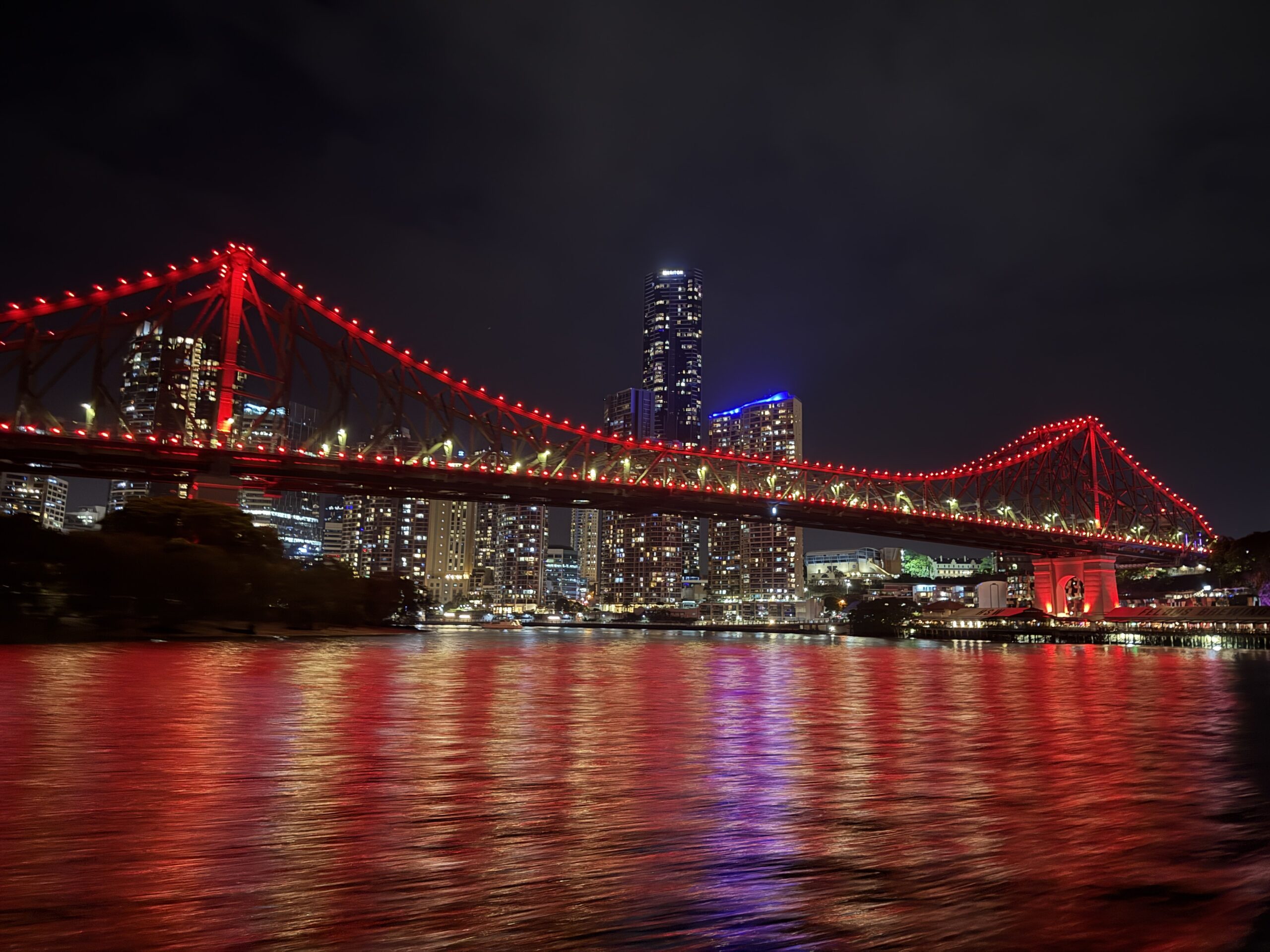
It was one of those Brisbane evenings that felt neatly put together. The moon hung above the Story Bridge, the bridge glowed in red and gold, and the river below reflected it all as if it knew its role.
This is the Brisbane River. But long before it became a postcard, it was Maiwar. The river of the Turrbal people, the first caretakers of this land. They lived along its bends for thousands of years before Europeans arrived in the 1820s. For them, the river was everything. Food, road, temple, and teacher.
The Meeting Place and a Cricket Fortress
The Turrbal people had names for every turn of the river. Woolloongabba meant “meeting place.” It still lives up to that name. It is now home to the famous cricket ground, The Gabba, where every few years India meets Australia to settle who really runs cricket.
In 2003, Sourav Ganguly’s brave century on a green, bouncy pitch showed that India had grown tired of being called timid. Then in 2021, a young, injury-hit team came back to do the impossible. Breaking Australia’s 32-year unbeaten record at the Gabba with courage, calm, and a touch of cheek.
It wasn’t just a win; it was a story of belief and joy. Many said the fortress had fallen. I thought otherwise. In fact, the Gabba stood taller for it. It proved again why sport matters: to host rivalries, to test effort, to stretch courage, and to honour that often-abused but still-revered phrase, the spirit of the game.
Funny how I started writing about the river and ended up at the cricket ground. But then again, the river has seen it all. Floods, bridges, and the odd boundary.
The River That Refused to Straighten
People call the river, ‘Brown Snake’. And the name fits. It winds through the city, calm and sure of itself. People jog along it, sail on it, build towers beside it and sometimes, when it floods, remember who’s really in charge.
Along its banks, the city gathers quietly.
Queensland’s Parliament House sits near one of the curves, looking calm and serious as if the river is ready with the next question. The kind that would embarrass a minister and still ask the opposition what they were doing all this while. A little further down, government offices line the shore, their glass windows catching the light. Across the water, old timber homes in Teneriffe stand beside tall new apartments, both pretending they belong together.
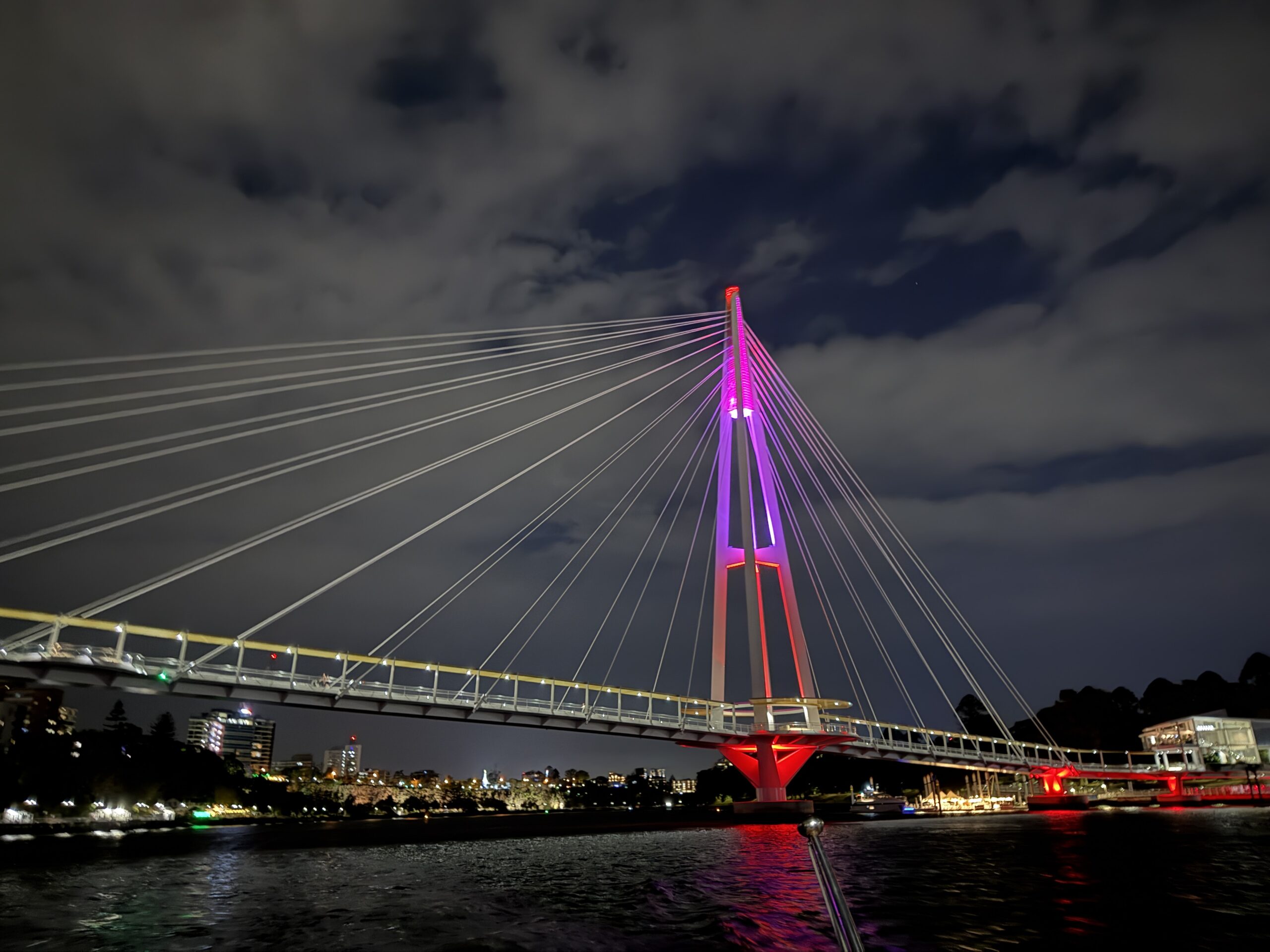
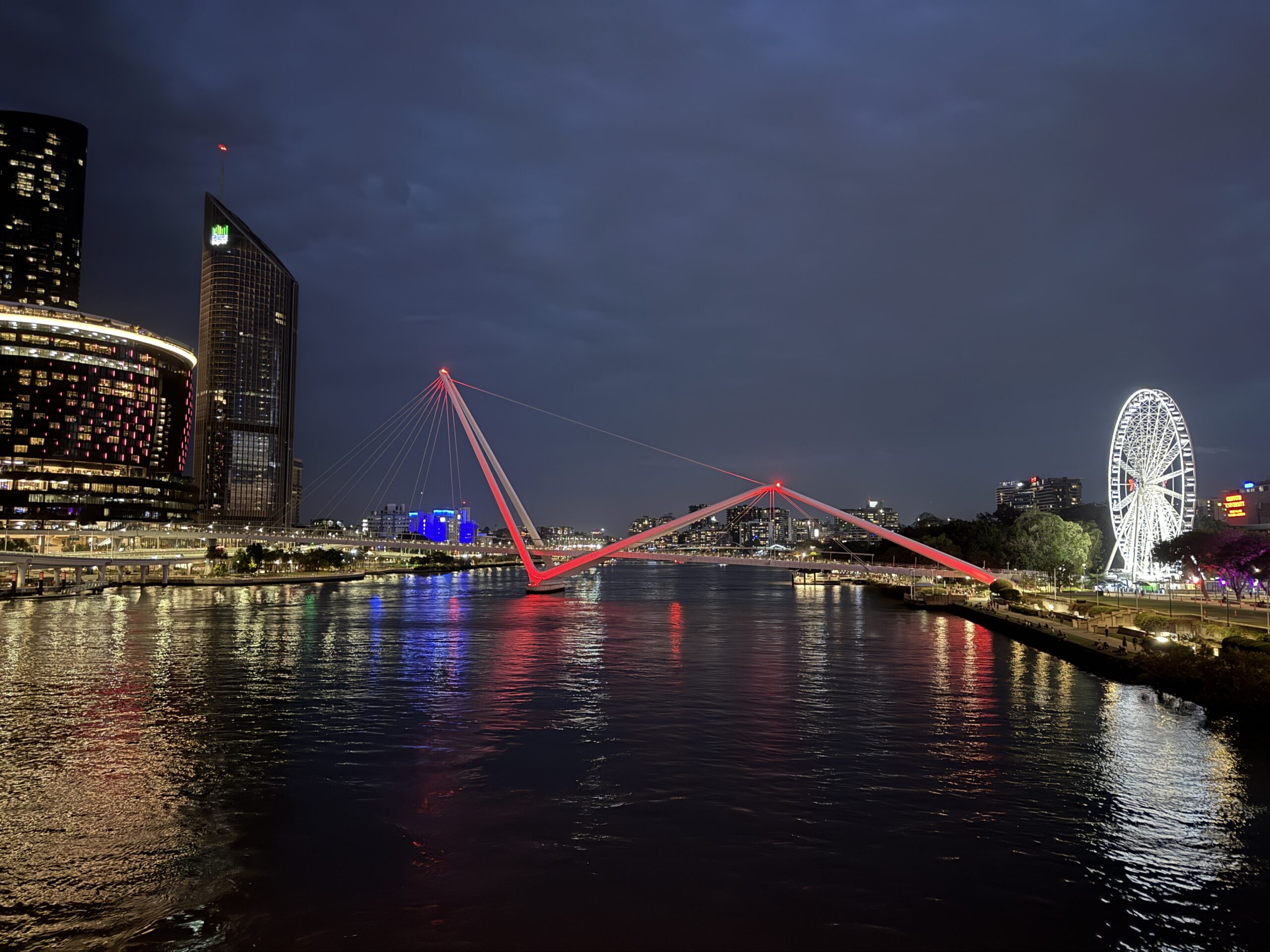
At South Bank, the Wheel of Brisbane turns slowly over the river. It’s a giant Ferris wheel that looks like it’s keeping an eye on the city. At night, its lights shimmer on the water, mixing with reflections from cafés and bridges. Downstream, near the University of Queensland, students walk and talk by the water, thinking of exams, futures, and maybe nothing at all. The Brown Snake watches them all, moving quietly past.
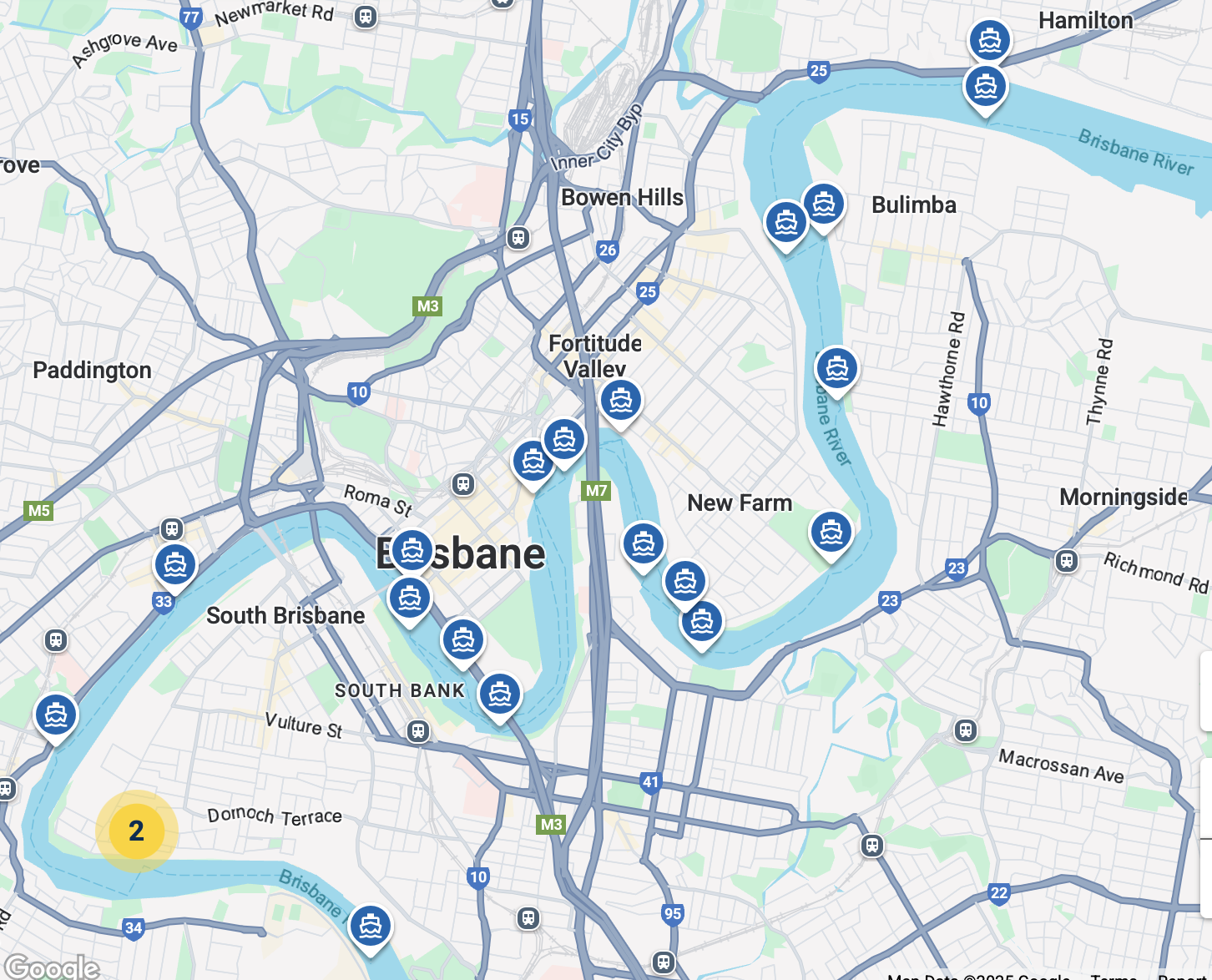
Later that night I read how early European settlers once tried to make this river straight. They brought dredges and plans, confident they could tidy nature’s design. The Brown Snake was fiercely Australian. It refused and kept curving and silting as it pleased, reminding everyone that some things are meant to meander.
Bridges, Lights, and the CityCat
Sixteen bridges now cross this river. The old Victoria Bridge has been rebuilt more than once. The Story Bridge, born in the Depression years, is Brisbane’s favourite landmark. Every night it glows like a festival — blue, gold, purple — changing colour depending on what the city is celebrating or mourning.
I took the CityCat a few evenings. Long, sleek, and painted in cheerful blues and whites, it glides along the river like a quiet promise. Office workers scroll on their phones. Tourists seem to take the same photo over and over. An extended hand holding a phone and clicking a picture is a standard feature! Somewhere, a child points at the moon.
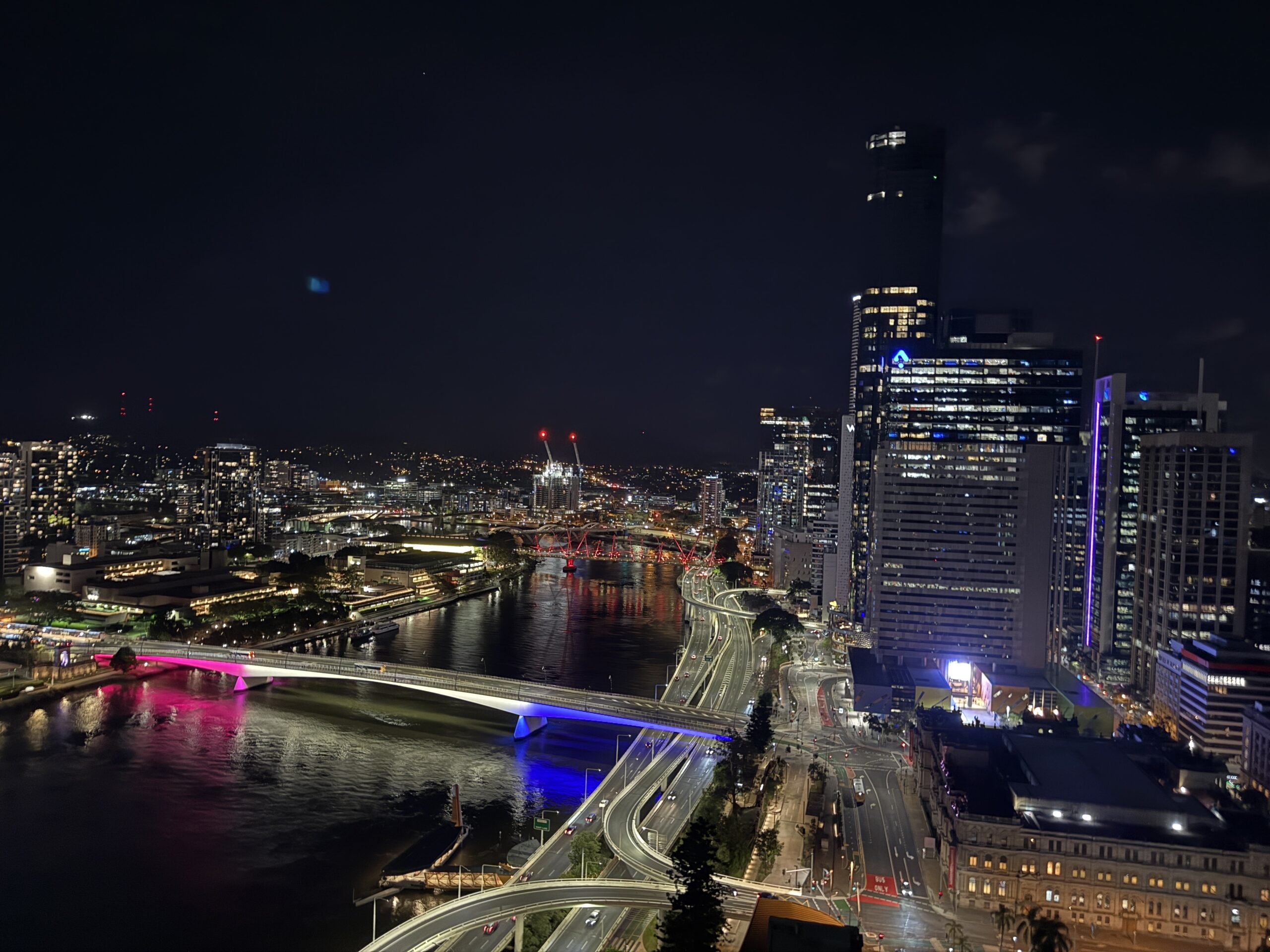
On one side, picture-perfect apartments lean over the water, all glass and balconies. On the other, green parks and old timber wharves stand calmly, pretending not to notice. The air smells faintly of salt and weekend plans.
The Rivers That Made Me
Somewhere between two stops, my mind wandered home. To Madurai. To the Vaigai. The river I grew up by. Once the pride of the city, now mostly a trickle between bridges that are newer than the water beneath them. Still, people cross, live, and hope. That’s what bridges are for.
And then I thought about space and wondered how many people live per square kilometer relative to spaces that I am used to.
Brisbane breathes at around 176 people per square kilometre.
Madurai hums at 8,800.
Mumbai roars at 33,000.
For ordinary people, that’s not density. That’s destiny.
Here, everyone seems to move. Running, rowing, cycling, sailing. But try getting a doctor’s appointment, and you’ll learn what patience truly means. The Brown Snake has its own pace, and so does the city.
Vaigai trickles. Maiwar flows. Mumbai surges. Each carries its own rhythm and lesson.
What Rivers Teach Us
As the CityCat slipped under the Story Bridge, the moon brightened above, and the Brisbane River — the Brown Snake — shimmered gold. The ferry hummed softly, carrying people home, and I felt the city exhale.
My mind darted back to the waters I’ve known: the restless sea in Mumbai, the fading Vaigai in Madurai, and this calm, brown river in Brisbane. Each carries its own rhythm . The sea crashes, the Vaigai sighs, the Brown Snake flows and forgives.
Mumbai teaches me motion. Madurai teaches me memory. Brisbane, perhaps, teaches me stillness and flow. Together, they remind me that home is not fixed to a pin on a map. It is a current that carries you forward, again and again, asking you to move, to meander, and to remember.
Rivers don’t just flow; they hold time. They carry stories we’ve forgotten how to tell. Stories of people, floods, bridges, and beginnings. The Brown Snake has watched Brisbane rise, falter, and rise again. It asks for nothing, but it seems to remembers everything.
Maybe that’s what rivers teach us in the end . That strength isn’t about speed or noise, but about keeping on, quietly, towards the sea.
Loved this Kavi
Even your writing flows like a river
Thank you so much Marcel.
‘It refused and kept curving and silting as it pleased, reminding everyone that some things are meant to meander.’
This line, says it all…..and stirs the imagination of the reader…… Lovely Kavi
Thank you so very much Abhijit.
I totally agree that your writing flows like a river, carrying us along with it… and on this journey we discover such wonderful perspectives and insights… very evocatively expressed, Kavi. It was a delight to read. I could virtually see every site described by you