In India the messages start early on the fifth of September. This is Teachers’ Day here, and the country takes it seriously in the way it takes most things seriously, which is to say by WhatsApp. Teachers open their inboxes to notes from students who are now forty and greying. Some get messages from students they cannot place at all, which must be its own strange feeling, being thanked warmly by a stranger for something you have no memory of doing.
A few came my way too, from people being generous with the definition of ‘teacher’. I will take the generosity and leave the title where it belongs.
Because I have been on the receiving end, in a very good way, all my life. Bosses, colleagues, clients, a few industry veterans who had nothing to gain from explaining something to me, or from believing in me, and did it anyway. Mentors who never used the word or the position. Most of them were not teaching. They were just being themselves, working out loud, near me. That turns out to be the same thing.
So thank you to all my teachers and mentors in everyday life. And to all the others who sent in the wishes. Not only for the wishes. For remembering, and for reaching across a working day to say it.
Not a List This Year
Some years I have marked this day by listing names of my teachers in a blogpost. It felt right then. A roll call, set down in public, as if writing them out was a form of saying thank you. Invariably realising afterwards that I had missed more names than I had written.
This year my mind is elsewhere. I keep thinking about the day itself. Where it came from. Why the world cannot agree on when to hold it.
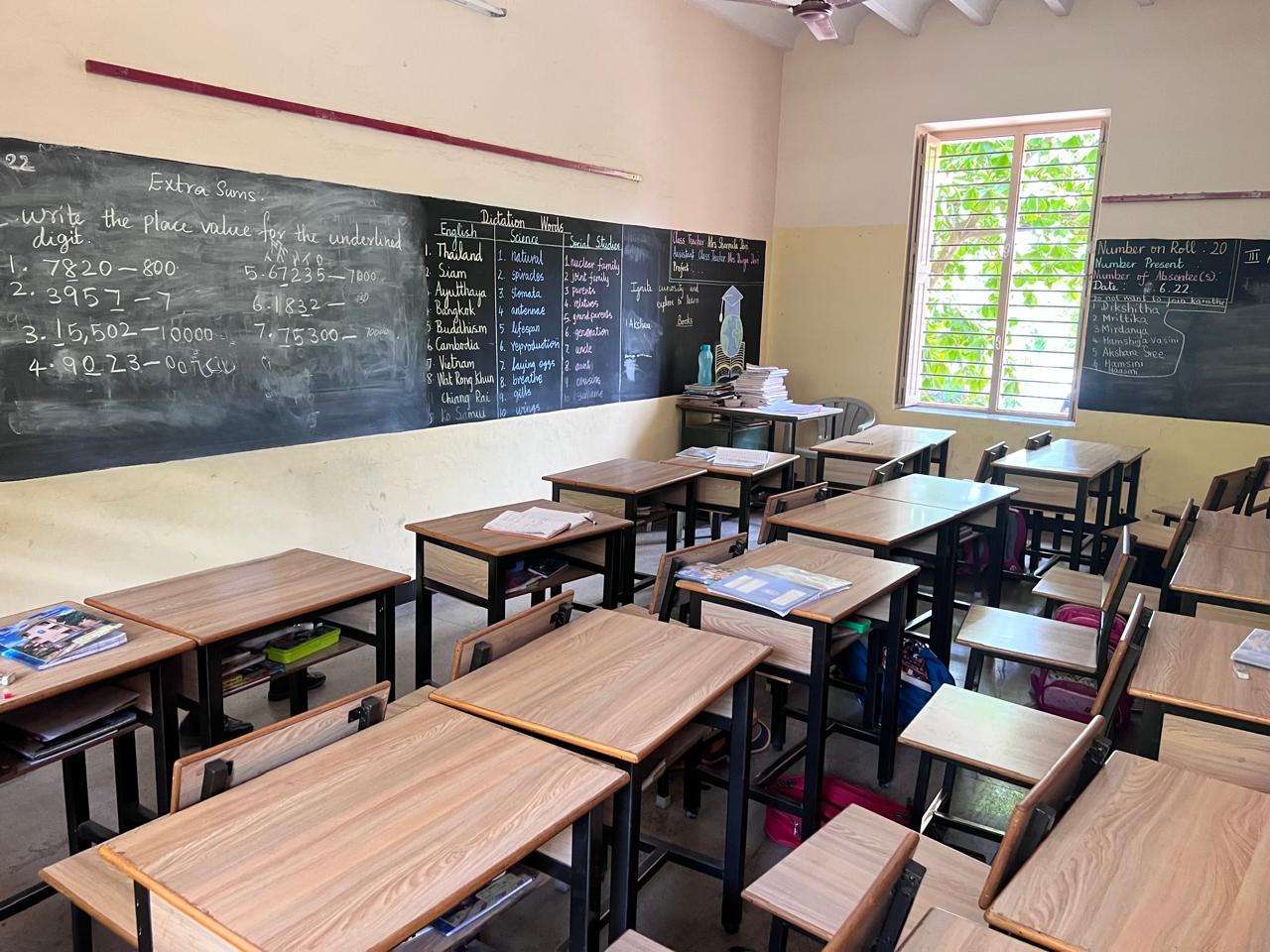
We say that life teaches. That situations teach. That every person and moment has something in it, if you are paying attention. All true, and all the easy version. Teachers’ Day, to me, is beyond all of that. It is about the formal role of a teacher. Somebody given a room, a timetable and forty young people, and tasked with readying the future. Of both the young people in front of them and the world at large.
Somebody’s Birthday
The day exists because in India because a man refused a birthday party.
Sarvepalli Radhakrishnan was born on the fifth of September, 1888, in Tiruttani. A philosopher, and a very good one. He taught, he wrote, and he ended up as President of India. In 1962 his students came to him wanting to celebrate his birthday. He told them to celebrate teachers instead. India has done exactly that every year since. A head of state was offered a party and traded it for a profession.
Look outward and the pattern repeats. In many places.
The Czechs use the birthday of John Amos Comenius, an education reformer who has been dead since 1670 and is, in a sense, still on duty. Korea chose the fifteenth of May for King Sejong, who gave his people their alphabet. Even the neutral version is not neutral. UNESCO’s World Teachers’ Day marks a 1966 agreement on how teachers should be treated. No country will let the day stand on its own.
It needs a name attached, or at least a signature.
The Job Is Bigger Than the Job
Start with the ordinary version, which is not ordinary at all. A teacher takes a subject and makes it accessible. That is the whole description, and it undersells itself badly. A subject is a door. Open one for a ten year old and you have not handed over a topic, you have handed over a world, and nobody ever closes it again. Long after the teacher is forgotten, the door is still there.
Kahlil Gibran got there a century ago, in The Prophet. A wise teacher, he wrote, does not invite you into the house of his own wisdom. He walks you to the threshold of your mind and leaves you at it. The door again. Somebody else’s hand on it, and the room beyond it entirely yours. For life.
That alone would be enough. It is also not a given.
Nicholas Kristof wrote recently about a biology teacher in Pine Bluff, Arkansas, with a student who kept falling asleep in class. She asked why instead of sending her to the principal. There was no bed in the house, so the teacher bought one out of her own salary. The girl thanked her, then asked for food.
Last week, in Nepal’s Trishuli Valley, a principal called Rajendra Dawadi got three flood warnings in a few minutes, none of them confirmed. He rang the bell anyway. From the hillside he watched his school, where he had studied and taught, go under the water. He lost his own house the same day, and when people called him a hero he asked what else he was supposed to have done.
Then there is Vizianagaram, in Andhra Pradesh, where a biology teacher called Miriyala Krishnaravu did something with no emergency in it at all. He told his class, months before the exams, that whoever topped the SSC would fly. E Hemanth topped. Krishnaravu paid from his own pocket and went with him. There is no column on any form where you record that a boy should know what it feels like when the wheels leave the ground.
Chalk and talk is the job. All of this sits outside it, and all of it is the job too.
My Own
Which brings me to mine. There were several.
There was a man with no connection to my subject, my department, or my future, as far as any timetable was concerned. He put me under the arc lights anyway. Nobody had asked him to notice me. He noticed me. And placed me on a higher pedestal.
There was a teacher who decided, on evidence I have never located, that I could be a quizzer. She would appear at the classroom door in the middle of someone else’s period and pull me into the corridor. What did you read today? It was none of her business. She made it hers anyway, week after week, until the question stopped being a question and became something I now ask myself without her. She placed me on the road to perpetual beta and curiosity.
And one who never said good morning. She said “state rank”. That was the entire greeting. Corridor, staff room, always the same two words, delivered like a weather report about a future already settled. I never did get the state rank. What she gave me was better and took longer to notice. She said it as though she meant it, so I began to think of myself differently, and to work differently, and eventually to handle the disappointment when it came. That last part has been worth more than any rank. She placed me within reach of patience and possibility.
Those memories keep me company today.
Frozen at the Last Look
Talking of memory, I have on occasion made the effort to go back and meet my teachers. The trouble with going back is that my mind has not updated.
Every teacher I remember sits filed away at the age they were when I last saw them. Upright. Unchanging. Then you return to school or college and the arithmetic arrives all at once. Some have aged in the ordinary way. One or two are exactly the same, which is its own small unfairness. And some are gone, and you find out casually, from someone who assumed you knew.
They are doing it to me too. Their file closed the day I walked out. I am unrecognisable to most of them, so they reach me by triangulation. You were with Madan, no? Mahilchi and Prabhu’s batch? Shankar’s class?
My more accomplished classmates have always been the landmarks, and I am located by standing somewhere near them. This seems entirely correct to me. Memory is expensive property and they have limited square footage. Madan earned his plot. I am delighted to be found loitering on it.
And placing me is exactly what they did in the first place. Not one told me what I would become. They put me somewhere I had not thought to stand, and left me searching, which is the most useful condition I know.
To the Ones Doing It Now
Some of the people I sat beside in those rooms are teachers now. Some of you reading this are.
You will not get a holiday for it. You may get a card, handmade, glue still wet. If you teach teenagers, a shrug and a meme behind your back. You will get a salary that arrives every month and never once refers to the actual work.
That is the arrangement, and it is a poor one. Almost everything that matters about what you do lands somewhere you will never see it. A child in your room today will remember one sentence you said, and it will not be the sentence you prepared. You will have forgotten saying it entirely.
Gibran had the mechanism right. The teacher in the temple shade, he said, gives of his faith and his lovingness. The wisdom was never the transferable part.
So, on this fifth of September, from a very ordinary man who gets placed at reunions by standing near his cleverer friends, thank you. To the man with the arc lights. To the woman with her weekly question. To the one still owed a greeting she never finished giving. One of the three will not read this, and I am writing it to them anyway, which is the sort of thing they would have found perfectly reasonable.
And to those doing the work now. You are readying and remaking the future. May you have the energy to keep at it.
14 responses
Made me think, thanks. Looking back at teachers gone, seeking self-directed learning from everything nowadays, and continuing to learn from my students.
Learning from students is very special. It arrives late and then never stops. You are in the post,incidentally, standing exactly where you have always stood. Thanks again Macha
Everytime I have commented expressing my thoughts on your column. Tjis time, I am clueless and speechless.
“My more accomplished classmates have always been the landmarks, and I am located by standing somewhere near them. This seems entirely correct to me. Memory is expensive property and they have limited square footage. Madan earned his plot. I am delighted to be found loitering on it.”
Oooooooh!!!!
Thank you Saar. Speechless from you is a first, and I am going to treat it as a good review. 😀
Thank you for reading, always.
Speaking as the Madan whose plot you are apparently delighted to be loitering around, you might have got this somewhat backwards. 🙂
Success comes in so many forms, and I am extraordinarily lucky to have grown up among friends like you: illustrious and accomplished in wonderfully different ways, but, much more importantly, fundamentally good people.
Your piece, thoughtful as always, made me realize something else. Teachers have opened amazing doors for me – oh boy, they certainly definitely did. But so did the friends I grew up with. I have learned as much from people like you, from the different lives you chose, the things you cared about, and the ways you saw the world, as I did from my teachers. You opened new doors for me, both to the outside world and within me.
So on Teachers’ Day, thank you, Kavi. I am very proud to have grown up alongside you. If I get to serve as the convenient anchor by which teachers locate some of these high-flying kites, I am happy to take the job.
The actual Madan. This is the internet doing something right for once. Thank you so very much. Anchor is the wrong word, though. Anchors keep kites down. You lot were the reason anyone knew where to look. Thank you, Madan. Proud to have grown up alongside you too.
Everything resonates — perhaps this one the most: “a teacher is one who walks you to the threshold of your mind and leaves you there”
What a lovely piece, Kavi!
Thank you for your writing and for the teacher you are.
That is Gibran, and he said it better in 1923 than any of us have managed since. The threshold and then the stepping back. The stepping back is the difficult half.
Thank you, Noel. Warmly received.
Kavi, a lovely piece. But I wonder if we sometimes make the teacher’s role so heroic that we let everyone else off the hook.
A teacher can open a door, certainly. But a child’s ability to walk through it often depends on food at home, safety, parental support, time, money and a system that does not exhaust the very people we celebrate once a year.
We praise teachers for going beyond the job, buying a flight ticket,feeding children, rescuing students and funding dreams. Yet perhaps the sharper question is this: why must generosity repeatedly compensate for institutional failure?
The extraordinary teacher deserves our gratitude. The ordinary teacher deserves a system in which doing the ordinary job well is enough.
his is a sharp observation, Achyut. Thank you.
There is a real risk in the way these stories get told, mine included. A teacher buys a bed. We are moved. We share it. And the fact that a child in a wealthy country had no bed goes quietly unexamined, because the story has already given us somewhere warm to put the feeling. Heroism is a very effective way of closing a conversation that ought to stay open.
And I would hold on to the day for a different reason. Once a year, the ordinary work gets looked at. Not the bed and the flight ticket. The forty children, the timetable, the marking, the same room every morning. Very little else in a teacher’s year invites that attention.
Attention is how a bar gets raised. For what we ask of teachers, and more importantly for what we owe them. Your last line is the one I want to carry: the ordinary teacher deserves a system in which doing the ordinary job well is enough. A day that says so out loud is worth keeping, even when it is doing far less than it should.
Beautifully expressed, Kavi Sir
A teacher is not always the one standing in a classroom — often, they are the people who shape our thinking, challenge us, and quietly influence who we become.
Your reflections are a wonderful reminder that learning never stops, and neither do the teachers in our lives. Truly inspiring.
Thank you, Raja. That has certainly been my experience, and most of my teaching has come from people who would be surprised to hear themselves described that way.
The “Prabhu” checking in here 🙂 So magnanimous of you, Kavi, for referencing me in this way in your Teacher’s Day post. Honored. I think it’s apt for me to share here that Kavi inspired me to fix my handwriting which the same aforementioned teachers described as Chicken-Scratch (lol), much to my chagrin. Kavi had the best handwriting, according to them (and I fully agreed after one look) and so I set out to learn from it (aka imitate it), every nook, cranny, curve and line. That was a memorable summer. I mostly succeeded I think. In that sense, Kavi was my teacher – more like the dhronacharya kind. He didn’t ask me for my thumb, thankfully, and instead gained a grateful friend for life. 🙂
Rock on, Kavi! And Happy Teacher’s Day y’all.
Thanks Prabhu. I do not remember my handwriting to be as good or yours being as bad that you were tasked with learning from me!!
But thats new memory that is getting formed and this comment will be proof. 😀
Thanks for being you.